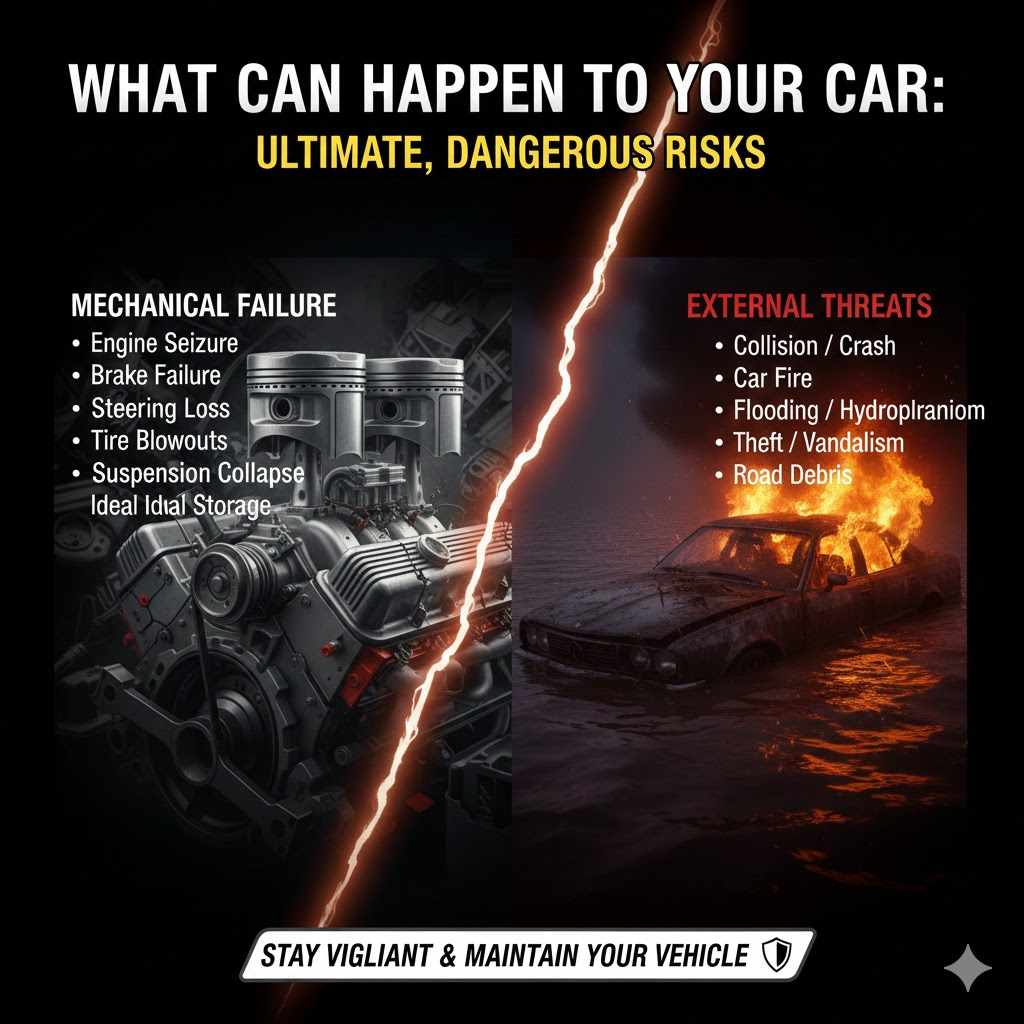
What Can Happen to Your Car: Ultimate, Dangerous Risks
Driving your car immediately in teen temperatures without a brief warm-up can cause significant long-term damage. The cold thickens your engine oil, preventing it from properly lubricating vital components. This leads to accelerated wear on the engine and transmission, puts stress on seals and hoses, and can result in costly repairs over time.
It’s a freezing morning, the temperature is in the teens, and you’re already running late. You jump in your car, turn the key, and your first thought is to just get moving. We’ve all been there. But have you ever wondered if you’re hurting your car by driving off immediately into the bitter cold? It’s a question every driver has, and the answer is more important than you might think.
Don’t worry, you don’t need to be a mechanic to understand this. The good news is that protecting your car is simple. I’m here to walk you through exactly what happens inside your vehicle on a frigid day and give you the clear, easy steps to keep it running smoothly for years to come. Let’s dive in and uncover the secrets to a safe and healthy cold start.
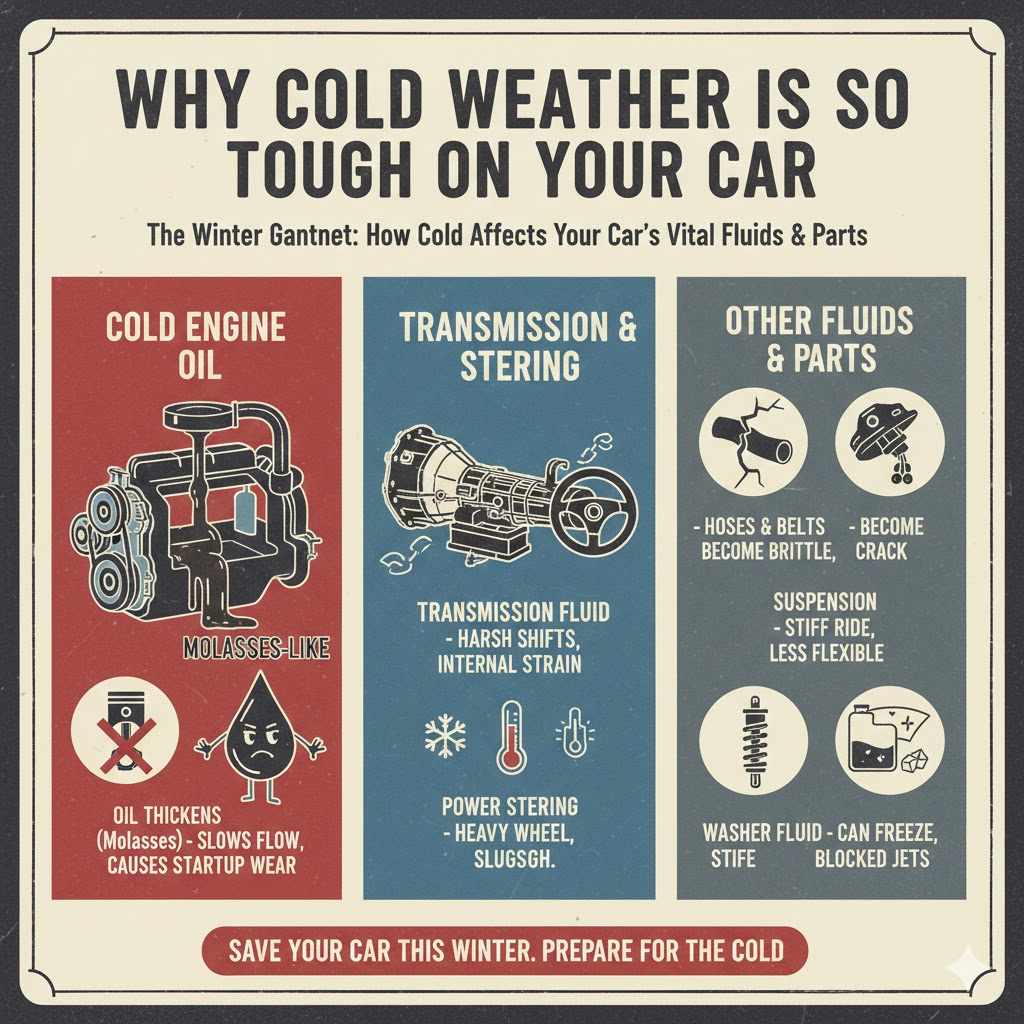
Why Cold Weather is So Tough on Your Car
To understand the risks, we first need to look at what’s happening under the hood when the temperature plummets. Your car is a complex machine full of fluids and moving parts, and extreme cold changes how all of them behave. Think of it like trying to move around right after you wake up—everything is a little stiff and slow.
The Big Problem: Cold Engine Oil
The single most critical fluid in your engine is the oil. Its job is to lubricate all the fast-moving metal parts, creating a thin, protective film that prevents them from grinding against each other. When your car is warm, this oil has the consistency of maple syrup—it flows easily to every nook and cranny.
However, when the temperature drops into the teens, that oil thickens up significantly. It becomes more like cold honey or molasses. When you start your engine, the oil pump has to work much harder to push this thick, sluggish fluid through the engine’s narrow passages. For the first several seconds, and sometimes up to a minute, crucial components like the camshafts, pistons, and bearings may not get the lubrication they desperately need. This brief period of oil starvation is where most engine wear occurs.
How Cold Affects Your Transmission
It’s not just your engine that suffers. Your transmission has its own special fluid that also thickens in the cold. This is why you might notice your car shifts gears harshly or seems to lurch when you first start driving on a winter day. The thick fluid can’t flow properly to operate the intricate valves and clutches inside.
Forcing the transmission to work under these conditions puts immense strain on its internal components. The seals and gaskets, which are made of rubber, also become hard and less flexible in the cold, making them more susceptible to damage and leaks under pressure.
Other Fluids and Parts Get Stiff, Too
Your car relies on a whole system of fluids and flexible parts that are all affected by the cold:
- Power Steering Fluid: This fluid also thickens, which can make your steering wheel feel heavy and difficult to turn initially.
- Rubber Hoses and Belts: The rubber compounds in your belts and coolant hoses lose their pliability in the cold, making them brittle and more likely to crack or snap.
- Suspension Components: The shocks and struts in your suspension have fluid and rubber bushings that stiffen up, leading to a harsher, bumpier ride until they warm up.
The Top 5 Dangers of Driving a Cold Car Immediately
Now that you know what’s happening internally, let’s break down the specific, dangerous risks you take when you start your car and immediately drive off in teen temperatures.
Accelerated Engine Wear
This is the biggest and most costly danger. During a cold start, your engine’s metal parts are rubbing against each other with very little oil to protect them. This metal-on-metal contact scrapes away microscopic layers of material from your cylinder walls, pistons, and bearings. While it might not cause your engine to fail overnight, doing this day after day dramatically shortens its lifespan. It’s like running a marathon without stretching—you can do it, but you’re causing cumulative damage that will catch up with you.
Potential Transmission Damage
Forcing your car to shift gears with thick, cold transmission fluid is a recipe for trouble. The increased pressure can damage sensitive solenoids and valve bodies, leading to shifting problems that require expensive repairs. Over time, this strain can cause permanent damage to the gears and clutches, potentially leading to a complete transmission failure.
Risk of Leaks from Hoses and Seals
When you start your car, the engine and its related systems build up pressure quickly. In the cold, the rubber seals, gaskets, and hoses are hard and not very flexible. This sudden pressure can be enough to crack a brittle hose or blow out a shrunken gasket, leading to coolant, oil, or power steering fluid leaks. A sudden coolant leak can cause your engine to overheat, leading to catastrophic failure.
Poor Fuel Economy
A cold engine is an inefficient engine. Your car’s computer knows this, so it intentionally runs the engine “rich” when it’s cold—meaning it injects more fuel than usual to help it warm up faster and run smoothly. If you start driving hard right away, you are forcing the engine to work inefficiently while it’s still in this warm-up mode, burning way more gasoline than necessary.
Serious Safety Risks
This danger isn’t about your car’s mechanical health; it’s about yours. To drive safely, you need to see clearly. Your car’s heater and defroster rely on heat from the engine to work. If you drive off immediately, your engine is still cold, and you won’t have an effective way to clear ice or fog from your windshield. Driving with poor visibility is one of the most dangerous things you can do.
Modern Cars vs. Older Cars: The Great Warm-Up Debate
You may have heard conflicting advice about warming up your car. Your dad might have told you to let it idle for 10 minutes, while a friend says that’s a bad idea. Both can be right—it just depends on the age of the car.
The Old Way: Carburetors and Long Idling
Back in the day (before the 1990s), most cars had carburetors. These devices were responsible for mixing air and fuel, and they were very finicky in the cold. They needed a long warm-up period to function correctly and provide a smooth, consistent fuel mixture. Without it, the car would sputter, stall, and run terribly. This is where the tradition of idling for 5-10 minutes comes from.
The New Way: Fuel Injection and Smart Computers
Virtually every car built in the last 25 years uses electronic fuel injection. This system has a computer and sensors that can instantly adjust the air-fuel mixture for any temperature. Modern cars don’t need to idle for long periods to run properly. In fact, extended idling is not the best way to warm them up. According to the U.S. Department of Energy, an engine warms up much faster when it’s being driven than when it’s idling. The key is how you drive it.
The Right Way to Warm Up Your Car in Teen Temperatures
So, what’s the perfect, safe, and efficient way to start your car on a frigid morning? It’s a simple, four-step process that protects your vehicle without wasting time or fuel.
- Start Your Car. Turn the key or push the button just like you normally would.
- Wait for Just 30 to 60 Seconds. This is the most important step. This brief period is all your car needs to get the oil pump moving and circulate that thick oil throughout the engine. You can use this time to buckle your seatbelt, adjust your mirrors, or choose your music.
-
Drive Gently for the First 5-10 Minutes. This is the secret to warming up a modern car. By driving, you put a light load on the engine, which helps it heat up much more quickly and efficiently than idling. “Driving gently” means:
- No hard acceleration or jackrabbit starts.
- Keep your engine speed (RPMs) low—generally below 2,500 RPM.
- Avoid high speeds on the highway until the engine is warm.
- Watch Your Temperature Gauge. Most cars have a temperature gauge on the dashboard. Once the needle moves off the “C” (Cold) and reaches its normal operating position (usually in the middle of the gauge), your engine is fully warm. At this point, you can drive normally.
Following this simple routine ensures that your engine and transmission are properly lubricated and protected, saving you from premature wear and expensive repairs down the road.
| Action | Why It’s Good or Bad |
|---|---|
| DO: Wait 30-60 Seconds After Starting | This allows the oil pump to begin circulating the thick oil, providing critical initial lubrication to engine parts. |
| DO: Drive Gently at Low RPMs | This warms up the engine, transmission, and other components faster and more efficiently than idling, without causing strain. |
| DON’T: Rev the Engine to Warm It Up | This is extremely damaging. It forces fast-moving parts to operate at high speed with little to no lubrication, causing severe wear. |
| DON’T: Idle for More Than a Few Minutes | Extended idling in a modern car wastes fuel, increases emissions, and can lead to carbon buildup inside the engine without warming it effectively. |
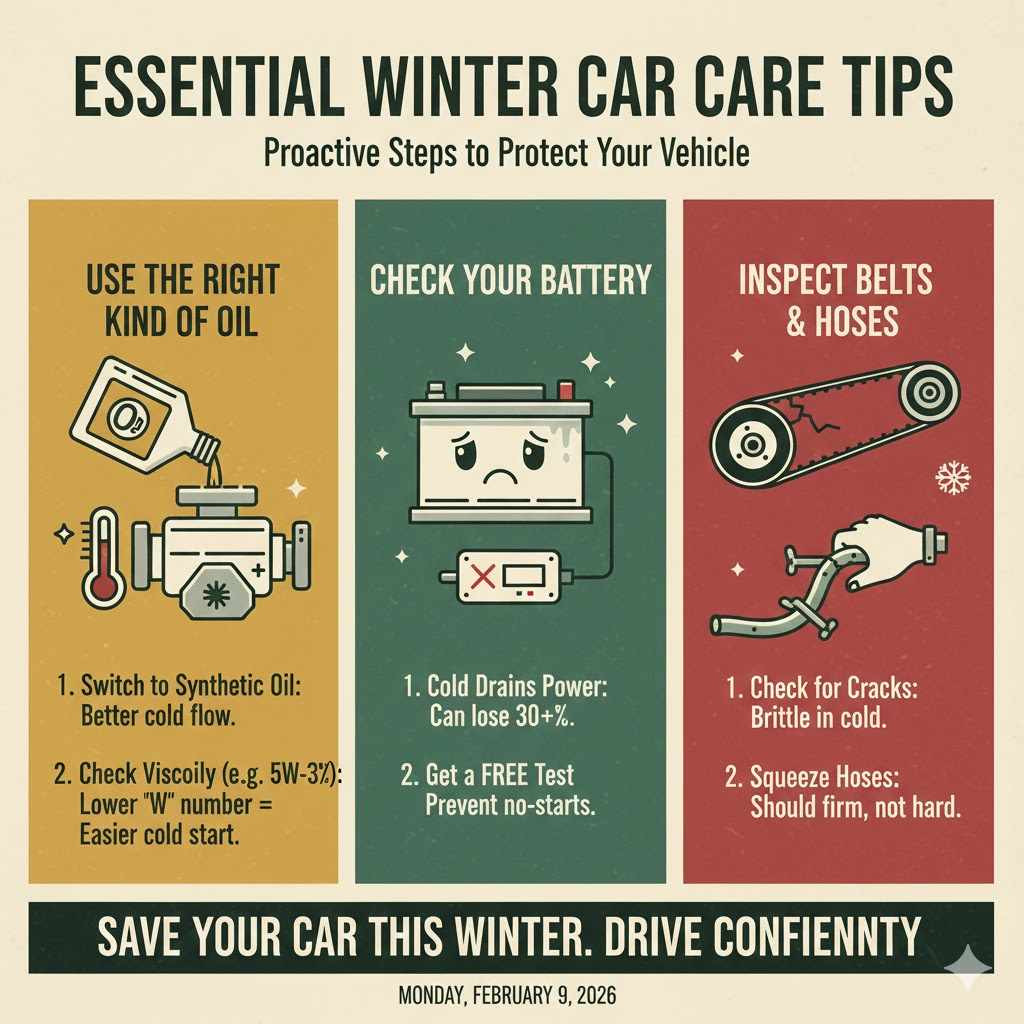
Essential Winter Car Care Tips to Prevent Damage
Being proactive is the best way to protect your car from the dangers of cold weather. Here are a few essential tips to prepare your vehicle for winter.
Use the Right Kind of Oil
Not all motor oils are created equal. Synthetic oil is scientifically engineered to perform better in extreme temperatures. It remains less viscous (thinner) in the cold, so it flows much more easily on startup to protect your engine. Check your owner’s manual for the recommended oil viscosity (e.g., 5W-30). The “W” stands for “Winter,” and a lower number before it means the oil performs better in the cold. For more on oil standards, the American Petroleum Institute provides great resources.
Check Your Battery
A car battery can lose over a third of its power in freezing weather. The cold chemical reaction inside the battery slows down, while the engine requires more power to crank over with thick oil. This is a tough combination. Before winter hits, have your battery tested at an auto parts store (most do it for free) to make sure it’s strong enough to handle the cold.
Inspect Belts and Hoses
Take a few minutes to look under the hood. Check the rubber belts for any cracks or fraying. Squeeze the major coolant hoses (when the engine is cool!). They should feel firm but not rock-hard or mushy. Replacing a worn belt or hose before it fails in the cold can save you from being stranded.
| Symptom | Possible Cause | What to Do |
|---|---|---|
| Loud Squealing Noise on Startup | The serpentine belt is cold and has lost its grip, or it’s worn out. | The noise may go away as the belt warms up. If it persists, have the belt inspected and possibly replaced. |
| Clunky or Delayed Gear Shifts | The transmission fluid is very thick and not flowing properly. | This is normal for the first few minutes. Drive very gently until the transmission warms up and shifts smoothly. |
| Grinding or Tapping Noise from Engine | Lack of oil lubrication on startup. The noise is from metal parts like valve lifters. | This is a sign of oil starvation. Ensure you are using the correct oil type and always allow 30-60 seconds of idle time before driving. |
| Steering Wheel is Hard to Turn | The power steering fluid is thick, making the pump work harder. | This should improve as the car warms up. If it remains difficult, have your power steering system checked. |
Frequently Asked Questions
How long is too long to idle my modern car?
For warming up, anything more than a minute or two is generally unnecessary and wasteful. The only time you should idle longer is if you need to defrost a heavily iced-over windshield for safety. Otherwise, the best practice is a short idle followed by gentle driving.
Can I damage my engine by revving it to warm it up faster?
Yes, absolutely. This is one of the worst things you can do to a cold engine. Revving the engine forces parts to move at high speed before the thick oil has had a chance to reach them. This causes significant metal-on-metal wear and can severely shorten the life of your engine.
What’s that whining or grinding sound when I first start my car in the cold?
A brief whining sound is often the power steering pump working with cold, thick fluid. A tapping or clicking sound from the top of the engine is typically the valve train waiting for oil to arrive. A loud squeal is usually a cold, stiff belt. Most of these noises should quiet down as the car warms up.
Is a block heater a good idea if I live in a very cold climate?
A block heater is an excellent investment for anyone who regularly experiences temperatures below 0°F (-18°C). It’s a small electric heater that keeps your engine block and the fluids inside it warm. Using one makes starting the car dramatically easier, provides instant cabin heat, and virtually eliminates cold-start engine wear.
Why does my transmission feel so jerky when it’s cold?
The jerky or hesitant shifting is caused by the transmission fluid being too thick to flow smoothly through the transmission’s small passages and operate its hydraulic components. Driving gently allows the fluid to heat up and thin out, which will restore smooth shifting.
Does using a remote starter to warm up my car cause damage?
Using a remote starter to run your car for a minute or two before you get in is perfectly fine and can help start the warming process. However, letting it idle for 10-15 minutes every morning just for cabin comfort is not great for the engine, wastes a lot of fuel, and contributes to air pollution.
Your Car’s Health is in Your Hands
Navigating the challenges of a cold winter morning doesn’t have to be a guessing game. The myth of the long, 10-minute warm-up is a thing of the past for modern vehicles. By understanding what’s truly happening inside your car, you can see that the key to a long and healthy engine life is a smart and gentle start.
Remember the simple rule: start, wait 30-60 seconds, then drive easy. This small change in your routine will protect your engine from premature wear, save your transmission from strain, and even help you conserve fuel. You don’t have to be a mechanic to take great care of your car, even on the coldest of days. With this knowledge, you can get behind the wheel with confidence, knowing you’re making the best choice for both your safety and your wallet.