What Car Is Jackson Storm Based On? Real-Life Design Inspiration
Cars fans have argued for years about exactly which real-world machine inspired Lightning McQueen’s slick new rival, and part of the confusion is that Jackson Storm doesn’t trace back to one single production car. Pixar’s designers pulled cues from several different eras of supercar and concept-car design to build his aggressive, futuristic look. Here’s a breakdown of the real-world design elements behind Jackson Storm’s look, and which specific styling cues show up where.
Quick Answer
Jackson Storm isn’t a direct copy of one car — his design blends modern supercar styling, most closely resembling the Lamborghini Aventador’s sharp wedge shape and low profile, with futuristic elements borrowed from concept cars like the Chevrolet Chaparral 2X Vision Gran Turismo.
Real Life Jackson Storm Inspiration
Jackson Storm is a star of the Cars franchise, known for his sleek, futuristic look and incredible speed. His design is a blend of cutting-edge automotive concepts, making him stand out from the more classic racers. This section explores the actual cars that likely influenced his creation, focusing on the design elements that make him so unique and identifiable as a modern speed machine.
We will look at the body shape, aerodynamic features, and overall aggressive stance that all point to specific real-world automotive influences.
Aerodynamic Design Principles
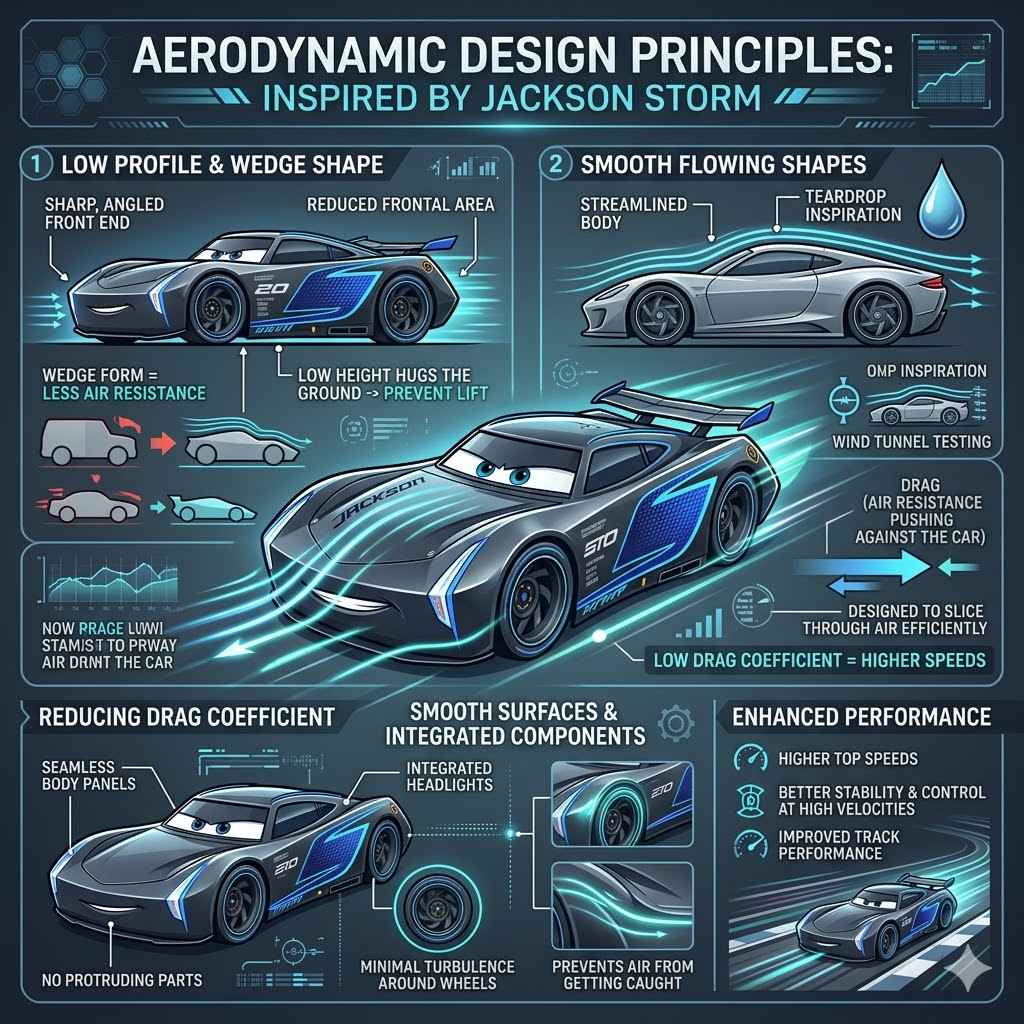
Aerodynamics is the study of how air moves around solid objects. In car design, especially for race cars like Jackson Storm, aerodynamics is incredibly important. It helps cars move faster by reducing the drag, which is the force that pushes against them as they move through the air.
Smooth, flowing shapes allow air to pass over and around the car with less resistance. Think of a teardrop shape; that’s very aerodynamic. Car designers use wind tunnels to test how air flows over their creations.
For Jackson Storm, his designers likely studied vehicles that are known for their low drag coefficients. This means they are shaped to slice through the air efficiently. Features like a low profile, a wedge-shaped body, and smooth surfaces are all hallmarks of good aerodynamic design.
These elements are not just for looks; they directly impact a car’s performance on the track by allowing it to reach higher speeds and maintain better control, especially at high velocities.
Low Profile and Wedge Shape
Jackson Storm’s very low height and sharp, angled front end create a classic wedge shape. This design is very common in concept cars and high-performance vehicles. It helps the car hug the ground, reducing the amount of air that can get underneath and create lift.
A low profile also means the car presents a smaller frontal area to the wind, thus reducing wind resistance.
Smooth Surfaces and Integrated Components
You won’t see many sharp edges or exposed parts on Jackson Storm. His body is incredibly smooth, with integrated headlights and a seamless rear. This smooth skin allows air to flow over him without getting caught on protruding parts.
Even the wheels seem to be part of the overall aerodynamic flow, with designs that aim to minimize air turbulence around them. This attention to detail is what makes him look so advanced and fast.
Influence of Modern Sports Cars
While Jackson Storm is a fictional character, his design draws heavily from the aesthetics and performance goals of real-world modern sports cars and supercars. These vehicles are built with speed, agility, and cutting-edge technology in mind. Designers often look to these high-performance machines for inspiration when creating characters that embody speed and the future of automotive engineering.
The focus is on aggressive lines, advanced materials, and a powerful presence.
Many contemporary sports cars feature designs that prioritize both aggressive styling and aerodynamic efficiency. They often have sharp creases, sculpted body panels, and large air intakes designed to cool powerful engines and brakes. The overall impression is one of speed, power, and a sophisticated, almost alien, technological advancement.
This mirrors the visual language used for Jackson Storm, making him appear as the pinnacle of racing technology within his universe.
Concept Cars and Future Designs
Concept cars are often showcased at auto shows to give the public a glimpse of what future vehicles might look like. These cars are not always built for mass production but serve as platforms for experimenting with new designs, technologies, and materials. Jackson Storm’s design strongly echoes the radical and forward-thinking forms seen in many automotive concept vehicles.
These concepts often push the boundaries of what is considered conventional car design.
For instance, some concept cars feature completely enclosed wheel wells, innovative lighting solutions, and extremely low rooflines. They might also incorporate advanced materials like carbon fiber to reduce weight and increase strength. The visual flair and futuristic appeal of these concepts directly translate into Jackson Storm’s character, positioning him as a racer from a different, more advanced era of automotive evolution.
His digital displays and neon accents also suggest a connection to concepts exploring digital integration and vibrant aesthetics.
Supercar Aesthetics
Supercars are the peak of automotive performance and luxury, characterized by their extreme speed, exotic materials, and striking designs. Brands like Lamborghini, Ferrari, and McLaren are known for producing cars that are as visually dramatic as they are mechanically impressive. Jackson Storm shares a similar aggressive stance and exotic appearance with these high-end vehicles.
His sharp angles and wide, low body are reminiscent of these powerful machines.
Think about the low, wide proportions of a supercar, designed to maximize grip and stability. Jackson Storm embodies this with his broad shoulders and close-to-the-ground profile. The way his body is sculpted to channel air and create downforce is also a common feature in supercar design.
Even the bright, often metallic or iridescent paint schemes seen on supercars are echoed in the vivid colors often associated with Jackson Storm. This association with elite performance is a key part of his character.
Specific Car Models as Influences
When trying to pinpoint the exact real-life car that inspired Jackson Storm, it’s important to understand that he is likely a composite of several influences rather than a direct copy of one specific model. However, certain vehicles share enough design similarities to be considered strong contenders for his inspiration. These are cars that embody the spirit of advanced aerodynamics, aggressive styling, and high-performance engineering.
We will examine these potential inspirations in detail to understand how they contributed to Jackson Storm’s iconic look.
These cars represent the cutting edge of automotive design, often blurring the lines between road-legal vehicles and track-focused machines. Their visual language is one of speed, power, and technological sophistication. By looking at these real-world examples, we can better appreciate the design choices made for Jackson Storm and understand the real-life automotive world that his character represents within the Cars universe.
It’s a fascinating look at how animation can draw from reality to create something unique.
Disney Pixar Cars Jackson Storm Die-Cast
Best for: Fans who want the character himself, not just his real-world inspiration.
Why we picked it: The official die-cast replica of Jackson Storm as he appears in Cars 3.
Main drawback: Small scale, designed more for play than display.
View Our Pick on Amazon
 Jackson Storm Glow Racer Check on Amazon |
 Lamborghini Aventador Model Kit Check on Amazon |
 1:64 Aventador Diecast Check on Amazon |
Lamborghini Aventador
The Lamborghini Aventador is a prime example of a modern supercar with a design that strongly resonates with Jackson Storm’s appearance. The Aventador is known for its sharp, angular lines, low-slung profile, and aggressive front end. Its Y-shaped headlights and distinctive side air intakes are features that can be seen echoed in Storm’s overall design language.
The dramatic styling of the Aventador is all about making a statement of power and speed.
The wedge shape is very pronounced in the Aventador, starting with a low, pointed nose and rising sharply towards the rear. This aerodynamic profile is designed to cut through the air efficiently. The wide stance and large wheels contribute to its imposing presence, much like Jackson Storm.
Even the way the body panels are sculpted, creating intersecting planes and sharp creases, is similar to the futuristic, almost alien look of Jackson Storm. This supercar truly embodies the spirit of a next-generation racer.
Chevrolet Chaparral 2X Vision Gran Turismo
Another significant influence might be the Chevrolet Chaparral 2X Vision Gran Turismo concept car. This vehicle was created specifically for the Gran Turismo video game series and pushed the boundaries of futuristic design. It features a radical, almost alien, design with a rider lying prone, similar to a motorcycle or airplane cockpit.
While Jackson Storm doesn’t have the same rider position, the extreme aerodynamics, unique cockpit shape, and unconventional silhouette share common ground.
The Chaparral 2X boasts extremely innovative aerodynamic features, with wings and fins designed to generate massive downforce. Its overall shape is very sleek and follows a sharp, futuristic design philosophy. The bright, almost glowing accents and the integrated lighting systems are also elements that align with the modern, high-tech aesthetic of Jackson Storm.
This concept car represents the bleeding edge of automotive imagination, and its influence on a character like Storm is highly plausible.
Other Potential Inspirations
Beyond specific models, Jackson Storm’s design likely pulls from a broader range of advanced automotive concepts. Think of other high-performance vehicles that emphasize aerodynamics and futuristic styling. This could include some of the more aggressively styled electric hypercars that are emerging today, which often feature sleek, flowing lines and advanced composite materials.
These cars are designed to be not only incredibly fast but also visually striking and representative of future automotive technology.
The overall theme is one of pushing the limits of design and performance. Even elements from futuristic movie cars or advanced racing prototypes could have played a role. The goal was to create a character that looked like he belonged to a future era of racing, a true marvel of engineering and design.
This blend of influences creates a unique character that feels both familiar in its automotive roots and strikingly new in its animated execution.
Technical Terms Explained
To fully appreciate the design of Jackson Storm and the cars that inspired him, it is helpful to understand some key automotive terms. These terms describe the features that contribute to a car’s performance and appearance. By breaking down these concepts, we can see how real-world engineering principles translate into animated characters.
This makes the connection between reality and fiction much clearer and more engaging for car enthusiasts and movie fans alike.
Understanding these terms allows for a deeper appreciation of the craftsmanship and innovation involved in automotive design. It also helps in recognizing the specific features that designers might have borrowed or adapted for fictional characters. This knowledge enriches the viewing experience and provides a solid foundation for understanding why certain design choices were made.
Drag Coefficient
The drag coefficient is a measure of how much air resistance a shape experiences when moving through the air. A lower drag coefficient means less air resistance, allowing a vehicle to move faster and more efficiently. For example, a smooth, rounded shape like a teardrop has a very low drag coefficient.
In contrast, a flat surface, like a brick, has a very high drag coefficient and would be very difficult to push through the air.
Automotive engineers work hard to minimize the drag coefficient of cars, especially sports cars and race cars, to improve their speed and fuel economy. They achieve this through careful shaping of the car’s body, using aerodynamic elements like spoilers and diffusers, and ensuring smooth underbodies. A car with a low drag coefficient needs less power to achieve high speeds.
Jackson Storm’s design, with its smooth, flowing lines, suggests a very low drag coefficient.
Aerodynamic Downforce
Aerodynamic downforce is a force that pushes a car downwards onto the track. It is generated by the shape of the car, particularly its wings, spoilers, and the underbody. Downforce is crucial for race cars because it increases the grip of the tires on the road.
More grip means the car can take corners at higher speeds without sliding out. It’s like the opposite of lift, which tries to make an airplane fly.
Think of how a race car’s spoiler works. It’s shaped like an upside-down airplane wing. As air flows over it, it creates a low-pressure area on top and a high-pressure area underneath, pushing the wing (and the car) down.
Jackson Storm’s aggressive styling, with its low profile and potentially integrated aerodynamic surfaces, suggests that his design would aim to generate significant downforce. This is essential for him to handle high speeds and sharp turns as depicted in the movies.
Body Sculpting
Body sculpting refers to the process of shaping a car’s body panels to create specific aesthetics and aerodynamic effects. This involves creating curves, creases, and surfaces that are not only visually appealing but also functional. For high-performance cars, body sculpting is used to direct airflow, manage heat, and generate downforce.
It’s an art form that combines styling with engineering.
Designers use computer-aided design (CAD) software to sculpt these surfaces with precision. The goal is to create a cohesive look that emphasizes the car’s performance capabilities. Sharp lines, aggressive vents, and flowing curves all contribute to the sculpted look.
Jackson Storm’s body features a lot of this advanced sculpting, giving him a dynamic and powerful appearance that hints at his advanced engineering.
Visual Elements of Jackson Storm
Jackson Storm is not just defined by his car type but also by his distinctive visual elements that set him apart. These include his color scheme, lighting, and overall futuristic aura. These elements were carefully chosen to represent his persona as a modern, technologically advanced rival to Lightning McQueen.
We will explore these visual aspects to understand how they contribute to his character and his place in the Cars universe.
The combination of these visual cues creates a strong impression of a cutting-edge racer. They are designed to be eye-catching and to communicate his speed and advanced nature immediately. This is a testament to the power of visual design in storytelling and character development.
Color Scheme and Lighting
Jackson Storm is often depicted with a striking blue and black color scheme, sometimes accented with neon or electric blue lighting. This palette is deliberately chosen to convey a sense of speed, technology, and modernity. Blue is often associated with innovation, coolness, and electricity, which fits his character perfectly.
The neon accents add a futuristic glow, making him stand out, especially in nighttime racing scenes.
The lighting integrated into his design, such as his headlights and other illuminated elements, further enhances his high-tech appearance. These are not just functional lights but part of his overall aesthetic, giving him an almost “cyberpunk” or futuristic robot feel. This use of light and color is a key part of making him seem like a next-generation racer compared to the more classic designs of the other cars.
The Significance of Blue
In design and psychology, blue is often linked to trust, stability, and intelligence. However, in the context of speed and technology, it can also represent innovation, electricity, and a futuristic outlook. For Jackson Storm, the bright, often electric blue used in his design communicates advanced technology and a cutting-edge approach to racing.
It suggests a character who is not bound by traditional methods but embraces the future.
Neon and LED Accents
The inclusion of neon or LED-style lighting accents on Jackson Storm is a direct nod to modern automotive design trends and futuristic aesthetics. Many concept cars and high-performance vehicles today feature intricate LED lighting signatures. These accents are not merely decorative; they contribute to the overall visual narrative of his character, making him appear fast, sleek, and technologically superior.
Aggressive Stance and Proportions
Jackson Storm’s physical presence is as important as his design details. His stance and proportions are engineered to look aggressive and ready for competition. This includes his wide track, low profile, and muscular body.
These features are common in real-world racing cars designed for maximum performance and visual impact. The aim is to create a character that looks intimidating and capable.
The way he sits on the road communicates stability and power. His wide wheelbase provides a stable platform for high-speed maneuvers, and his low center of gravity helps prevent rollovers. These physical characteristics are not accidental; they are carefully designed to reflect the engineering that would go into a real-life champion racer.
Wide Track and Low Center of Gravity
A wide track, meaning the distance between the wheels on the same axle, contributes to a car’s stability, especially when turning. Combined with a low center of gravity, which is the point at which the car’s weight is balanced, this makes it very difficult for the car to tip over. Jackson Storm’s design emphasizes these features, giving him a planted and powerful look.
He appears to be firmly rooted to the ground, ready to take on any challenge.
Muscular Bodywork
The term “muscular bodywork” refers to body panels that bulge and swell in a way that resembles muscle definition. This is common in sports cars and supercars, conveying power and strength. Jackson Storm’s body features these sculpted lines, particularly around the wheel arches and along the sides.
This gives him a powerful and athletic physique, enhancing his persona as a formidable racer.
We have explored the design elements and potential real-life inspirations behind Jackson Storm. While he is a unique character, his features are heavily influenced by modern supercars and concept cars known for their aerodynamic prowess and aggressive styling. The focus on sleek lines, low profiles, and advanced aesthetics points towards cars like the Lamborghini Aventador and experimental vehicles such as the Chevrolet Chaparral 2X.
His design is a brilliant fusion of real-world automotive engineering and imaginative character creation. By understanding these influences, fans can appreciate the depth of design that went into making Jackson Storm such a memorable racer. He truly embodies the spirit of future high-performance vehicles.
Frequently Asked Questions
Is Jackson Storm a specific real car?
Jackson Storm is not based on a single specific real car. He is a fictional character whose design is a composite of influences from various modern supercars and futuristic concept cars.
What is the main characteristic of Jackson Storm’s design?
His main characteristic is his sleek, futuristic, and highly aerodynamic design, which emphasizes speed and advanced technology.
What real-life car brands might have inspired Jackson Storm?
Brands known for aggressive and futuristic designs like Lamborghini, as well as concept car divisions of various manufacturers, likely served as inspiration.
Why does Jackson Storm look so different from other Cars characters?
He is designed to represent a new generation of racers, focusing on modern aerodynamics and technology, contrasting with the more classic car designs of characters like Lightning McQueen.
Can I buy a car that looks like Jackson Storm?
While you cannot buy a car that is identical to Jackson Storm, you can find real-life supercars and sports cars with similar aggressive styling, low profiles, and aerodynamic features.
Summary
So, what car is Jackson Storm based on? Real life models like the Lamborghini Aventador and futuristic concept cars heavily influenced his design. His sleek, aerodynamic look, aggressive stance, and advanced visual elements all draw from cutting-edge automotive engineering.
Jackson Storm represents the future of racing, blending real-world speed and style into an unforgettable animated character.
Products related to this article
Sponsored / affiliate links. As an Amazon Associate I earn from qualifying purchases. I may earn additional commission from eligible campaigns.