Detroit’s Auto Legacy: The Real History Behind Motor City
Detroit earned the “Motor City” name from Ford’s Piquette Avenue Plant, which built the first Model T in 1908 — not from today’s factories. Only two automakers, General Motors and Stellantis, still assemble complete vehicles inside Detroit’s city limits in 2026; the Mustang, Escalade, and Camaro are all built elsewhere. This guide covers how Detroit became the birthplace of the U.S. auto industry, where its most famous nameplates are actually manufactured today, and how the city’s factories have changed since 1908.
Quick Answer
Detroit became the “Motor City” when Ford’s Piquette Avenue Plant produced the first Model T in 1908 and the nearby Highland Park Plant introduced the moving assembly line in 1913. The Big Three — Ford, General Motors, and Chrysler (now Stellantis) — were all headquartered in the Detroit area by the 1920s. Today, most iconic Detroit-brand nameplates (Mustang, Escalade, Camaro) are built outside the city; only GM’s Factory ZERO and Stellantis’s Detroit Assembly Complex still assemble vehicles within Detroit proper.
Why Is Detroit Called the Motor City? The Real History
Detroit didn’t become the center of American car manufacturing by accident. Two specific factories, built four years apart, are the reason the nickname “Motor City” stuck — and the reason nearly every major U.S. automaker still traces its roots back to this one stretch of southeastern Michigan.
Birthplace at the Ford Piquette Avenue Plant (1904–1910)
Ford Motor Company built its first factory at 461 Piquette Avenue in Detroit in 1904, ten months after the company launched. The Model T — the car that made automobile ownership affordable for ordinary Americans — was designed there and rolled off the line for the first time on September 27, 1908. The plant is now a museum and is recognized as the oldest purpose-built automotive factory building still open to the public.
“I will build a car for the great multitude. It will be large enough for the family, but small enough for the individual to run and care for… it will be so low in price that no man making a good salary will be unable to own one.”
Highland Park and the Moving Assembly Line (1910–1913)
By the end of 1909, Model T demand had already outgrown Piquette Avenue. Ford moved production to a new plant in nearby Highland Park in January 1910, and it was there — not at Piquette — that Ford introduced the moving assembly line in 1913. That single change cut the time to build a Model T chassis from roughly 12.5 hours to about 93 minutes, and it’s the innovation that turned Detroit into a manufacturing capital, not just a car-industry headquarters.
The Big Three Take Root in the Detroit Area
Ford, General Motors, and Chrysler — the “Big Three” — were all headquartered in the Detroit area by the 1920s, and that concentration of engineering talent, suppliers, and factory labor is what cemented the Motor City identity. It’s worth noting even Ford itself doesn’t fit the popular image exactly: its global headquarters moved to neighboring Dearborn in 1904 and has stayed there ever since, and Ford hasn’t assembled a complete vehicle inside Detroit’s city limits since production left Highland Park in 1910.
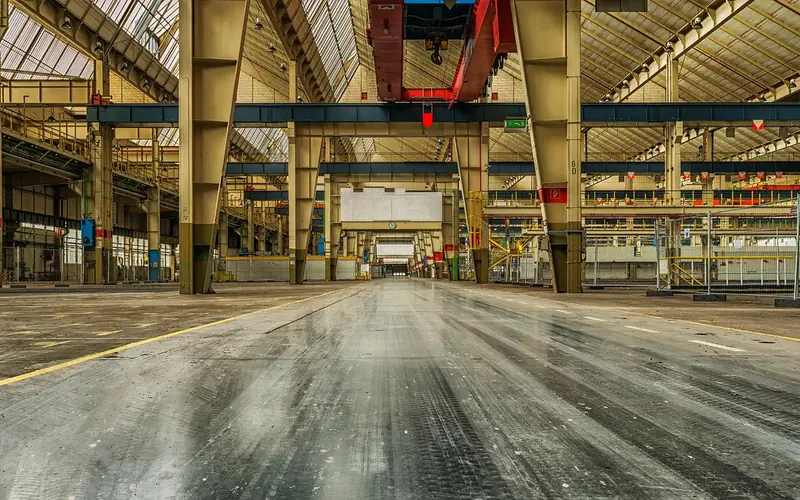
Iconic “Detroit” Cars — And Where They’re Actually Built Today
The Mustang, Escalade, Charger, and Camaro are all “Detroit” cars in the sense that Ford, GM, and Stellantis are Detroit-area companies. But that doesn’t mean any of them roll off a line inside Detroit’s city limits today — most never did, and the ones that once did have since moved.
| Model | Debut | First Built | Built Today |
|---|---|---|---|
| Ford Model T | 1908 | Piquette Ave. Plant, Detroit | Discontinued 1927 |
| Ford Mustang | 1964 | Dearborn Assembly (Dearborn, MI) | Flat Rock, MI (~25 mi. SW of Detroit) |
| Dodge Charger | 1966 | Dodge Main / Hamtramck Assembly (Detroit-Hamtramck border — same site as today’s Factory ZERO) | Windsor, Ontario, Canada |
| Chevrolet Camaro | 1966 | Norwood, OH (primary plant) | Discontinued 2024; revival planned for Lansing, MI (~2027) |
| Cadillac Escalade | 1999 | Arlington, TX | Arlington, TX (Escalade IQ EV: Factory ZERO, Detroit) |
| Jeep Grand Cherokee | 1992 | Jefferson North Assembly, Detroit | Detroit Assembly Complex, Detroit — still built there today |
One connection most guides miss: the original 1966–67 Dodge Charger was partly built at Dodge Main, the historic Hamtramck-area plant that straddled Detroit’s border. That same site was rebuilt and reopened as GM’s Factory ZERO — which today builds the Cadillac Escalade IQ and GMC Hummer EV instead of a single Dodge. For the complete, currently updated roster of every vehicle actually assembled inside Detroit in 2026, see our dedicated plant guide: What Cars Are Made in Detroit? The Real Plant List (2026).
Detroit Auto Legends Diecast Pick
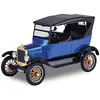
Motormax 1925 Ford Model T Touring 1:24 Diecast
A detailed 1:24 scale replica of the car type that put Detroit on the map — the direct descendant of the 1908 original built at Piquette Avenue.
- Best for: readers who want a tangible piece of the Model T story on a shelf
- Why we picked it: accurate 1:24 scale, opening doors and hood, closest widely available replica to the 1908 original
- Main drawback: represents the 1925 touring version, not the exact 1908 launch model
Compare more Detroit auto legend diecast options
 Option 1 1965 Ford Mustang 1:24 Die-Cast
|
 Option 2 1957 Chevy Bel Air Coupe
|
 Option 3 1969 Chevrolet Camaro 1:24 Die-Cast
|
As an Amazon Associate we earn from qualifying purchases.
Detroit’s Manufacturing Evolution
From Assembly Lines to Automation
Ford’s 1913 moving assembly line was the first major leap — it made mass production possible and turned car ownership from a luxury into something a working family could afford. A century later, the change is automation. Robots now handle welding, painting, and heavy lifting on most Detroit-area lines, while human workers focus on quality control, programming, and the final assembly steps robots can’t reliably do. GM’s Factory ZERO, for example, is built around a highly automated battery and EV production process that didn’t exist in Detroit a decade ago.
📊 Michigan’s motor vehicle manufacturing sector employed roughly 155,400 people as of May 2026 — Source: Federal Reserve Economic Data (FRED), St. Louis Fed, 2026
Sustainability in Today’s Detroit Plants
Detroit’s remaining auto plants have shifted their production focus alongside the industry’s move toward electrification. Factory ZERO was purpose-built and retooled specifically for EV production, replacing the older Detroit-Hamtramck Assembly plant that stood on the same site. That shift reflects a broader industry pattern of consolidating traditional gas-engine assembly work outside city centers while concentrating newer, cleaner EV lines closer to corporate headquarters and engineering teams.
Detroit’s Cultural Impact on the Auto World
Detroit Cars in Music and Film
Detroit-built and Detroit-brand cars show up constantly in American music and film, from Motown-era songs about cruising Woodward Avenue to muscle cars used as characters in car-chase movies. That cultural footprint is part of why “Detroit” still functions as shorthand for American car culture generally, even for models that haven’t rolled off a Detroit line in decades.
Detroit’s Car Enthusiast Communities
Detroit still hosts major car shows, including the long-running North American International Auto Show, and draws restoration and muscle-car communities from across the country. Enthusiasts who want to bring an old Detroit-brand car back to its original condition can find a full walkthrough in our guide on how to restore old car paint.
Frequently Asked Questions
Why is Detroit called the Motor City?
Detroit earned the nickname “Motor City” in the early 1900s after Ford’s Piquette Avenue Plant began mass-producing the Model T in 1908 and the nearby Highland Park Plant introduced the moving assembly line in 1913. By the 1920s, Ford, General Motors, and Chrysler — the “Big Three” — were all headquartered in the Detroit area, cementing the city’s identity as the center of American car manufacturing.
Where was the first Ford Model T built?
The first Model T rolled off the line at Ford’s Piquette Avenue Plant in Detroit on September 27, 1908. Production moved to the nearby Highland Park Plant in January 1910, where Ford introduced the moving assembly line in 1913 — the innovation that made mass-produced, affordable cars possible.
Is the Ford Mustang built in Detroit?
No. The Mustang has never been assembled within Detroit’s city limits. It was built at Ford’s Dearborn Assembly Plant from 1964 to 2004, and every Mustang since 2005 has come from the Flat Rock Assembly Plant, about 25 miles southwest of Detroit — both in neighboring cities, not Detroit itself.
Is the Cadillac Escalade made in Detroit?
The standard gas-powered Cadillac Escalade and Escalade-V are built at GM’s Arlington Assembly plant in Arlington, Texas — not Detroit. The all-electric Cadillac Escalade IQ is the exception: it’s assembled at GM’s Factory ZERO plant, which sits within Detroit city limits.
What cars are still built inside Detroit today?
Only two automakers currently assemble complete vehicles within Detroit’s city limits: General Motors at Factory ZERO (Cadillac Escalade IQ, GMC Hummer EV, Chevrolet Silverado EV, GMC Sierra EV) and Stellantis at its Detroit Assembly Complex (Jeep Grand Cherokee, Jeep Grand Cherokee L, Dodge Durango). See our full 2026 Detroit plant-by-plant list for complete details.
Are Ford, GM, and Stellantis still headquartered in Detroit?
General Motors and Stellantis North America keep their headquarters in downtown Detroit. Ford is the exception — its global headquarters has been in neighboring Dearborn, Michigan since 1904, not inside Detroit proper, even though Ford is closely associated with the city.
The Bottom Line
Detroit’s claim to the “Motor City” title rests on real history — the Piquette Avenue Plant, the Highland Park assembly line, and a century of Big Three headquarters — not on where today’s most famous nameplates actually get built. Most of them don’t, anymore. If you want to know exactly which vehicles are still assembled inside Detroit right now, our complete 2026 plant list has the current, verified answer.
Products related to this article
Sponsored / affiliate links. As an Amazon Associate I earn from qualifying purchases. I may earn additional commission from eligible campaigns.