What Cars Have Heated Steering Wheels: Essential Guide
Heated steering wheels are now common in many mid-range and premium vehicles across most major brands. You can often find this feature on higher trim levels or as an option package in models from brands like Ford, Toyota, Honda, BMW, and Audi, particularly those released in the last decade.
Cold mornings can make getting into your car tough, especially when your hands freeze up waiting for the heater to blow warm air. A heated steering wheel offers instant comfort, warming your hands quickly so you can drive safely and happily. If you are shopping for a new or used car, or just wondering if your current ride has this cozy feature, you might feel a bit lost. It can seem like a mystery which models include it.
Don’t worry! As your trusted automotive guide, I’m here to clear up the confusion. We will break down exactly what cars offer heated steering wheels, how they work, and how you can easily check your own vehicle. By the end of this guide, you will feel confident knowing all about this wonderful winter feature.
Understanding the Heated Steering Wheel: What Is It and How Does It Work?
A heated steering wheel is more than just a luxury; it’s a practical comfort feature that significantly improves the driving experience in colder climates. Instead of waiting minutes for the engine and cabin heater to warm up, you get immediate warmth right where you need it most—your hands.
The Basic Mechanism
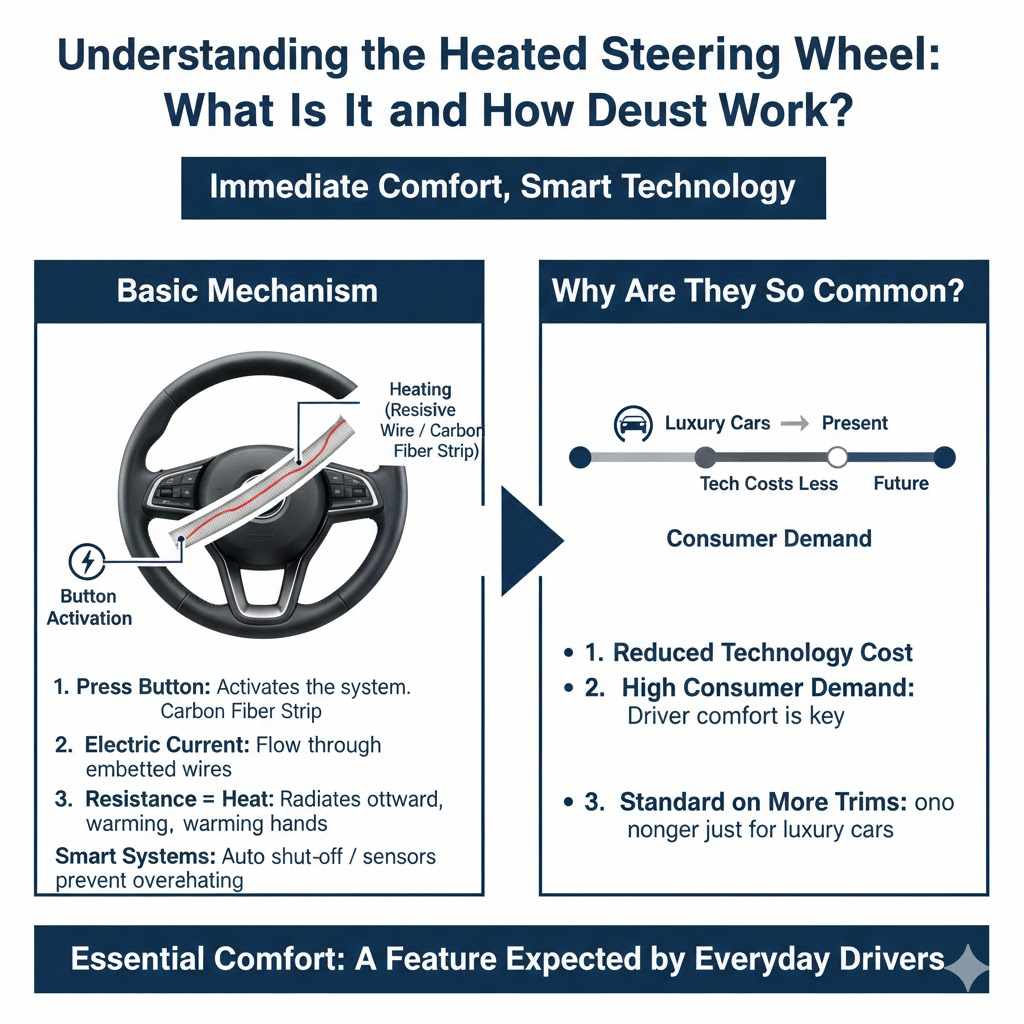
At its core, a heated steering wheel uses simple electrical technology. It works much like the defroster on your rear window or your heated seats. Inside the steering wheel rim, thin heating elements (usually resistive wires or carbon fiber strips) are embedded beneath the leather or plastic wrap.
When you press the activation button, electric current flows through these elements. This resistance generates heat, which radiates outward into the steering wheel material, warming your hands quickly. Most modern systems are smart, featuring automatic shut-off timers or temperature sensors to prevent overheating, which is an important safety feature.
Why Are They Becoming So Common?
When they first appeared, heated steering wheels were reserved only for the most expensive luxury cars. Now, technology costs less to produce, and consumer demand for comfort features has skyrocketed. Automakers recognize that features once considered premium are now expected by everyday drivers. According to several industry reports, driver comfort is a major factor in purchasing decisions, pushing manufacturers to include these features across more trim levels.
The Big Picture: Which Brands Offer Heated Steering Wheels?
It’s almost easier to list the brands that don’t offer them anymore! Today, nearly every major manufacturer includes this feature in their lineup, though usually on mid-to-high trim levels or as part of an optional “Cold Weather Package.”
Mainstream Manufacturers Leading the Way
These brands frequently include heated steering wheels on popular models, often starting at the second or third trim level:
- Ford: Very common on Explorer, F-150, Escape, and higher trims of the Fusion (where available).
- General Motors (Chevy, GMC, Buick): Standard or available on nearly all higher-trim SUVs and trucks (e.g., Chevy Tahoe, GMC Sierra).
- Toyota/Lexus: Widely available, especially on RAV4, Highlander, Camry XSE/XLE trims, and standard on Lexus models.
- Honda/Acura: Often found on higher trims of the CR-V, Pilot, and standard on many Acura models.
- Hyundai/Kia: Known for packing features, heated steering wheels are surprisingly common even on mid-level trims of the Santa Fe, Telluride, and Sorento.
Luxury Brands: Where Comfort is Standard
For brands like BMW, Mercedes-Benz, Audi, and Genesis, a heated steering wheel is often standard equipment or part of a very basic package. If you are looking at a luxury vehicle from the last 10 years, chances are very high that it has one.
How to Check If Your Car Has a Heated Steering Wheel (The Simple Steps)
Knowing which brands offer the feature is one thing, but how do you confirm if the specific car sitting in your driveway has one? Here are the easiest, most reliable ways to check, tailored for the everyday driver.
Method 1: The Dashboard Button Check (The Quickest Way)
The most direct way to tell is by looking for the physical control button or switch.
- Locate the Controls: Get into your driver’s seat. Look around the steering column area, usually on the left or right spoke of the steering wheel itself, or sometimes on the dashboard panel near the driver’s side air vent or door controls.
- Identify the Symbol: The symbol for a heated steering wheel is almost always a picture of a steering wheel with wavy lines (heat lines) emanating from it.
- Test It: If you find the button, press it! You should see an indicator light turn on (often amber or red), and within 30 to 60 seconds, you should feel warmth spreading across the wheel.
Method 2: Navigating the Infotainment Screen
Many newer cars no longer use physical buttons for everything. The heating function might be hidden inside the digital menus.
If you cannot find a physical button, go to your main touchscreen display. Look for menus labeled:
- Climate Control
- Comfort Settings
- Driver Preferences
Browse these sections. If the option exists, you will find an icon or toggle switch there that allows you to activate the steering wheel heater.
Method 3: Reviewing Your Owner’s Manual
Your owner’s manual is the ultimate source of truth for your specific vehicle. If you have the physical book or the digital version online (you can often download it from the manufacturer’s website by entering your VIN), search the index for “Heated Steering Wheel” or “Steering Wheel Heater.” This will tell you exactly where the control is located and how to use it.
Method 4: Checking the Vehicle Trim Level
If you are shopping for a used car, knowing the trim level helps tremendously. Features like heated steering wheels are often tied to specific packages:
- Base Model (LX, S, SE): Rarely includes this feature.
- Mid-Level (EX, LT, XLE): Often where the feature appears as standard or a low-cost option.
- Top Level (Touring, Denali, Limited): Very likely to have it standard.
Heated Steering Wheel Availability by Model Year and Segment
The availability of this feature has changed rapidly over the last decade. Here is a general guide based on vehicle segments. Remember, this is a guideline; always check the specific vehicle details!
Compact & Mid-Size Sedans/Hatchbacks
In this segment, heated wheels used to be rare. Now, they are common in the higher trims of popular models, especially those built after 2017.
| Model Example | Typical Availability Year Range (For Feature) | Common Trim Level |
|---|---|---|
| Toyota Camry | 2018 onwards | XLE, XSE |
| Honda Accord | 2020 onwards | EX-L, Touring |
| Hyundai Sonata | 2016 onwards | Limited, SEL Plus |
SUVs and Crossovers
This is the segment where heated steering wheels have exploded in popularity. Many SUVs now include them standard because they are frequently used in family and road-trip scenarios.
For example, many manufacturers associate heated steering wheels with all-wheel-drive (AWD) versions or the popular family hauling trims. If you live in a snowy area, manufacturers often group this feature with winter safety items.
Trucks and Large SUVs
In this segment, they are nearly ubiquitous on anything above the work-truck trim level. For popular models like the Ford F-150 or Chevy Silverado, if you opt for the Lariat/LTZ trim or higher, you can almost guarantee a heated wheel.
The Difference Between Heated and Ventilated Steering Wheels
While we focus on heat, some modern, high-end vehicles offer the opposite feature: ventilation. It is important not to confuse the two!
Heated Steering Wheel (Warmth)
- Purpose: To warm cold hands during winter or cool weather.
- Mechanism: Electrical resistance heating elements embedded in the wheel.
- Feel: Direct, penetrating warmth across the entire gripping surface.
Ventilated Steering Wheel (Cooling)
Ventilated wheels are less common but are appearing on top-tier models (like some Mercedes-Benz S-Class or high-end Genesis models). These wheels use tiny fans or perforated surfaces combined with active cooling elements to draw heat away from your hands in the summer.
Key Takeaway: If your car has heated seats, it has a much higher chance of having a heated steering wheel than if it only has basic ventilation features, as the heating system is simpler to integrate.
Pros and Cons of Having a Heated Steering Wheel
No feature is perfect for everyone. Here is a straightforward look at the benefits and potential drawbacks to help you decide if it’s a must-have for your next vehicle.
The Advantages (Pros)
- Instant Comfort: Immediate relief on freezing mornings—no waiting for the cabin air to warm up.
- Improved Grip and Safety: Warm hands are more dexterous. In icy conditions, better grip means better control.
- Reduced Strain: For drivers with arthritis or poor circulation, gentle warmth can reduce stiffness and pain while driving.
- Feature Grouping: If a car has this feature, it usually means it has other desirable options, like heated seats and remote start.
The Potential Drawbacks (Cons)
- Cost: If you are buying used, a car with this option might command a slightly higher price than an identical model without it.
- Availability Gap: It is often locked into higher, more expensive trim levels, meaning you might have to buy a pricier version just for the wheel heat.
- Wear and Tear: Like any electrical component, the heating elements can eventually fail, requiring specialized repair, though modern units are very reliable.
Maintenance and Safety Tips for Your Heated Wheel
Heated steering wheels are very low maintenance, but proper use ensures they last a long time. Remember, you are dealing with electrical components integrated into a safety device.
Usage Guidelines
Follow these simple rules to keep your wheel functioning safely and reliably:
- Don’t Overuse: Only use the heat when necessary. If your hands are already warm, turn it off. This saves wear on the electrical components.
- Check the Temperature: Always start on the lowest setting if you are unsure. Modern systems regulate themselves, but extreme heat isn’t necessary.
- Avoid Sharp Objects: Be careful when cleaning or placing items on the wheel. Puncturing the rim material could damage the internal heating elements.
Understanding Safety Standards
Manufacturers design these systems to meet strict safety standards. For instance, the National Highway Traffic Safety Administration (NHTSA) oversees vehicle component safety. While specific regulations for steering wheel heat are integrated into overall cabin electronics standards, these systems are generally designed to operate within safe temperature parameters (You can explore general vehicle safety standards on the NHTSA website).
Shopping Smart: How to Find a Used Car with This Feature
If you are hunting for a pre-owned vehicle and a heated steering wheel is a must-have, you need a targeted search strategy. Don’t just rely on the general listing description.
Step-by-Step Used Car Inspection
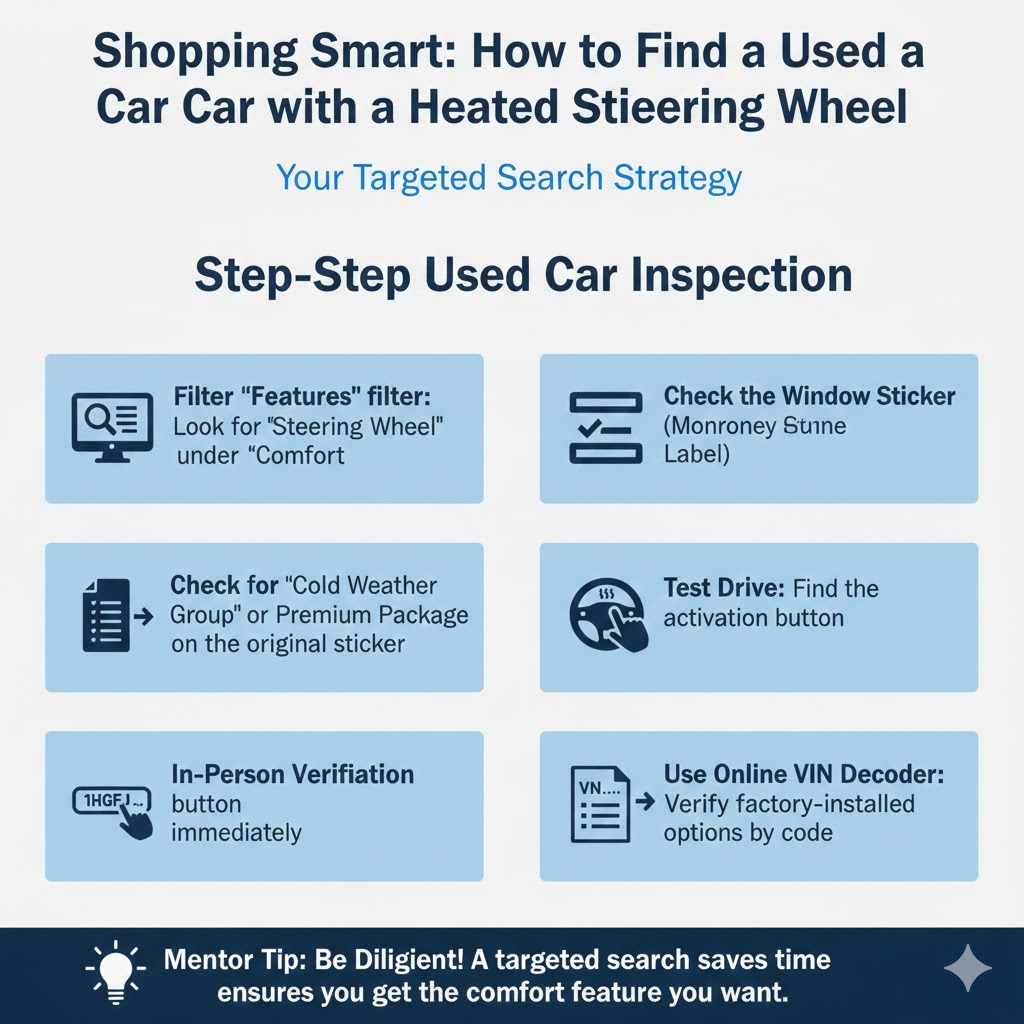
- Filter Online Listings: When searching sites like Autotrader or local dealer sites, use the “Features” filter. Look specifically under “Comfort” or “Interior Features” for “Heated Steering Wheel.”
- Check the Window Sticker (Monroney Label): If available, look at the original sticker for the car. This lists every factory option included. Look for terms like “Cold Weather Group,” “Premium Package,” or the specific option code for the heated wheel.
- In-Person Verification: When you test drive the car, immediately look for the button (Method 1 above). If you can’t find it within 60 seconds, call the salesperson over—it’s better to ask them upfront than waste time.
- Check the VIN Decoder: For an added layer of certainty, you can use a VIN decoder tool online (often found on sites that offer vehicle history reports). Input the Vehicle Identification Number, and the resulting report often lists factory-installed options by code.
FAQ: Beginner Questions About Heated Steering Wheels
Q1: Does a heated steering wheel use a lot of battery power?
A: Not really. While they do draw electricity, the power consumption is relatively low compared to major systems like the air conditioning or heated seats. If your car is running normally, it won’t noticeably drain the battery.
Q2: Can I add a heated steering wheel to my car if it doesn’t have one?
A: This is generally not recommended for beginners. Since the heating elements are built deep into the steering wheel structure and are tied into the vehicle’s wiring harness and safety systems (like airbags), aftermarket installation is complex, expensive, and potentially unsafe. It’s usually best to buy a car that already has the feature.
Q3: How long does it take for a heated steering wheel to warm up?
A: Most modern systems start providing noticeable warmth within 30 to 60 seconds after pressing the button, assuming the car’s electrical system is running properly.
Q4: Is it safe to leave the heated steering wheel on all the time?
A: While the system has automatic shut-offs, leaving it on constantly increases wear on the heating elements. It is best practice to turn it off once your hands are comfortably warm.
Q5: Do all cars with heated seats also have heated steering wheels?
A: No, they are often separate options, although they are frequently bundled together in “Winter Packages.” Some vehicles might offer one without the other, especially on entry-level trims.
Q6: My button lights up, but I don’t feel any heat. What should I check first?
A: First, give it a full minute to warm up. If still cold, check your owner’s manual to ensure you aren’t confusing it with a different button. If the car is running and the button is lit, but there is no heat, it likely needs a professional check of the resistive wiring inside the wheel.
Conclusion: Warming Up Your Commute with Confidence
Figuring out what cars have heated steering wheels doesn’t have to be a guessing game. As we’ve seen, this fantastic feature has moved from luxury garages into the mainstream, often appearing on popular SUVs and family sedans built within the last five to seven years.
Now you know the key indicators: look for that steering wheel icon on the dash or infotainment screen, understand that mid-to-high trim levels are your best bet, and always check the original factory options list when buying used. By using these straightforward methods, you can confidently shop for or verify the comfort features in your current ride.
Driving doesn’t have to be a chilling experience. Armed with this knowledge, you can ensure your next set of keys unlocks a warmer, more comfortable commute, making those cold starts much easier to handle!