What Does a Car Salesman Make Per Car: Proven Earnings
A car salesman’s earnings per car vary significantly, typically ranging from $200 to $2,000 or more, depending on commission structures, vehicle type, and dealership policies. This often includes a base salary plus commission, bonuses, and incentives tied to sales volume and profitability.
Ever wondered what happens under the hood of a car salesman’s paycheck? It’s a question many of us have asked while negotiating a new car deal. You see the polished showroom, the friendly faces, and you might think it’s all about the thrill of selling. But beneath the surface, there’s a complex system of earnings. This article will break down exactly what a car salesman makes per car, demystifying those commissions and bonuses so you can understand their incentives and make more informed decisions during your car buying journey.
Understanding How Car Salesmen Get Paid
The world of car sales compensation isn’t a one-size-fits-all model. Most dealerships operate on a commission-based pay structure, meaning a salesperson’s income is directly tied to the number of cars they sell and the profit made on each sale. However, there are several layers to this, and it’s more than just a simple percentage of the sticker price.
Think of it like this: a base salary often covers the basics, providing a safety net. Then, the real earning potential kicks in with commissions. These commissions can be structured in various ways, influencing how much a salesperson makes on a single vehicle. They might earn more on a higher-priced vehicle or on a car that has more profit margin for the dealership. It’s a dynamic system that rewards performance and drives sales.
Base Salary vs. Commission: The Pay Mix
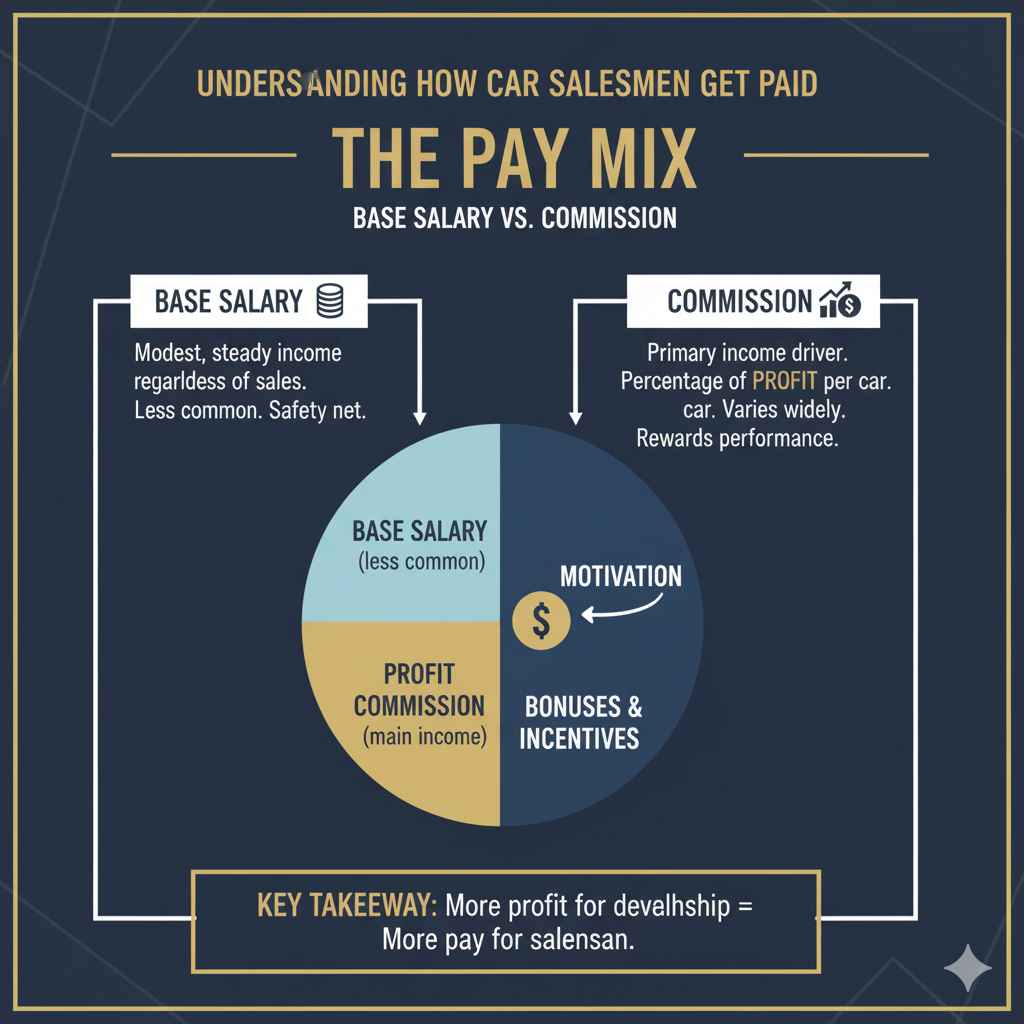
Before diving into per-car earnings, it’s crucial to understand the two main components of a car salesman’s pay:
- Base Salary: Some dealerships offer a modest base salary. This provides a steady, albeit smaller, income regardless of sales performance. It’s not as common as pure commission, but it exists, especially in larger dealerships or national chains. This base salary might be hourly or a weekly/monthly flat rate.
- Commission: This is the primary driver of income for most car salespeople. It’s usually a portion of the profit generated from the sale of a vehicle. The percentage or flat fee can vary widely.
The mix between base salary and commission significantly impacts how much a salesman makes per car. A pure commission salesperson relying solely on sales will be highly motivated to earn the highest possible profit on every vehicle. Those with a base salary might have a slightly less intense immediate pressure per sale but still need to hit targets to maximize their earnings.
Deconstructing the Commission Structure
The actual dollar amount a car salesman earns per vehicle hinges on several factors within the commission structure. It’s rarely a direct percentage of the car’s retail price. Instead, it’s usually based on the dealership’s profit, often referred to as the “back end.”
Here’s how it typically works:
- Gross Profit: This is the difference between what the dealership paid for the car (or its cost) and what they sold it for. Salespeople often earn a percentage of this gross profit. For example, if a car has a gross profit of $3,000, a salesperson might earn 25% ($750).
- Net Profit: Some dealerships calculate commission based on net profit, which accounts for all costs associated with selling the car, including advertising, reconditioning, and salesperson bonuses. This can make the commission lower.
- Flat Rate per Unit Sold: Some dealerships, especially for certain models or during specific promotions, might pay a flat fee for each car sold. This is often simpler but doesn’t directly reward higher profit margins.
- Volume Bonuses: Salespeople often receive additional bonuses for hitting certain sales targets within a month or quarter. Selling more cars can unlock higher commission rates on all sales or a lump-sum bonus.
Factors Influencing Commission Per Car
Several variables can sway the commission earned on a specific car:
- Vehicle Type: Luxury cars, trucks, or SUVs often have higher profit margins than smaller, entry-level sedans. This can translate to higher commissions for the salesperson.
- New vs. Used: Used cars can offer more flexibility for profit generation and, consequently, higher commissions. New cars often have more controlled pricing and manufacturer incentives that can impact the profit pool.
- Financing and Insurance (F&I): Salespeople often earn a cut if they successfully sell additional products like extended warranties, GAP insurance, or paint protection packages through the finance department. This is a significant profit center for dealerships and can boost a salesperson’s earnings considerably per deal.
- Negotiated Price: If a car is sold below a certain profit threshold, the commission might be reduced or even zero. Conversely, selling a car at a higher-than-expected price can significantly increase the commission.
| Commission Component | How it Works | Salesperson Earnings Per Car (Example) |
|---|---|---|
| Gross Profit Percentage | A percentage of the profit from the sale. | If a car has $3,000 gross profit and the commission rate is 25%, the salesperson earns $750. |
| Flat Rate per Unit | A fixed dollar amount for each car sold. | The dealership might pay $300 for every car sold, regardless of profit. |
| F&I Product Commission | A portion from selling extras like warranties or insurance. | Could earn $100-$500+ per F&I product sold with the car. |
| Manufacturer Bonuses | Incentives from the car maker for meeting specific sales goals. | Variable, often paid monthly or quarterly, not always directly per car. |
The Range: What a Car Salesman Actually Makes Per Car
While exact figures are proprietary to dealerships, industry experts and sales professionals offer insights into the typical earnings per vehicle. It’s important to remember that this is the salesperson’s cut, not the dealership’s total profit.
A common range a car salesman might make per car is between $200 and $2,000. This wide range is due to the many variables we’ve discussed.
- Lower End ($200 – $500): This might apply to smaller, less expensive vehicles where profit margins are tight, or if the car was sold at a very aggressive price. It could also be the commission before factoring in F&I products.
- Mid-Range ($500 – $1,000): This is a more typical earning for a standard vehicle sale where a reasonable profit was achieved, and perhaps one or two F&I products were sold.
- Higher End ($1,000 – $2,000+): This usually involves the sale of higher-priced vehicles (like luxury SUVs or trucks), strong profit margins, successful sales of multiple F&I products, and potentially hitting sales volume targets that trigger bonuses.
Impact of Dealership Size and Location
The dealership’s size and location play a role. Larger, high-volume dealerships might have more structured commission plans, often with tighter margins but higher overall sales volume. This means a salesperson might earn less per unit but sell many more cars. Small, independent dealerships might offer more flexibility and potentially higher per-car commissions, but with fewer opportunities overall.
Dealerships in affluent areas might handle higher-priced inventory with larger profit margins, potentially leading to higher per-car commissions. However, they also face higher overhead costs and more competitive markets.
Beyond the Car: The Importance of F&I
The Finance and Insurance (F&I) office is a goldmine for car salespeople and dealerships. While the focus is often on the vehicle sale itself, the true profit and a significant portion of a salesperson’s income often come from selling extras. These are the additions that extend vehicle life, provide peace of mind, or simplify ownership.
Here are some common F&I products, and how they contribute to a salesperson’s earnings:
- Extended Warranties (Vehicle Service Contracts): These offer coverage beyond the manufacturer’s warranty. They can be highly profitable for the dealership.
- GAP Insurance: Covers the difference between what you owe on your loan and the car’s actual cash value if it’s totaled.
- Tire and Wheel Protection: Covers damage to tires and wheels, a common wear-and-tear item.
- Prepaid Maintenance Plans: Customers pay upfront for routine service appointments.
- Cosmetic Protection Packages: Includes things like paint sealant, fabric protection, or undercoating.
A savvy salesperson knows that a successful deal often involves not just selling the sheet metal but also securing profitable add-ons. The commission on these products can sometimes be as much or even more than the commission on the car itself.
How F&I Boosts Per-Car Earnings
When a salesperson sells a car, they often work with the F&I manager or are trained to present these options themselves. If they successfully sell an extended warranty for $1,500 and their commission on that product is 30%, that’s an additional $450 to their earnings for that deal. If they also sell tire protection and a maintenance plan, their total earnings for that single car can skyrocket.
This is why you’ll often see salespeople actively promoting these extras. It’s not just about upselling; it’s a fundamental part of their compensation strategy and a major driver of dealership revenue. For a deeper dive into automotive sales and its structures, resources from organizations like the National Automobile Dealers Association (NADA) can offer broader industry context, though specific commission details are typically dealership-specific.
Are There Kickers and Bonuses?
Absolutely! The car sales world is also fueled by incentives layered on top of base commissions. These “kickers” and bonuses are designed to motivate salespeople to perform at their best and achieve specific dealership or manufacturer goals.
Common Types of Bonuses
- Volume Bonuses: These are perhaps the most common. If a salesperson sells a certain number of cars in a month (e.g., 10 cars), they might get a bonus. Selling more than that threshold could unlock a higher bonus or a better commission rate on future sales within that period. For instance, selling 8 cars might earn them $200 per car, but selling 12 cars could boost that to $300 per car and a $500 bonus.
- Profitability Bonuses: Some dealerships offer bonuses based on the profit margin achieved per car rather than just the number of units. If a salesperson consistently sells cars with higher profit margins, they may receive an additional bonus.
- Manufacturer Incentives: Car manufacturers often have their own incentive programs for dealerships and their sales staff. Meeting specific sales targets for particular models can result in bonuses paid directly to the salesperson.
- “First Forward” or “Ups” Bonuses: These might be smaller bonuses for being the first salesperson to earn commission on a specific day or for selling a particular type of vehicle.
These bonuses can significantly increase a salesperson’s income per car, often adding hundreds or even thousands of dollars to their monthly earnings. They turn a decent commission into a great payday.
The Daily Grind: A Salesperson’s Perspective
It’s easy to see the potential earnings and think it’s all sitting in a plush office. However, the reality of being a car salesman involves a lot of hard work, resilience, and skill. The pay per car is only realized when a deal is closed, and many prospects don’t lead to a sale.
What a “Deal” Entails
- Prospecting and Lead Management: Salespeople spend time following up on leads from online inquiries, phone calls, and walk-ins.
- Customer Engagement: Greeting customers, building rapport, understanding their needs.
- Vehicle Selection and Presentation: Showing appropriate vehicles, explaining features.
- Test Drives: Taking customers on a spin to experience the car.
- Negotiation: This is where the commission is determined. Salespeople must negotiate pricing, trade-ins, and F&I products.
- Paperwork: Processing the sale, which involves extensive documentation.
- Customer Follow-up: Ensuring customer satisfaction post-sale, which can lead to future business or referrals.
Not every step leads to a sale. A salesperson might spend hours with a customer who ultimately decides not to buy, or who is working with another dealership. This means the effort spent on potential sales that fall through doesn’t yield direct income per car.
The Ups and Downs of Commission Income
Commission-based pay means income can fluctuate drastically. Some months can be fantastic, with many sales and high earnings. Other months can be slow, leading to much lower pay. This requires careful financial planning and budgeting from the salesperson.
The mental fortitude to handle rejection, stay motivated, and consistently put in the effort is as crucial as understanding commission structures. It’s a performance-driven career where your earnings are a direct reflection of your hustle and ability to connect with customers.
How This Affects Car Buyers
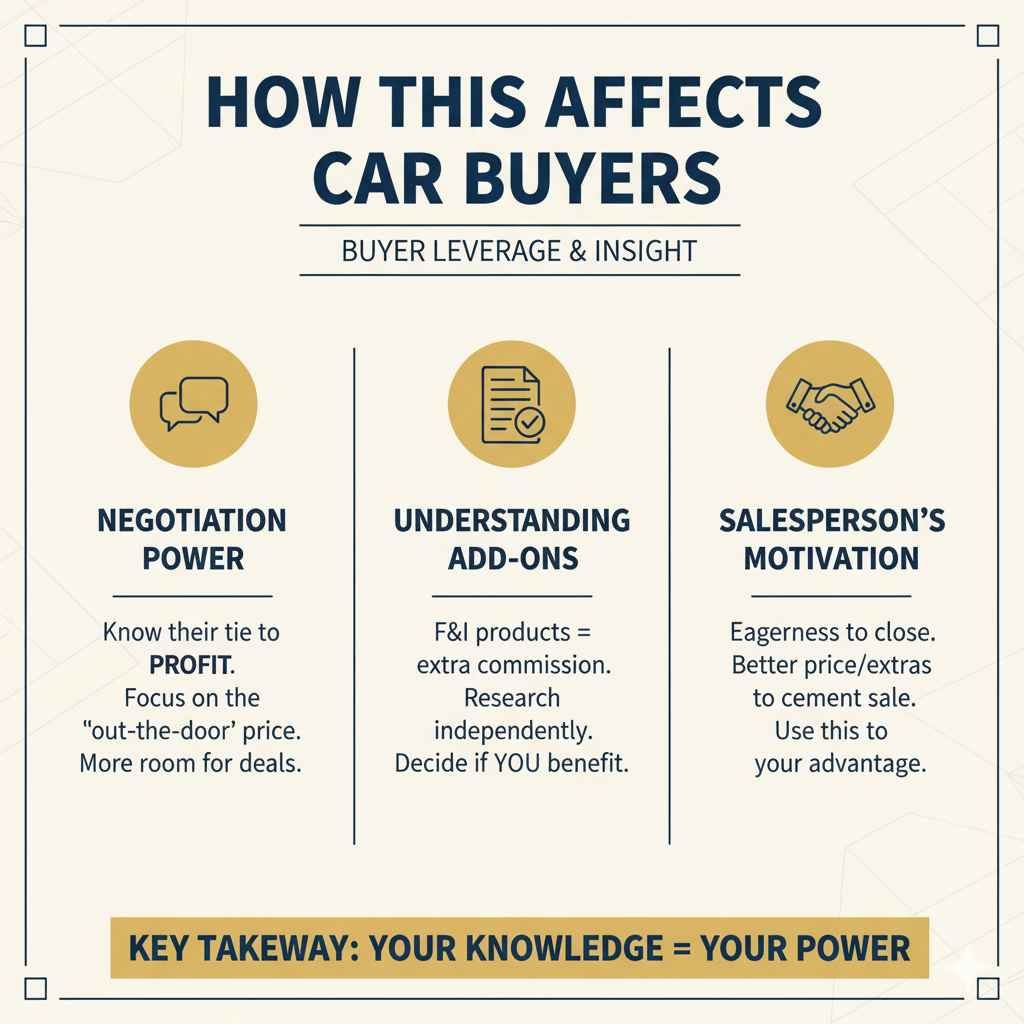
Understanding what a car salesman makes per car isn’t just about curiosity; it gives you leverage and insight as a buyer. When you know that their income is tied to profit and the sale of add-ons, you can better understand their sales tactics.
- Negotiation Power: Knowing that a higher-profit sale means a better payday for the salesperson can inform your negotiation strategy. You can focus on the “out-the-door” price and understand how much room they might have.
- Understanding Add-ons: When an F&I product is pushed hard, you now understand that the salesperson likely earns a commission on it. This might encourage you to research the product independently and decide if it truly benefits you beyond the salesperson’s incentive.
- Salesperson’s Motivation: A salesperson eager to close a deal might be more willing to offer a better price or throw in extras if they know it will cement the sale for them.
For instance, if a salesperson seems particularly insistent on selling you an extended warranty, it’s because their commission on that product could be substantial. This doesn’t mean the product is bad, but it means you should weigh their recommendation against your own research and needs. Resources like consumer finance information can help you understand loan products and warranties better.
FAQ: Your Car Salesman Earnings Questions Answered
Q1: What is the average salary of a car salesman?
A1: While many car salesmen are commission-based, those with a base salary might earn anywhere from $30,000 to $60,000 annually. However, total earnings, including commissions and bonuses, can push experienced and successful salespeople into the $70,000 to $150,000+ range per year.
Q2: Does a car salesman make money on trade-ins?
A2: Typically, the salesperson doesn’t directly earn a commission on the full trade-in value. Their commission is usually tied to the profit the dealership makes on its sales. If the dealership buys a trade-in for $15,000 and sells it for $18,000, the $3,000 profit is where the commission is generated, often shared with the salesperson who facilitated the sale.
Q3: What is the difference between gross and net profit for a car salesman’s commission?
A3: Gross profit is the difference between the car’s selling price and the dealership’s cost. Net profit is this gross profit minus all expenses associated with selling that vehicle (like reconditioning, advertising, and salesperson bonuses). Some dealerships pay commission on gross profit, while others use net profit, impacting how much the salesperson actually earns.
Q4: How much does a salesperson make if the car sells at MSRP?
A4: Selling at MSRP usually means very little to no profit for the dealership, especially for new cars. Therefore, the salesperson’s commission would be minimal or nonexistent in this scenario. Their earnings are much higher when the car is sold above the dealership’s cost, even if it’s below MSRP.
Q5: Is commission only on the car, or are there other ways a salesman makes money?
A5: Beyond the commission on the car itself, car salesmen often earn significant income from selling add-on products through the Finance & Insurance (F&I) department, such as extended warranties, GAP insurance, and protection packages.