What Does DTE Mean On A Car: Essential Guide
DTE on your car means “Distance To Empty.” This simple dashboard reading estimates how many miles or kilometers your vehicle can still travel before running out of fuel. It is crucial for planning trips and avoiding inconvenient roadside stops.
Ever glance at your dashboard and see those confusing letters, DTE, next to a number? It’s a common sight that can make any driver pause. You might worry if your car is telling you something is wrong. Rest assured, “What does DTE mean on a car” is one of the easiest things to understand! DTE stands for Distance To Empty, and it’s one of your car’s most helpful tools for planning your drive.
We know dealing with car jargon can be frustrating. You just want to know if you need to stop for gas soon. This guide is here to break down DTE in plain, simple terms. We will show you exactly what it means, how your car calculates it, and how to use this number safely. By the end of this, you’ll feel much more confident managing your fuel stops. Let’s demystify this important dashboard feature together!
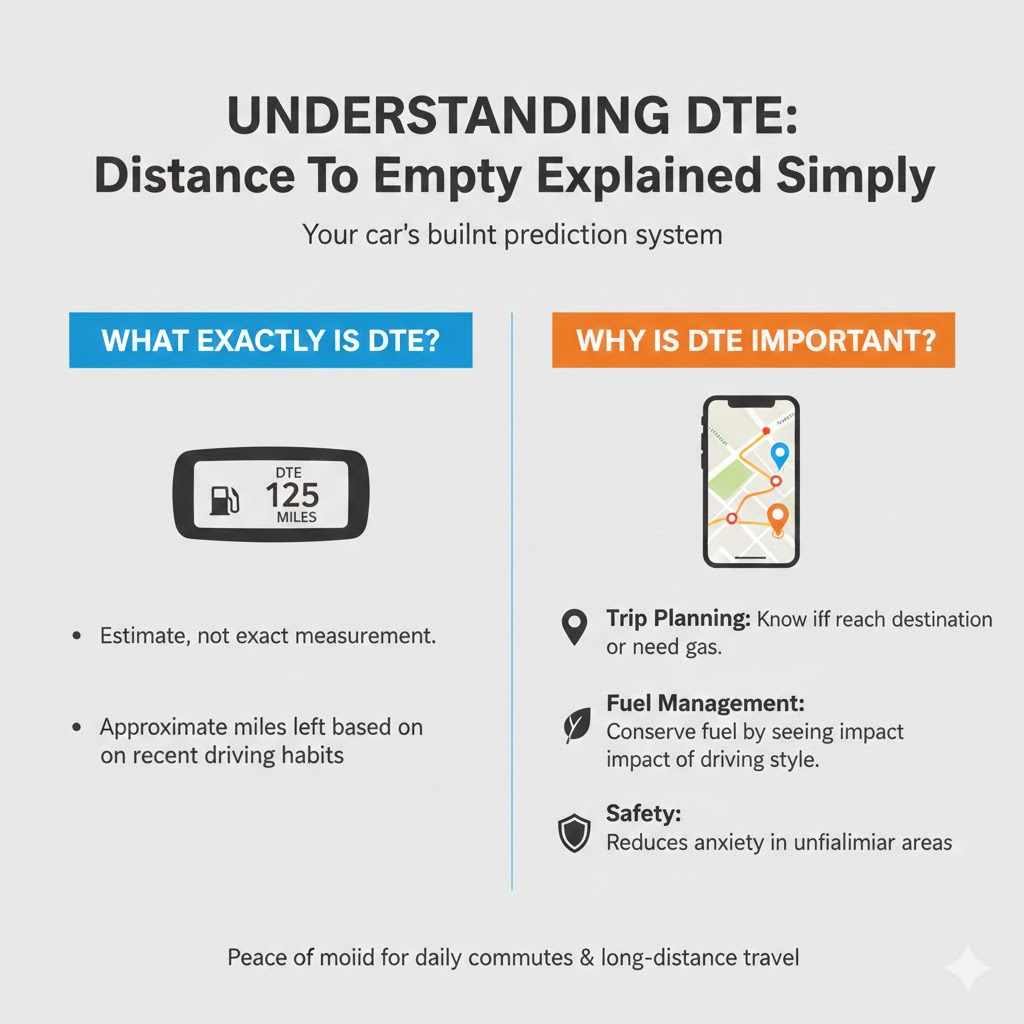
Understanding DTE: Distance To Empty Explained Simply
The acronym DTE is featured prominently on the digital display or trip computer of most modern vehicles. It’s designed to give you a quick snapshot of your remaining driving range. Think of it as your car’s built-in prediction system for refueling.
What Exactly is DTE?
DTE is an estimate, not an exact measurement. It tells you the approximate number of miles (or kilometers, depending on your car’s settings) you can travel before the fuel tank is completely empty, based on your recent driving habits.
Why Is DTE Important for Drivers?
For daily commuters and long-distance travelers alike, DTE provides peace of mind and helps prevent running out of gas in inconvenient locations. It removes the guesswork involved with older fuel gauges that only show a simple needle position.
- Trip Planning: Allows you to know if you can make it to your destination or if you need to route past a gas station.
- Fuel Management: Helps you conserve fuel when needed by showing the immediate impact of your driving style.
- Safety: Reduces the anxiety associated with low fuel, especially when driving in unfamiliar or remote areas.
How Does Your Car Calculate DTE?
Your car’s computer—the Engine Control Unit (ECU)—doesn’t just look at how much fuel is physically in the tank. It uses a dynamic calculation that includes several key factors. This is why the DTE number often changes while you drive.
The Core Components of the DTE Calculation
The process relies on two main inputs: the amount of fuel available and your recent fuel consumption rate. Here is a breakdown of the variables involved:
- Fuel Level Sensor Data: The car reads the data coming from the fuel level sending unit in the tank. This tells the computer the precise current volume of gasoline or diesel remaining.
- Average Fuel Economy (MPG/L/100km): This is the most dynamic part. The computer looks at the fuel efficiency you have achieved over the last 50 to 100 miles of driving.
- Driving Conditions: If you were just driving aggressively with hard acceleration and high speeds, the car assumes you will continue driving that way, lowering the DTE number. If you are cruising gently on the highway, the DTE number may increase slightly, even if the fuel level hasn’t changed much.
Because the calculation is based on recent driving, a sudden change in driving style will cause the DTE to update. For example, if your DTE shows 100 miles, but you immediately start driving slowly and smoothly, your actual range might increase slightly. Conversely, hitting heavy stop-and-go traffic will quickly drop that number.
Understanding the “Low Fuel” Trigger
Most vehicles start displaying DTE once the fuel level drops below half a tank, though this varies by manufacturer. When the DTE hits a critical threshold—often around 30 to 50 miles remaining—your low fuel warning light usually illuminates as a secondary indicator.
DTE vs. MPG: What’s the Difference?
While DTE and MPG (Miles Per Gallon) are closely related, they measure two different things. Understanding this difference helps you manage your driving better.
MPG (Miles Per Gallon)
MPG is a measure of efficiency. It tells you how far you traveled for every gallon of fuel burned over a specific period. A higher MPG is better.
DTE (Distance To Empty)
DTE is a measure of range. It tells you how far you can still go using the remaining fuel, based on your current efficiency.
Think of it this way: If you are getting 30 MPG, and you have half a tank left, DTE tells you the resulting mileage. If you switch to a mode that prioritizes fuel economy, your MPG might jump to 35, which should cause your DTE reading to go up.
Quick Comparison Table
Here is a simple way to keep these two concepts separate:
| Metric | What It Measures | Unit | Goal |
|---|---|---|---|
| MPG (Miles Per Gallon) | Fuel Efficiency | Miles per gallon (or L/100km) | Maximize the number |
| DTE (Distance To Empty) | Remaining Driving Range | Miles or Kilometers | Use this number for planning trips |
Using DTE Safely: When Should You Refuel?
This is perhaps the most crucial section for new drivers. While DTE is helpful, it is an estimate. You should never push your car to exactly 0 miles remaining.
The Golden Rule: Never Trust the Final Mile
Automotive experts strongly advise refueling well before the DTE hits zero. Why? Because fuel gauge technology, including the DTE calculation, is rarely 100% accurate at the very end.
Why DTE is Unreliable at Zero
When the DTE reads “0,” it often means the fuel level has dropped below the minimum threshold the car’s computer is programmed to read reliably. There might still be a gallon or two left, but you shouldn’t count on it. Furthermore, the fuel pump needs liquid fuel to stay cool and work properly.
To maintain the health of your fuel pump and avoid getting stranded, follow these practical guidelines:
- Refuel when DTE hits 50 miles: This gives you a comfortable buffer for unexpected traffic or detours.
- Refuel when the low fuel light comes on: This light is usually designed to illuminate when you have about 2 to 3 gallons left, which translates to a DTE range of around 40 to 60 miles, depending on your vehicle.
- Understand the Margin of Error: Running your tank completely dry can introduce air into the fuel system, potentially causing the car to stall and require a restart, which is inconvenient and can strain components.
Factors That Can Skew Your DTE Reading
Because DTE relies on recent driving, certain situations can cause the reading to seem unusually high or worryingly low compared to your actual fuel level.
Situations That Lower DTE Quickly:
- Heavy Acceleration and Braking: City driving with lots of stoplights forces your car to burn fuel inefficiently.
- Towing or Carrying Heavy Loads: More weight requires more power, drastically reducing MPG and thus DTE.
- Cold Weather Operation: Engines use more fuel when warming up, especially in freezing temperatures.
- Using High Power Accessories: Running the A/C or heat intensely, especially the heater on very cold days, draws more engine load.
Situations That Can Artificially Raise DTE:
This is less common but happens when driving very efficiently for an extended period.
- Long Highway Cruises: Maintaining a steady, moderate speed (e.g., 60 mph) on flat ground maximizes MPG, causing the DTE to climb slightly, even if you’ve driven a short distance since the last fill-up.
- Driving Downhill: Coasting or gentle coasting downhill significantly reduces fuel usage momentarily.
Remember, these shifts are temporary predictions. The DTE is always trying to “catch up” to your actual fuel usage.
Troubleshooting Common DTE Display Issues
Most of the time, your DTE display works perfectly. However, sometimes the reading seems stuck, jumps wildly, or disappears entirely. Here are simple steps to troubleshoot these minor glitches.
When DTE Disappears or Reads “—“
If your trip computer shows dashes (“—”) instead of a number, it usually means one of two things:
- The Fuel Tank is Too Full: Some vehicles do not calculate DTE immediately after a full refill because the computer needs a brief period to confirm the fuel level stabilizes. Wait for 5–10 miles of driving.
- The Fuel Tank is Too Empty: If the DTE reads zero and stays there, the system might default to displaying dashes until a substantial amount of fuel is added.
When DTE Seems Stuck
If you drive 50 miles, but your DTE hasn’t changed much, the calculation system might need a reset or needs more varied driving data to recalibrate.
Simple Fixes for Glitches
You can often resolve minor electronic hiccups with a quick restart:
- Turn the Car Off and On: Park your car safely, turn the engine off, wait about 5 minutes, and restart. This allows the ECU to perform a quick self-check.
- Drive a Mixed Route: Take the car on a route that includes a mix of city driving and steady highway cruising. This provides the computer with the necessary varied data points to generate a more accurate DTE estimate.
- Check Fuel Level Sensor: If the issue persists, especially if the physical fuel gauge needle is also acting erratically, the sending unit inside the tank might be failing. This requires professional inspection. For general maintenance advice on sensors and fuel systems, resources like the National Highway Traffic Safety Administration (NHTSA) provide valuable safety guidance on vehicle systems.
Comparing Digital and Analog Fuel Gauges
It’s important to know that the digital DTE reading and the physical, analog fuel gauge needle do not always perfectly mirror each other. The needle shows the immediate volume, while DTE is a projection.
| Indicator | What it Shows | Accuracy Level |
|---|---|---|
| Fuel Gauge Needle | Current physical fuel level | Generally reliable, but can fluctuate with vehicle angle |
| DTE Reading | Estimated remaining distance | Variable; depends heavily on recent driving habits |
Tips for Maximizing Your Range (and Improving DTE)
If you want your DTE number to stay high and help you drive further between fill-ups, improving your fuel economy (MPG) is the key. Better efficiency directly translates to a higher Distance To Empty.
Driving Habits for Better Fuel Economy
The way you handle the accelerator and brake pedals has the biggest impact on how fast your DTE drops.
Be Gentle on the Pedals
Aggressive driving burns fuel quickly. Smooth, gradual inputs are your best friend for increasing DTE.
- Accelerate Slowly: Press the gas pedal gently when pulling away from a stop or light.
- Anticipate Stops: Look far ahead. If you see a red light coming up, take your foot off the gas early and coast toward it instead of speeding up and slamming on the brakes.
- Maintain Steady Speed: Use cruise control on the highway whenever possible. Fluctuations in speed waste energy.
Vehicle Maintenance Matters
A well-maintained car runs more efficiently, which the DTE calculation rewards with a higher range.
- Check Tire Pressure Regularly: Under-inflated tires increase rolling resistance, making your engine work harder. Check your owner’s manual for the correct PSI—usually listed on a sticker inside the driver’s side door jamb. Proper inflation is a key factor in vehicle efficiency, as documented by groups like the U.S. Department of Energy’s Alternative Fuels Data Center.
- Keep Up with Oil Changes: Fresh, correct-viscosity engine oil reduces internal friction, helping the engine operate more smoothly.
- Replace Dirty Air Filters: A clogged air filter starves the engine of the oxygen it needs for efficient combustion.
- Remove Excess Weight: Don’t use your trunk as permanent storage. Extra weight forces the engine to burn more fuel to move the vehicle.
DTE in Different Vehicle Types
While the concept of Distance To Empty remains the same, how it is displayed and calculated can differ slightly between gasoline cars, diesel vehicles, and hybrids.
Gasoline and Diesel Cars
For conventional vehicles, DTE is purely a function of fuel volume and combustion rate. Diesel engines generally have lower instantaneous fuel consumption rates than similarly sized gasoline engines, meaning a diesel car might show a slightly higher DTE number for the same amount of fuel, especially during highway cruising.
Hybrid Vehicles (HEVs and PHEVs)
Hybrid systems add complexity because the car switches seamlessly between the electric motor and the gasoline engine.
- How Hybrids Calculate DTE: The system factors in the battery charge level. If the car is running solely on the electric battery, fuel consumption is zero, and the DTE might temporarily increase rapidly (or display “Electric Range” if it’s a Plug-in Hybrid, or PHEV).
- Electric Range Caveat: In PHEVs, the DTE for the gasoline engine only becomes meaningful once the battery charge drops below a certain point, switching the car into traditional hybrid or gas-only mode.
What About Electric Vehicles (EVs)?
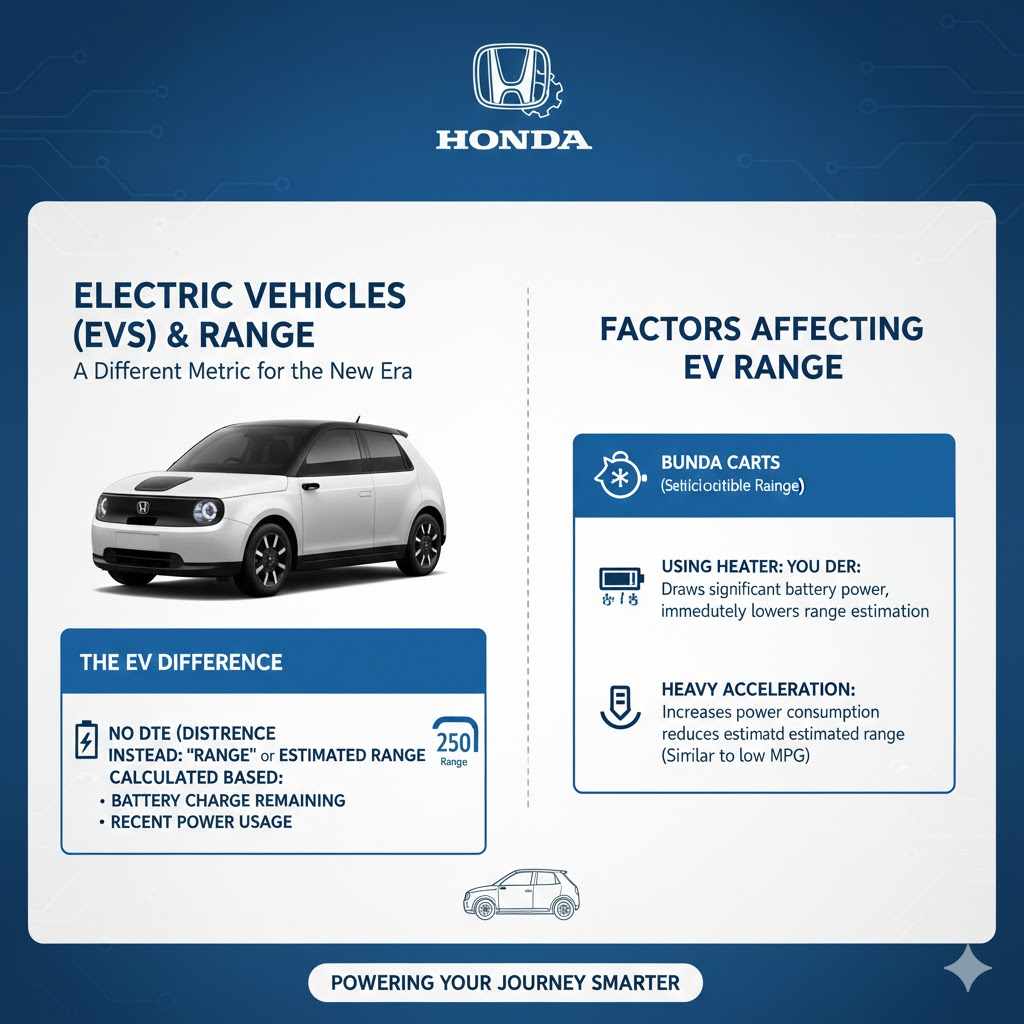
Electric vehicles do not use DTE. Instead, they display an equivalent metric often called “Range” or “Estimated Range.”
This EV range is calculated based on the remaining battery charge and the recent power usage (similar to how DTE uses MPG). Factors like using the heater (which draws significant battery power) will immediately lower the estimated EV range, just as heavy acceleration lowers a gasoline car’s DTE.
Frequently Asked Questions (FAQ) About DTE
Q1: Can I reset the DTE reading?
A: You cannot usually reset the DTE reading directly through a dedicated button. The DTE automatically resets and recalculates when you drive a significant distance (usually after a few drive cycles) or, most effectively, immediately after refueling a substantial amount of gas.
Q2: Why does my DTE jump up and down so much?
A: The DTE is very sensitive to your immediate driving style. If you drive aggressively for ten minutes, the DTE will drop. If you then drive very smoothly for the next ten minutes, the DTE will rise again to reflect the improved efficiency. It is constantly adjusting.
Q3: Should I rely on the DTE number when I’m in heavy snow or ice?
A: No. DTE is calculated based on smooth, optimal driving. Driving in slippery conditions requires much more power and causes low speeds and frequent wheel slippage, which drastically reduces efficiency. Always refuel earlier than the DTE suggests when driving in poor weather.
Q4: What is the difference between the DTE display and the low fuel light?
A: The DTE gives you a numerical estimate (e.g., 45 miles remaining). The low fuel light is a universal safety warning, usually signaling you have about 2 gallons left, regardless of your exact MPG. Use the light as the ultimate backup reminder.
Q5: Is it bad for my car to frequently drive until the DTE hits 10 miles?
A: Yes, it can be detrimental long-term. The fuel pump, which sits submerged in the fuel tank, uses the gasoline to keep itself cool. Running the tank extremely low exposes the pump to air, causing it to run hotter and potentially wear out faster. It’s best practice to refill when DTE is above 40–50 miles.
Q6: What if my DTE says 999?
A: “999” miles is usually the maximum reading the onboard computer is programmed to display. This typically happens right after filling up a very large tank, or if the car has recently been driven extremely efficiently for a long time. It simply means, “You have plenty of fuel, and we can’t calculate the exact range beyond this point right now.”
Conclusion: Confidence in Your Dashboard Reading
Learning “what does DTE mean on a car” moves you from being a passenger in your vehicle’s maintenance to being a confident driver. DTE is a fantastic convenience feature—a proactive tool that helps you manage your trips without stress. Remember, it’s a smart estimate based on how you are driving right now, not a binding promise.
By understanding that DTE is tied directly to your real-time fuel economy, you gain the power to influence that number. Keep your tires inflated, drive smoothly, and treat that DTE number as a helpful guide, not a strict deadline. With this knowledge, you can confidently navigate your daily drives, plan road trips efficiently, and keep your car running reliably, knowing exactly when it’s time to head toward the nearest gas station.