What Happened to Scar: A Proven Analysis
It’s a common question car owners ask: “What happened to Scar?” This analysis breaks down the most frequent causes of engine “scarring” (scuffing or scoring) in a way anyone can understand, empowering you to identify, prevent, and fix it.
Ever heard a strange noise from your engine, or noticed a dip in performance, and wondered, “What happened to Scar?” You might have heard mechanics use this term, or seen it in a forum, and felt a little lost. Don’t worry, it’s not as scary as it sounds! “Scarring” in an engine usually refers to scuffing or scoring on the cylinder walls. These are the sleek, smooth surfaces inside your engine where the pistons move up and down. When these walls get scratched or damaged, it’s a big deal for your engine’s health. It can lead to oil leaks, poor compression, and even serious damage if not addressed. But guess what? Understanding what causes it is the first big step to keeping your engine running smoothly. We’re going to break down exactly what this “scarring” is, why it happens, and what you can do about it, all in plain English.
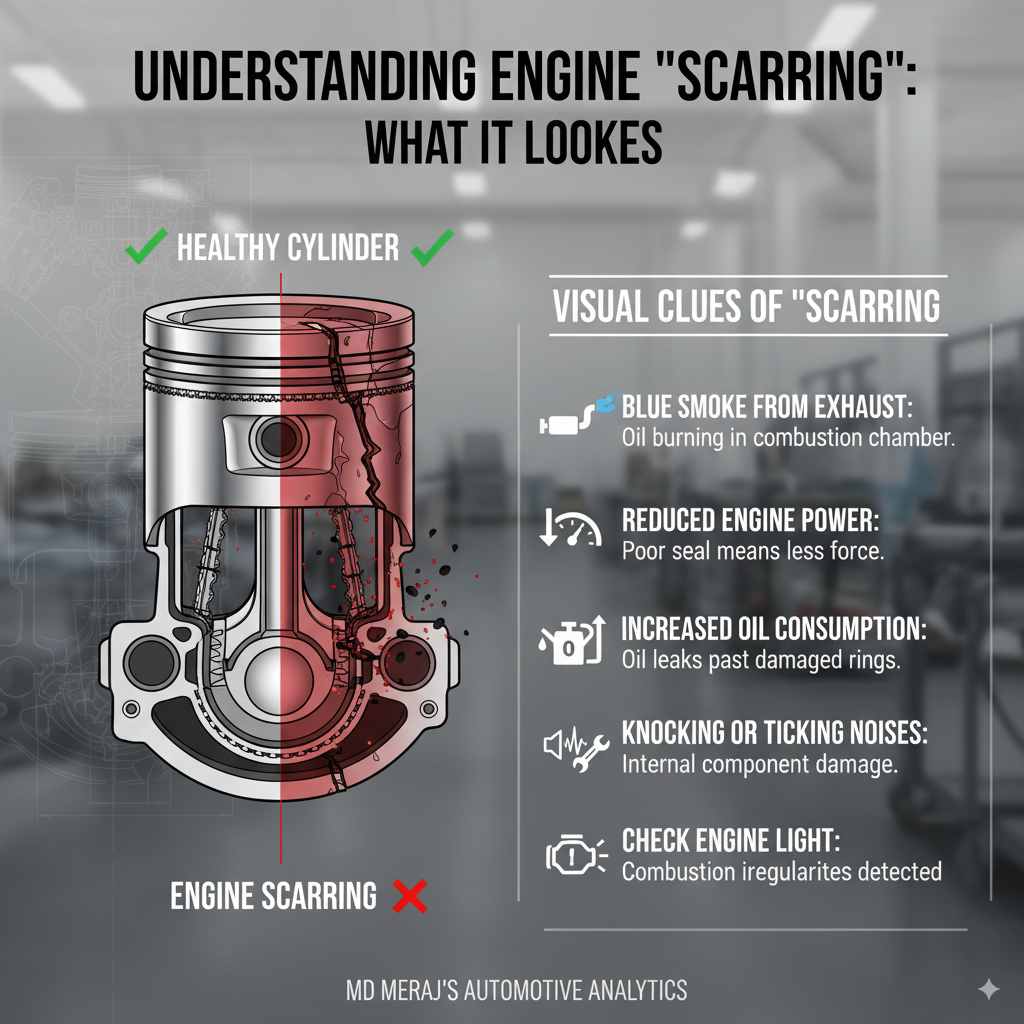
Understanding Engine “Scarring”: What It Looks Like
When we talk about “what happened to Scar?” in an engine, we’re really talking about internal damage to the cylinder walls. Imagine the cylinders as the lungs of your engine. Inside them, pistons go up and down thousands of times every minute. This constant, high-speed movement requires a super smooth surface on the cylinder walls. Think of it like a perfectly polished mirror.
When these smooth surfaces get damaged, they develop “scars.” These aren’t just superficial marks; they are physical abrasions, scratches, or scoring. These imperfections disrupt the piston rings, which are designed to create a tight seal between the piston and the cylinder wall. This seal is crucial for keeping combustion gases in, oil out, and ensuring proper engine compression. When the seal is broken by “scarring,” all sorts of problems can arise.
Visual Clues of “Scarring”
Identifying “scarring” isn’t always something you can do just by looking under the hood. Often, it’s diagnosed by symptoms or after the engine is opened up. However, if you’re experiencing any of the following, it’s worth investigating:
- Blue Smoke from the Exhaust: This is a classic sign that oil is getting past the piston rings and burning in the combustion chamber, often due to damaged cylinder walls.
- Reduced Engine Power: A poor seal means less force generated during the combustion cycle, leading to a noticeable loss of power.
- Increased Oil Consumption: The “scars” allow oil to sneak into the combustion chamber, meaning you’ll be topping up your oil much more often.
- Knocking or Ticking Noises: While not exclusively caused by scarring, unusual engine noises can sometimes be a symptom of internal damage.
- Check Engine Light: Modern cars have sensors that can detect combustion irregularities, sometimes triggering a check engine light.
The Common Culprits: Why “Scarring” Happens
So, “what happened to Scar?” is often a question of what went wrong in the engine’s life. Several factors can lead to this damaging wear and tear. Understanding these causes is key to preventing them in your own vehicle and addressing them if they’ve already occurred.
1. Lack of Proper Lubrication
This is perhaps the most frequent reason for cylinder wall scarring. Your engine oil is its lifeblood. It creates a thin, protective film between moving parts, like the piston rings and cylinder walls. When this film is compromised, metal grinds against metal.
Situations leading to lubrication failure:
- Low Oil Level: If your engine is running with too little oil, pumpstarvation can occur, meaning the oil pump can’t effectively circulate lubricant to all parts of the engine.
- Infrequent Oil Changes: Old, degraded oil loses its lubricating properties. It can become sludgy, thick, and unable to form an adequate protective barrier. For an in-depth look at why oil changes are so critical, check out this informative guide from the U.S. Department of Transportation, NHTSA’s information on oil filters, which are integral to keeping oil clean.
- Using the Wrong Type of Oil: Different engines require specific oil viscosities and formulations. Using an oil that’s too thin or too thick, or one that doesn’t meet the manufacturer’s specifications, can lead to inadequate lubrication. Always consult your owner’s manual.
- Oil Starvation During Startup: Especially in cold weather or with the wrong oil, it can take a few moments for oil to reach all critical components after starting. If the engine is revved too hard before adequate lubrication occurs, damage can begin.
2. Overheating
An engine running too hot is a very unhappy engine. Extreme temperatures can break down your engine oil, reducing its ability to lubricate. Overheating can also cause metal components, including cylinder walls and pistons, to expand unevenly, leading to friction and scoring.
Common causes of engine overheating:
- Low Coolant Level: The cooling system depends on coolant to absorb and dissipate heat. A leak or simply low coolant levels mean it can’t do its job effectively.
- Faulty Thermostat: The thermostat regulates engine temperature by controlling coolant flow. If it gets stuck closed, coolant can’t circulate, causing rapid overheating.
- Bad Water Pump: The water pump circulates coolant throughout the engine. If it fails, the coolant stops flowing.
- Clogged Radiator: The radiator dissipates heat from the coolant to the outside air. Obstructions, whether internal sludge or external debris, can prevent efficient cooling.
3. Contaminated Fuel or Air Intake
Anything that enters the combustion chamber that shouldn’t be there can act like sandpaper. Dirt, debris, or even low-quality fuel can cause abrasive wear on the delicate cylinder walls.
How contamination happens:
- Dirty Air Filter: Your air filter is the first line of defense against dirt entering the engine. A clogged or damaged filter can allow particles to pass through. Regular replacement is essential.
- Leaking Intake System: If there are cracks or loose connections in the intake manifold or vacuum hoses, dirt and debris can be sucked directly into the engine.
- Poor Fuel Quality: In some cases, poor-quality fuel can contain contaminants that lead to increased wear.
- Internal Debris: If a previous component in the engine failed and left debris (like metal shavings) circulating, it can wreak havoc.
4. Detonation and Pre-Ignition (Engine Knock)
These are sounds of extreme distress from your engine. Detonation (or “knocking”) and pre-ignition occur when the fuel-air mixture in the cylinder ignites at the wrong time or in an uncontrolled manner. This can create shockwaves and excessive pressure that can damage cylinder walls, piston rings, and other internal engine components.
Contributing factors include:
- Incorrect Octane Fuel: Using fuel with an octane rating lower than what your manufacturer recommends can lead to knock.
- Carbon Buildup: Deposits on the piston tops or cylinder heads can become “hot spots” that ignite the fuel prematurely.
- Incorrect Ignition Timing: If the spark plug fires at the wrong moment, it can cause abnormal combustion.
- Overheating: As mentioned earlier, overheating can contribute to conditions that lead to knock.
For a deeper understanding of combustion issues and their impact, resources from automotive engineering societies can be valuable. For instance, the Society of Automotive Engineers (SAE) provides extensive research on engine combustion principles.
5. Wear and Tear Over Time
Even with perfect maintenance, components wear out. Over hundreds of thousands of miles, the smooth cylinder walls will naturally experience some degree of wear. However, this is usually a slow, gradual process. Premature or excessive “scarring” often points to one of the other issues being present.
Diagnosing the “Scar” Problem
When you suspect an engine “scar” issue, a mechanic will perform several checks to confirm and pinpoint the cause. This isn’t a DIY job for most beginners, but understanding the process can save you from unnecessary repairs or help you talk to your mechanic more confidently.
Key Diagnostic Steps
Here’s what a mechanic might do:
- Listen to the Engine: The mechanic will listen for abnormal sounds like knocking, ticking, or rough running.
- Perform a Compression Test: This test measures the pressure built up in each cylinder. Low compression in one or more cylinders is a strong indicator of sealing issues, which can be caused by worn or damaged cylinder walls.
- Conduct a Leak-Down Test: This more advanced test pressurizes each cylinder with air while the piston is at a specific position. The mechanic can then listen for where the air is escaping. Leaks into the crankcase (past the piston rings) or into adjacent cylinders point to ring or cylinder wall problems.
- Visual Inspection (Borescope): In some cases, a flexible camera called a borescope can be inserted into the cylinder (through a spark plug hole or injector port) to visually inspect the cylinder walls for scoring or damage.
- Oil Analysis: Sending a sample of your engine oil for laboratory analysis can reveal the presence of metal shavings or other contaminants that indicate internal wear.
What Happens When “Scarring” is Found? Repair Options
“What happened to Scar?” is now answered. The next big question is, “What now?” The repair options depend entirely on the severity of the damage and the type of engine.
Option 1: Engine Rebuild or Replacement
For significant or widespread cylinder wall scoring, a complete engine rebuild is often the most reliable solution. This typically involves:
- Complete disassembly of the engine.
- Machining of the cylinder block to either hone the existing cylinders to a larger size and fit oversized pistons, or to fit new cylinder liners.
- Replacement of pistons, piston rings, bearings, seals, and gaskets.
- Inspection and potential repair or replacement of other engine components like the crankshaft, camshaft, and valves.
This is a costly and time-consuming process, but it restores the engine to like-new condition. In some cases, if the engine block is too damaged or it’s more cost-effective, replacing the entire engine with a new, remanufactured, or used engine might be recommended.
Option 2: Engine Deglazing/Honing (Minor Scuffing)
In very minor cases of scuffing (not deep scoring), sometimes a process called honing can be performed. This involves using a tool with abrasive stones to lightly re-texture the cylinder walls. This can help new piston rings seat properly. However, this is only effective for very light surface imperfections and is often done as part of a larger rebuild.
Option 3: Ignoring It (Not Recommended!)
Ignoring engine scarring is never a good idea. While an engine might seem to run okay initially, the problem will almost certainly worsen over time. This can lead to catastrophic engine failure, leaving you with a much larger and more expensive repair bill than addressing it early.
The potential consequences of ignoring engine scarring include:
- Complete loss of compression.
- Catastrophic engine seizure.
- Damage to pistons, connecting rods, and crankshaft.
- The need for an entirely new engine or vehicle.
Preventing “Scarring”: Your Best Defense
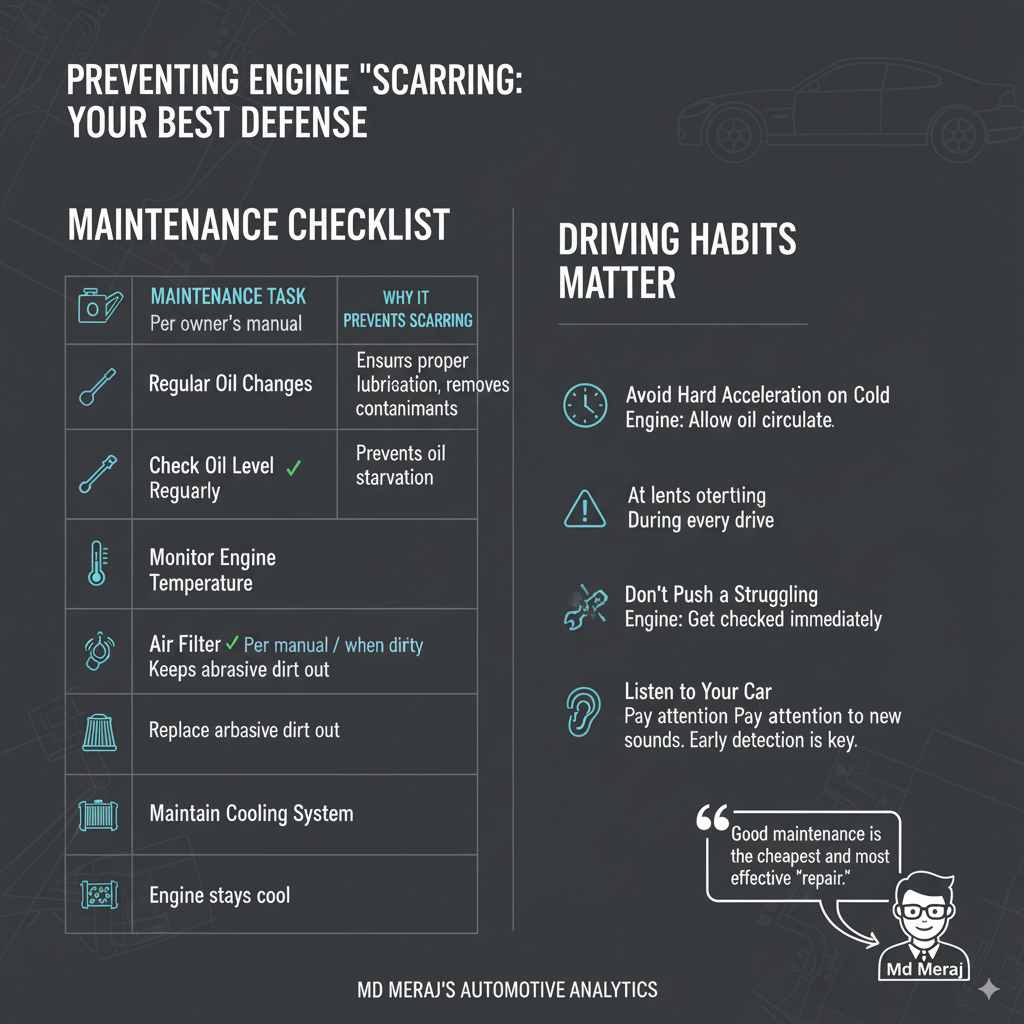
The most effective way to deal with “what happened to Scar?” is to prevent it from happening in the first place. As Md Meraj, I always tell my readers that good maintenance is the cheapest and most effective “repair.”
Your Routine Maintenance Checklist
Focus on these key areas:
| Maintenance Task | Frequency | Why It Prevents Scarring |
|---|---|---|
| Regular Oil Changes | Per owner’s manual (e.g., every 3,000-7,500 miles or 6-12 months) | Ensures proper lubrication, removes contaminants that can score cylinder walls. |
| Check Oil Level Regularly | At least monthly, or before long trips | Prevents oil starvation, which is a primary cause of engine scarring. |
| Monitor Engine Temperature | During every drive | Prevents overheating, which degrades oil and can cause component expansion leading to damage. |
| Replace Air Filter | Per owner’s manual (e.g., every 15,000-30,000 miles, or when dirty) | Keeps abrasive dirt and debris out of the intake system. |
| Use Correct Fuel Octane | Always follow manufacturer recommendations | Prevents detonation and pre-ignition (engine knock). |
| Maintain Cooling System | Per owner’s manual (coolant flushes, hose checks) | Ensures the engine stays within its optimal operating temperature. |
Driving Habits Matter
How you drive also plays a role:
- Avoid Hard Acceleration on a Cold Engine: Give your engine a minute or two to warm up after starting, especially in colder weather, to allow oil to circulate properly.
- Don’t Push a Struggling Engine: If you notice unusual noises, poor performance, or warning lights, get it checked out immediately rather than continuing to drive.
- Listen to Your Car: Pay attention to any new sounds or driving behaviors. Early detection is key.
Frequently Asked Questions (FAQs) About Engine “Scarring”
Let’s tackle some common questions about engine scarring to make things even clearer.
Q1: Is “engine scarring” the same as “cylinder scoring”?
A1: Yes, “engine scarring” is a general term that almost always refers to “cylinder scoring” or “cylinder scuffing.” It means the smooth inner walls of the engine’s cylinders have been scratched or damaged.
Q2: Can I fix cylinder scarring myself?
A2: For most car owners, fixing cylinder scarring is beyond a DIY project. It usually requires specialized tools, knowledge, and components. Repair typically involves disassembling the engine, which is best left to experienced mechanics.
Q3: How much does it cost to repair cylinder scarring?
A3: The cost can vary significantly. A minor honing might be a few hundred dollars, but a full engine rebuild or replacement can range from $2,000 to $7,000 or even more, depending on the vehicle and the extent of the damage.
Q4: Will my car’s warranty cover cylinder scarring?
A4: It depends on the cause and your warranty terms. If the scarring is due to a manufacturing defect and occurred within the warranty period, it may be covered. However, damage caused by poor maintenance (like low oil levels or infrequent changes) is rarely covered by warranty.
Q5: If my engine has scarring, can I still drive it?
A5: It’s not recommended. While an engine with minor scarring might still run, it will likely continue to degrade, leading to more severe problems, reduced performance, and increased emissions. Continuing to drive can cause even more extensive and expensive damage.
Q6: How can I tell if my engine has scarring just by listening?
A6: You might hear knocking, ticking, or a generally rougher running sound. Also, blue smoke from your exhaust and a noticeable drop in power or oil levels are strong indicators that something is wrong internally, potentially including cylinder scarring.
Q7: What’s the difference between cylinder honing and boring?
A7: Honing is a process that uses abrasive stones to create a cross-hatch pattern on the cylinder wall, improving oil retention and wear for new rings. Boring cuts away metal to enlarge the cylinder, usually to fit larger pistons or to clean up significant damage. In cases of scarring, boring might be done first to remove the damage, followed by honing to prepare the surface.
Conclusion: Keeping Your Engine’s “Scar” Away
So, when you find yourself asking, “What happened to Scar?” in your engine, you now have a solid understanding of the potential causes, from lubrication breakdown and overheating to contamination and detonation. These issues all point back to fundamental engine health. The good news is that most of these problems are preventable!