What Happens To Your Body After A Car Accident: Essential Insights
A car accident can cause a range of immediate and delayed physical effects, from minor bumps and bruises to more serious internal injuries. Understanding these potential outcomes is crucial for seeking timely medical attention and ensuring a proper recovery. This guide will help you recognize common symptoms and know what steps to take for your health.
Getting into a car accident, even a minor one, can be a really unsettling experience. The sudden jolt and the aftermath can leave you feeling shaken up, and it’s natural to wonder what’s really going on inside your body. You might feel okay at first, or maybe you have a few aches and pains. But sometimes, the real effects don’t show up right away, which can be confusing and a little scary. Don’t worry, though! We’re here to break down what can happen to your body after a car accident in a way that’s easy to understand. Knowing what to look for is the first step to taking care of yourself and getting back to normal. Let’s explore the common physical responses your body might have after a collision.
Understanding the Impact: The Physics of a Car Crash
When a car crashes, it’s all about force and energy. Think of your body as being part of that energy. During a sudden stop or impact, your body continues to move forward at the speed the car was going. This is due to inertia, a fundamental concept in physics described by Newton’s First Law of Motion. Your seatbelt and airbags are designed to help slow down this forward motion and distribute the force, but they can’t eliminate it entirely. The way your body moves and absorbs this force determines the type and severity of injuries you might sustain.
Different types of crashes lead to different kinds of forces. A head-on collision generally involves forces directed straight at the front of your body. A rear-end collision typically causes your head and neck to snap forward and then backward (whiplash). Side-impact crashes, or T-bone collisions, can exert significant force on your torso and limbs. Even a low-speed impact can generate enough force to cause harm, especially to delicate areas like the neck and spine.
Immediate Physical Reactions: What You Might Feel Right Away
Right after a car accident, your body goes into a kind of survival mode. Your adrenaline levels shoot up, which can mask pain and make you feel surprisingly normal for a little while. However, there are several immediate physical reactions you might notice:
- Shock and Disorientation: You might feel confused, dizzy, or have trouble thinking clearly. This is your body’s response to trauma.
- Pain: While adrenaline can dull pain, you might still feel immediate aches, soreness, or sharp pains in various parts of your body, especially where you felt the impact.
- Bruising and Abrasions: You might see visible bruises, scrapes, or cuts from hitting parts of the car’s interior, shattered glass, or the force of the impact itself.
- Swelling: Areas that have taken a hit may begin to swell as your body sends fluid to the injured site.
- Muscle Stiffness: Muscles can tense up unexpectedly during a crash, leading to immediate stiffness and discomfort.
It’s important to remember that not feeling severe pain immediately doesn’t mean you’re injury-free. The adrenaline can be a powerful pain reliever, but its effects wear off. That’s why it’s always a good idea to get checked out by a medical professional even if you feel mostly okay.
Delayed Symptoms: The Signs That Appear Later
Many injuries from car accidents don’t announce themselves immediately. They can creep up hours or even days after the crash. This is partly because inflammation can take time to develop, and the initial shock can mask subtler signs of internal distress. Being aware of these potential delayed symptoms is key:
- Decreased range of motion or stiffness in joints.
- Persistent headaches or migraines that weren’t present initially.
- Muscle soreness that worsens over time.
- Numbness or tingling sensations in the arms or legs.
- Vision changes, such as blurred vision or difficulty focusing.
- Fatigue or a general feeling of being unwell.
- Nausea or dizziness that comes and goes.
These delayed symptoms can be signs of injuries like whiplash, soft tissue damage, or even internal bleeding that wasn’t obvious at the scene. If you experience any of these, it’s crucial to seek medical attention promptly.
Common Injuries and What They Mean
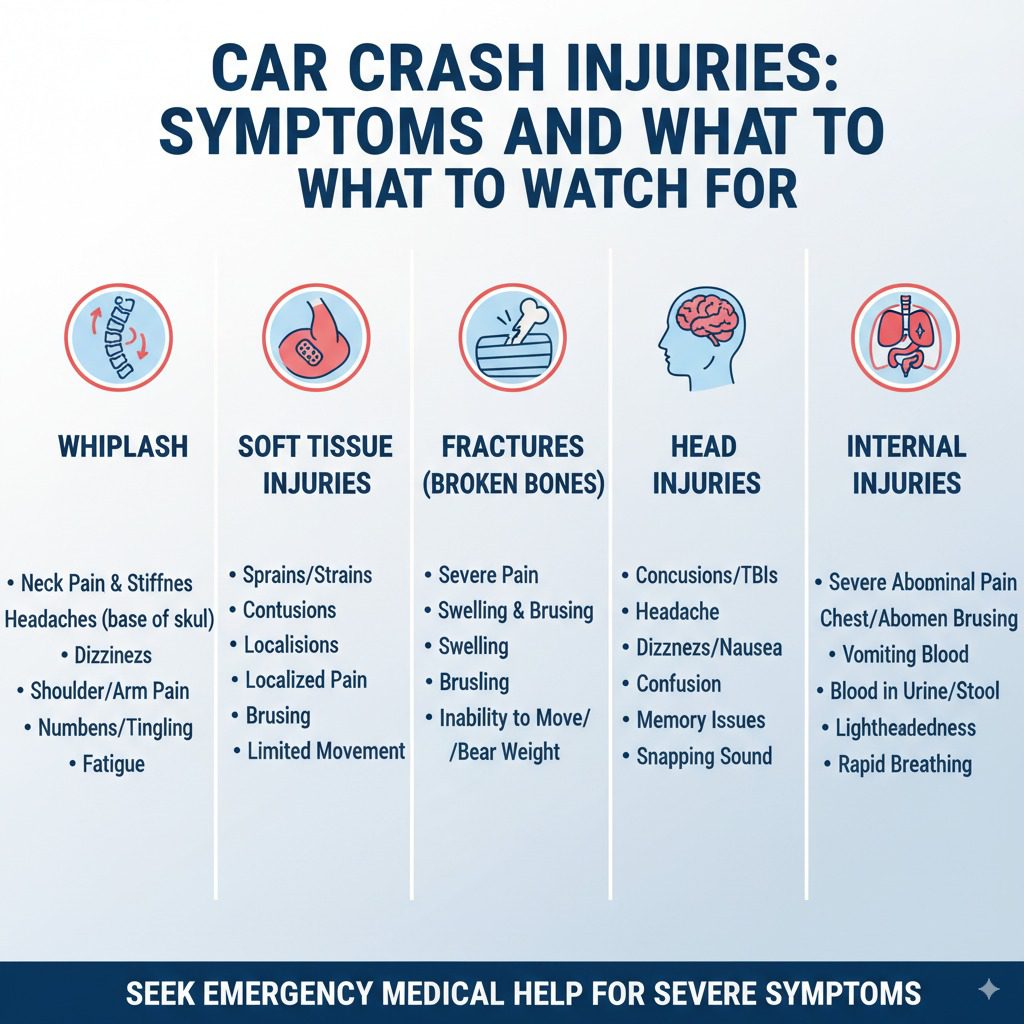
Car accidents can lead to a variety of injuries, ranging from minor to severe. Understanding the most common ones can help you recognize them:
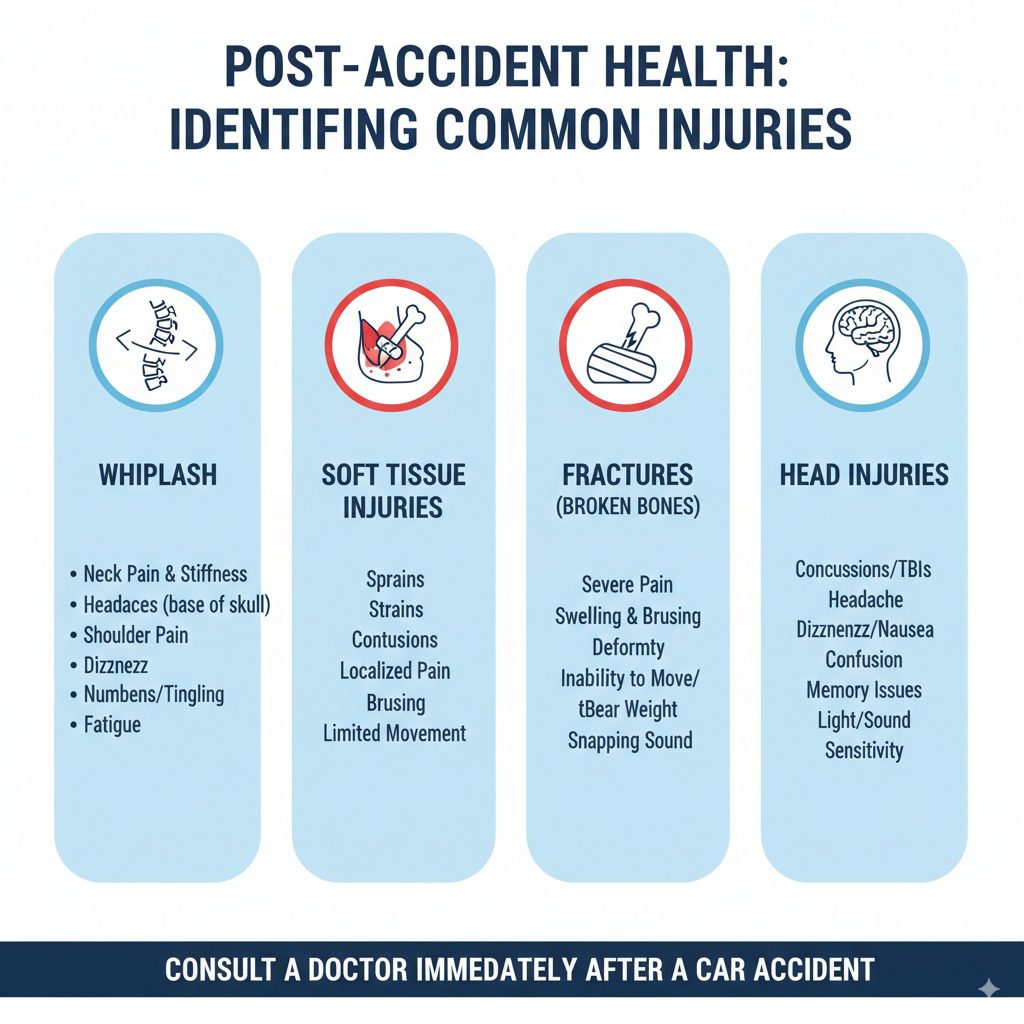
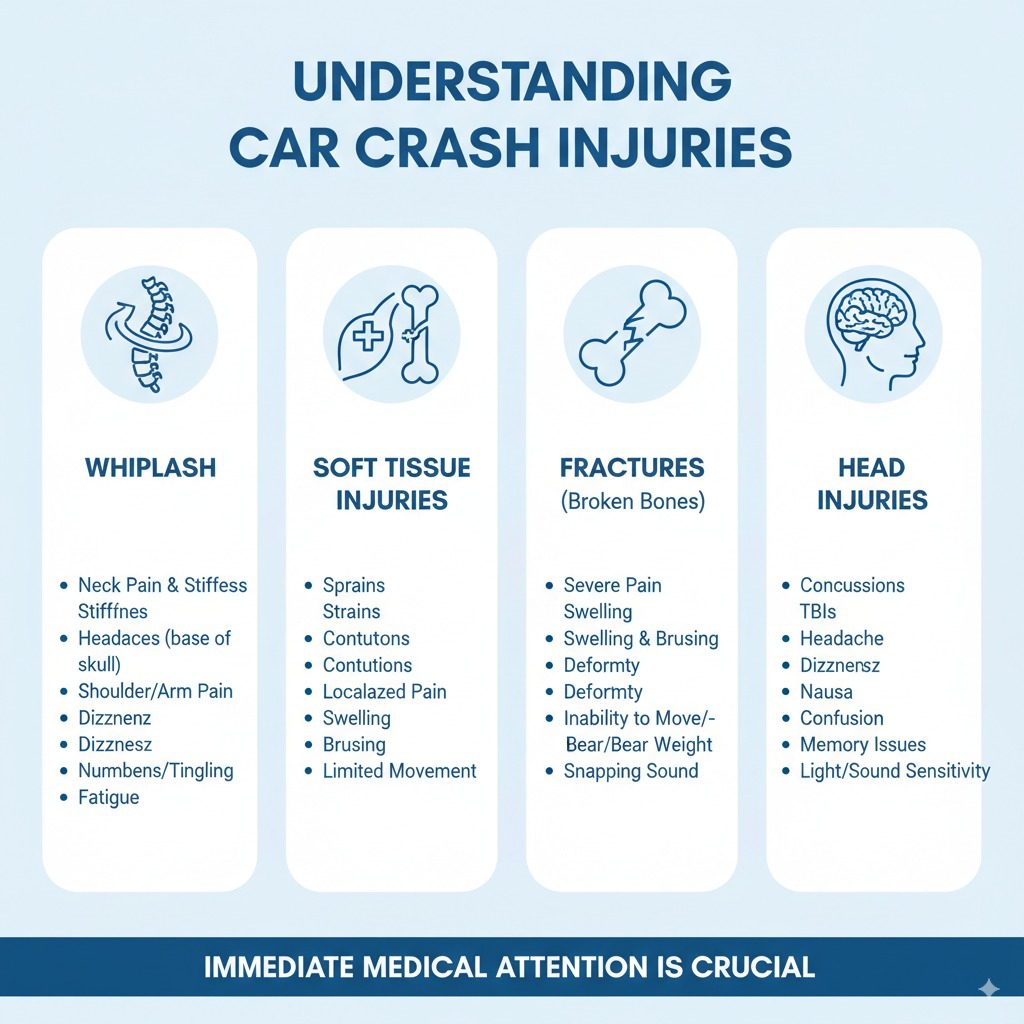
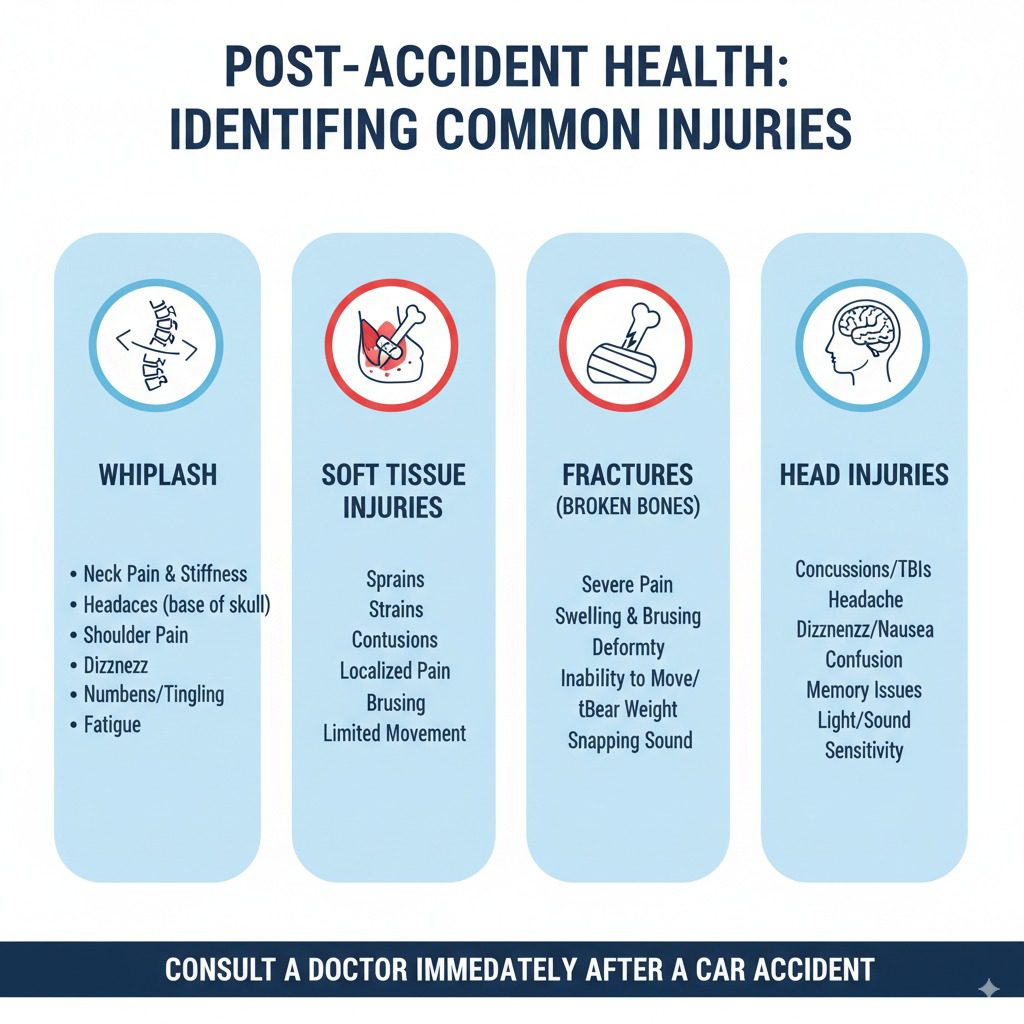
Whiplash
Whiplash is perhaps the most talked-about injury from car accidents, especially rear-end collisions. It’s a neck injury that happens when your head is suddenly forced backward and then forward beyond its normal range of motion. This rapid movement can strain or tear the muscles, ligaments, and tendons in your neck.
Symptoms of whiplash include:
- Neck pain and stiffness
- Headaches, often starting at the base of the skull
- Pain in the shoulders, upper back, and arms
- Dizziness
- Numbness or tingling in the arms
- Fatigue
Whiplash symptoms can appear hours or days after an accident. Treatment often involves pain management, physical therapy, and sometimes medication.
Soft Tissue Injuries
Soft tissues include muscles, ligaments, and tendons. During a crash, these tissues can be stretched, torn, or bruised due to the sudden forces. This category encompasses a wide range of injuries, including sprains (ligament damage), strains (muscle or tendon damage), and contusions (bruises).
Symptoms of soft tissue injuries:
- Localized pain at the affected site
- Tenderness to the touch
- Swelling
- Bruising
- Limited ability to move the injured body part
Healing from soft tissue injuries can take time, and rest, ice, compression, and elevation (RICE) are often recommended initially, followed by physical therapy to regain strength and flexibility.
Fractures (Broken Bones)
Fractures occur when a bone breaks or is severely cracked. This can happen from direct impact, such as your leg hitting the dashboard, or from the extreme forces transmitted through your body during a collision.
Symptoms of fractures:
- Severe pain at the site of the break
- Swelling and bruising
- Deformity of the limb
- Inability to move the affected limb or bear weight on it
- A snapping sound at the time of injury
Fractures require immediate medical attention and often involve casting, splinting, or surgery to ensure proper healing.
Head Injuries
Even if you don’t hit your head directly, the sudden back-and-forth motion of your head can cause your brain to move inside your skull. This can lead to concussions or more severe traumatic brain injuries (TBIs).
Symptoms of head injuries can include:
- Headache
- Dizziness or balance problems
- Nausea or vomiting
- Confusion or disorientation
- Memory problems
- Sensitivity to light or sound
- Blurred vision
- Slurred speech
- Loss of consciousness (even brief)
Any suspected head injury should be evaluated by a medical professional. Concussions, in particular, require rest and careful monitoring to prevent further complications. The Centers for Disease Control and Prevention (CDC) offers comprehensive guidance on concussion prevention and management: CDC HEADS UP.
Internal Injuries
These are some of the most dangerous injuries because they are not always visible or immediately apparent. The force of a crash can cause damage to internal organs, blood vessels, or cause internal bleeding.
Signs you should watch for that could indicate internal injuries include:
- Severe abdominal pain or tenderness
- Bruising on the abdomen or chest
- Vomiting blood or material that looks like coffee grounds
- Blood in the urine or stool
- Feeling lightheaded or faint
- Rapid, shallow breathing
- A rigid or hard abdomen
Internal bleeding is a medical emergency. If you suspect any internal injuries, call emergency services immediately (like 911 in the US).
How the Body Responds to Trauma: Beyond Physical Pain
Car accidents are highly traumatic events, and your body and mind react to this stress in complex ways. Beyond the physical injuries, you might experience emotional and psychological effects that are just as important to acknowledge and address.
The Stress Response (Fight or Flight)
When you’re in a crash, your sympathetic nervous system kicks into high gear. This is the “fight or flight” response. Your body releases hormones like adrenaline and cortisol, preparing you to deal with perceived danger. This can cause:
- Increased heart rate and blood pressure
- Rapid breathing
- Dilated pupils
- Increased blood flow to muscles
- Heightened senses
While beneficial in true emergencies, this prolonged state of alert can leave you feeling anxious, jittery, or on edge even after the immediate danger has passed.
Psychological and Emotional Aftermath
The emotional toll of a car accident can be significant. You might experience:
- Anxiety and Fear: A persistent fear of driving or even riding in a car.
- Post-Traumatic Stress Symptoms: Intrusive thoughts, flashbacks, nightmares, or avoidance of anything related to the accident.
- Irritability: Feeling easily frustrated or agitated.
- Difficulty Concentrating: Trouble focusing on tasks due to ongoing anxiety or the cognitive effects of an injury.
- Sleep Disturbances: Insomnia or restless sleep.
It’s completely normal to feel these emotions. Seeking support from friends, family, or a mental health professional can be very helpful in processing the trauma.
What to Do After an Accident: Essential Steps for Your Health
Prioritizing your health and safety after a car accident is paramount. Here’s a breakdown of what you should do:
- Ensure Immediate Safety: If possible and safe to do so, move your vehicle to the side of the road to avoid further accidents. Turn on your hazard lights.
- Check for Injuries: Assess yourself and any passengers for injuries. If anyone is seriously hurt or unresponsive, call emergency services immediately.
- Call the Police: Even for minor accidents, it’s a good idea to call the police to file an official report. This can be important for insurance purposes.
- Seek Medical Attention: This is critical. Go to an emergency room, urgent care clinic, or your doctor as soon as possible, even if you feel fine. Many injuries have delayed symptoms. Keep a record of your medical visits and treatments.
- Document Everything: Take photos of the accident scene, vehicle damage, any visible injuries, and road conditions. Exchange information with the other driver(s), including name, contact details, insurance information, and license plate number. If there are witnesses, get their contact information too.
- Avoid Admitting Fault: Stick to the facts when speaking with the police and other drivers. Don’t apologize or admit you were at fault, as this can be used against you later.
- Notify Your Insurance Company: Report the accident to your car insurance provider promptly. They will guide you through the claims process.
Taking these steps helps ensure your immediate safety and lays the groundwork for any necessary medical treatment and insurance claims. Remember, your health is the absolute priority.
Medical Evaluation: What to Expect
When you see a doctor after an accident, they’ll conduct a thorough evaluation to identify any injuries. This typically involves several steps:
Medical History and Discussion
The doctor will ask you detailed questions about the accident: how it happened, the speed, the direction of impact, and whether you were wearing a seatbelt. They will also ask about your symptoms, when they started, and their severity. Be honest and thorough in your answers.
Physical Examination
A physical exam will assess your overall condition. This includes:
- Checking your vital signs (blood pressure, heart rate, breathing)
- Testing your reflexes and muscle strength
- Assessing your range of motion, especially in your neck and back
- Checking for tenderness, swelling, and bruising
- Evaluating your neurological function (pupil response, coordination, sensation)
Diagnostic Tests
Depending on your symptoms and the suspected injuries, the doctor may order diagnostic tests:
- X-rays: To detect bone fractures or dislocations.
- CT Scans (Computed Tomography): These provide more detailed cross-sectional images of bones, soft tissues, and blood vessels, often used for suspected head injuries or internal damage. According to the U.S. National Library of Medicine, CT scans are excellent for visualizing bone and soft tissue injuries.
- MRIs (Magnetic Resonance Imaging): MRIs use magnetic fields to create highly detailed images of organs and soft tissues, making them ideal for diagnosing ligament tears, muscle damage, and spinal cord injuries.
- Blood Tests: To check for internal bleeding or other abnormalities.
The results of these evaluations will help the medical team create an appropriate treatment plan tailored to your specific injuries.
Recovery and Rehabilitation
The recovery process after a car accident varies greatly depending on the severity and type of injuries sustained. For minor issues like bruises or mild strains, rest and over-the-counter pain relievers might be enough. However, for more significant injuries, a structured rehabilitation plan is often necessary.
Physical Therapy
Physical therapy is a cornerstone of recovery for many accident victims, especially those with whiplash or soft tissue injuries. A physical therapist will design a personalized program that may include:
- Stretching Exercises: To restore flexibility and range of motion.
- Strengthening Exercises: To rebuild muscle strength that may have weakened due to disuse or injury.
- Manual Therapy: Techniques like massage or joint mobilization to relieve pain and improve function.
- Modalities: Heat, ice, ultrasound, or electrical stimulation to reduce pain and inflammation.
Consistency is key in physical therapy. Following your therapist’s guidance diligently can significantly speed up your recovery and reduce the risk of long-term problems.
Pain Management
Pain management strategies can be multifaceted. They might include:
- Prescription pain medications
- Anti-inflammatory drugs
- Nerve pain medications
- Topical creams or patches
It’s important to work closely with your doctor to find the most effective and safe pain relief methods for your condition.
Rest and Lifestyle Adjustments
Allowing your body adequate time to heal is crucial. This means getting enough sleep, eating a healthy diet to support tissue repair, and avoiding activities that could aggravate your injuries. You might need to take time off work, adjust your exercise routine, or get help with daily tasks.
The Importance of a Timely Medical Check-Up
We can’t stress this enough: get checked by a medical professional after any car accident, no matter how minor you think it is. Here’s why it’s so important:
- Detecting Hidden Injuries: As we’ve discussed, many injuries, especially those affecting the neck, spine, or internal organs, may not have immediate symptoms. A doctor can perform tests to identify these problems early.
- Accurate Documentation: A medical report created shortly after the accident serves as crucial evidence if you need to file an insurance claim or pursue legal action. It links your injuries directly to the crash.
- Preventing Worsening Conditions: Early diagnosis and treatment can prevent minor injuries from becoming chronic or more severe. For example, untreated whiplash can lead to long-term pain.
- Personal Well-being: Knowing what’s going on with your body and having a plan for recovery provides peace of mind and reduces anxiety.
Don’t wait for pain to become unbearable. A proactive approach to your health is the smartest move after an accident.
FAQ: Answering Your Questions About Post-Accident Body Changes
| Question | Answer |
|---|---|
| How soon after a car accident should I see a doctor? | You should seek medical attention as soon as possible after any car accident, ideally |