What Are The Main Uses Of Electric Vehicles Today?
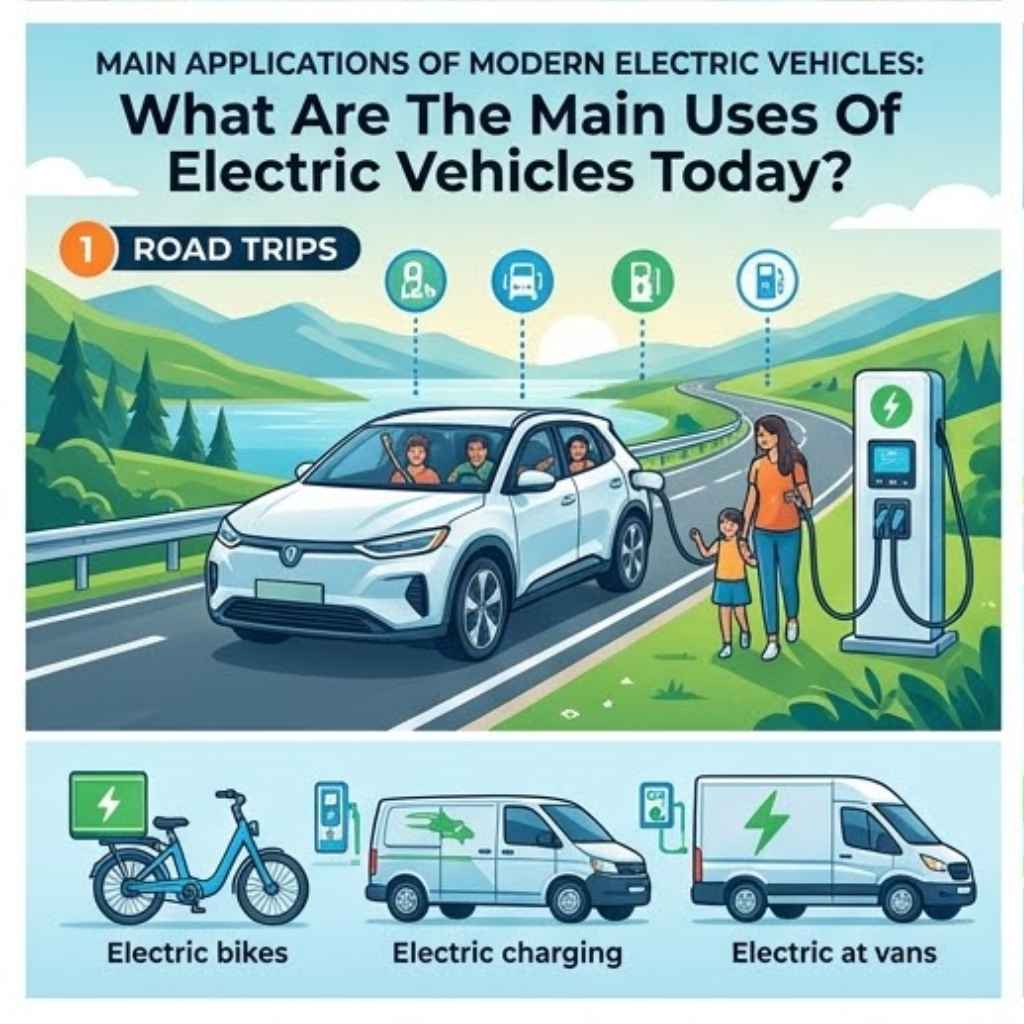
Electric vehicles are primarily used for daily commuting, errands, and short to medium-distance travel. They also serve as a sustainable transport option for longer road trips, with growing charging infrastructure. Their main uses today center on reducing fuel costs, lowering emissions, and providing a quiet, smooth driving experience.
The Everyday Role of Electric Vehicles
Electric vehicles, or EVs, are no longer just a far-off idea. They are here, and they are being used for real things every single day. Think about your own driving needs.
Most of the time, you’re not driving across the country. You’re heading to work, picking up groceries, or visiting friends. This is exactly where EVs shine.
Their main job today is handling these common trips. The range of most EVs is more than enough for a typical day. Many can go 200 to 300 miles on a single charge.
That’s way more than most people drive in a day. So, for your daily commute, an EV works perfectly. You can charge it overnight at home.
Then, it’s ready for you in the morning.
This cuts down on gas station stops. It also means you are not burning fossil fuels for your everyday travel. This is a huge plus for the environment.
EVs produce zero tailpipe emissions. This helps make our air cleaner. It also means less noise pollution in our towns and cities.
The quiet ride is a bonus many drivers love.
What also stands out is the cost savings. Electricity is often cheaper than gasoline. You don’t have to pay for oil changes or other engine maintenance either.
This means fewer trips to the mechanic and more money in your pocket. It’s a practical choice that makes sense for many households.
The Commuting Champion
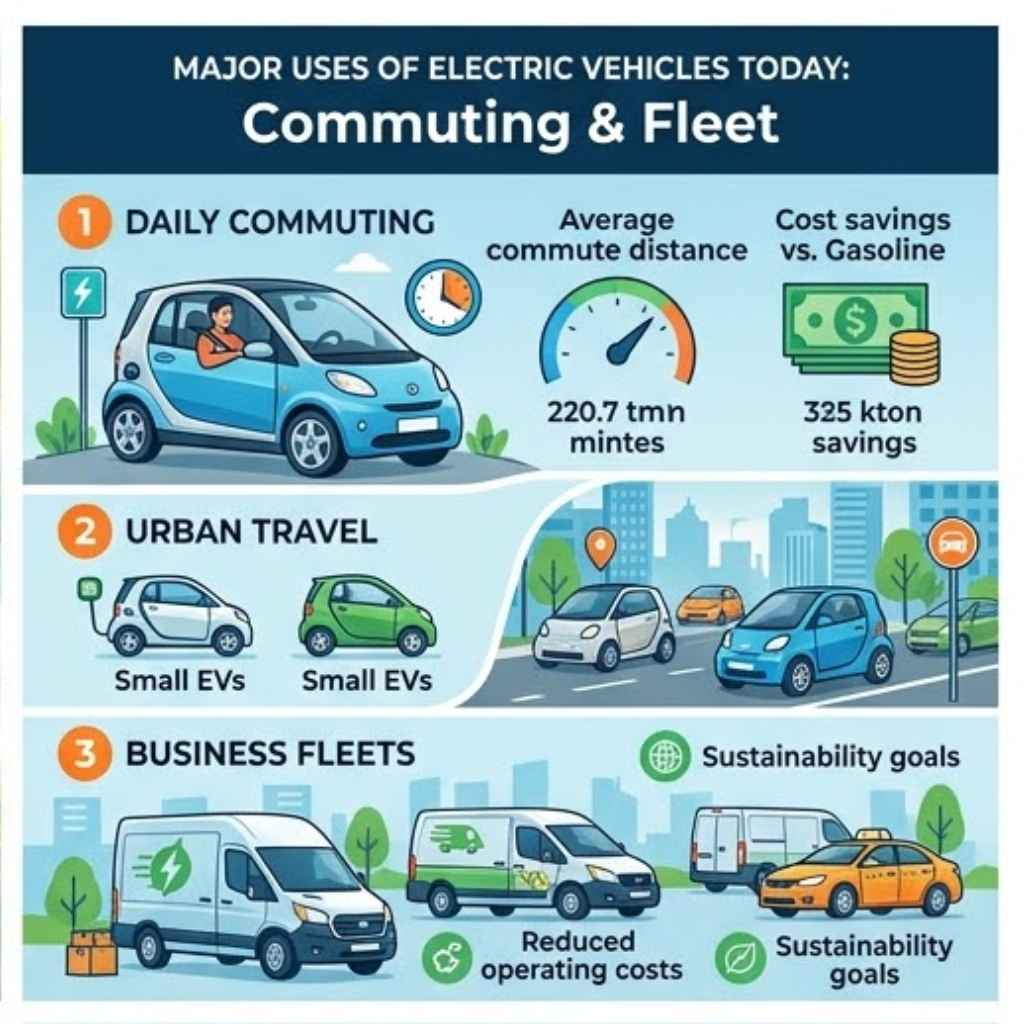
Let’s talk about the biggest use case: commuting. For millions of Americans, the daily drive to work is the most frequent type of travel. This is where electric vehicles really prove their worth.
Imagine waking up, plugging in your phone, and then plugging in your car. That’s all you need to do to “fuel” up.
The average American drives about 30 miles each way to work. Some drive more, some drive less. But a 200-mile range EV can handle this for days without needing a charge.
If you have a shorter commute, maybe only 10-20 miles each way, you might only need to charge your EV once or twice a week. This makes it incredibly convenient.
Think about the money saved. If gas prices are high, filling up a tank can cost $50, $60, or even more. Charging an EV at home usually costs much less.
The exact cost depends on your local electricity rates, but it’s generally a significant saving. Plus, you avoid those impulse buys at the gas station.
Beyond savings, there’s the driving experience. EVs offer instant torque. This means they accelerate very quickly and smoothly.
They don’t have the jerky feeling of a gas engine shifting gears. The ride is often described as very relaxing and quiet. This can make a stressful commute feel a lot more pleasant.
Many workplaces are also starting to install charging stations. This means you can top up your battery while you work. This adds another layer of convenience.
It ensures you have enough charge for your drive home, and even for errands afterward. Commuting is truly where EVs are making their biggest impact right now.
EV Charging at Home
Easy Setup: Most EV owners charge at home. This is the most convenient method. You can use a standard wall outlet (Level 1 charging).
This is slow but works for overnight charging. For faster charging, you can install a Level 2 charger. This is like a more powerful version of your dryer outlet.
Timing is Key: Many utility companies offer special electricity rates. You can charge your EV during off-peak hours. This is usually at night when demand is low.
It can save you a lot of money on charging costs.
Errands and Local Travel
After commuting, the next big use for EVs is running errands. This includes trips to the grocery store, the post office, the gym, or visiting friends nearby. These are all relatively short trips, often within a few miles of home.
For these kinds of drives, range anxiety is almost non-existent. You can make several short trips on a single charge. Even if you only charge your EV every few days, you’ll likely always have enough power for your local needs.
This makes it a very reliable car for daily life.
The ease of use is a big factor here too. You don’t need to plan your trips around gas stations. You just leave home and go.
When you get back, you can simply plug it in. This is especially helpful for parents who are constantly on the go, picking up kids from school or activities.
Many EVs also have features that make running errands more pleasant. They often have advanced navigation systems that can help you find charging stations if needed. Some have hands-free driving assist features.
These can make traffic jams less tiresome. The regenerative braking system also helps to slow the car down smoothly. This can make driving in stop-and-go traffic feel more natural.
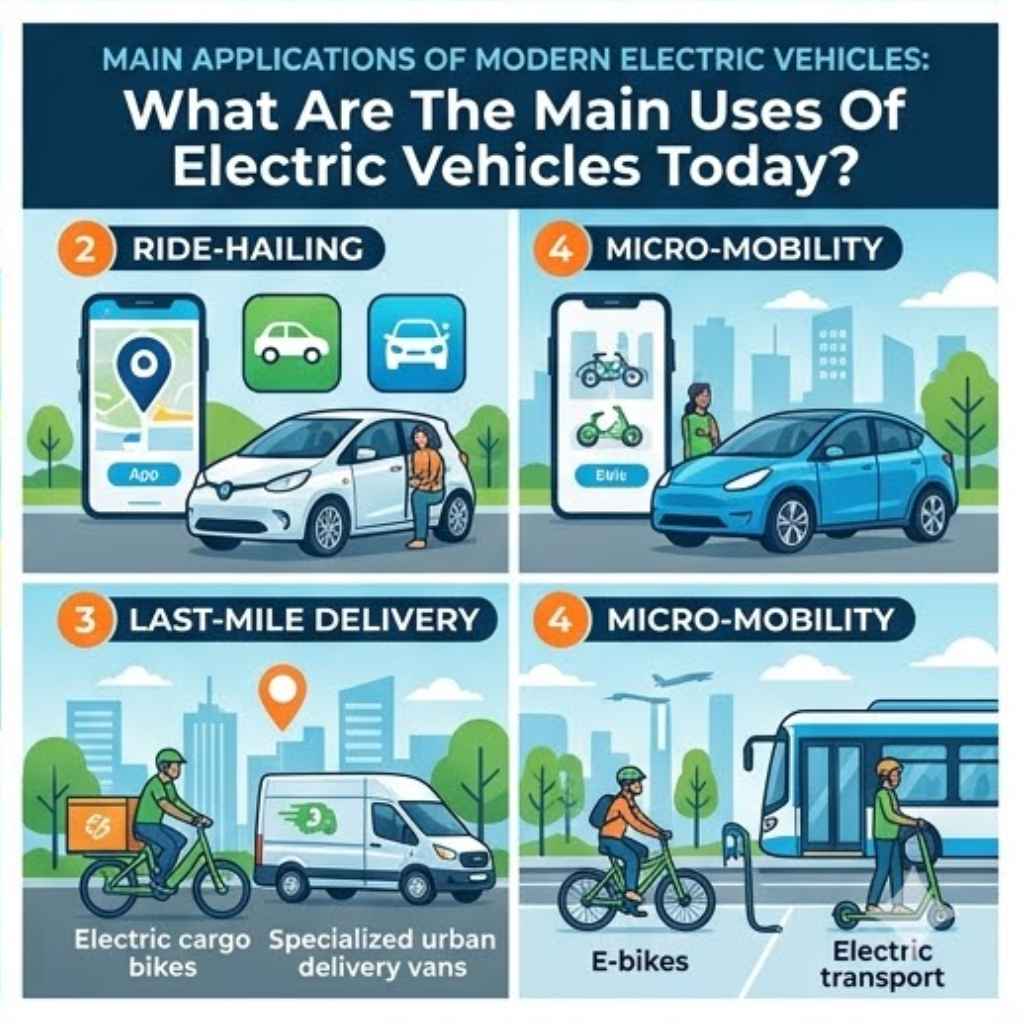
What’s also interesting is how EVs are being used by delivery services. Many companies are switching their fleets to electric vans. This is for local deliveries.
They see the cost savings and the environmental benefits. This shows that EVs are practical for businesses that cover a lot of ground in urban areas.
Think about the environmental impact. Every time an EV replaces a gasoline car for these short trips, it’s a win for air quality. Especially in cities where pollution can be a big problem.
EVs help reduce local smog and make neighborhoods healthier places to live.
EVs for Families
Safety First: EVs are built with safety in mind. They often have advanced driver-assistance systems (ADAS). These include features like automatic emergency braking and lane keeping assist.
The battery pack is usually located low in the car. This can improve stability and reduce the risk of rollovers.
Space and Comfort: Many EVs offer spacious interiors. The lack of a traditional engine can mean more legroom. Some models have a “frunk” – a front trunk – for extra storage.
This is great for groceries or sports gear.
The Growing Use for Longer Trips
Now, let’s address the elephant in the room: long trips. For a long time, this was seen as a weakness for EVs. However, things are changing fast.
The charging infrastructure is improving all the time. This makes longer journeys more feasible and less stressful.
Most newer EVs have a range of 250 miles or more. This means you can drive for several hours before needing to stop. When you do need to charge, the public charging network is growing.
You can find fast chargers along major highways. These can add significant range in just 20-30 minutes.
Planning is key for longer trips. You can use apps to map out your route. These apps show you where charging stations are located.
They can also tell you how long you’ll need to charge. Many EVs can navigate to charging stations and even pre-condition the battery for faster charging when you arrive.
What’s amazing is the speed of charging development. Companies are deploying ultra-fast chargers. These can add 100-200 miles of range in about 15 minutes.
This is comparable to a quick stop for gas and a snack. This makes road trips much more practical than they were even a few years ago.
Think about vacation trips. You can drive to a national park or visit family in another state. You can charge your car at your destination, if it has charging.
Many hotels and campgrounds are starting to offer charging. This adds to the convenience. It means you can explore without constantly worrying about your battery level.
The experience of driving an EV on a long trip is often very enjoyable. The quiet ride means less fatigue. The smooth acceleration helps you maintain speed on highways.
You can listen to your music or podcasts without engine noise. It can make a long drive feel less like a chore and more like a part of the adventure.
Fast Charging Explained
Level 1: Uses a standard 120V wall outlet. Very slow. Adds about 3-5 miles of range per hour.
Best for overnight trickle charging if you drive very little.
Level 2: Uses a 240V outlet (like a clothes dryer). Much faster. Adds about 20-30 miles of range per hour.
Ideal for home charging and public charging stations.
DC Fast Charging (Level 3): Uses high-voltage direct current. Very fast. Can add 100-200+ miles of range in 15-30 minutes.
Found along highways for long-distance travel.
Beyond Personal Use: Commercial and Fleet Applications
It’s not just about individuals buying EVs. Businesses are also recognizing the value of electric vehicles for their operations. This includes delivery services, taxi companies, and even larger fleets for utility companies and government agencies.
For businesses, the total cost of ownership is a major factor. While the initial purchase price of an EV might be higher, the savings on fuel and maintenance can make them cheaper over their lifespan. For a fleet of vehicles that drive thousands of miles per year, these savings add up quickly.
Delivery companies are a prime example. They often operate in urban areas with predictable routes. Charging can be done overnight at depots.
This reduces their reliance on expensive gasoline and lowers their carbon footprint. This is good for their brand image and for the environment.
Taxis and ride-sharing services are also adopting EVs. The quiet ride is appreciated by passengers. The lower operating costs can improve profitability for drivers.
As more charging stations become available, this trend is expected to grow. It makes sense for vehicles that spend a lot of time on the road.
Utility companies are using EVs for their service technicians. These vehicles need to be reliable. They often drive around local areas.
The ability to charge at home or at the depot makes it practical. The lower maintenance needs also mean less downtime for these essential vehicles.
Government agencies, from local municipalities to federal bodies, are also electrifying their fleets. This aligns with sustainability goals. It sets an example for the public.
It also helps reduce operational costs for taxpayer-funded vehicles. This shows the broad impact of EVs across different sectors.
What is interesting to see is the innovation in this space. Companies are developing specialized electric vehicles for specific commercial needs. This includes electric trucks, vans, and even buses.
They are designed for efficiency and durability in demanding work environments. This is a sign that EVs are becoming a mainstream solution for transportation needs.
EV Fleet Management
Route Optimization: Software helps manage EV routes to maximize efficiency. It considers battery range and charging needs.
Charging Strategy: Businesses plan charging schedules. This often involves overnight charging at depots. It takes advantage of lower electricity rates.
Maintenance: EVs have fewer moving parts than gasoline cars. This means less frequent and less costly maintenance. Fewer brake jobs, no oil changes.
The Role of EVs in Reducing Emissions
One of the most significant uses of electric vehicles today is their role in reducing harmful emissions. While we’ve talked about practical benefits, the environmental aspect is crucial. It’s a major driver behind the push for EVs.
Gasoline and diesel cars release pollutants into the air. These include carbon dioxide (CO2), nitrogen oxides (NOx), and particulate matter. These contribute to climate change, smog, and respiratory problems.
EVs, by contrast, have zero tailpipe emissions.
This means that when an EV drives by, it’s not adding to the air pollution in that moment. This is especially important in densely populated cities. Cleaner air means healthier communities.
It means fewer asthma attacks and other breathing issues.
Of course, the electricity used to charge EVs has to come from somewhere. If the electricity is generated from fossil fuels, there are still emissions associated with that. However, the trend is towards cleaner energy sources.
Renewable energy like solar and wind power is becoming more common.
Even when powered by a mixed grid, EVs are generally cleaner than gasoline cars. This is because power plants are often more efficient at generating electricity than an individual car engine. Also, power plants are typically located away from residential areas, so their emissions have less direct impact on people’s health.
As more renewable energy sources come online, the environmental benefit of EVs increases. It’s a virtuous cycle. The more EVs there are, the more demand there is for clean electricity.
This, in turn, drives investment in renewables.
Consumer Reports has done studies that show EVs can have a lower carbon footprint over their lifetime. This includes manufacturing and disposal. The exact amount depends on the electricity grid mix.
But in most parts of the U.S., driving an EV is cleaner than driving a comparable gasoline car.
This commitment to a cleaner future is a key reason why many people choose EVs. It’s not just about saving money or convenience. It’s about making a positive choice for the planet.
It’s about contributing to a world with better air quality for everyone.
Understanding EV Emissions
Tailpipe Emissions: Zero. This is the most direct benefit. No harmful gases are released from the car itself.
Upstream Emissions: These come from generating the electricity used to charge the car. They depend on the power source (coal, natural gas, solar, wind).
Manufacturing Emissions: Producing batteries and cars creates emissions. However, lifetime emissions are usually lower than gasoline cars, especially with cleaner grids.
The Future is Electric: Continued Evolution
What’s exciting about electric vehicles today is that we’re still in the early stages of their widespread adoption. The technology is improving rapidly. Battery costs are coming down.
Range is increasing. Charging speeds are getting faster.
This means that the uses for EVs will only continue to expand. We will likely see more specialized EVs designed for specific tasks. This could include electric trucks that can tow heavy loads, or smaller, more affordable EVs for urban mobility.
The charging infrastructure will also become more robust. More charging stations will be available in public places, workplaces, and along travel routes. This will make owning and operating an EV even easier.
What also stands out is the innovation in battery technology. New battery chemistries are being developed. These promise even longer ranges, faster charging, and longer lifespans.
Some researchers are looking into solid-state batteries, which could be a game-changer.
The integration of EVs with the power grid is another area of growth. Vehicle-to-grid (V2G) technology could allow EVs to send power back to the grid. This could help stabilize the grid.
It could also provide a new revenue stream for EV owners.
We are seeing government incentives and regulations that support EV adoption. These can include tax credits, rebates, and mandates for zero-emission vehicles. This policy support is crucial for accelerating the transition.
In summary, the main uses of electric vehicles today are practical and widespread. They are excellent for daily commutes, errands, and increasingly, for longer trips. They offer cost savings, environmental benefits, and a pleasant driving experience.
As technology advances and infrastructure grows, their role in our transportation system will only become more significant.
Frequently Asked Questions
Are electric cars good for long road trips?
Yes, electric cars are becoming much better for long road trips. Newer models have ranges of 250 miles or more. Public fast-charging stations are increasing along highways.
Planning your stops with charging apps makes them very feasible. Charging times are also getting shorter, often taking only 20-30 minutes for a significant range boost.
How much does it cost to charge an electric vehicle?
The cost of charging an EV varies. It depends on your electricity rates and the size of the car’s battery. Charging at home overnight is usually the cheapest option.
Many utility companies offer lower rates for off-peak charging. Generally, it costs less than filling up a gasoline car.
Do electric vehicles require a lot of maintenance?
No, electric vehicles typically require less maintenance than gasoline cars. They have fewer moving parts. There are no oil changes, no spark plugs, and no exhaust systems.
Brake wear is also often reduced due to regenerative braking. This can lead to significant cost savings over time.
What is range anxiety and how is it being solved?
Range anxiety is the fear that an electric vehicle will run out of battery charge before reaching its destination or a charging station. It is being solved by increasing battery range in EVs, building more public charging stations (especially fast chargers), and improving charging speeds. Navigation apps that plan charging stops also help reduce this worry.
Are electric cars better for the environment than gas cars?
Yes, electric cars are generally better for the environment. They produce zero tailpipe emissions, which improves air quality in cities. While electricity generation has emissions, EVs are often powered by cleaner energy sources over their lifetime.
As renewable energy grows, EVs become even more environmentally friendly.
Can I charge an electric car in my garage?
Yes, you can charge an electric car in your garage. You can use a standard wall outlet (Level 1 charging), which is slow but works for overnight charging. For faster charging, you can install a Level 2 charger, which requires a 240V connection similar to a clothes dryer.
What is the typical lifespan of an EV battery?
EV batteries are designed to last a long time. Most manufacturers offer warranties of 8 years or 100,000 miles. Many batteries still retain a significant portion of their capacity after this period.
Battery technology is constantly improving, leading to longer lifespans.
Conclusion
Electric vehicles are fundamentally changing how we get around. Their primary uses today are centered on making daily life easier and cleaner. From the daily commute to errands and longer adventures, EVs are proving their versatility.
They offer a smart, sustainable, and often more affordable way to drive. It’s an exciting time to witness and be part of this automotive shift.
Products related to this article
Sponsored / affiliate links. As an Amazon Associate I earn from qualifying purchases. I may earn additional commission from eligible campaigns.
![iPhone Car Charger,USB C Fast Car Charger[Apple MFi Certified] Apple Car Charging 38W Dual Port CarCharger Cigarette Lighter Adapter 2x3ft PD&QC 3.0 Lightning Cable for iPhone 14/13/12 Pro/11/Airpods](https://m.media-amazon.com/images/I/41XizrssoiL._SL500_.jpg)