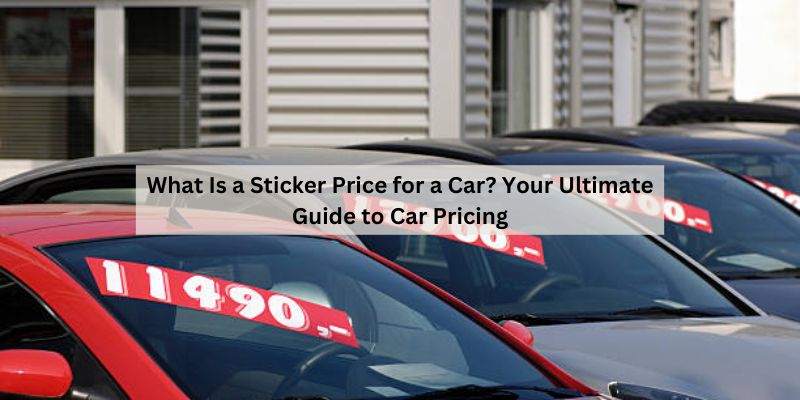
What Is a Sticker Price for a Car? Your Ultimate Guide to Car Pricing
Hey there! So, you’re curious about what a sticker price for a car means? I get it. When I bought my first car, I walked onto a dealership lot and saw those big numbers on the window stickers, and I thought, “Is this what I’m paying?” Spoiler alert: it’s not always that simple! After buying a few cars, haggling with dealers, and learning the ins and outs of car pricing in the USA, I’ve got the full scoop
. The sticker price is just the starting point, and I’m excited to share everything I’ve learned to help you navigate car shopping like a pro. In this guide, I’ll break down what the sticker price is, why it matters, and how to get the best deal. Let’s dive in and demystify car pricing together!
My First Encounter with a Sticker Price
Let me take you back to when I bought my first car—a used Toyota Corolla. I was 23, nervous, and had no clue what I was doing. I saw a shiny window sticker with a price of $15,995, and I thought that was the final cost. Boy, was I wrong! The dealer started adding fees, and the price crept up. That experience taught me to question the sticker price and dig deeper. Since then, I’ve bought three cars, negotiated better deals, and learned what that number on the sticker means. Knowing this stuff has saved me thousands, and I want to pass that knowledge on to you.
What Is a Sticker Price?
So, what exactly is a sticker price? It’s the price you see on the window of a car at a dealership. Officially, it’s called the Manufacturer’s Suggested Retail Price, or MSRP. It’s the price the carmaker suggests the dealer charge for the car. When I bought my Honda Civic, the sticker price was $22,500, and it listed all the features, like the trim level, engine, and extras like a sunroof.
The sticker price includes the base cost of the car plus any optional features or packages added by the manufacturer. For example, my Civic’s sticker included a $1,000 upgrade for a premium audio system. But here’s the key: the sticker price is just a suggestion. You can often negotiate it down, which I’ll get to later. It’s like the starting line in a race—where you end up depends on how you run!
Why Is the Sticker Price Important?
When I first saw a sticker price, I thought it was set in stone. Not true! The sticker price is important because it gives you a baseline. It’s the number you start negotiating from. Here’s why it matters:
- Comparison Shopping: I used the sticker price to compare the same car at different dealerships. My Civic’s MSRP was $22,500 at one lot but $22,300 at another due to different options.
- Negotiation Tool: Knowing the MSRP helps you push for a lower price. I got my Corolla for $1,500 below the sticker by negotiating.
- Understanding Value: The sticker shows what features you’re paying for. I checked my Civic’s sticker to confirm it had the safety tech I wanted.
- Avoiding Overpayment: Some dealers inflate prices above MSRP, especially for hot cars. I avoided a dealer charging $5,000 over sticker for a popular SUV.
The sticker price is your first clue to what a car is worth, but it’s not the whole story.
What’s Included in the Sticker Price?
The sticker price isn’t just one number—it’s a breakdown of costs. When I looked at my Civic’s window sticker, it listed several parts. Here’s what I found:
- Base Price: This is the cost of the car without extras. My Civic’s base price was $20,000 for the EX trim.
- Optional Features: Things like a sunroof, navigation, or upgraded wheels. My sticker added $1,500 for a tech package.
- Destination Charge: This covers shipping the car to the dealer. It was $995 for my Civic and non-negotiable.
- Factory-Installed Options: Extras added at the factory, like leather seats. My Corolla had a $500 option for alloy wheels.
The sticker also lists fuel economy, safety ratings, and warranty info, which helped me compare cars. I always read the whole sticker to know exactly what I’m getting.
Sticker Price vs. Invoice Price
One thing that confused me early on was the invoice price. I thought it was the same as the sticker price, but it’s not. The invoice price is what the dealer pays the manufacturer for the car. For my Civic, the invoice was about $21,000, while the sticker was $22,500. The difference is the dealer’s profit margin, called the “holdback” (usually 2-3%).
Here’s a quick table to show the difference:
| Price Type | What It Is | Example (My Civic) |
|---|---|---|
| Sticker Price (MSRP) | Suggested retail price from manufacturer | $22,500 |
| Invoice Price | What the dealer pays the manufacturer | $21,000 |
I used the invoice price to negotiate. Knowing the dealer paid $21,000 gave me leverage to push for a price closer to that. I ended up paying $21,800—better than the sticker!
Additional Costs Beyond the Sticker Price
The sticker price is just the start. I learned this the hard way when I bought my Corolla and got hit with extra fees. Here’s what I’ve seen added to the final cost:
- Taxes: Sales tax varies by state. In Colorado, I paid 7.5% tax, adding about $1,600 to my Civic’s price.
- Registration Fees: These cover your license plates and title. I paid $400 in Colorado, but it varies by state.
- Dealer Fees: Things like “documentation fees” or “prep fees.” My dealer charged a $500 doc fee, which I negotiated down to $300.
- Add-Ons: Dealers push extras like extended warranties or paint protection. I said no to a $1,000 warranty to save money.
- Financing Costs: If you take a loan, interest adds up. My 4% loan for $20,000 added $2,000 in interest over five years.
I always ask for an “out-the-door” price, which includes all fees. It helped me budget and avoid surprises.
Why the Sticker Price Isn’t Always the Final Price
When I bought my first car, I thought the sticker price was what I’d pay. Nope! The sticker is a starting point for negotiation. Here’s why the final price can be different:
- Negotiation: Dealers expect you to haggle. I got my Civic for $700 below MSRP by negotiating.
- Market Demand: Hot cars (like new trucks or EVs) might sell above sticker. I saw a Toyota RAV4 priced $3,000 over MSRP during a shortage.
- Incentives: Manufacturers offer rebates or discounts. I got a $1,000 rebate on my Corolla, lowering the price.
- Dealer Discounts: Some dealers cut prices to move inventory. I bought my Ford Escape at $2,000 below sticker during a year-end sale.
Knowing this, I never pay the sticker price without trying to negotiate first.
How to Negotiate Below the Sticker Price
Negotiating was scary at first, but now I love it. Here’s how I get a deal below the sticker price:
- Research the Invoice Price: I use sites like Kelley Blue Book to find the invoice price. For my Civic, knowing the $21,000 invoice helped me aim low.
- Get Multiple Quotes: I email 3-4 dealers for their best price. One offered my Civic for $21,500, beating the others by $500.
- Mention Incentives: I check manufacturer websites for rebates. My $1,000 Corolla rebate gave me extra bargaining power.
- Be Ready to Walk Away: If the dealer won’t budge, I leave. When I walked away from a stubborn dealer, they called me back with a $1,200 discount.
- Focus on the Out-the-Door Price: I ask for the total cost, including fees. It keeps dealers honest.
I saved $1,500 on my Civic by negotiating. It’s like a game, and practice makes you better!
When Dealers Charge Above the Sticker Price
Sometimes, dealers charge more than the sticker price, which shocked me at first. This happens with high-demand cars, like new EVs or trucks. When I shopped for a Ford F-150, one dealer wanted $5,000 over the $40,000 MSRP because it was a hot model. They called it a “market adjustment.”
Here’s what I do to avoid overpaying:
- Shop Around: I found another dealer selling the same F-150 at MSRP.
- Wait It Out: If demand is high, waiting a few months can lower prices. I waited three months for my Escape and got it at sticker.
- Check Other Regions: Dealers in rural areas might not charge markups. I drove an hour to save $2,000 on my Corolla.
If a dealer insists on a markup, I walk away. There’s always another option.
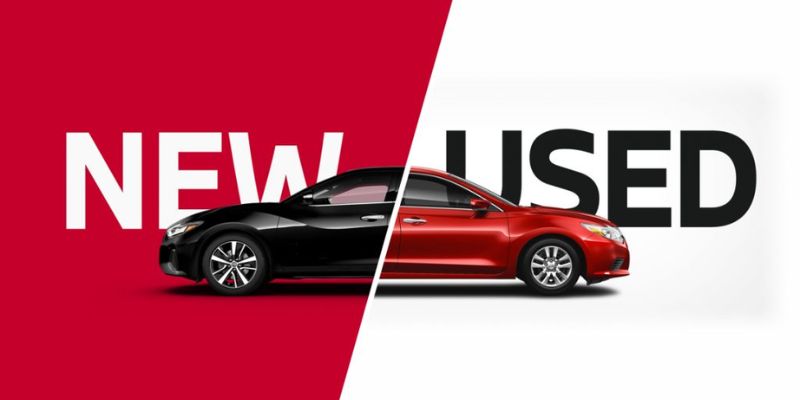
New Cars vs. Used Cars: Sticker Price Differences
Sticker prices work differently for new and used cars. Here’s what I’ve learned:
- New Cars: Every new car has a window sticker with the MSRP, destination charge, and options. My Civic’s sticker was clear and standardized.
- Used Cars: Used cars don’t always have an MSRP sticker. Dealers set their price based on market value. My Corolla’s sticker was a dealer-made label showing $15,995, but I checked Kelley Blue Book to confirm it was fair.
- Negotiation: New cars have less wiggle room due to fixed MSRP, but I got $700 off my Civic. Used cars have more flexibility—I negotiated $1,500 off my Corolla.
For used cars, I use tools like Kelley Blue Book or Edmunds to check fair market value before negotiating.
How to Read a Car’s Window Sticker
Reading the window sticker is like decoding a car’s story. Here’s what I look for:
- MSRP: The total suggested price, including options. My Civic was $22,500.
- Base Price: The cost without extras. Mine was $20,000.
- Options List: Details like tech packages or wheels. My sticker listed a $1,500 navigation system.
- Destination Charge: Non-negotiable shipping fee. Mine was $995.
- Fuel Economy: MPG ratings help me estimate gas costs. My Civic got 32 mpg city/42 highway.
- VIN: The car’s unique ID. I used it to check the car’s history.
I always snap a photo of the sticker to compare with other cars. It’s a great way to stay organized.
Online Tools to Understand Sticker Prices
I love using online tools to research sticker prices. Here’s what I use:
- Kelley Blue Book: Shows MSRP, invoice price, and fair market value. I used it to confirm my Civic’s $22,500 sticker was reasonable.
- Edmunds: Lists MSRP, invoice, and incentives. I found a $1,000 rebate for my Corolla here.
- TrueCar: Shows what others paid for the same car. I saw people paid $21,000 for my Civic, so I aimed for that.
- Manufacturer Websites: Toyota, Honda, and Ford list MSRPs for every model and trim. I checked Honda’s site to verify my Civic’s options.
These tools helped me negotiate like a pro and avoid overpaying.
Tips for Getting the Best Deal
I’ve learned some tricks to pay less than the sticker price. Here’s what works for me:
- Shop at Year-End: Dealers clear inventory in December. I got my Escape $2,000 below MSRP during a year-end sale.
- Avoid Peak Times: Weekends are busy, so I visit on weekdays. Dealers are more willing to negotiate when it’s quiet.
- Bring Research: I show dealers my invoice price and competitor quotes. It pushed one to drop $500 off my Civic.
- Skip Add-Ons: I say no to overpriced extras like gap insurance. It saved me $800 on my Corolla.
- Get Pre-Approved: I got a loan from my bank before shopping. It gave me leverage to negotiate better terms.
These tips have saved me thousands over the years.
Common Mistakes to Avoid
I’ve made plenty of car-buying mistakes. Here’s what to watch out for:
- Assuming the Sticker Is Final: I paid the sticker price for my first car because I didn’t negotiate. Always haggle!
- Ignoring Fees: I got hit with a $600 doc fee I didn’t question. Ask about all fees upfront.
- Falling for Markups: I almost paid $3,000 over sticker for an SUV. Shop around to avoid this.
- Not Checking Options: I didn’t realize my Corolla’s sticker included a $500 option I didn’t need. Read the sticker carefully.
Learning from my mistakes has made me a smarter buyer.
The Future of Car Pricing
Car pricing is changing, and I’m curious to see where it goes. Some brands, like Tesla, skip the MSRP and list fixed prices online. Dealerships are also moving toward transparent pricing, showing out-the-door costs upfront. I think we’ll see fewer window stickers and more digital pricing as cars go electric and sales move online. Staying informed will keep you ahead of the game.
Why Understanding Sticker Prices Matters
Knowing what a sticker price is has transformed how I buy cars. I’m not intimidated by dealers anymore, and I can spot a good deal from a bad one. It’s helped me save money, get the features I want, and enjoy the process. Whether you’re buying your first car or your tenth, understanding the sticker price gives you power at the dealership.
Conclusion
So, what is the sticker price for a car? It’s the starting point—the Manufacturer’s Suggested Retail Price that kicks off your car-buying journey. After years of shopping for cars, negotiating deals, and learning the ropes, I’ve realized the sticker price is just one piece of the puzzle. By researching invoice prices, comparing dealers, and negotiating smartly, you can pay less and drive away happy. I hope this guide has given you the confidence to tackle car shopping like a pro. Next time you see that window sticker, you’ll know exactly what it means and how to get the best deal. Here’s to hitting the road in your new ride!
FAQs
What is the sticker price for a car?
It’s the Manufacturer’s Suggested Retail Price (MSRP) on the car’s window sticker. It shows the suggested cost, including the base price, options, and destination charge.
Is the sticker price the final price I’ll pay?
No, you can often negotiate below the sticker price. I got my Civic for $700 less by haggling. Taxes, fees, and add-ons also add to the final cost.
What’s the difference between sticker price and invoice price?
The sticker price is the suggested retail price. The invoice price is what the dealer pays the manufacturer. I used the invoice to negotiate $1,500 off my Corolla.
Can I pay more than the stickebr price?
Yes, for high-demand cars, dealers may charge a “market adjustment.” I saw an SUV priced $5,000 over sticker, but found another at MSRP.
How do I negotiate below the sticker price?
Research the invoice price, get quotes from multiple dealers, and mention rebates. I saved $700 on my Civic by showing competitor offers.
What extra costs are added to the sticker price?
Taxes, registration, dealer fees, and add-ons like warranties. I paid $1,600 in taxes and $300 in fees for my Civic.
Do used cars have a sticker price?
Not always an MSRP, but dealers list their asking price on a sticker. I checked Kelley Blue Book to ensure my Corolla’s $15,995 was fair.
Where can I find a car’s sticker price?
Look at the car’s window sticker or check manufacturer websites, Kelley Blue Book, or Edmunds. I used Honda’s site to verify my Civic’s MSRP.