What Is a Suicide Door on a Car? History & Modern Uses
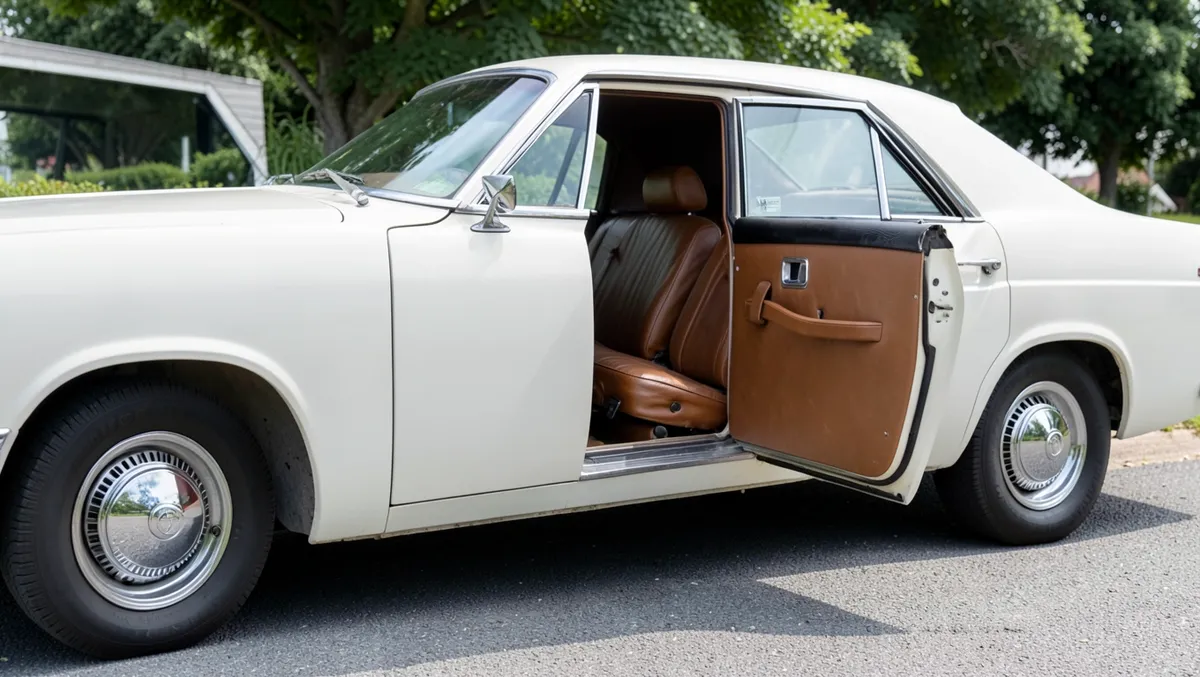
A suicide door is a car door hinged at its rear edge instead of the front, so it swings open toward the back of the car rather than the front. The nickname comes from early automotive history: on a conventionally hinged door, wind pushes the door shut, but on a rear-hinged door, wind catches the open door like a sail and can wrench it wide open. Automakers themselves never used the nickname officially — Rolls-Royce calls them “coach doors,” Mazda called them “freestyle doors” — but “suicide door” is the term that stuck.
What Is a Suicide Door on a Car?
On almost every modern car, each door is hinged at the front edge (closest to the front bumper) and swings open toward the rear. A suicide door flips that: the hinge sits at the rear edge of the door, near the center pillar, so the door swings open toward the front of the car instead. Picture two doors on the same side of a car opening toward each other, meeting in the middle with no center pillar in the way — that’s the classic “coach door” layout used on cars like the 1961-1969 Lincoln Continental.
The design has one real functional advantage: it opens up a much wider, unobstructed entryway, since there’s no B-pillar blocking the middle of the doorway once both doors are open. That’s why it shows up on limousines, luxury sedans, and a handful of SUVs and trucks that need easy rear-seat access without adding a full extra set of doors.
Why Are They Called Suicide Doors?
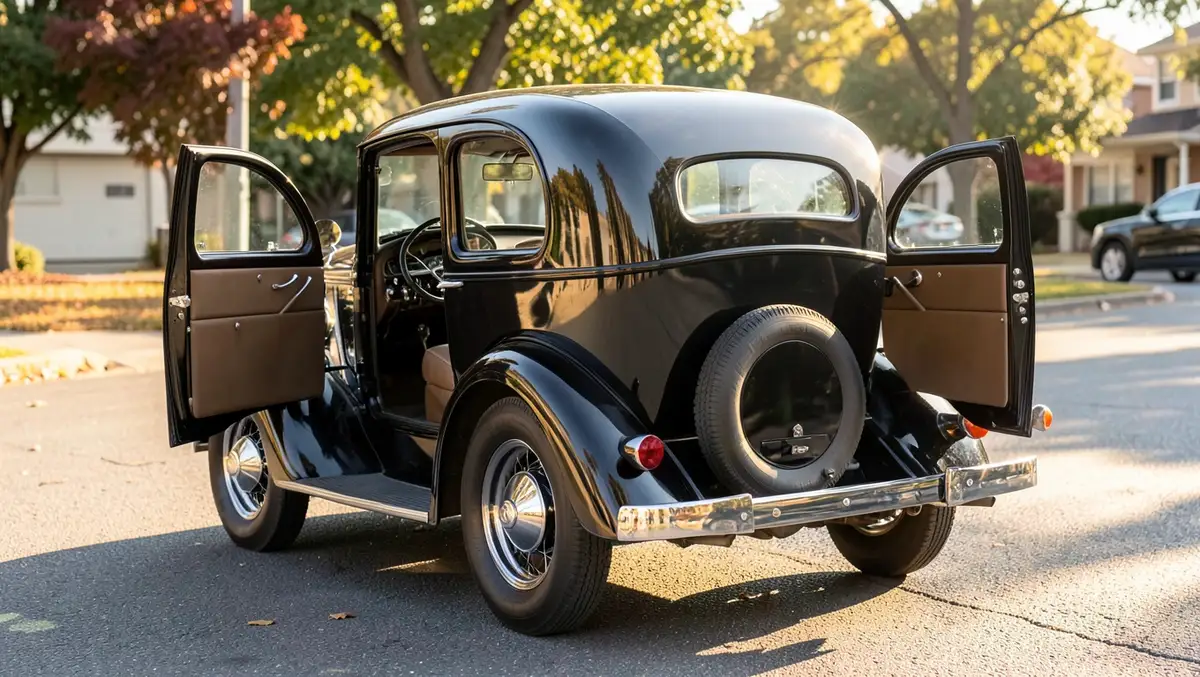
Rear-hinged doors are actually older than the automobile itself — horse-drawn carriages used the same layout, and it simply carried over when cars replaced carriages in the early 1900s. The 1910 Rolls-Royce Silver Ghost is widely credited as the first production car built with them, and the design stayed common through the 1920s and 1930s on everything from mainstream sedans to coachbuilt luxury cars.
The nickname itself came later, largely in the 1950s and 1960s. The physics behind it are straightforward: air pushing past a car in motion tends to press a front-hinged door closed, but it catches a rear-hinged door from the opposite side and can force it further open — a real risk in the era before seatbelts were mandatory, when a door popping open at speed could pull a passenger toward it or out of the car. There’s no single confirmed origin story for the exact phrase, and automotive historians still disagree on it — one recurring (and unverified) bit of lore ties the name to 1930s-era gangsters, who supposedly favored rear-hinged doors because they made it easier to push a passenger out of a moving car. Whatever its exact origin, the name reflects a genuine engineering trade-off, not just a spooky-sounding label.
Cars With Suicide Doors: Classic and Modern Examples
Suicide doors have shown up across nearly a century of car design, from Depression-era luxury cars to today’s ultra-high-end SUVs. Here’s a look at some of the best-known examples, old and new.
| Car | Era | Notes |
|---|---|---|
| 1910 Rolls-Royce Silver Ghost | Early 1900s | Widely credited as the first production car with rear-hinged doors |
| 1957-1958 Cadillac Eldorado Brougham | 1950s | Hand-built ultra-luxury coupe; only about three built per day; owned by Elvis Presley, Frank Sinatra, and other celebrities of the era |
| 1961-1969 Lincoln Continental | 1960s | The most iconic use of the design; the four-door convertible remains a design-history landmark |
| Mazda RX-8 (2003-2012) | 2000s | Marketed as “freestyle doors”; no B-pillar, rear doors can’t open unless the front doors are open first |
| Honda Element (2003-2011) | 2000s | Rear-hinged “clamshell” doors for easy cargo and passenger access |
| Toyota FJ Cruiser (2007-2014) | 2000s-2010s | Small rear-hinged access doors, similar in concept to extended-cab trucks |
| Rolls-Royce Phantom, Ghost, Wraith, Dawn, Cullinan | Today | Rolls-Royce calls them “coach doors”; currently the only new production cars sold with true rear-hinged rear doors |
| HiPhi X (2020-present) | Today | Chinese electric SUV built with rear coach doors |
Rolls-Royce is the one automaker still selling factory suicide/coach doors on every current model in its lineup — if you want them on a brand-new car today, that’s the only place to get them (and you’re looking at a car that starts well into six figures). Outside of Rolls-Royce, the design mostly survives as a styling quirk on a handful of past models, or as a factory option that never returns.
Why Did Suicide Doors Fall Out of Favor?
By the mid-20th century, safety became the priority that pushed suicide doors off most production lines. A rear-hinged door that pops open at highway speed is genuinely more dangerous than a front-hinged one, for the wind-direction reasons covered above, and as seatbelt laws and crash-safety standards tightened in the 1960s and 1970s, automakers largely abandoned the design in favor of conventional doors with simpler, more reliably reinforced latch mechanisms.
There was also a practical engineering cost. Rear-hinged doors need reinforced hinges and door frames to handle the stress of opening against airflow, which adds weight and complexity that mainstream manufacturers had little incentive to pay for once the style fell out of fashion. Combine that with rising consumer preference for four true doors over the two-door-plus-coach-door layout, and the design mostly disappeared from everyday cars by the 1970s.
Are Suicide Doors Making a Comeback?
In a limited way, yes. Rolls-Royce has kept coach doors on every model in its current lineup — the Ghost, Phantom, Wraith, Dawn, and Cullinan all use them on at least the rear doors — and modern electronics have solved the original safety problem. Today’s coach doors are typically locked out entirely above a low speed threshold and can include power-assisted opening and closing, so the wind-catch risk that gave the design its nickname is largely engineered away.
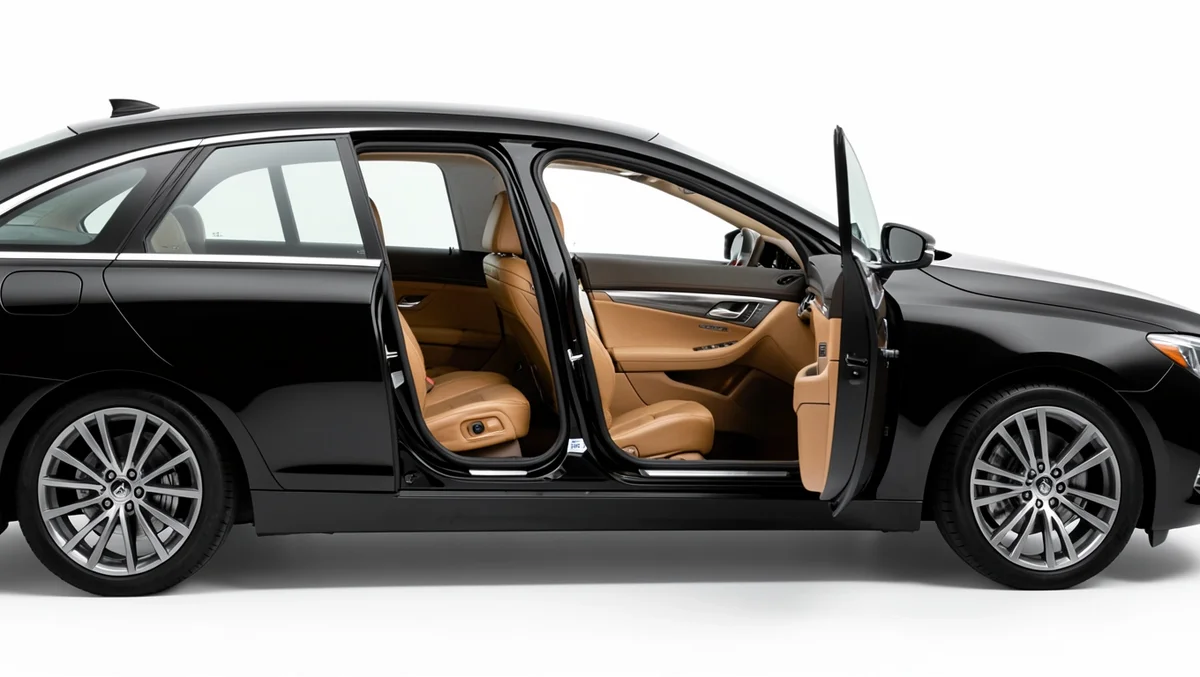
A few other automakers have experimented with the layout more recently, including the 2010 Opel Meriva and the HiPhi X electric SUV. Concept cars use rear-hinged doors even more often than production cars do, since designers like the dramatic, pillarless look at auto shows even when it’s not practical for a mass-market vehicle.
Do Pickup Trucks and SUVs Have Suicide Doors Too?
Yes, in a smaller and more common form than most people realize. Extended-cab pickup trucks — like the Ford F-150 SuperCab and the Nissan Frontier’s extended cab — use small rear-hinged half-doors to add rear-seat access without stretching the truck into a full four-door crew cab. These access doors are genuinely rear-hinged, exactly like a classic suicide door, but they’re deliberately built without their own door handle and can’t be opened until the matching front door is opened first — a built-in safety interlock that prevents them from swinging open on their own.
One note on a specific, frequently-searched example: GMC does not currently sell the Yukon with factory suicide doors. The rear-hinged “suicide door” conversion kits you’ll find for the Yukon and similar SUVs are aftermarket modifications, not a factory option — something to keep in mind if you’re shopping for one expecting it to come stock.
Are Suicide Doors Legal and Safe Today?
Suicide doors are not illegal in the US. There’s no law that bans rear-hinged doors specifically — any door, front-hinged or rear-hinged, just has to meet the same federal door-latch and occupant-protection standards (FMVSS 206) as every other car door sold in the country. That’s why Rolls-Royce can still sell them new today, and why classic cars and custom builds with suicide doors are legal to drive and register.
Modern coach doors are also considerably safer than their vintage counterparts. Power latches, speed-based lockouts, and reinforced hinges address the specific failure mode — a door flying open at speed — that earned the design its nickname in the first place. The risk was real on 1930s-1960s cars without those safeguards; it’s far less of a concern on a new Rolls-Royce built to 21st-century safety standards.
Frequently Asked Questions
Why are they called suicide doors on cars?
Suicide doors are named for their rear-hinged design. Because the hinge is at the back of the door instead of the front, wind can catch an open door and force it wider instead of pushing it shut, which made an accidental opening at speed more dangerous than on a standard front-hinged door — especially before seatbelts were required equipment.
Why did they quit making suicide doors on cars?
Manufacturers largely moved away from suicide doors as safety standards tightened in the 1960s and 1970s. The design needs reinforced hinges and door frames to safely resist wind force, which adds cost and weight, and most automakers found it simpler to switch to conventional front-hinged doors with standard latch designs instead.
Are suicide doors illegal in the US?
No. Suicide doors are not illegal in the US. Any car door, regardless of which way it’s hinged, has to meet the same federal safety standards for latches and occupant protection. That’s how Rolls-Royce is able to sell new cars with rear-hinged coach doors today, and why classic cars and custom builds with suicide doors remain street legal.
What cars still use suicide doors today?
Rolls-Royce is the main automaker still building them, calling them “coach doors” on the current Ghost, Phantom, Wraith, Dawn, and Cullinan. The HiPhi X, a Chinese electric SUV, also uses them. Outside of new cars, suicide doors survive on classics like the 1961-1969 Lincoln Continental and in custom/aftermarket door-conversion builds.
How dangerous are suicide doors really?
On a vintage car without modern safeguards, a suicide door genuinely could be pulled open by wind if it came unlatched at speed — that’s the real risk the nickname refers to. On a modern car with power locks and a speed-based lockout, like today’s Rolls-Royce models, that specific failure mode is largely engineered out, making them far safer than their 20th-century predecessors.
What is the suicide door on a pickup truck?
On extended-cab pickups like the Ford F-150 SuperCab, the “suicide door” is a small rear-hinged half-door used to reach the back seat without building a full four-door crew cab. Unlike a full-size suicide door, these access doors have no separate handle and are designed so they can only be opened after the front door on the same side is already open, which acts as a built-in safety interlock.
The Bottom Line
A suicide door is simply a car door hinged at the back instead of the front — a design nearly as old as the automobile itself, named for a real (and now mostly solved) safety trade-off rather than anything mysterious. It fell out of mainstream use once safety regulation caught up to it in the mid-20th century, but it never fully disappeared: Rolls-Royce still builds it into every model it sells, extended-cab trucks use a smaller version of the same idea for rear-seat access, and it keeps resurfacing on concept cars whenever designers want a dramatic, pillarless entrance.
Products related to this article
Sponsored / affiliate links. As an Amazon Associate I earn from qualifying purchases. I may earn additional commission from eligible campaigns.