Suitcase Rack for Car: How Many Suitcases Fit in a Roof Bag
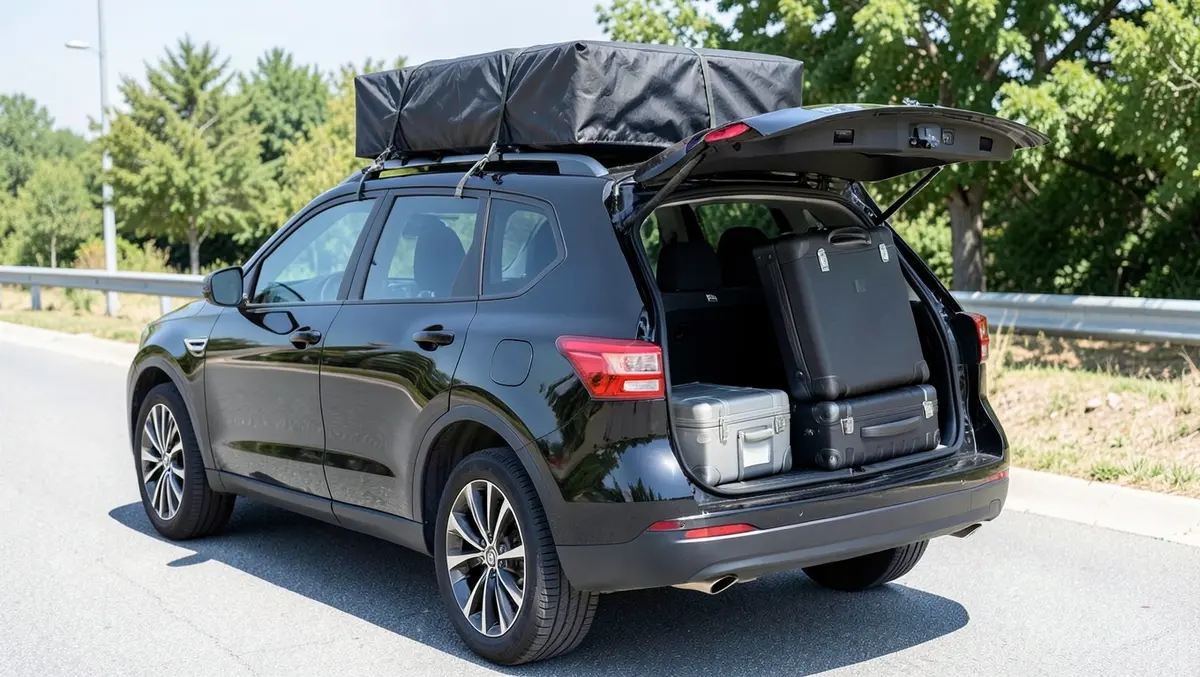
A suitcase rack for a car is a rooftop cargo bag, and a standard 21 cu. ft. bag realistically holds about 3 large suitcases or 5 medium ones – not the 6-8 the cubic-foot number alone suggests.
Rigid suitcases don’t pack the same way as duffel bags and camping gear. Hard corners, built-in wheels, and telescoping handles all waste space inside a soft, tapered fabric bag, and those same hard edges are what puncture or wear through the bag’s fabric if you load them carelessly. This guide covers exactly how many suitcases fit by bag size, how to load them without damaging the bag, and how to pick a size that actually matches your luggage.
The Best Rooftop Bag for Loading Multiple Suitcases
30 CU. FT. PICK FOR MULTIPLE SUITCASES
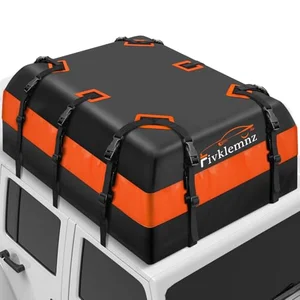 |
FIVKLEMNZ 30 Cu. Ft. Rooftop Cargo Carrier – $109.99 Sized larger than the standard 21 cu. ft. bags most sites recommend, which matters because rigid suitcases pack less efficiently than soft duffels and camping gear.
|
Most rooftop bag listings advertise 15 to 23 cu. ft. of capacity, a number based on the bag’s outer dimensions when fully packed with soft, compressible items. Hard-shell suitcases don’t compress, and their box shape and wheel housings leave gaps that a duffel bag or sleeping bag would fill in. Sizing up, as with the 30 cu. ft. pick above, is the simplest fix for a family carrying several rigid suitcases rather than soft bags.
How Many Suitcases Actually Fit in a Rooftop Cargo Bag?
Airlines set common suitcase dimensions: a carry-on is roughly 22 x 14 x 9 in. (about 1.6 cu. ft.), a medium checked bag is roughly 25 x 17 x 11 in. (about 2.7 cu. ft.), and a large checked bag near the 62-linear-inch limit is roughly 28 x 20 x 12 in. (about 3.9 cu. ft.). Because rigid boxes don’t nest as efficiently as soft cargo inside a rounded, tapered bag, a realistic estimate assumes only about 65% of the bag’s rated capacity is usable for suitcases specifically – the rest is lost to corners, wheels, and the room needed to actually zip the bag closed.
| Bag Capacity | Large Suitcases (~3.9 cu ft) | Medium Suitcases (~2.7 cu ft) | Carry-Ons (~1.6 cu ft) |
|---|---|---|---|
| 15 cu. ft. | ~2 | ~3 | ~6 |
| 21 cu. ft. | ~3 | ~5 | ~8 |
| 30 cu. ft. | ~5 | ~7 | ~12 |
These numbers assume suitcases of one size only; most families pack a mix of sizes, so treat this as a planning estimate rather than a guarantee. Measure your own suitcases and compare against the bag’s listed interior dimensions before buying, especially if you’re packing hard-shell luggage rather than soft bags.
How to Load Hard-Shell Suitcases Without Damaging the Bag
Soft rooftop bags are built to hold soft, irregular cargo. Hard-shell suitcases are the one type of luggage most likely to tear or puncture that fabric if you load them wrong, since the corners and wheel housings concentrate pressure onto a single point of the bag’s material.
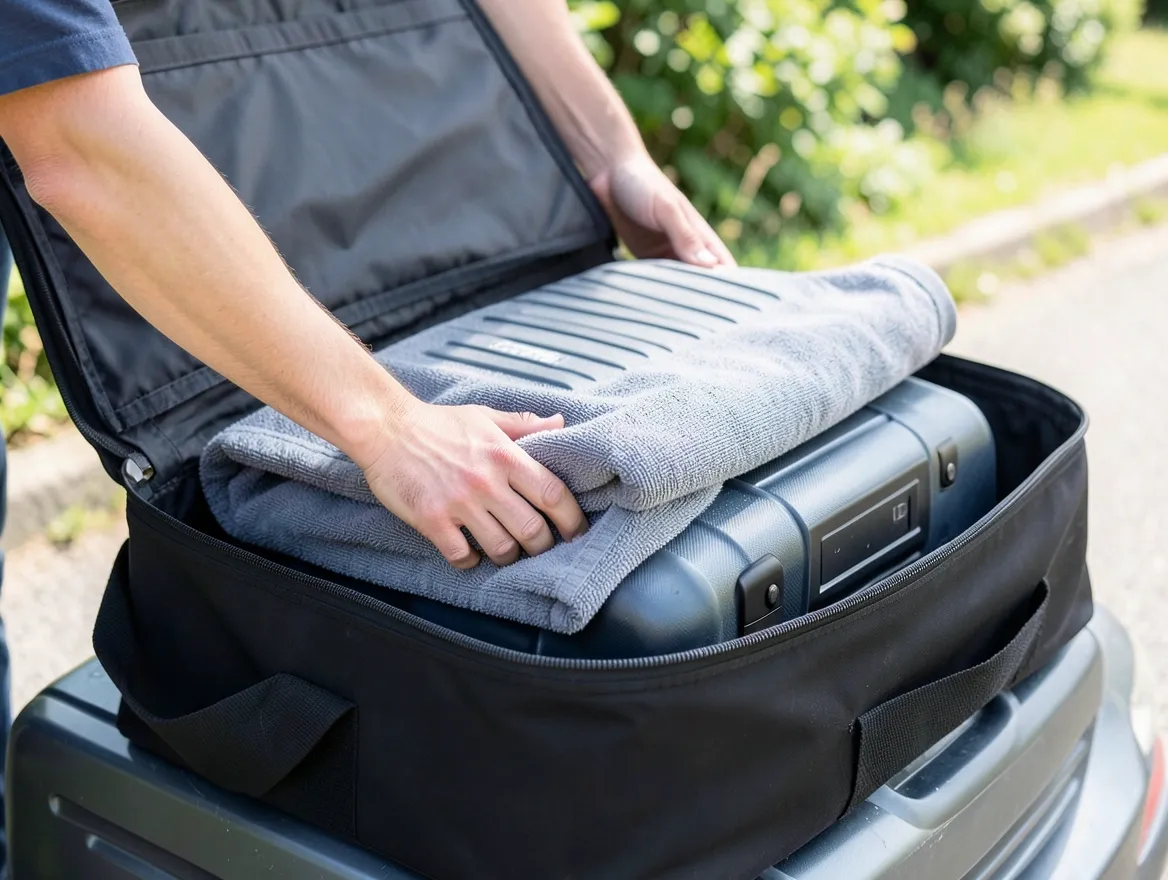
- Pad every rigid corner. Wrap suitcase corners and wheel housings in a towel, moving blanket, or spare clothing before closing the zipper – this is the single biggest thing that prevents fabric wear.
- Load the heaviest, flattest suitcase first, centered over the roof rails or crossbars, then build lighter and softer items around and on top of it.
- Keep suitcase wheels facing inward or down, never pressed against a seam or zipper, where they’re most likely to puncture the fabric.
- Distribute weight side-to-side and front-to-back so the load doesn’t shift the bag’s center of gravity during turns and braking.
- Re-tighten every strap after the first 10-15 minutes of driving; new straps and a newly-loaded bag both settle once the suitcases shift into place.
Suitcase Rack vs. Other Roof Cargo Options
A soft rooftop bag isn’t the only way to carry extra suitcases. If you want the full comparison of soft bags, open baskets, hard-shell boxes, and hitch-mount carriers, see our guide to the 4 types of car luggage racks compared. For the weight limits, real fuel-economy impact, and cubic-foot ranges behind the numbers used above, see our breakdown of roof rack storage capacity and MPG impact. If you’d rather lock your suitcases in a rigid, weatherproof shell instead of a soft bag, compare options in our best car roof cargo box guide. And if lifting heavy suitcases overhead isn’t practical, a hitch-mounted luggage carrier loads at bumper height instead of on the roof – a different mounting location worth considering for the same amount of extra suitcase space.
Frequently Asked Questions
What Is A Suitcase Rack For A Car?
A “suitcase rack for car” almost always means a soft-sided rooftop cargo bag rather than a rigid basket or box. It straps directly to bare roof rails, factory crossbars, or even door frames, and it’s built specifically to expand trunk space for road trips when the actual suitcases in your trunk won’t all fit.
How Many Suitcases Fit In A Rooftop Cargo Bag?
A 21 cu. ft. bag realistically holds about 3 large suitcases, 5 medium suitcases, or 8 carry-ons once you account for how rigid corners waste space inside a tapered fabric bag. A 30 cu. ft. bag holds roughly 5 large, 7 medium, or 12 carry-ons. See the capacity table above for the full breakdown by bag size.
Will Hard-Shell Suitcases Damage A Soft Rooftop Bag?
They can, if you load them directly against the fabric. Rigid corners and wheel housings are the most common cause of punctures and worn spots on soft rooftop bags. Wrapping each suitcase’s corners in a towel, moving blanket, or the bag’s own padded liner (if it includes one) before closing the zipper prevents most of this damage.
How Do I Install A Roof Cargo Bag?
Place the anti-slip mat on the roof first, then center the bag and secure it with the included straps. On cars with factory roof rails or crossbars, straps loop over the bars. On cars without a rack, most bags include door hooks that anchor to the door frames instead. Tighten every strap and check for movement before driving.
Are Rooftop Cargo Carriers Waterproof?
Most are, but “waterproof” varies by construction. Look for 840D or heavier PVC-coated fabric with taped or welded seams and a storm-flap-covered zipper, not just a water-resistant coating. Those details, not the cubic-foot number, are what actually keep suitcases dry in real rain.
Can I Use A Roof Bag Without A Rack?
Yes. Most rooftop cargo bags include door hooks specifically for cars with no roof rails or crossbars. Clean the roof first so the anti-slip mat grips properly, and re-check the straps after the first 10-15 minutes of driving since new straps settle.
How Much Weight Can A Rooftop Carrier Hold?
The bag itself is usually rated for 100-165 lb, but your vehicle’s dynamic roof-load rating (found in the owner’s manual) is almost always the lower, binding limit. A trunk full of hard-shell suitcases gets heavy fast, so weigh your bags before assuming the bag’s rating is the one that matters.
Conclusion
A suitcase rack for your car – really a rooftop cargo bag – only works as well as its cubic-foot number suggests if you plan around how rigid suitcases actually pack. Size up if you’re carrying several hard-shell bags, pad every corner before closing the zipper, and load the heaviest suitcase first and centered.
Whether you land on a 21 cu. ft. bag for a couple of large suitcases or the 30 cu. ft. pick above for a full family trip, matching the bag’s real usable capacity to your actual luggage – not just the advertised cubic feet – is what keeps a road trip’s cargo both dry and undamaged.
Products related to this article
Sponsored / affiliate links. As an Amazon Associate I earn from qualifying purchases. I may earn additional commission from eligible campaigns.