What Is Automotive Technology in High School? Classes & Certs
Automotive technology in high school is a career and technical education (CTE) program that trains students in vehicle maintenance, diagnosis, and repair — most run 540 to 1,200 hours depending on the ASE accreditation level. The certification a student earns matters: ASE Entry-Level certification needs no work experience, but professional ASE certification does. This guide covers what you actually learn, which certifications a high schooler can realistically earn, and where the program leads after graduation.
Quick Answer
High school automotive technology is a hands-on CTE course covering brakes, steering and suspension, electrical systems, engine performance, and heating and air conditioning. Students work on real vehicles in a shop, and in an ASE-accredited program they can test for ASE Entry-Level certification before they graduate.
The Role Of Automotive Technology In High School
Automotive technology is a career and technical education pathway that teaches students to inspect, diagnose, and repair vehicles using the same standards the repair industry uses. It sits alongside academic coursework rather than replacing it, and it is designed to end in a credential — not just a grade.
That credential requirement is federal. Under Perkins V, the CTE law signed on July 31, 2018, funded programs of study must align to industry standards, connect to postsecondary institutions or apprenticeships, and result in a credential that adds value to the high school diploma. That is why a well-run auto tech program is built around ASE task lists instead of a teacher’s personal syllabus.
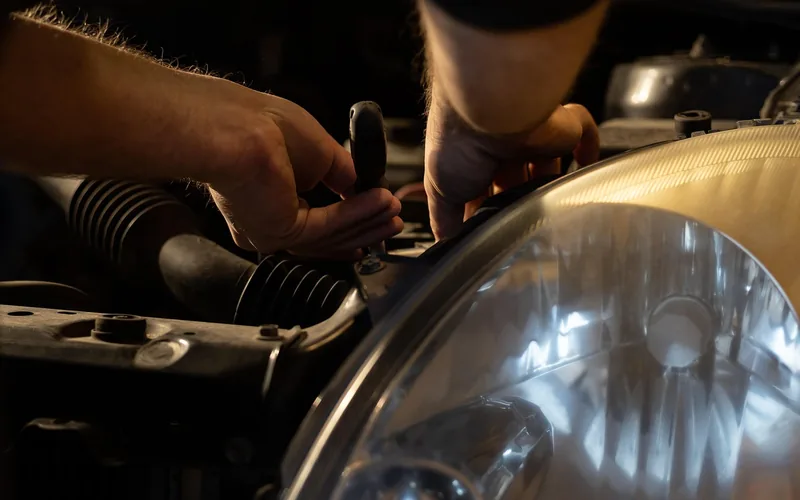
Gearing Up Future Mechanics
Auto tech programs give students the shop hours and diagnostic habits that repair employers screen for. Students learn to read a service procedure, follow a diagnostic tree instead of guessing, torque fasteners to spec, and document what they did — the workflow discipline that separates a hire-ready graduate from a hobbyist.
Essential Skills For Everyday Life
Students who never enter the trade still leave able to check fluids, read a tire sidewall, change a wiper or a battery, and recognize when a noise means “stop driving now.” Just as useful is the ability to hold an informed conversation with a shop — knowing what a brake job actually involves makes an estimate far harder to inflate.
The programs also lean hard on transferable habits: safety procedure, teamwork on a two-person job, and explaining a technical finding to a non-technical customer.
How Long Is A High School Automotive Program? (ASE Accreditation Levels)
Program length is not arbitrary. The ASE Education Foundation — the body formerly known as NATEF — evaluates secondary and post-secondary programs against published Automobile Program Standards and accredits them at one of three levels. Each level has its own minimum instructional hours and its own task list, and each higher level contains everything below it.
| Accreditation level | Minimum hours | Scope of the task list |
|---|---|---|
| MLR — Maintenance & Light Repair | 540 hours | Core maintenance, brakes, steering and suspension, electrical basics |
| AST — Automobile Service Technician | 840 hours | All MLR tasks plus engine performance and added diagnostic work |
| MAST — Master Automobile Service Technician | 1,200 hours | All AST tasks plus the full master-level task list |
Most high school programs accredit at the MLR level, which fits a two-year course sequence. Career-center and shared-time programs with longer daily blocks are the ones that usually reach AST or MAST. Instructor requirements scale too: MLR instructors must themselves hold current ASE certification in Maintenance & Light Repair (G1), Suspension & Steering (A4), Brakes (A5), and Electrical/Electronic Systems (A6).
Why this matters before you enrol: ask which level the program holds and whether the accreditation is current. An unaccredited shop class can still be worthwhile, but only an ASE-accredited program qualifies its students for the entry-level testing described below.
Best Auto Tech Student Tool Kit Pick
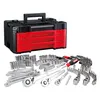
CRAFTSMAN 230 Pc Mechanics Tool Set with VERSASTACK Toolbox
Most auto tech programs supply the lifts and scan tools but expect students to start building a personal hand-tool set. A broad SAE and metric socket and wrench set in a latching box covers the majority of MLR-level shop tasks.
- Best for: A first-year student who needs one box that covers nearly every shop assignment
- Why we picked it: Both SAE and metric sizes in a closing case, so nothing goes missing between class periods
- Main drawback: Heavier and pricier than a starter kit, and overkill if the program already issues personal tool carts
Compare more auto tech student tool options
 Option 1 DEWALT Mechanics Tools Kit and Socket Set, 108-Piece
|
 Option 2 ANCEL AD310 Universal OBD II Scanner and Code Reader
|
 Option 3 CRAFTSMAN Torque Wrench, 3/8 in. Drive (CMMT99433)
|
As an Amazon Associate we earn from qualifying purchases.
What Certifications Can A High School Student Actually Earn?
This is where most descriptions of high school auto tech get vague, and it is the single most important thing to understand before you enrol. A high schooler cannot become a professional ASE Certified technician in the classroom — but there are real, industry-recognised credentials they can finish school holding.
ASE Entry-Level Certification
ASE Entry-Level Certification is a credential for students who are still in an ASE-accredited training program and have no shop employment yet. There is no work experience requirement — the student attends an accredited program and passes one or more entry-level tests. The automobile series alone covers ten separate tests, with additional series for collision repair and refinish and for medium/heavy truck.
It also shortens the road to professional status. Students who pass the required entry-level tests are credited with six months toward the one-year work experience requirement for the G1 Auto Maintenance and Light Repair certification, leaving roughly six more months of full-time work to claim it.
EPA Section 609 Refrigerant Certification
Anyone who services motor vehicle air conditioning for pay must be certified under EPA Section 609. There is no age or experience gate, so many auto tech programs run the test in class — it is one of the few federally required credentials a student can genuinely hold before graduation, and it makes a first job application stand out.
What Professional ASE Certification Still Requires
Professional ASE certification is a different credential with a different bar. ASE states that to become certified “you must pass an ASE test and have relevant hands-on work experience,” and while formal training can be substituted for part of that requirement, it cannot replace all of it. Coursework alone does not produce a certified technician; time on a real shop floor does. Plan on that, and the high school program stops looking like a finish line and starts looking like what it is — a head start.
Curricular Structure Of High School Auto Tech Programs
Accredited programs are built around the ASE task lists rather than a generic syllabus, so the topic order is fairly consistent from school to school: safety and shop procedure first, then measurement and fasteners, then system-by-system work.
From Basics To Advanced Systems
Year one typically covers shop safety, hand and power tool use, precision measurement, fluids and maintenance intervals, tires and wheels, and basic electrical theory — batteries, charging, starting, and lighting. Year two moves into brakes and hydraulics, steering and suspension including alignment angles, heating and air conditioning, engine performance, and computerised diagnosis using a scan tool and service information.
Certification Opportunities
Beyond ASE Entry-Level and EPA 609, individual programs bolt on their own credentials — manufacturer career-exploration certificates, state safety and emissions inspector licences where the state allows student licensing, and precision measurement credentials covering calipers, micrometers, and multimeters. Ask the specific school which of these it actually delivers; the list varies far more than the core curriculum does.
Synergy Between Theory And Practice
Classroom Learning Vs. Hands-on Training
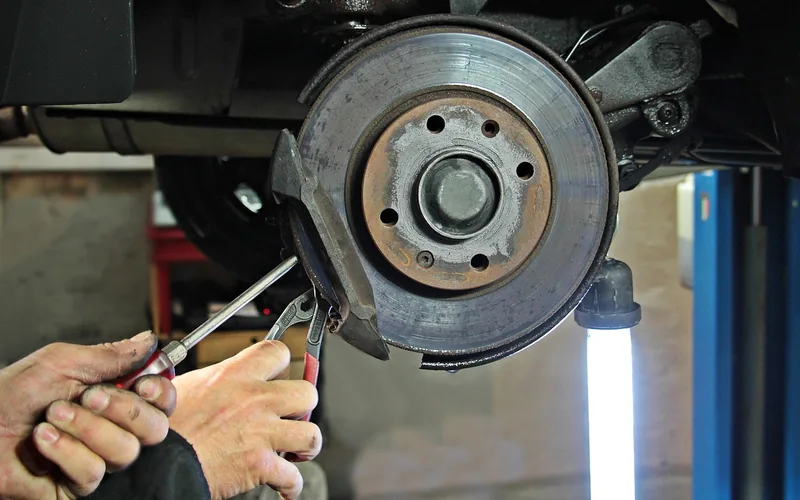
Classroom time covers how a system is supposed to work — circuit theory, hydraulic principles, the four-stroke cycle, refrigerant states. Shop time is where that gets tested against a vehicle that does not read the textbook. Accredited programs weight the balance heavily toward the shop, because the task lists they are measured against are performance tasks, not written ones.
The Importance Of Work-based Learning
Work-based learning — co-op placement, internship, or a registered pre-apprenticeship — is what converts classroom hours into the employment history professional certification later requires. It is also the most reliable hiring pipeline in the trade: a shop that has already watched a student work for a semester rarely needs a formal interview process.
The Broader Spectrum Of Automotive Studies
Interdisciplinary Approach
Modern vehicle work draws on mechanics, electronics, networking, and chemistry at once. Diagnosing a no-start means applying Ohm’s law to a voltage-drop test; diagnosing a misfire means reasoning about combustion and fuel trim data at the same time. That mix is why auto tech transfers cleanly into fields like industrial maintenance, avionics, HVAC, and heavy equipment.
Incorporating STEM In Auto Tech
Auto tech is applied STEM whether or not a school labels it that way. Students use algebra for gear ratios and displacement, geometry for alignment angles such as camber, caster, and toe, and data interpretation for live scan-tool streams. Programs with fabrication or design components add CAD work on top.
Career Pathways After High School Auto Tech
Auto tech is one of the few high school pathways that leads to a wage-earning job the summer after graduation. It is not, however, a pathway that ends there — the federal data is clear that the technicians who advance keep training after high school.
📊 The median annual wage for automotive service technicians and mechanics was $49,670 in May 2024, with employment projected to grow 4 percent from 2024 to 2034 and about 70,000 openings per year over the decade. — Source: U.S. Bureau of Labor Statistics, Occupational Outlook Handbook, 2024
Read the same handbook one line further and you find the caveat that matters most to a high school student: the typical entry-level education for the occupation is a postsecondary nondegree award, and BLS names completing a postsecondary program in automotive service technology as the best preparation for entry-level positions. A high school diploma is the floor, not the target.
Industry Certifications And Employment
- Enter a shop, dealership, or fleet as a lube or maintenance technician while stacking work hours toward professional ASE certification.
- Move into a manufacturer-sponsored dealer training track, which many brands open to recent CTE graduates.
- Use an EPA 609 card and entry-level certs as the differentiator on a first application against untrained applicants.
Continued Education In Automotive Technology
- Complete a certificate or two-year associate degree in automotive service technology, which BLS identifies as the strongest entry preparation.
- Specialise in the areas that pay above median — diagnostics, diesel, hybrid and electric drivetrains, or ADAS calibration.
- Continue into automotive engineering, engineering technology, or shop management if the goal is off the shop floor.
Students weighing the trade itself rather than the class should read our fuller pros and cons of an auto mechanic career, and anyone drawn to the design side rather than the repair side should look at why automotive engineering matters.
How To Turn A High School Auto Tech Class Into A Career
The sequence below is the shortest honest route from a shop class to a certified, wage-earning technician.
- Confirm the program is ASE-accredited: Ask the school which level it holds — MLR, AST, or MAST — and whether the accreditation is current, because entry-level testing depends on it.
- Pass the ASE Entry-Level tests: Sit the automobile-series tests offered by your program before graduation, while the coursework is still fresh and the testing is arranged through the school.
- Add EPA Section 609: Take the refrigerant certification in class so you leave school already legally cleared to service vehicle air conditioning for pay.
- Get work-based hours early: Take a co-op, internship, or pre-apprenticeship placement to start accumulating the employment history professional certification requires.
- Continue into a postsecondary program: Enrol in a certificate or associate degree in automotive service technology, which BLS names as the best preparation for entry-level work.
- Claim professional ASE certification: Once you have passed the professional test and met the hands-on work experience requirement, register the certification and specialise from there.
Evolving Automotive Technologies And Education
Staying Current With Industry Trends
Because ASE Education Foundation accreditation runs five years before re-evaluation, the standards a program is measured against are revised on a rolling basis rather than frozen. That is the mechanism that pushes shop equipment and curriculum to keep pace instead of drifting a decade behind the vehicles in the parking lot.
The Role Of Electric And Autonomous Vehicles
High-voltage work introduces a genuine safety layer that combustion work does not have — de-energising a pack, verifying zero potential, and using rated insulating gloves. Most secondary programs therefore teach EV and hybrid content at an awareness and safety level, with full high-voltage service training handled postsecondary or through a manufacturer. Driver-assistance systems add the newer growth area: sensor calibration after something as routine as a windshield replacement or an alignment.
Community And Industry Partnerships
Local Businesses As Educational Partners
Accreditation requires an active advisory committee drawn from local employers, which is why partnerships are structural rather than optional. Shops donate vehicles, parts, and retired equipment, host placements, and tell the program directly which skills their hiring is short of. Where a program is well connected locally, its graduates tend to be hired locally — the specifics of that market are covered in our guide to automotive technology in high school and local careers.
Benefits Of Dual Credit Programs
Dual credit turns high school shop hours into transcripted college credit at a partner institution, which is exactly the articulation Perkins V pushes funded programs to build. The practical payoff is that a student can begin the postsecondary award BLS calls the best entry preparation already part-finished, cutting both time and tuition.
Is High School Automotive Technology Worth It?
For a student who likes diagnosing problems with their hands, it is one of the strongest bets on a high school timetable — it ends in a portable credential, it costs nothing beyond tools, and it produces employable skill before graduation. It is a weaker fit for a student who expects to walk out fully certified, because that is not how the credential ladder is built.
“Unlike professional-level ASE certifications, there are no work experience requirements for ASE entry-level certifications. The student simply needs to pass one or more of the entry-level tests.”
Read that as the honest summary of the whole program: high school auto tech is designed to get a student onto the ladder without experience, not to carry them to the top of it.
Frequently Asked Questions
Why Does Automotive Need To Be Taught In High School?
Automotive technology gives students a credential and employable skill before graduation, which is exactly what Perkins V asks funded CTE programs to deliver. Students who never enter the trade still leave able to handle basic maintenance and judge a repair estimate, and those who do enter it start with shop hours their untrained peers do not have.
What Is Auto Technology In School?
Auto technology in school is a career and technical education course that teaches vehicle inspection, diagnosis, maintenance, and repair using industry task lists. Students split time between classroom theory and shop work on real vehicles, covering brakes, steering and suspension, electrical systems, engine performance, and heating and air conditioning.
What Is The Study Of Automotive Technology?
The study of automotive technology covers how vehicle systems work and how to diagnose and repair them when they do not. It spans mechanical systems, electrical and electronic systems, and the computerised controls that manage them, taught through a mix of theory and hands-on performance tasks rather than lectures alone.
Can You Get ASE Certified In High School?
You can earn ASE Entry-Level certification in high school, but not professional ASE certification. Entry-level testing is open to students in an ASE-accredited program with no work experience required. Professional certification additionally requires relevant hands-on work experience, and while formal training substitutes for part of that, it cannot substitute for all of it.
How Many Hours Is A High School Automotive Program?
It depends on the accreditation level. The ASE Education Foundation sets minimums of 540 hours for Maintenance and Light Repair (MLR), 840 hours for Automobile Service Technician (AST), and 1,200 hours for Master Automobile Service Technician (MAST). Most high school programs accredit at the MLR level across a two-year sequence.
Is Automotive Technology In High Demand?
Demand is steady rather than booming. The U.S. Bureau of Labor Statistics projects employment of automotive service technicians and mechanics to grow 4 percent from 2024 to 2034, about as fast as the average for all occupations, with roughly 70,000 openings each year over the decade as workers retire or change fields.
What Can You Do After High School Auto Tech?
Graduates commonly enter a shop, dealership, or fleet as a maintenance or lube technician while accumulating work hours toward professional certification. BLS names a postsecondary program in automotive service technology as the best preparation for entry-level positions, so many pair that first job with a certificate or associate degree, often using dual credit already earned.
Conclusion
Automotive technology in high school is an accredited CTE pathway, not a hobby class: 540 to 1,200 instructional hours built on ASE task lists, ending in credentials an employer recognises. Earn the ASE Entry-Level certs and EPA Section 609 before you graduate, get work-based hours as early as the program allows, and treat the postsecondary award as the next rung rather than an optional extra. Done in that order, a shop class turns into a career with a $49,670 median behind it.
Products related to this article
Sponsored / affiliate links. As an Amazon Associate I earn from qualifying purchases. I may earn additional commission from eligible campaigns.