What Is Speed Control In A Car? How It Works Explained
Speed control in a car is a system that automatically adjusts the engine’s power. This keeps the vehicle moving at a pre-set speed. You set it, and the car handles the gas pedal.
It’s great for highways. It takes some of the effort out of driving.
Most modern cars offer some form of speed control. It’s a comfort feature. It can also help save fuel.
You don’t have to constantly nudge the gas pedal. This is especially true on long, flat roads. It lets you relax your foot.
Speed control in a car, commonly known as cruise control, is a system that automatically maintains a set speed. It relieves the driver from the need to manually operate the accelerator pedal. This technology primarily benefits long-distance driving by enhancing comfort and promoting fuel efficiency.
How Does Basic Cruise Control Work?
Think of basic cruise control as an automatic gas pedal. It has a few main parts. These parts work together.
They keep your speed steady.
First, there’s the speed control module. This is like the car’s brain for this system. You tell it what speed to hold.
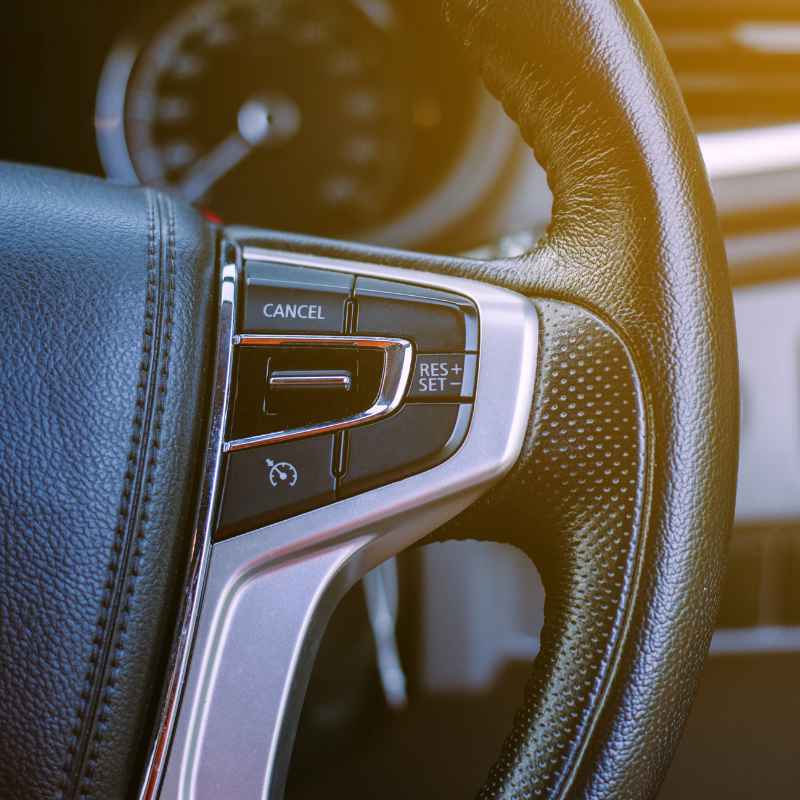
You usually do this with buttons on your steering wheel. These buttons let you set, resume, or cancel the speed. They also let you adjust the speed up or down.
Next, there’s a speed sensor. This sensor tells the control module how fast the car is actually going. It’s important for the system to know the real speed.
This way, it can make adjustments.
Then, there’s the throttle actuator. This is the part that physically does the work. It connects to the engine’s throttle.
The throttle controls how much air and fuel go into the engine. More air and fuel mean more power. Less means less power.
When you set your speed, the control module compares your current speed to your set speed. If you are going too slow, the module tells the actuator to open the throttle more. This gives the engine more gas.
The car speeds up.
If you are going too fast, the module tells the actuator to close the throttle. This reduces the gas to the engine. The car slows down.
This cycle happens very quickly. It keeps your speed very close to what you set.
On hills, this system works hard. Going uphill, the car naturally slows down. The control module senses this.
It opens the throttle wider to keep the speed. Going downhill, the car naturally speeds up. The module closes the throttle.
However, basic cruise control often can’t brake. So, on steep downhills, you might still speed up.
Understanding the Speed Control Components
Control Module: The “brain.” Takes your input and sensor data.
Speed Sensor: Tells the brain how fast you’re moving.
Throttle Actuator: The “muscle.” Controls the engine’s gas flow.
Driver Controls: Buttons on the steering wheel. Set, resume, cancel, speed up, slow down.
A Personal Story: My First Cruise Control Glitch
I remember a trip a few years back. It was a long drive to visit my parents. The highway was mostly clear.
I decided to try out the cruise control on my newer car. I set it to 70 mph. It was so nice!
My foot was off the pedal. I could stretch out a bit more.
Then we hit a big hill. The car started to slow down. I watched the speedometer drop.
It went to 68, then 65. The engine was revving, trying to keep up. But it just couldn’t.
The basic cruise control was fighting gravity. It kept the throttle wide open. But the car kept slowing.
I felt a little surge of panic. What if it didn’t catch up? What if I got stuck crawling up the hill?
That’s when I remembered I could just tap the brake pedal. That instantly disengaged the cruise control. I took over manually.
I got up the hill. Then I re-engaged it on the flat stretch.
It was a good lesson. Basic cruise control is smart, but it has limits. It can’t fix everything.
It’s best for steady conditions. It taught me to pay attention. Even with the car doing some work, I was still the driver.
The Evolution: Adaptive Cruise Control (ACC)
Basic cruise control was a great start. But drivers wanted more. They wanted a system that could react to traffic.
That’s where Adaptive Cruise Control, or ACC, comes in. It’s a much smarter version.
ACC doesn’t just maintain a set speed. It also keeps a safe distance from the car in front of you. This is a huge safety and convenience upgrade.
Imagine driving in stop-and-go traffic. With ACC, the car can slow down, stop, and even start again on its own.
How does it do this? ACC uses sensors. These are usually radar sensors or cameras.
They are mounted on the front of the car. These sensors scan the road ahead. They detect other vehicles.
The system constantly measures the distance. It also measures the speed of the car ahead. You still set a desired speed.
You also set a desired following distance. This distance is usually shown as a number of seconds. For example, you might set it to 2 seconds.
If the car in front speeds up or moves out of the way, ACC will return your car to the set speed. If the car in front slows down, ACC will also slow your car down. It does this by reducing the throttle.
It can also apply the brakes if needed.
Some advanced ACC systems can bring the car to a complete stop. They can even resume driving when traffic starts moving again. This is often called “stop-and-go” functionality.
It’s a game-changer for commuting.
ACC vs. Basic Cruise Control
Basic Cruise Control:
- Maintains a set speed only.
- Does not react to other vehicles.
- Can struggle on hills.
Adaptive Cruise Control (ACC):
- Maintains a set speed.
- Keeps a set distance from the car ahead.
- Uses sensors (radar, cameras).
- Can slow down and brake automatically.
- Some systems can stop and restart.
The Technology Behind ACC
The sensors are key to ACC. Radar sensors use radio waves. They bounce off objects ahead.
The system analyzes the return signals. This tells it about distance and speed. Cameras use visual information.
They can identify lanes and other vehicles.
These sensors feed data to a dedicated ACC control unit. This unit is more advanced than a basic cruise control module. It has more processing power.
It needs to make quick decisions based on changing road conditions.
The control unit then communicates with the car’s engine control unit (ECU). It also communicates with the braking system. The ECU manages the engine’s power.
The braking system applies the brakes.
When the system detects a slower vehicle, it acts. It first eases off the gas. If that’s not enough, it will gently apply the brakes.
The goal is to match the speed of the car ahead. It aims to maintain that preset following gap.
When the car ahead speeds up or moves away, the ACC system recognizes this. It then smoothly accelerates your car back up to your set speed. This all happens without you touching anything.
It’s important to remember that ACC is an assist system. It is not fully autonomous driving. You must always pay attention.
You should be ready to take over at any moment. The sensors can be affected by bad weather. Heavy rain, snow, or fog can reduce their effectiveness.
ACC Sensor Types
Radar Sensors
How they work: Emit radio waves that bounce off objects.
Pros: Work well in most weather, good at measuring distance and speed.
Cons: Can sometimes be fooled by stationary objects or road debris.
Camera Sensors
How they work: Use visual input to “see” the road and other cars.
Pros: Good at identifying lane markings, can help distinguish different types of objects.
Cons: Performance can be degraded by poor lighting or bad weather.
Combined Systems
Many cars use both radar and cameras. This offers the best of both worlds. It improves reliability.
Real-World Benefits and Considerations
The benefits of speed control systems are clear. For basic cruise control, it’s comfort. It reduces driver fatigue on long trips.
This can make driving feel less like a chore. It can also help drivers maintain a more consistent speed. This can lead to better fuel economy.
You avoid unnecessary acceleration and braking.
Adaptive Cruise Control takes these benefits further. The ability to maintain distance in traffic is a huge relief. It reduces stress.
It can also improve safety. By preventing tailgating, it can help avoid rear-end collisions. The car’s reaction time might be faster than a human’s.
However, there are things to consider. As I learned, basic cruise control struggles with terrain. It’s not for winding roads or unpredictable traffic.
You must disengage it manually. This is usually done by tapping the brake or clutch pedal. Or you can press a cancel button.
ACC is better suited for more situations. But it’s not foolproof. You should never rely on it completely.
Always be aware of your surroundings. Check your mirrors often. Be ready to brake yourself.
Conditions like heavy rain or snow can affect sensor performance.
Also, different cars have different ACC systems. Some systems can brake harder than others. Some can bring you to a complete stop.
Others might require you to brake yourself when the speed gets very low. Always read your car’s owner’s manual. Understand how your specific system works.
In my experience, ACC is amazing for highway driving. It makes long commutes much more bearable. I often use it on my regular drive to visit family.
It lets me focus more on the road. It reduces the constant small adjustments needed to maintain speed and distance.
When to Use Speed Control
Best For:
- Long highway drives.
- Relatively flat terrain.
- Traffic situations (for ACC).
- When you want to reduce fatigue.
Use With Caution or Avoid:
- Winding or curvy roads.
- Heavy city traffic (for basic cruise control).
- Poor weather conditions (especially for ACC sensors).
- When road conditions are unpredictable.
Speed Control vs. Other Driving Aids
It’s easy to get speed control systems mixed up with other driver aids. But they have different jobs. Lane Keeping Assist, for example, helps keep you centered in your lane.
It uses cameras to see lane markings. It can steer slightly to keep you on track.
Forward Collision Warning alerts you if you’re too close to the car ahead. It might flash a warning light or beep. Some systems also offer Automatic Emergency Braking (AEB).
If you don’t react to a warning, AEB can apply the brakes forcefully.
ACC is unique because it combines speed maintenance with distance keeping. It takes over the accelerator and brakes to manage both. It’s a step toward more advanced driver assistance systems (ADAS).
Think of ACC as a very smart cruise control. It’s not full self-driving. It’s meant to help you, not replace your attention.
It handles the tedious parts of driving. This frees up some of your mental load. But you must remain engaged.
What This Means for You
Knowing how speed control works helps you use it wisely. For basic cruise control, it’s best for steady, open roads. It makes long highway stretches less tiring.
Just remember to be ready to take over on hills or when traffic changes.
Adaptive Cruise Control is a much more versatile tool. It’s excellent for most highway driving, even in traffic. It significantly boosts comfort.
It can also add a layer of safety by maintaining distance. But like all driver aids, it requires your supervision.
If your car has ACC, take some time to learn its specific features. Read the manual. Try it out in safe conditions.
Understand how it behaves. Pay attention to the following distance settings. Adjust them to what feels comfortable and safe for you.
When is it normal to use speed control? Anytime you are on a highway and want to maintain a steady speed. It’s especially useful on long, monotonous drives.
When should you worry? You should always worry if you find yourself becoming too relaxed. If you start looking at your phone or taking your eyes off the road because of it, that’s a problem.
It’s a tool, not a chauffeur.
Simple checks for ACC include ensuring the sensors are clean. If your car has a camera behind the windshield or radar sensors in the bumper, keep them free of dirt and snow. If they are blocked, the system won’t work correctly.
Quick Tips for Using Speed Control
Here are some simple tips to help you use speed control effectively and safely.
For Basic Cruise Control:
- Use it on open highways with consistent speed limits.
- Be prepared to disengage it instantly on hills, curves, or if traffic slows.
- Avoid using it in bad weather or on wet roads where traction might be an issue.
For Adaptive Cruise Control (ACC):
- Familiarize yourself with your car’s specific ACC settings.
- Set a following distance that feels safe to you. Start with a longer distance and adjust if needed.
- Always keep your eyes on the road and hands near the steering wheel.
- Ensure your sensors are clean and unobstructed.
- Understand that ACC may not react to stationary objects in all situations.
General Tips for Both:
- Your car’s manual is your best friend. Read it!
- Practice using the system in light traffic to get a feel for it.
- Never use speed control when you are tired or distracted. It’s a convenience, not a cure for fatigue.
- Always be ready to take over driving at any moment.
Frequently Asked Questions About Speed Control
What is the main purpose of cruise control?
The main purpose of cruise control is to automatically maintain a set speed for your car. This helps reduce driver fatigue on long drives and can improve fuel efficiency by keeping a steady pace.
Can cruise control brake for me?
Basic cruise control cannot brake. It only controls the engine’s acceleration. Adaptive Cruise Control (ACC) systems can apply the brakes to slow down or stop the car if traffic ahead slows.
Is adaptive cruise control (ACC) safe to use in all weather?
ACC can be less effective in bad weather like heavy rain, snow, or fog. These conditions can interfere with the sensors (radar and cameras) that ACC relies on to detect other vehicles.
How do I turn off cruise control?
You can typically turn off cruise control by tapping the brake pedal, pressing the clutch pedal (if manual transmission), or pressing the “Cancel” button on the steering wheel controls. Some systems also disengage if you steer sharply.
Will cruise control help me save gas?
Yes, both basic cruise control and ACC can help save gas. By maintaining a steady speed and avoiding frequent acceleration and braking, they help the engine operate more efficiently. This is especially true on flat, open roads.
What is the difference between cruise control and lane keeping assist?
Cruise control manages your speed. Lane Keeping Assist helps keep your car centered within its lane using cameras and steering adjustments. They are different driver assistance features that work together.
Should I use cruise control in hilly areas?
Basic cruise control is not ideal for very hilly areas. It may struggle to maintain speed going uphill and can potentially accelerate too much going downhill. Adaptive Cruise Control is better in varied terrain as it can adjust speed more dynamically.
Conclusion
Speed control, from basic cruise to advanced ACC, is a fantastic driver aid. It makes driving more comfortable and can add a layer of convenience and safety. Understanding how these systems work helps you use them better.
Always remember to stay alert and be ready to take control. Happy driving!
Products related to this article
Sponsored / affiliate links. As an Amazon Associate I earn from qualifying purchases. I may earn additional commission from eligible campaigns.