What Is the Air Screw on a Carburetor? Explained
If you’re tinkering with engines, you’ve probably heard the question, What Is the Air Screw on a Carburetor? It’s a common topic for beginners because carburetors can seem tricky. Don’t worry, we’re going to keep things simple. This guide will explore the air screw’s purpose and how it works. We’ll break down everything step-by-step so you can adjust your carburetor with confidence. Ready to get started?
An Overview of Air and Fuel Control
Carburetors are amazing little devices that mix air and fuel to make engines run. They’ve been around for a long time, and while newer engines use fuel injection, carburetors are still found in many older vehicles, small engines, and even some motorcycles. The main goal is to get the right ratio of air and fuel. This is crucial for performance and fuel efficiency. If the mix is off, the engine can run poorly, stall, or use too much fuel. The air screw is a small, but important component that helps dial in this crucial mix. Understanding its function is a key element of carburetor adjustments.
The Carburetor’s Core Functions
The carburetor’s main job is to blend air and fuel in the correct proportions for combustion inside the engine. This process is far more intricate than just pouring gas into a cylinder. The carburetor needs to precisely control the amount of fuel delivered based on the amount of air flowing through the engine. The air screw plays a key part in this precise control system. The carburetor’s performance directly affects the engine’s power, fuel consumption, and emissions. A well-adjusted carburetor will provide the engine with the right air-fuel mixture, ensuring efficient operation. The air screw adjustment contributes to making this happen.
Fuel Metering: The carburetor measures and delivers the correct amount of fuel, which depends on the amount of air pulled into the engine. The size of the jets and the fuel level in the float bowl play a part in this.
This fuel metering process allows the engine to run at various speeds. A well-functioning fuel system is important for maximizing performance.
Airflow Regulation: It controls the air flowing into the engine, which is the other half of the mixture. The throttle controls how much air goes in, and the air screw can fine-tune the mix at idle.
Airflow regulation allows the engine to respond to the operator’s commands. A well-controlled airflow can enhance the engine’s overall performance.
Mixing the Air and Fuel: It’s not enough to measure air and fuel separately; they must be mixed thoroughly. The carburetor does this by spraying fuel into the airflow, creating a fine mist.
The mixing process ensures a homogeneous mixture, resulting in efficient combustion. A well-mixed air and fuel mixture contributes to maximizing engine power and minimizing emissions.
Idle Circuit: At idle speed, the engine needs a very specific air-fuel mix. The carburetor uses a special circuit to deliver this mix, and the air screw helps fine-tune it.
The idle circuit makes sure the engine runs smoothly when it is not under load. Proper idle adjustments are essential for ensuring an engine idles correctly, is easy to start, and doesn’t stall.
Air-Fuel Ratio Basics
The air-fuel ratio, or AFR, is the weight ratio of air to fuel entering the engine. This ratio is extremely important for how well the engine runs. The “ideal” air-fuel ratio for gasoline engines is about 14.7 parts air to 1 part fuel, often called stoichiometric. This ratio lets the engine burn fuel completely, which leads to great fuel efficiency and minimizes emissions. However, the best AFR can change depending on how the engine is being used. For example, at idle or during acceleration, the engine may need a richer mixture (more fuel) to run smoothly. On the other hand, for cruising at a steady speed, a leaner mix (less fuel) may be sufficient.
Different situations require different air-fuel ratios. Knowing these variations helps with proper carburetor adjustment:
Stoichiometric Mixture: This is a ratio of roughly 14.7:1 (air to fuel), which is ideal for good fuel economy and low emissions under steady-state conditions.
The stoichiometric mixture is like a sweet spot, where the fuel burns completely. This also helps reduce harmful emissions.
Lean Mixture: A lean mixture has more air than fuel (e.g., 16:1 or higher). This can improve fuel economy, but if the mixture is too lean, it can damage the engine from overheating.
A lean mixture often causes the engine to run hot, increasing the chance of engine damage. It can also cause the engine to run poorly.
Rich Mixture: A rich mixture has more fuel than air (e.g., 12:1 or lower). This can boost power, especially during acceleration, but it reduces fuel economy and increases emissions.
A rich mixture often results in unburnt fuel, which leads to both poor fuel economy and polluting exhaust. While it can enhance power during certain operations, it is generally undesirable.
Unveiling What Is the Air Screw on a Carburetor?
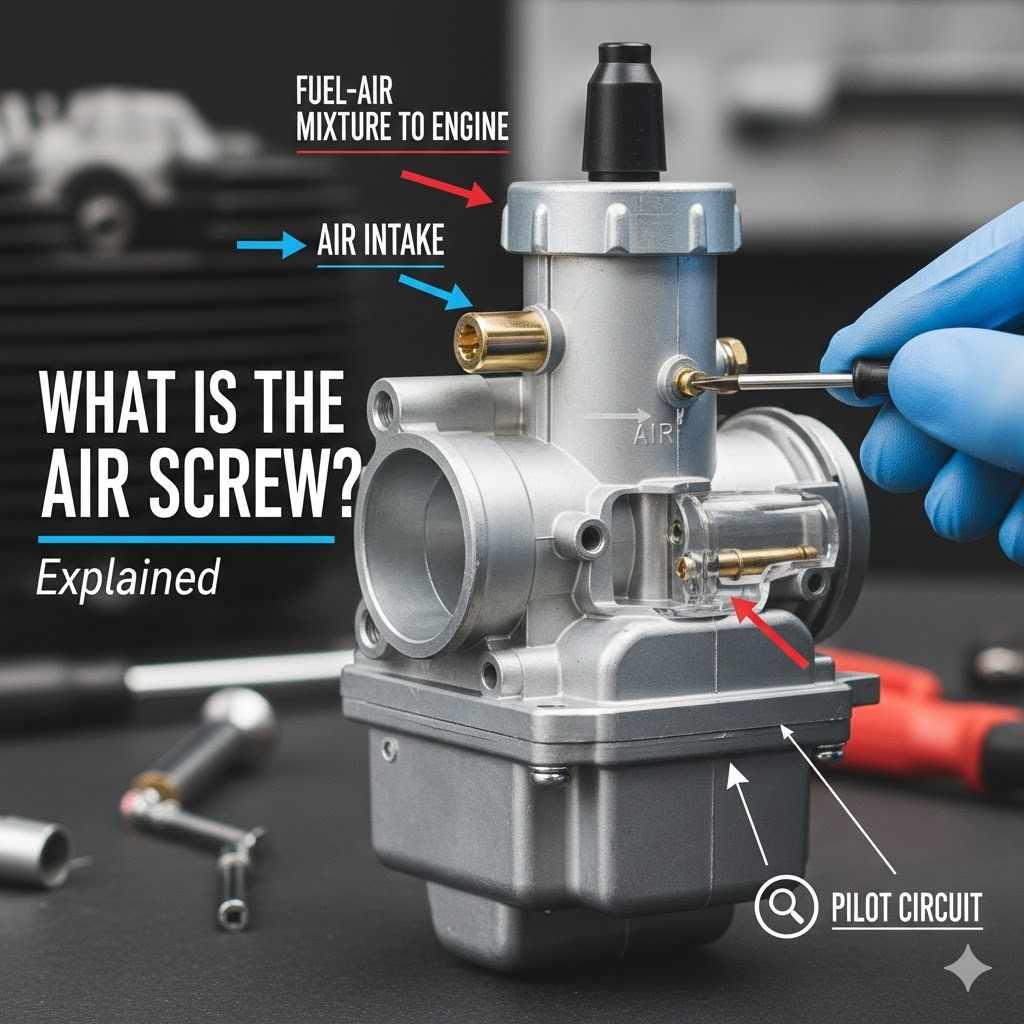
The air screw, sometimes also called the mixture screw, is a small adjustable screw located on the carburetor body. It is typically positioned on the side or bottom of the carburetor. The air screw adjusts the air-fuel mixture at idle speed. It does this by controlling the amount of air that mixes with the fuel in the idle circuit. Turning the air screw in (clockwise) usually makes the mixture leaner (less fuel). Turning it out (counterclockwise) makes the mixture richer (more fuel). This is an essential component when thinking about What Is the Air Screw on a Carburetor?
The Air Screw’s Location and Appearance
The air screw is a crucial part of your carburetor. Its exact location depends on the carburetor design. However, it’s typically easy to find once you know what to look for. Common places to find the air screw are on the side or the bottom of the carburetor body. It often has a slotted head, which makes it easy to adjust with a screwdriver. Sometimes, you’ll find a small spring behind the air screw. The spring helps to keep the air screw in place and prevents it from vibrating loose. It’s usually easy to identify, so take a look and get familiar with this component.
Location Variations: The placement varies. It can be found on the side, bottom, or sometimes at the top of the carburetor. You should always consult your specific engine’s repair manual.
Knowing where your air screw is located will make adjustments easier. The location may be different on various carburetors, so knowing yours will help.
Identifying Features: Look for a small screw head, often slotted, or sometimes with a special shape. This will help you identify the air screw.
The head of the air screw is usually simple to identify with a screwdriver, so this visual will help in identification.
The Spring: A small spring is often located behind the screw. This helps keep it steady and in place, which is important for maintaining the correct setting.
The spring ensures the air screw stays in place. This makes sure your engine will maintain its air-fuel ratio settings, maintaining optimal performance.
Air Screw Materials: It is usually made from brass or steel. It can withstand fuel and heat, which ensures its long life.
The air screw is built to last. The materials it is made from are durable enough to handle what it needs to handle.
Air Screw’s Role in Engine Operation
The air screw plays a key role in the engine’s performance, particularly at idle. The air screw directly impacts the air-fuel mixture when the engine is idling. When you adjust the air screw, you’re changing the amount of air that mixes with the fuel that is fed through the idle circuit. This precise control helps determine how the engine runs at low speeds. A proper adjustment is key for a smooth idle and a reliable engine start. Incorrect settings can cause the engine to stall, run roughly, or consume excessive fuel.
Idle Circuit Control: The air screw controls the amount of air that mixes with fuel in the idle circuit. This influences the mixture at low engine speeds.
Adjusting the air screw directly impacts how the engine runs at idle. This is the stage where the engine is not under load.
Idle Speed Impact: It affects idle speed, and improper adjustment can cause stalling or rough running. You will likely notice a significant difference if your air screw is poorly tuned.
Fine-tuning the air screw contributes to the smoothness and stability of the engine’s idle. It can prevent stalling or rough running.
Fuel Efficiency and Emissions: The correct air-fuel mixture, adjusted by the air screw, can improve fuel efficiency and minimize emissions.
A well-adjusted air screw is an essential step towards optimal fuel economy. It also contributes to minimizing the engine’s overall emissions.
Smooth Transitions: Proper air screw adjustment helps provide smooth transitions from idle to higher speeds.
Adjusting the air screw helps make smooth transitions in engine speed easier. The change from low to high will be more responsive.
Air Screw Adjustment Techniques
Adjusting the air screw is a simple but important process. Start by warming up the engine. This ensures the carburetor is operating at its normal temperature. Next, locate the air screw, usually found on the side or bottom of the carburetor. Gently turn the screw clockwise until it lightly seats, then back it out a certain number of turns, typically 1.5 to 2.5 turns is a safe start. Then, start the engine and make slight adjustments to the air screw while listening to the engine’s behavior. A correctly adjusted air screw will result in a stable idle, a responsive throttle, and efficient operation. This is a very common task when exploring What Is the Air Screw on a Carburetor?
Step-by-Step Adjustment Guide
Adjusting the air screw is relatively straightforward, but it’s important to do it correctly for optimal engine performance. The procedure generally involves a few key steps. First, warm up the engine to its operating temperature. Then, gently seat the air screw by turning it clockwise until it lightly touches. After that, back the screw out a specified number of turns, often around 1.5 to 2.5 turns as a starting point. Finally, start the engine and carefully adjust the screw while monitoring the engine’s idle speed. Remember to make small adjustments and allow the engine to respond. This approach will allow you to fine-tune the air-fuel mixture for smooth operation. You can always revert to your starting position if you make a mistake.
-
- Warm Up the Engine: Start the engine and let it warm up completely. This ensures that the engine is at its normal operating temperature.
Warming the engine lets you know where your engine’s baseline setting should be. This step helps in tuning your air screw.
-
- Locate the Air Screw: Identify the air screw on the carburetor. It’s usually a small screw on the side or bottom. Consult the engine’s manual if needed.
Knowing where the air screw is located is necessary before any tuning can be done. If you are unsure, you can consult your engine’s manual.
-
- Lightly Seat the Screw: Gently turn the air screw clockwise until it lightly seats. Do not tighten it hard.
Seating the screw is important for establishing a starting point for adjustment. This step is about getting a baseline.
-
- Back Out to Start: Back the air screw out a specific number of turns. Often, it’s 1.5 to 2.5 turns counterclockwise.
Backing out the screw is how you get the engine to start properly. Always start here before making any adjustments.
-
- Start the Engine: Start the engine and let it idle. Observe the engine’s behavior.
This will allow you to gauge if any further adjustments are needed. The air screw will need to be changed in almost every situation.
-
- Adjust and Listen: Make small adjustments, turning the screw in or out. Listen to how the engine responds.
Make small adjustments to fine-tune the idle, ensuring a responsive throttle. This will give you the best settings possible.
-
- Final Adjustments: Find the point where the engine runs smoothly and idles best.
The goal is to get a smooth idle and good throttle response. Small adjustments may be required to get there.
Troubleshooting Common Issues
Sometimes, even after adjusting the air screw, you may encounter problems. Common issues include a rough idle, stalling, or poor throttle response. These issues often relate to an incorrect air-fuel mixture. To resolve them, you can try re-adjusting the air screw. However, you might also need to check other carburetor components, such as the idle jet or the float level. Another cause could be a vacuum leak, which can affect the air-fuel mixture. Thoroughly checking for leaks and the condition of all relevant parts is a good idea. Knowing how to troubleshoot these problems is an important part of understanding your carburetor.
Rough Idle: If the engine idles roughly, try adjusting the air screw in small increments. It could be too lean or too rich.
When you have a rough idle, the engine might be getting too much or too little air or fuel. Adjustments to the air screw can help correct this.
Stalling: If the engine stalls at idle, the mixture is often too lean. Try enriching the mixture by turning the air screw out.
If your engine keeps stalling, the air-fuel mixture is likely not correct. Enriching the mixture may help you fix this issue.
Poor Throttle Response: If the engine hesitates or bogs when you open the throttle, the mixture might be too lean or too rich. Adjust the air screw to refine the mixture.
Poor throttle response can indicate issues with the air-fuel mixture. Adjust the air screw to fine-tune performance and make it more responsive.
Vacuum Leaks: Vacuum leaks can disrupt the air-fuel mixture and cause various problems. Inspect the carburetor and manifold for any leaks.
Vacuum leaks are often the culprit if you are having issues. It is important to check the seals to see if they are the problem.
The Impact of the Air Screw on Performance
The air screw significantly impacts engine performance. A properly adjusted air screw ensures the engine gets the right air-fuel mixture, crucial for smooth running and optimum performance. If the air screw is set incorrectly, it can lead to various issues. These issues include a rough idle, difficulty starting, poor acceleration, and reduced fuel economy. Therefore, a properly adjusted air screw can have a big effect. It will improve performance and keep the engine operating efficiently. Learning about What Is the Air Screw on a Carburetor? is very useful for improving your engine’s output.
Air Screw and Engine Power
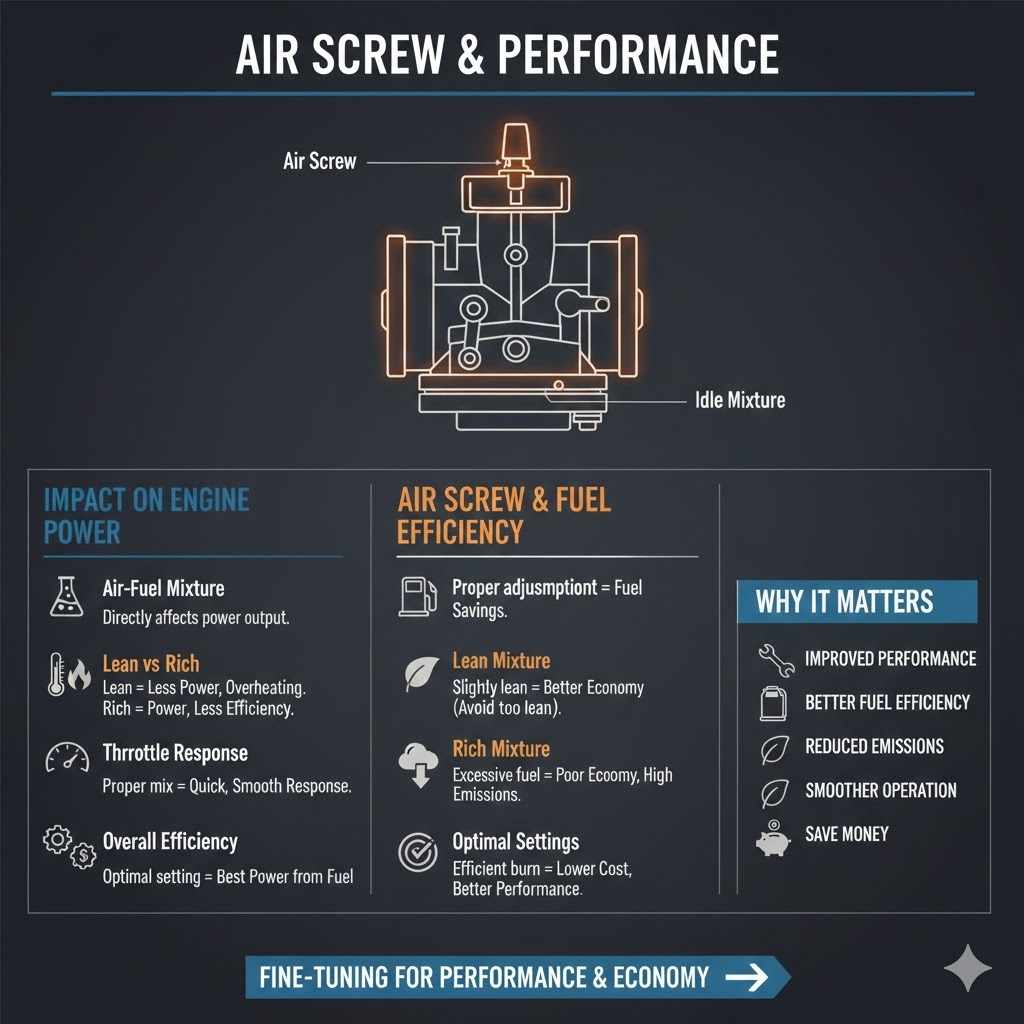
The air screw’s adjustment directly affects engine power. An improperly adjusted air screw can restrict the engine’s ability to develop its full power. This is because the air-fuel mixture is not ideal for combustion. For example, a too-lean mixture may cause the engine to lack power. It may also overheat. In contrast, a too-rich mixture can cause the engine to run sluggishly. This means that you need to find the correct balance. The correct balance means the air screw allows the engine to produce the right level of power. The goal is to provide enough fuel without excessive waste. This is what you should focus on when thinking about adjusting the air screw.
Air-Fuel Mixture Influence: The air screw directly impacts the air-fuel mixture. This is an important factor in power output.
The air screw will affect engine power. You must ensure you get the proper air-fuel mixture for the best outcome.
Lean vs. Rich Settings: A lean mixture might reduce power and risk damage. A rich mixture can deliver more power, but at the cost of fuel economy.
The air screw can improve power, but both lean and rich mixtures have drawbacks. You should aim for the optimal mixture.
Throttle Response: The air screw also affects the throttle response. A properly adjusted mixture allows the engine to respond quickly and smoothly.
When the throttle opens and closes, the engine’s performance will change. A well-adjusted air screw helps the engine respond quickly.
Overall Engine Efficiency: Tuning the air screw ensures the engine runs efficiently. This leads to the best possible power output from the fuel.
The air screw plays a key part in the engine’s overall efficiency. It helps deliver the best power output for the given fuel.
Air Screw and Fuel Efficiency
The air screw is very important for how much fuel your engine uses. A well-adjusted air screw helps your engine burn fuel efficiently. This results in better fuel economy. If the air screw is set incorrectly, your engine might consume more fuel than necessary. A lean mixture might make your engine use too much fuel. It can also cause problems like poor performance and higher emissions. You can improve your engine’s fuel efficiency by adjusting the air screw properly. This can not only save you money on fuel, but it can also reduce your engine’s impact on the environment.
Fuel efficiency can be easily affected by adjusting the air screw. A study showed that optimizing the air screw setting can improve fuel economy by as much as 10% in some engines, especially at idle and low speeds. This is very important for overall fuel economy.
Impact on Fuel Consumption: The air screw directly affects how much fuel your engine uses. Proper adjustment can lead to significant fuel savings.
Adjusting the air screw is an important step toward better fuel economy. You might notice a decrease in fuel usage.
Lean Mixture Benefits: A slightly lean mixture can lead to better fuel economy. It is important that you do not go too lean, though.
A slightly lean mixture will improve fuel economy. It’s also important to make sure the engine does not overheat.
Rich Mixture Consequences: A rich mixture can lead to excessive fuel consumption. This often comes with higher emissions and reduced engine performance.
If you have a rich mixture, you will likely see a large drop in fuel economy. The emissions of your engine will also be negatively impacted.
Optimal Settings: Getting the air screw settings just right ensures the engine burns fuel efficiently. This means your engine will use fuel in the best way possible.
The main goal is to get the best performance from your engine. It will lead to both lower fuel consumption and better performance.

Frequently Asked Questions
Question: What is the main function of the air screw on a carburetor?
Answer: The air screw’s main job is to control the amount of air mixing with fuel in the idle circuit, which affects the engine’s air-fuel mixture at idle speed.
Question: What happens if the air screw is turned in (clockwise)?
Answer: Turning the air screw in usually makes the mixture leaner (less fuel) at idle.
Question: What is the recommended starting point for adjusting the air screw?
Answer: A common starting point is to lightly seat the screw and then back it out 1.5 to 2.5 turns.
Question: How can I tell if the air screw is properly adjusted?
Answer: A properly adjusted air screw will allow the engine to idle smoothly, accelerate well, and run efficiently.
Question: Can the air screw affect fuel economy?
Answer: Yes, the air screw plays a key role in fuel economy. Adjusting it correctly ensures efficient fuel combustion and prevents excessive fuel consumption.
Final Thoughts
You’ve explored the inner workings of carburetors and learned about What Is the Air Screw on a Carburetor?. We’ve taken a look at what the air screw does, where it’s found, and how to adjust it. We’ve also explored the impacts of proper adjustment on engine performance and fuel efficiency. Remember, adjusting the air screw is a process of small changes. Listen to how your engine responds to each adjustment. Don’t be afraid to experiment, and consult your engine’s manual if you are unsure. By understanding the function of the air screw and practicing the adjustment steps, you can improve your engine’s performance and fuel economy. Good luck, and keep learning!