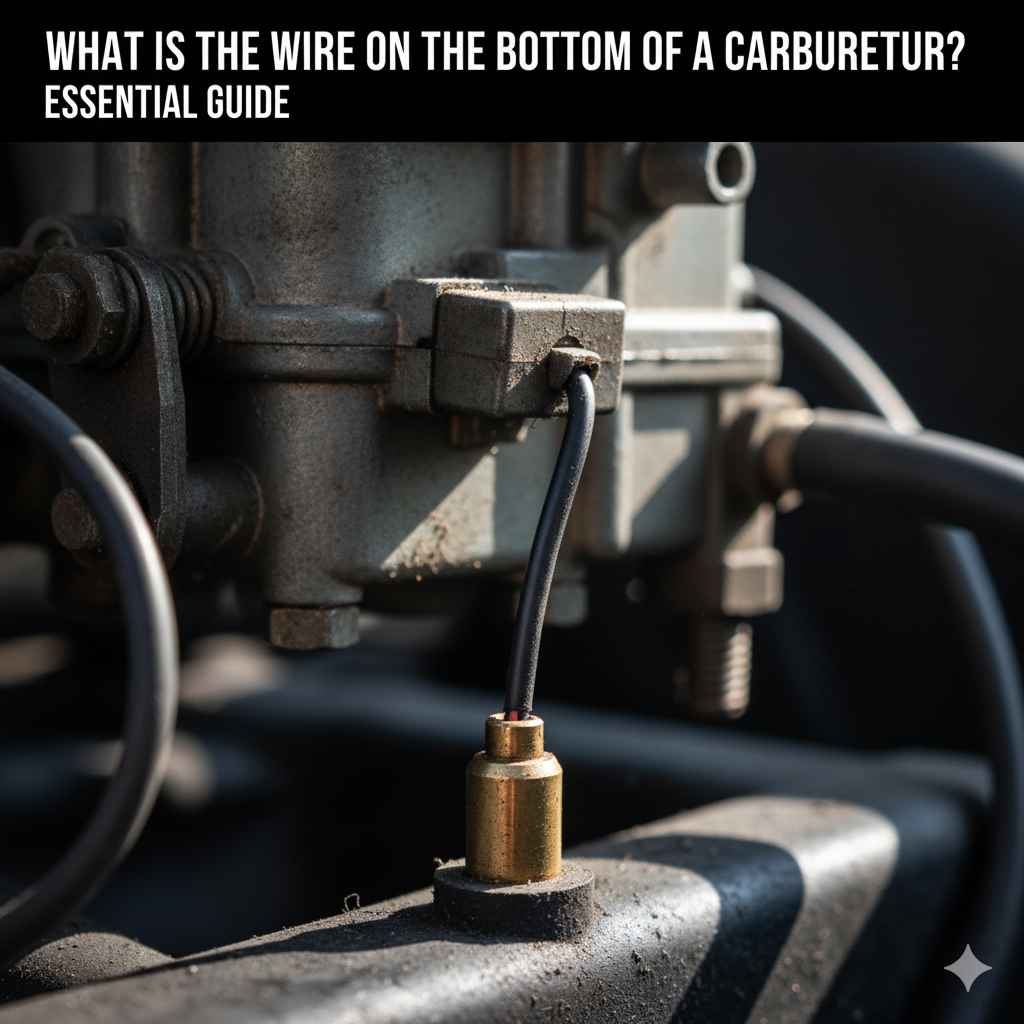
What is the Wire on the Bottom of a Carburetor? Essential Guide
The wire on the bottom of a carburetor is usually a fuel line, responsible for delivering gasoline from your car’s fuel tank to the carburetor for mixing with air. It’s a crucial part of your engine’s fuel system.
Ever noticed a small wire or tube extending from the bottom of your car’s carburetor and wondered what it does? You’re not alone! Many car owners see this and feel a little confused, especially if they’re new to DIY car maintenance. Don’t worry, it’s a common question, and understanding it is not as complicated as it might seem. This seemingly simple component plays a vital role in how your engine runs.
Carburetors, though less common in modern vehicles, are still found in many older cars, motorcycles, and small engines. If your car has one, knowing its basic parts helps you understand its function and spot potential issues. This guide will break down what that wire is, why it’s there, and what to do if you suspect a problem.
We’ll walk you through its purpose, how it works, and what signs might mean it needs attention. By the end, you’ll feel much more confident about your carburetor and its essential components. Let’s dive in and demystify this part of your engine!
Understanding the Carburetor and Its Components
Before we zero in on the “wire” at the bottom, let’s briefly talk about the carburetor itself. Think of a carburetor as the engine’s chef. Its main job is to mix air and fuel in the right proportions so your engine can run smoothly and efficiently. It takes gasoline from the fuel tank and atomizes it, creating a fine mist that mixes with incoming air. This air-fuel mixture is then sent into the engine’s cylinders to be ignited by the spark plugs.
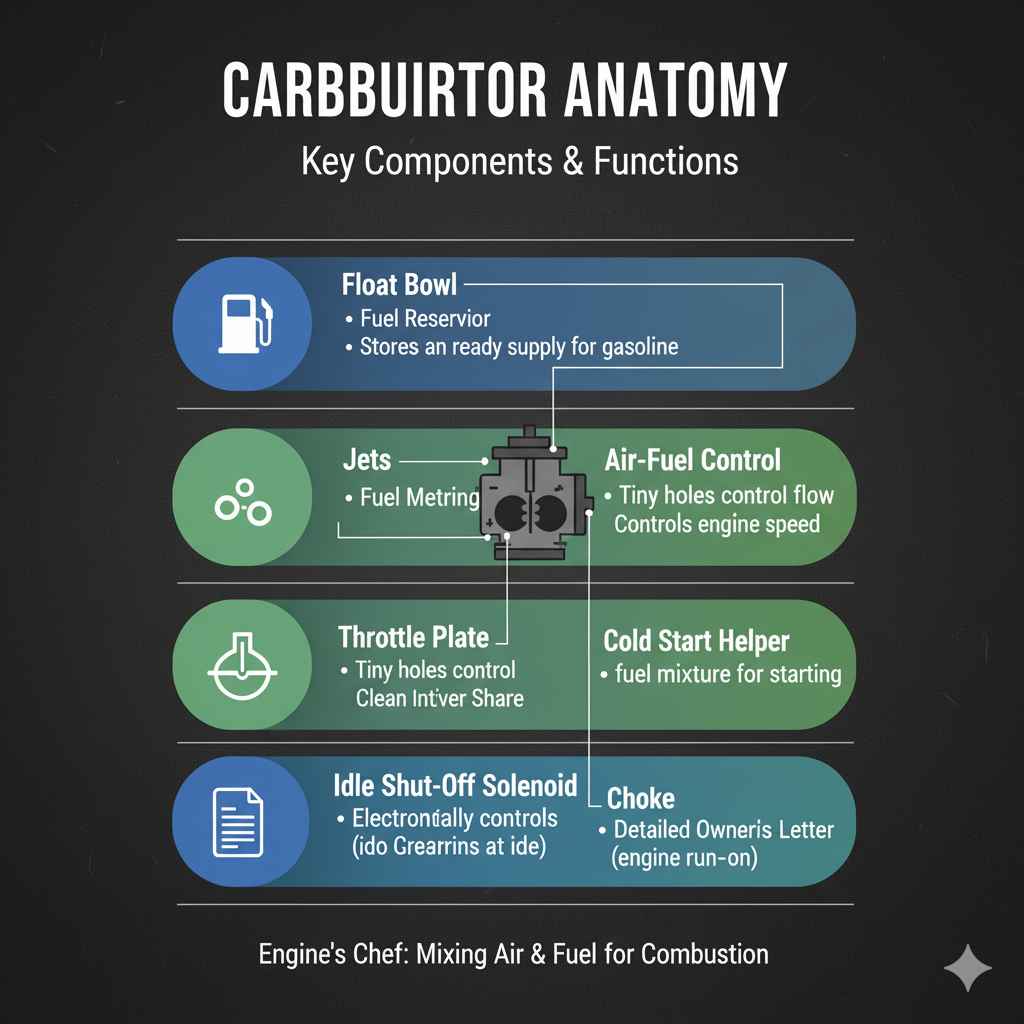
The carburetor has several parts, each with a specific function. These include:
The float bowl: This small reservoir stores a ready supply of fuel.
The jets: These are tiny holes that control the amount of fuel entering the carburetor.
The throttle plate: This acts like a valve, controlling how much air-fuel mixture enters the engine, which in turn controls your engine’s speed.
The choke: This helps enrich the fuel mixture for easier starting in cold weather.
And, of course, the “wire” we’re interested in!
So, What Exactly is the “Wire” on the Bottom of a Carburetor?
In most cases, the “wire” you’re seeing is actually a fuel inlet line or a fuel supply hose. This isn’t a literal electrical wire. It’s a metal or reinforced rubber hose that connects your carburetor to the rest of the fuel system.
This line’s primary job is to bring gasoline from your car’s fuel pump (or sometimes directly from the fuel tank in very simple systems) into the carburetor. Once the fuel enters the carburetor, it goes into the float bowl, ready to be mixed with air.
Think of it as the highway for gasoline, leading directly to the place where it gets transformed into the energy that powers your car.
How it Connects and Functions
The fuel inlet line typically connects to a specific fitting on the carburetor, often located on the side or bottom. This fitting allows fuel to flow into the float bowl. Inside the float bowl, a float (much like the float in your toilet tank) rises and falls with the fuel level. When the fuel level drops, the float lowers, opening a needle valve that allows more fuel to enter from the inlet line. When the fuel level rises, the float raises the needle valve, shutting off the fuel supply from the line to prevent overflowing. This process ensures a consistent supply of fuel for the engine without flooding the carburetor.
This continuous supply is vital. If this line is blocked, damaged, or disconnected, the carburetor won’t get the fuel it needs, and your engine will likely sputter, stall, or refuse to start altogether.
Why is This Fuel Line Important?
The fuel inlet line is a critical link in your engine’s operation. Here’s why it’s so important:
Fuel Delivery: Its most obvious role is delivering fuel. Without this connection, fuel cannot reach the carburetor.
Consistent Supply: It ensures a steady flow of fuel, allowing the carburetor to maintain the correct air-fuel mixture for optimal engine performance.
Engine Performance: Proper fuel delivery via this line directly impacts how your engine idles, accelerates, and runs at different speeds.
Preventing Lean or Rich Conditions: A healthy fuel line helps prevent situations where the engine receives too little fuel (lean condition) or too much fuel (rich condition), both of which can cause damage or poor performance.
Common Issues with the Fuel Line
Because this line is constantly handling fuel, it’s subjected to various stresses. Over time, it can develop problems. Here are some common concerns:
1. Leaks
What it looks like: You might see small puddles of gasoline under your car, often near the carburetor, or even smell gasoline. The hose itself might look cracked, brittle, or show signs of fuel weeping from fittings.
Why it happens: Rubber hoses degrade over time due to heat, age, and exposure to fuel. Metal lines can develop cracks or corrosion. Fittings can loosen.
Why it’s dangerous: Gasoline is highly flammable. Leaks are a serious fire hazard. Even small leaks can lead to engine misfires or stalls.
2. Blockages
What it looks like: The engine may run poorly, hesitate, or stall, especially under load. It might struggle to start or not start at all. The fuel filter (if you have one before the carburetor) might be clogged, or debris within the fuel line itself could be the cause.
Why it happens: Dirt, rust particles from the fuel tank, or even dried fuel residue can accumulate and restrict fuel flow through the line or its associated filter.
What to do: A clogged fuel filter needs replacing. If the line itself is suspected of being blocked, it might need flushing or replacement.
3. Kinks or Crushes
What it looks like: Similar to blockages, this will cause fuel starvation. The hose might look bent sharply or flattened.
Why it happens: If the hose is routed improperly, or if something has fallen on it or pressed against it, it can get kinked. This severely restricts or stops fuel flow.
What to do: Gently try to straighten the kink if it’s minor. If the hose is permanently damaged or severely kinked, it needs to be replaced.
4. Loose Connections
What it looks like: Fuel leaks, fuel smell, or intermittent fuel supply issues. You might be able to wiggle the hose at the connection point.
Why it happens: Over time, clamps can loosen, or fittings can become corroded or damaged, preventing a tight seal.
What to do: Tighten hose clamps or ensure fittings like banjo bolts are snug (but be careful not to overtighten and strip threads).
Signs Your Fuel Line Might Need Attention
Your car will often give you clues if there’s a problem with the fuel line. Watch out for these symptoms:
Strong smell of gasoline: This is the most obvious sign of a leak.
Engine sputtering or hesitating: The engine might feel like it’s “missing” a beat, especially when you accelerate.
Difficulty starting the engine: If fuel isn’t reaching the carburetor, starting becomes a challenge.
Engine stalling: The engine might cut out unexpectedly, particularly at idle or when you stop.
Decreased engine power: If fuel flow is restricted, your engine won’t have the power it needs.
Visual inspection: Seeing cracks, dryness, fraying, or unusual bulges on a rubber hose, or rust/corrosion on a metal line.
Tools You Might Need for Inspection and Simple Fixes
If you decide to inspect or perform some basic maintenance on your fuel line, having the right tools makes the job easier and safer.
Safety Glasses: Always protect your eyes, especially when working with fuel.
Gloves: Nitrile gloves are best as they resist gasoline.
Shop Rags or Paper Towels: For cleaning up spills and wiping away fuel.
Wrench Set or Socket Set: To loosen or tighten fittings and clamps.
Pliers (various types): To grip hoses or work with clamps.
Carburetor Cleaner Spray: For cleaning external parts once fuel is safely handled.
Replacement Fuel Hose and Clamps: If you need to replace a section of hose. Ensure you get fuel-grade hose rated for the type of fuel your vehicle uses.
Fire Extinguisher (rated for Class B fires): Crucially important whenever you’re working with flammable liquids like gasoline. Keep it nearby but out of the immediate work area.
How to Inspect the Fuel Line (Beginner-Friendly Steps)
Inspecting the fuel line is a great starting point for understanding its condition. Always work in a well-ventilated area, away from any open flames or sparks, and ensure the engine is cool.
Here’s a simple way to check it:
1. Locate the Carburetor: Identify the carburetor on your engine. It’s usually a metal component with various hoses and linkages attached.
2. Identify the Fuel Inlet: Follow the fuel lines leading to the carburetor. You’re looking for the one that enters the bottom or side and goes into what looks like a fuel reservoir (the float bowl).
3. Visual Inspection (Engine OFF and Cool):
Look closely at the entire length of the fuel hose.
Check for cracks, cuts, abrasions, or any signs of wear.
Feel the rubber hose. Is it hard and brittle, or soft and mushy? Both can indicate it’s time for replacement.
Inspect the connections at both ends. Are the clamps tight? Is there any sign of fuel residue around the fittings?
If it’s a metal line, check for rust, corrosion, or dents that might have compromised its integrity.
4. Gentle Wiggle Test: Carefully and gently try to wiggle the hose at its connection points. It should feel secure. Significant movement could mean a loose clamp or worn fitting.
5. Check for Kinks: Ensure the hose isn’t bent sharply or flattened anywhere along its path.
Important Safety Note: If you find any signs of damage, leaks, or severe wear, do not attempt to drive the vehicle extensively. Leaking fuel is a serious fire hazard.
When to Seek Professional Help
While inspecting the fuel line is manageable for most beginners, some situations warrant calling a mechanic.
You smell fuel but can’t locate the leak.
Multiple fuel lines are deteriorated.
You’re not comfortable working with fuel systems.
You’ve replaced a part, and the problem persists.
The vehicle runs very poorly or not at all, and you’ve done basic checks.
Mechanics have specialized tools and extensive experience to diagnose and repair fuel system issues safely and effectively. Don’t hesitate to ask for help if you’re unsure.
Fuel Lines vs. Other Carburetor Wires
It’s worth mentioning that carburetors can sometimes have electrical connections. These are typically related to:
Idle Stop Solenoids: An electrical device that helps prevent engine diesel or dieseling (running on after the key is turned off).
Electric Choke Heaters or Auto Choke Components: Some carburetors use electricity to adjust the choke mechanism.
Throttle Position Sensors (TPS) on some advanced carburetors or throttle bodies: While less common on traditional carburetors.
The “wire” on the bottom of the carburetor is almost universally an aspect of the fuel delivery system, not an electrical one. Electrical wires usually connect to the side or top of the carburetor assembly.
Carburetor Fuel Line Materials and Durability
The materials used for carburetor fuel lines play a significant role in their lifespan and reliability.
Here’s a look at common materials:
| Material Type | Description | Pros | Cons |
|---|---|---|---|
| Reinforced Rubber Hose | Standard fuel hose made of synthetic rubber, often with internal textile braiding for strength and resistance to fuel permeation. | Flexible, easy to route, relatively inexpensive, readily available. | Prone to hardening, cracking, and degradation from fuel and heat over time. Requires secure clamps. |
| Braided Stainless Steel Hose | A flexible hose with a PTFE (Teflon) or similar inner liner, covered by a woven stainless steel braid. | Very durable, resistant to high temperatures and abrasion, visually appealing, less prone to leaks at connections with proper fittings. | Less flexible than rubber, more expensive, can be harder to route around sharp bends. |
| Metal/Hard Lines (Steel or Aluminum) | Rigid tubing, often used for longer runs from near the fuel tank or pump to the carburetor. May have flexible rubber sections near the carburetor. | Very long lifespan, resistant to fuel degradation, excellent structural integrity. | Can’t be easily bent or flexed, susceptible to rust (steel) or fatigue/cracking at bends if stressed. Requires precise bending and flaring for connections. |
When replacing a fuel line, it’s crucial to use materials specifically designed for automotive fuel systems. This ensures they can withstand the corrosive nature of gasoline and the varying temperatures they’ll encounter. For example, always use fuel-injection-rated hose if your application requires it, as it’s designed for higher pressures and fuel types than older carbureted systems might have used.
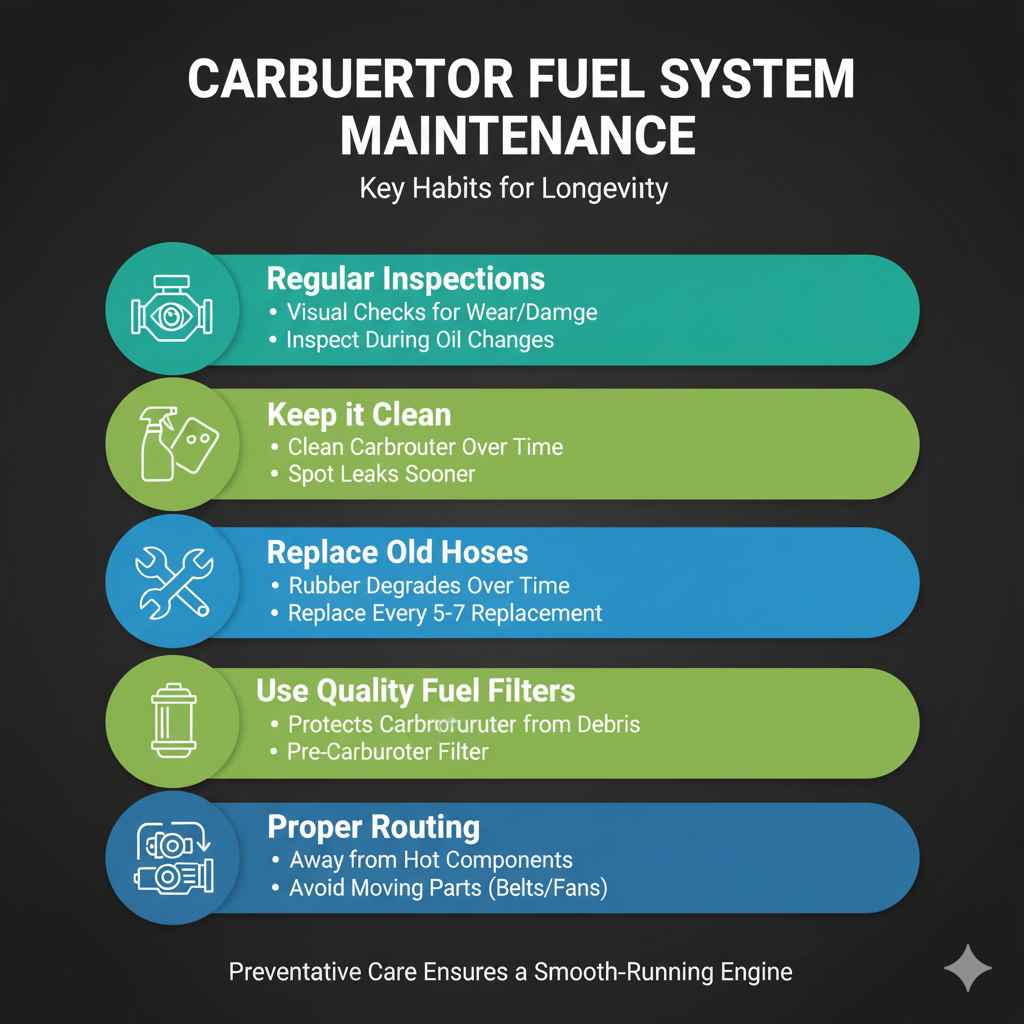
Maintaining Your Carburetor Fuel System for Longevity
Preventative maintenance is key to avoiding issues with your carburetor’s fuel line and the entire fuel system.
Regular Inspections: Make it a habit to visually inspect the fuel line during routine maintenance like oil changes. Look for any of the signs of wear or damage mentioned earlier.
Keep it Clean: While you don’t need to deep-clean the fuel line itself, keeping the area around the carburetor clean can help you spot leaks sooner.
Replace Old Hoses: If your car is older and still has original rubber fuel hoses, consider proactively replacing them. Rubber degrades over time and can fail unexpectedly. A good rule of thumb is to consider replacement every 5-7 years, or sooner if they show any signs of aging.
Use Quality Fuel Filters: Many vehicles with carburetors have a small fuel filter located just before the carburetor or inline. Ensure this filter is replaced according to your vehicle’s maintenance schedule. A clean filter protects your carburetor from debris. You can find more information on maintaining your fuel system for efficiency from the U.S. Department of Energy.
Proper Routing: Ensure fuel lines are routed away from hot engine components and moving parts like belts or fans. This prevents premature wear and potential damage.
Frequently Asked Questions (FAQ)
Here are some common questions beginners have about the wire on the bottom of a carburetor:
Q1: Is the “wire” on the bottom of my carburetor an electrical wire?
A: No, typically the component you’re referring to as a “wire” on the bottom of a carburetor is a fuel line. This is a hose or tube that carries gasoline from your fuel tank to the carburetor. Electrical connections on a carburetor are usually for functions like an idle solenoid and are typically found elsewhere on the unit.
Q2: Can I just ignore a small fuel leak from the bottom of my carburetor?
A: Absolutely not. Any fuel leak, no matter how small, is a serious fire hazard and should be addressed immediately. Gasoline is highly flammable, and a leak can lead to a dangerous situation.
Q3: How often should I replace my carburetor fuel line?
A: Rubber fuel lines typically last between 5 to 7 years, depending on the quality of the hose, climate, and exposure to heat. It’s best to inspect them regularly and replace them proactively if they show signs of cracking, hardening, or brittleness. Metal lines can last much longer but can be susceptible to rust or fatigue.
Q4: What happens if the fuel line to my carburetor is blocked?
A: If the fuel line is blocked, your carburetor won’t receive fuel. This can cause your engine to run poorly, hesitate, bog down, stall, or refuse to start altogether. It’s essentially starving the engine of its fuel supply.
Q5: Can I use just any hose as a replacement for my carburetor fuel line?
A: No, it’s crucial to use only hoses specifically rated for automotive fuel use. Regular rubber hoses are not designed to withstand the corrosive properties of gasoline and can degrade quickly, leading to dangerous leaks. Always use fuel-grade hose that matches your vehicle’s specifications.
Q6: My car smells like gas. Could it be the fuel line to the carburetor?
A: Yes, a fuel smell is a strong indicator of a fuel leak. The fuel line connected to the bottom of the carburetor is a common place for leaks to occur due to hose degradation or loose fittings. Check this line and its connections carefully.