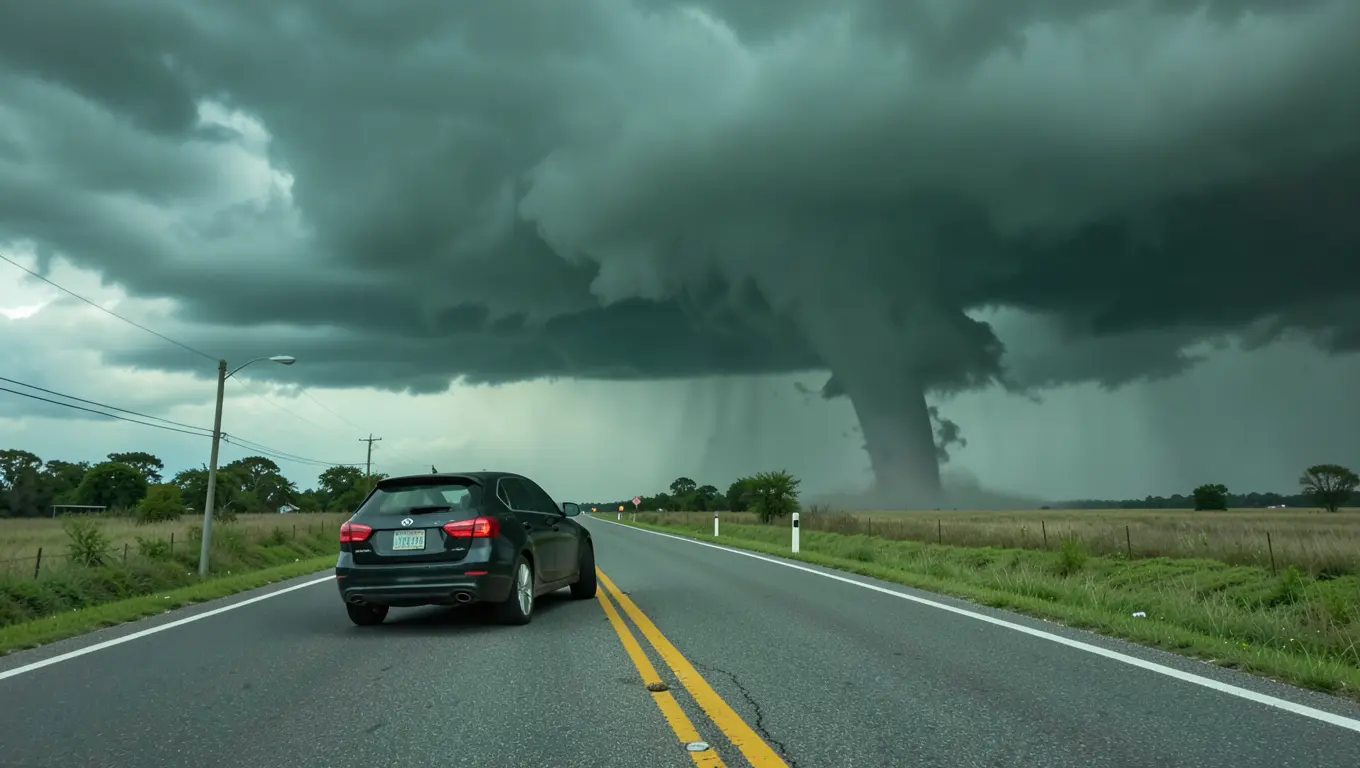
What to Do in a Car During a Tornado (NOAA Safety Steps)
If a tornado hits while you are driving, do not try to outrun it in traffic and do not shelter under a bridge. The National Weather Service (NWS) and NOAA’s Storm Prediction Center rank your options in a strict order: get to a sturdy building first, drive away only if the tornado is far off, clearly visible, and the road ahead is clear, and if neither is possible, stay belted in the car with your head below the windows – or lie flat in a ditch if you can safely reach ground lower than the road.
There is no fully safe place to be in a car during a tornado. The strongest tornadoes, rated EF4 and EF5 on the Enhanced Fujita Scale, produce winds over 200 mph – more than enough to lift and throw a vehicle. NOAA is explicit that a car is not considered a safe shelter, only a less dangerous option than being fully exposed once every safer choice is gone.
This guide walks through the exact NOAA/NWS priority order for a tornado while driving, why the old advice to “hide under an overpass” is one of the most dangerous myths in tornado safety, how to protect yourself if you are stuck in the vehicle, and what to keep in a car emergency kit so you are ready before severe weather ever hits.
The NOAA Safety Priority Order for a Tornado in Your Car
NOAA’s Storm Prediction Center and the National Weather Service lay out a specific order of options, from safest to least safe. Work through them in this order – do not skip straight to “stay in the car” if a better option is actually available to you.
- Get to a sturdy building. If you can reach a building with a basement, or an interior room on the lowest floor away from windows, within a minute or two, this is always the safest choice – leave the car and go inside.
- Drive away only if it is visible, far away, and traffic is light. If you can see the tornado, it is clearly still a distance off, and you can move at a right angle to the direction it is traveling without driving into congestion, you may be able to get clear of its path. Never drive toward a tornado or push into traffic to try to escape one that is close.
- If you cannot reach shelter or safely drive away, stay in the car. Keep your seatbelt fastened, get your head down below window level, and cover your head and neck with your hands and a blanket, coat, or cushion if you have one.
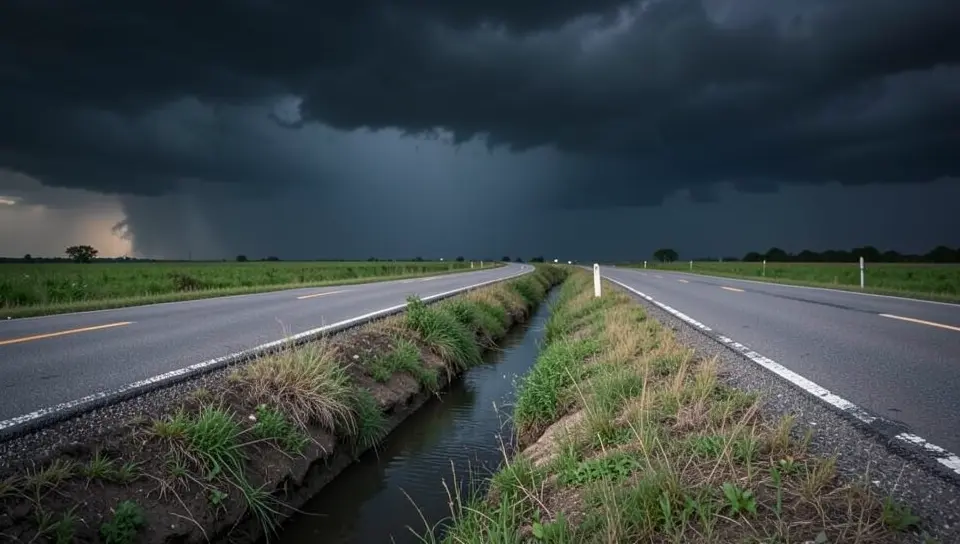
- If you can safely reach ground noticeably lower than the roadway, leave the car. A ditch, culvert, or ravine away from the vehicle and any trees is safer than the car itself. Get down, lie face-down, and cover your head with your hands.
Notice what is missing from that list: overpasses and bridges. NOAA specifically warns against using them, which the next section covers in detail.
Keep in Your Car Emergency Kit
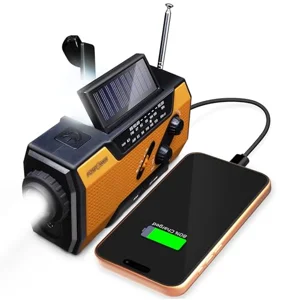 |
FosPower NOAA Emergency Weather Radio A1 – $32.98 This guide points out that recognizing tornado warnings early is what gives you time to reach a sturdy building instead of relying on the car – a dedicated NOAA weather radio keeps that alert coming even if cell signal drops.
|
Why You Cannot Outrun a Tornado in Traffic
Tornadoes are unpredictable in a way that roads are not. A tornado’s forward track can exceed 60 mph, it can change speed and direction with little to no warning, and it does not follow streets or highways the way a driver does. A car that looks like it has room to escape can suddenly find the tornado turning back into its path.
Traffic makes this worse, not better. When a tornado warning hits a populated area, roads fill quickly with other drivers trying to do the same thing you are. Downed power lines, blown-over signs, and debris can block a route in seconds. This is exactly why NOAA’s “drive at right angles” advice comes with strict conditions attached – it only applies when the tornado is visible, clearly distant, and the road ahead is genuinely open. If any one of those is not true, driving is more dangerous than staying put and taking cover.
Never Shelter Under a Highway Overpass
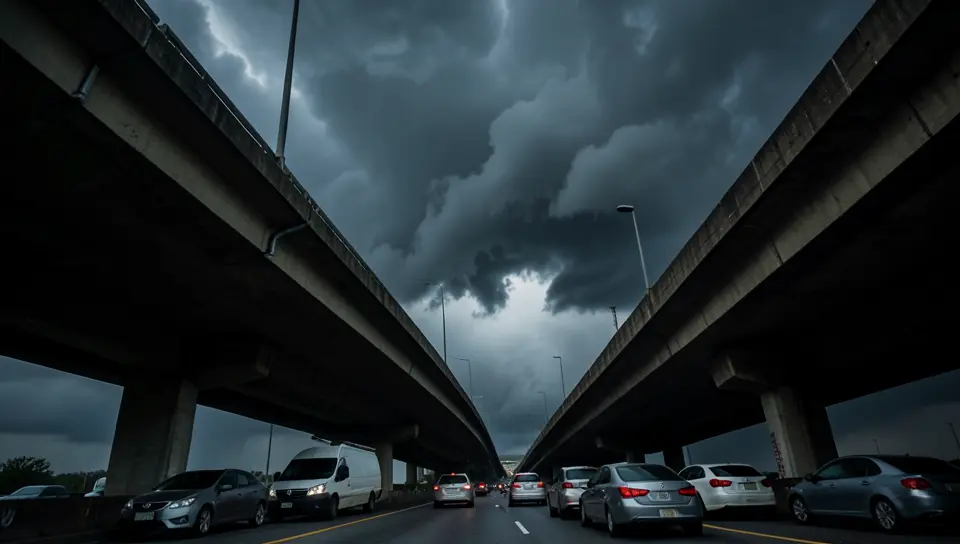
Parking under a bridge or overpass during a tornado feels instinctively safe – it is not. The National Weather Service documented this directly after the May 3, 1999, Oklahoma/Kansas tornado outbreak, when several drivers were killed or seriously injured after stopping under highway overpasses, including one person killed as a violent tornado crossed directly over a bridge being used as shelter.
The underside of an overpass can act like a wind tunnel, funneling and accelerating debris-filled wind through the gap rather than blocking it. There is also nothing to anchor you to, and the girders and open sides offer little more protection than open ground. On top of the wind risk, cars stopped under an overpass block the lane for everyone else trying to get away or reach shelter, turning one driver’s decision into a hazard for many others.
If You Are Trapped in the Car: How to Protect Yourself
If you genuinely cannot reach a building and cannot safely drive away, staying in the vehicle with the right protective steps is better than standing outside fully exposed.
- Pull off the road. Get out of the traffic lanes so you are not blocking other drivers and are not at risk of being hit while stopped.
- Keep your seatbelt fastened. High winds can roll or tip a vehicle. A seatbelt keeps you from being thrown around the cabin or ejected.
- Get your head down below the windows. Flying debris breaking through glass is one of the leading causes of injury for people caught in vehicles during tornadoes.
- Cover your head and neck. Use your arms, a blanket, a coat, or a cushion – anything that adds a layer between you and broken glass or debris.
When It Is Safer to Leave the Car for a Ditch
Leaving the vehicle only makes sense if you can genuinely reach ground that sits noticeably lower than the road – a ditch, culvert, or ravine – and you have enough time to get there safely. If the only option nearby is flat, open ground at the same level as the road, staying belted in the car with your head down is the better choice.
When a lower spot is available, move away from the car and any trees before lying down – a tossed vehicle or falling tree limb next to you defeats the purpose of getting low. Lie face-down and cover the back of your head and neck with your hands.
How to Recognize a Tornado While You Are Driving
Warning signs can appear quickly, so knowing them buys you time to act on the priority order above instead of reacting at the last second.
- A sky that turns dark, greenish, or an unusual sickly color
- Large hail falling, especially right before or during a storm
- A loud, continuous roar, often compared to a freight train or jet engine
- A rotating, lowering wall cloud, or a visible funnel
- A debris cloud near the ground, even if you cannot see a distinct funnel above it
Enable Wireless Emergency Alerts on your phone (they are on by default on most phones but worth checking) and keep a battery- or hand-crank-powered NOAA weather radio in the car for areas with weak cell signal. A tornado watch means conditions are favorable for a tornado to form – be ready to act. A tornado warning means one has actually been spotted or indicated by radar – take shelter immediately, without waiting to see it yourself.
Build a Tornado Emergency Kit for Your Car
Keeping a stocked kit in the trunk means you are not scrambling to gather supplies once a warning is already active.
| Item | Why It Matters |
|---|---|
| Water and non-perishable food | You may be stranded well after the storm passes if roads are blocked by debris |
| First-aid kit | Covers cuts and injuries from broken glass or debris before you can reach help |
| Flashlight and extra batteries | Power outages are common after tornadoes, especially after dark |
| NOAA weather radio | Keeps you updated on warnings and all-clear alerts if cell service is down |
| Whistle | Easier to signal for help than shouting if you are trapped or injured |
| Blanket or coat | Doubles as protection for your head during the storm and warmth afterward |
| Portable phone charger | Keeps your phone able to receive alerts and call for help |
| Waterproof bag for documents | Protects ID, insurance information, and other essentials from water damage |
Store the kit somewhere easy to reach quickly, like the trunk or under a seat, and make sure everyone who drives the car knows where it is.
Frequently Asked Questions
How to Survive a Tornado in a Car?
Follow the priority order: reach a sturdy building if you can, drive away only if the tornado is far off, clearly visible, and the road is clear, and if neither is possible, stay in the car with your seatbelt on and your head below the windows, covered with your hands and a blanket or coat. When ground noticeably lower than the road, such as a ditch, is within safe reach, leaving the car and lying flat there is safer than staying in the vehicle. Never shelter under a bridge or overpass.
Is It Safer to Be in a Car or a Ditch During a Tornado?
A ditch is generally safer than a car, but only if you can genuinely reach ground that sits noticeably lower than the roadway and you have enough time to get there safely. Cars can be lifted and thrown by strong tornado winds, so getting below ground level and away from the vehicle removes that risk. If no lower ground is available nearby, staying belted in the car with your head down is the next-best option, not the ditch of a flat field at the same level as the road.
What Should You Do If You See a Tornado in the Distance While Driving?
Stay calm and assess whether it is genuinely far away and moving away from your path, with clear roads ahead. If all of that is true, you may be able to drive to safety at a right angle to its direction of travel. If you are unsure of the distance, if traffic is heavy, or if the tornado could be moving toward you, do not try to outrun it – get to the nearest sturdy building instead, or follow the in-car and ditch steps above if no building is within reach.
Will a Tornado Pick Up a Car?
Yes. Tornadoes rated EF4 and EF5 on the Enhanced Fujita Scale can produce winds over 200 mph, which is more than enough force to lift a passenger vehicle off the ground and throw it a significant distance. This is the core reason NOAA does not treat a parked car as a safe shelter on its own.
Should You Shelter Under a Bridge or Overpass During a Tornado?
No. The National Weather Service specifically warns against this. The space under a bridge can funnel and speed up wind rather than block it, offers little to anchor you against flying debris, and stopping there blocks the road for other drivers trying to escape or reach shelter. This advice was reinforced after the May 3, 1999, Oklahoma/Kansas tornado outbreak, when people sheltering under overpasses were killed or seriously injured.
What Is the Difference Between a Tornado Watch and a Tornado Warning?
A tornado watch means conditions are favorable for tornadoes to form in and around the area, typically covering several hours and a wide region – it is a signal to review your plan and stay alert. A tornado warning means a tornado has actually been spotted or indicated by radar and is an immediate threat – it usually covers a smaller area for 20 to 60 minutes and means you should take shelter right away rather than waiting to see the tornado yourself.
Conclusion
Being caught in a car during a tornado is frightening, but working through the priority order in a clear head helps: get to a sturdy building if you can, only drive away if the tornado is distant, visible, and the road is clear, and if neither works, stay belted in the car with your head down or move to lower ground away from the vehicle if it is genuinely available. Never treat a bridge or overpass as shelter.
Tornadoes can also total a vehicle even when everyone inside walks away safely, so it is worth knowing ahead of time whether your policy would actually cover tornado damage to your car. Share this guide with anyone who regularly drives through tornado-prone areas – being prepared before severe weather hits is what makes these steps possible to follow under pressure.
Products related to this article
Sponsored / affiliate links. As an Amazon Associate I earn from qualifying purchases. I may earn additional commission from eligible campaigns.