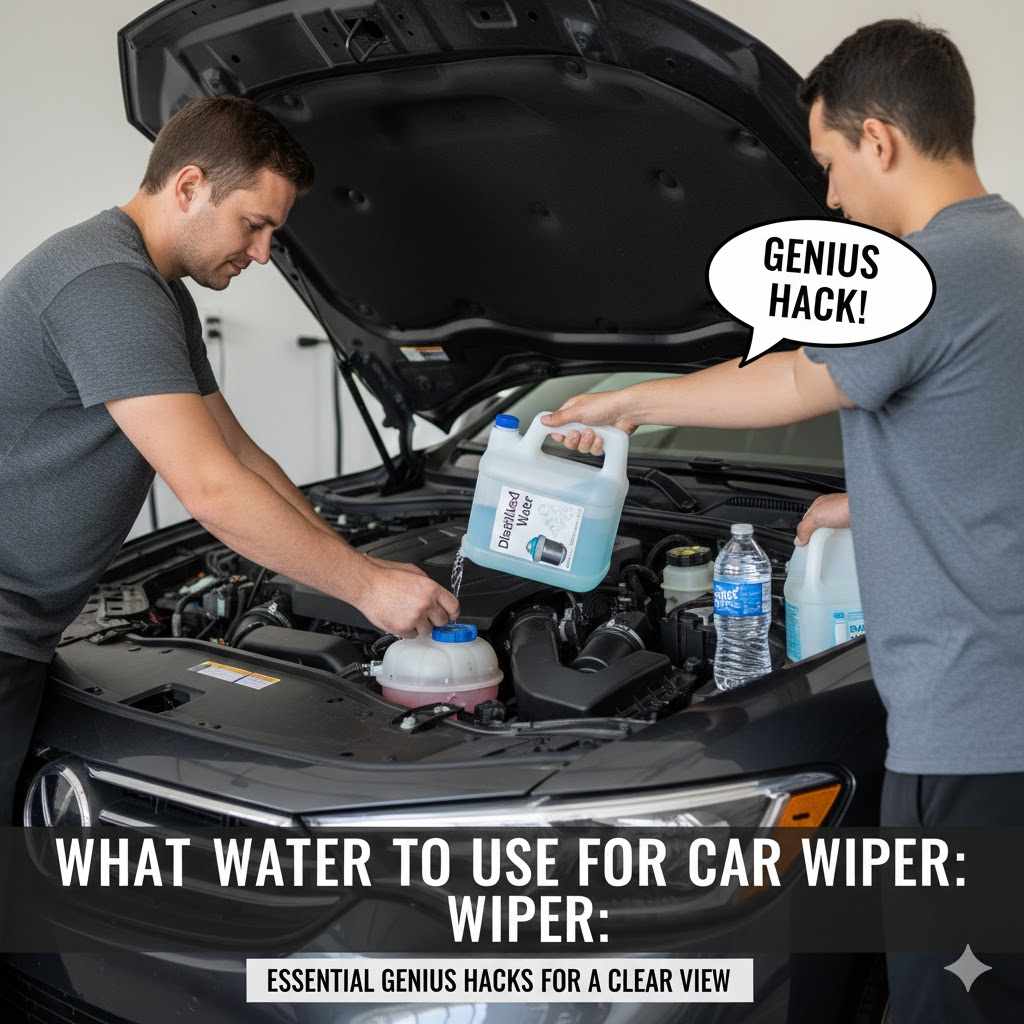
What Water to Use for Car Wiper: Essential Genius Hacks
For car wipers, always use either a pre-mixed commercial windshield washer fluid or a mixture of washer fluid concentrate and distilled water. Never use plain tap water, as its minerals can clog the system and it lacks cleaning power and freeze protection, posing a safety risk.
Have you ever been driving on a dusty road or through a swarm of bugs, only to hit the wiper fluid switch and get… nothing? Or worse, a weak dribble that just smears the grime across your windshield? It’s a frustrating and surprisingly common problem. Many people wonder if they can just top off the reservoir with tap water from the hose. It seems so simple, right?
I’m Md Meraj, and I’m here to tell you that this simple choice can make a huge difference for your car’s health and your own safety on the road. Don’t worry, you don’t need to be a mechanic to get this right. We’re going to break down exactly what you should use, what you should avoid, and a few genius hacks to keep your view crystal clear. Let’s get started!
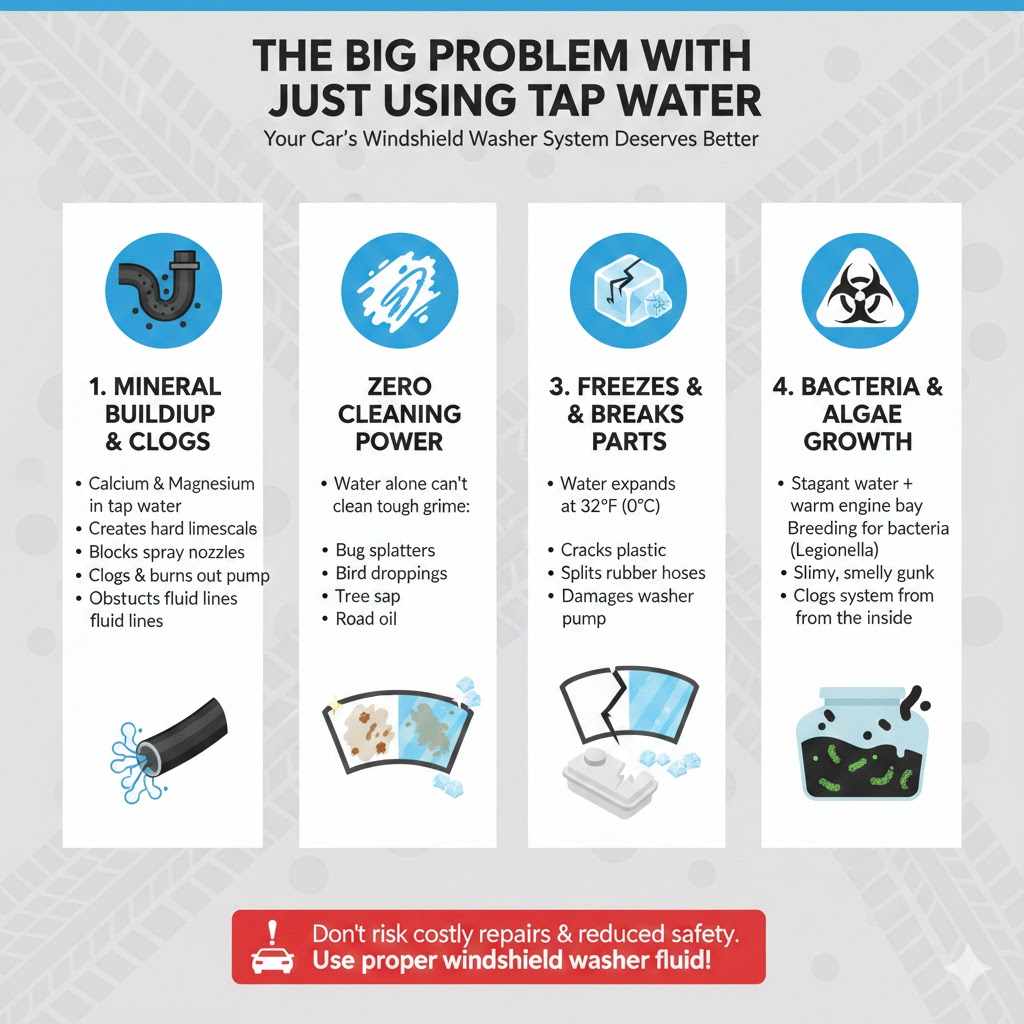
The Big Problem with Using Just Tap Water
Reaching for the garden hose might seem like a quick fix, but using plain tap water in your windshield washer system is one of the most common mistakes a car owner can make. Over time, it creates serious problems that are much harder to fix than simply using the right fluid. Here’s why tap water is your washer system’s worst enemy.
Mineral Buildup Will Clog Everything
Tap water contains minerals like calcium and magnesium. While they’re harmless for you to drink, they are terrible for your car. As the water sits in the reservoir and runs through the lines, these minerals leave behind hard, chalky deposits called limescale. It’s the same stuff that clogs your coffee maker or shower head.
This limescale will:
- Block the tiny spray nozzles on your hood.
- Clog the washer fluid pump, causing it to burn out.
- Create blockages inside the fluid lines.
Eventually, your system will stop working entirely, and fixing a clogged pump or replacing lines can be an expensive and time-consuming repair.
It Has Zero Cleaning Power
Think about washing greasy dishes with just water. It doesn’t work very well, does it? The same principle applies to your windshield. Water alone can’t break down the tough stuff you encounter on the road:
- Bug splatters
- Bird droppings
- Tree sap
- Road grime and oil
Instead of cleaning the glass, tap water often just smears the mess around, making your visibility even worse, which is a major safety hazard, especially when driving into the sun or at night.
It Freezes and Breaks Parts in Winter
This is a critical safety issue. Water freezes at 32°F (0°C). If you have plain water in your reservoir during cold weather, it will turn into a solid block of ice. As water freezes, it expands with incredible force. This expansion can:
- Crack your plastic washer fluid reservoir.
- Split the rubber or plastic hoses.
- Damage the delicate components of the washer pump.
A cracked reservoir means you’ll have no fluid when you need it, and you’ll be facing a costly replacement. More importantly, having no way to clear your windshield of salt and road spray in a winter storm is extremely dangerous.
It Can Grow Nasty Bacteria and Algae
When plain water sits stagnant in the warm environment of an engine bay, it becomes a perfect breeding ground for bacteria and algae. This can lead to a slimy, smelly green or black gunk forming inside your reservoir. One particular concern is the potential growth of Legionella bacteria, which can be harmful if inhaled through the spray. According to the Centers for Disease Control and Prevention (CDC), these bacteria thrive in water systems. This gunk not only stinks but also contributes to clogging the system from the inside out.
What Should You Use Instead? Your Top 3 Safe Choices
Now that you know what to avoid, let’s focus on the best options for keeping your washer system clean, healthy, and ready for action. You have three excellent choices, each with its own benefits.
Option 1: Pre-Mixed Commercial Windshield Washer Fluid (The Easiest Choice)
This is the simplest, most foolproof option. You can buy it at any auto parts store, gas station, or supermarket. It comes in a gallon jug, ready to pour directly into your reservoir—no mixing, no measuring, no fuss.
Pros:
- Extremely Convenient: Just open and pour.
- Formulated for Cleaning: Contains detergents that easily cut through bugs, grime, and dirt.
- Freeze Protection: Most formulas are rated for cold temperatures, preventing system damage in winter.
- Variety: You can find specific formulas like De-Icer, Bug Remover, or All-Season.
Cons:
- Higher Cost: It’s the most expensive option per gallon.
- Plastic Waste: Each purchase comes with a large plastic jug.
Option 2: Washer Fluid Concentrate + Distilled Water (The Smart, Cost-Effective Choice)
This is my personal favorite and the one I recommend to most people. You buy a small, highly concentrated bottle of washer fluid. You then mix it with distilled water according to the directions on the bottle. This method gives you professional results for a fraction of the cost.
Why Distilled Water is Essential: Distilled water has had all its minerals removed through a process of boiling and condensation. This means it is 100% pure H₂O, with no calcium, magnesium, or other contaminants. Using distilled water guarantees that you will never have to worry about limescale buildup or clogged nozzles.
Pros:
- Very Economical: A small bottle of concentrate can make many gallons of fluid, saving you a lot of money.
- Reduces Plastic Waste: One small bottle replaces multiple large jugs.
- Customizable Strength: You can mix it stronger for better freeze protection in the winter.
- Prevents Clogs: When mixed with distilled water, it’s the cleanest possible solution for your system.
Cons:
- Requires Mixing: It takes an extra minute to mix it before filling the reservoir.
Option 3: A DIY Emergency Solution (For a Pinch Only)
Let’s say you’re on a road trip and run out of fluid in the middle of nowhere. What can you do? In a true emergency, you can create a temporary solution. But be very careful with this.
Emergency Recipe: Fill a clean container with one gallon of distilled water (if possible, or bottled drinking water as a last resort) and add 2-3 drops of a very basic, mild dish soap. Do not use soaps with lotions, degreasers, or waxes.
IMPORTANT: This is a temporary fix to get you to the next town where you can buy proper fluid. Using too much soap will create a sudsy mess on your windshield that smears and impairs vision. Long-term use of soap can also potentially damage your car’s paint and rubber seals. Flush this mixture out and replace it with proper washer fluid as soon as you can.
Washer Fluid Options at a Glance
Sometimes a visual comparison makes the choice clearer. Here’s a simple table breaking down the pros and cons of each fluid type.
| Fluid Option | Cleaning Power | Clog Risk | Freeze Protection | Convenience | Cost |
|---|---|---|---|---|---|
| Plain Tap Water | Very Low | Very High | None | High | Very Low |
| Pre-Mixed Fluid | Excellent | Very Low | Excellent | Very High | High |
| Concentrate + Distilled Water | Excellent | None | Excellent | Medium | Low |
Genius Hacks for a Crystal-Clear Windshield
Beyond just using the right fluid, a few simple tricks can keep your washer system working perfectly and your vision unobstructed.
Hack #1: Clean Your Wiper Blades
Dirty wiper blades will streak your windshield no matter what fluid you use. Once a month, take a clean cloth dampened with a bit of washer fluid or rubbing alcohol and wipe down the length of each rubber blade. You’ll be shocked at how much black gunk comes off. This simple step makes your blades last longer and work better.
Hack #2: Unclog Nozzles with a Sewing Pin
If you press the washer button and get a weak spray or no spray at all, the nozzle might be clogged with wax or debris. Don’t worry! You can easily fix this yourself.
- Get a thin sewing pin or a safety pin.
- Gently insert the tip of the pin into the nozzle opening.
- Wiggle it around carefully to break up any blockage.
- Test the spray. If it’s still blocked, repeat.
- You can also use the pin to re-aim the nozzle if it’s spraying too high or too low. Just gently pry it in the direction you want it to spray.
Hack #3: Flush Your System Annually
Once a year, it’s a good idea to flush out any old fluid and sediment. The easiest way is to simply use your washers until the reservoir is completely empty. Then, refill it with a high-quality commercial fluid or a fresh batch of your concentrate/distilled water mix. This prevents old fluid from breaking down and creating sludge.
How to Refill Your Windshield Washer Fluid: A Simple 4-Step Guide
Topping off your washer fluid is one of the easiest car maintenance tasks you can do. It takes less than five minutes and requires no special tools. Feeling confident? You should! Let’s do it together.
- Locate the Reservoir: Pop the hood of your car. Look for a large plastic tank with a cap that has a symbol of a windshield with a water spray on it. The cap is often a bright color like blue, yellow, or white to make it easy to spot.
- Open the Cap and Check the Level: The cap usually just pops off or unscrews. Look inside the reservoir. Most are made of semi-transparent plastic, so you can see the fluid level from the outside. If it’s low, it’s time to fill up.
- Pour the Fluid Carefully: Get your chosen fluid (either pre-mixed or what you mixed yourself). If the opening is small, using a funnel will prevent spills. Pour the fluid slowly until it reaches the “Full” line or is about an inch from the top. Don’t overfill it!
- Close the Cap and Test: Secure the cap firmly back on the reservoir. Close the hood, get in your car, and test the sprayers to make sure everything is working perfectly. That’s it! You did it.
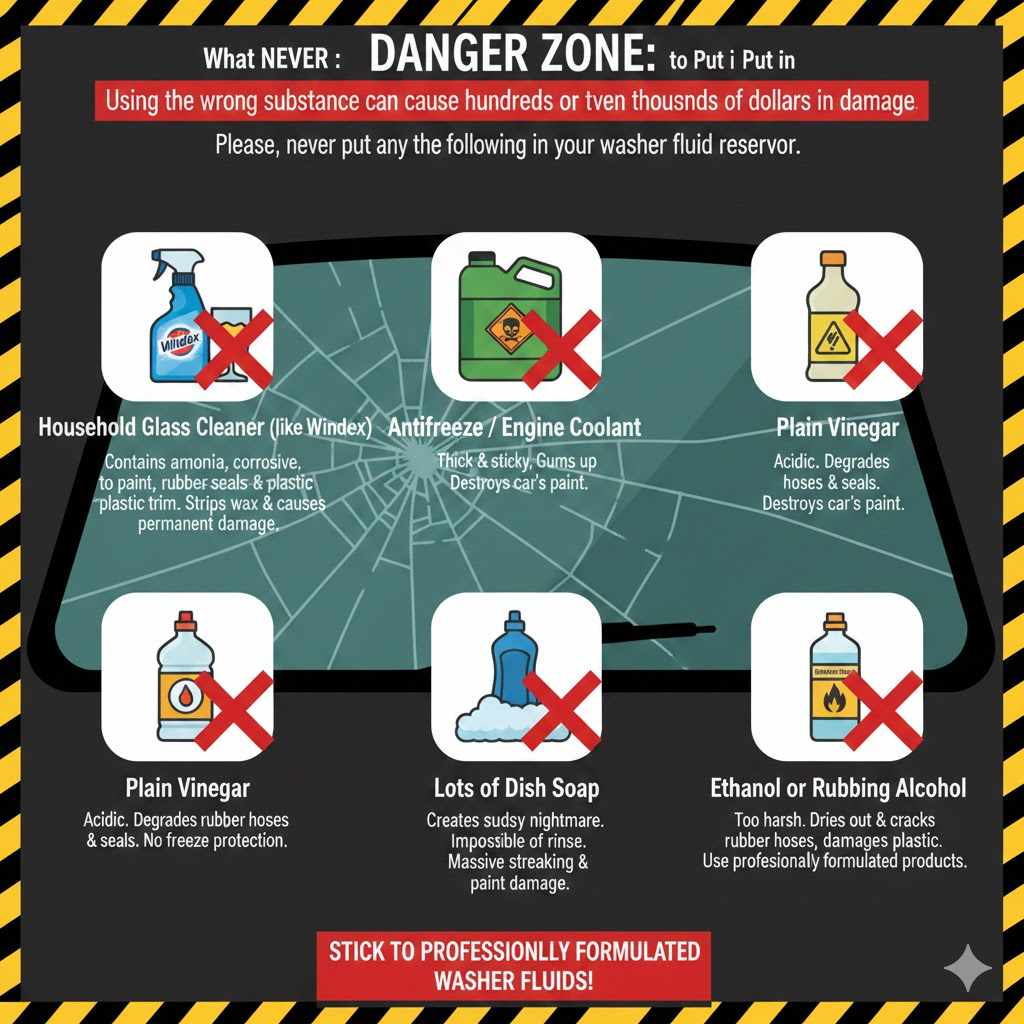
Danger Zone: What NEVER to Put in Your Wiper Fluid Reservoir
Using the wrong substance can cause hundreds or even thousands of dollars in damage. Please, never put any of the following in your washer fluid reservoir.
- Household Glass Cleaner (like Windex): Most of these cleaners contain ammonia, which is highly corrosive to car paint, rubber seals, and plastic trim. It will strip wax and can cause permanent damage.
- Antifreeze / Engine Coolant: This is a catastrophic mistake. Antifreeze is thick, sticky, and designed for your engine’s cooling system. It will completely gum up your entire washer system and destroy your car’s paint.
- Plain Vinegar: While a tiny amount can sometimes help with cleaning in summer, pure or concentrated vinegar is acidic. It can degrade the rubber hoses and seals in your washer system over time and has no freeze protection.
- Lots of Dish Soap: As mentioned, a few drops in an emergency is one thing. But pouring in a large amount will create a sudsy nightmare that is impossible to rinse out. The suds will cause massive streaking and can damage paint protectants.
- Ethanol or Rubbing Alcohol: While many washer fluids contain some methanol to prevent freezing, adding pure rubbing alcohol or high-proof ethanol can be too harsh. It can dry out and crack rubber hoses and damage certain plastic components. Many washer fluids use ethanol, but they are specifically formulated with other ingredients to be safe. According to the U.S. Energy Information Administration, ethanol is a powerful solvent. It’s best to stick with professionally formulated products.
Frequently Asked Questions (FAQ)
1. Can I just use water in my car wiper in an emergency?
Yes, in a true emergency where you have no other option and need to clean your windshield for safety, you can use water (preferably bottled or distilled). However, you should replace it with proper washer fluid as soon as possible to prevent clogs, freezing, and bacteria growth.
2. Is it okay to mix different brands of washer fluid?
Generally, yes. It’s safe to mix different brands of standard, all-season washer fluid (e.g., mixing two different blue fluids). However, avoid mixing specialty fluids, like a bug remover with a de-icer, as they have different chemical properties that might not work well together.
3. What happens if I accidentally put Windex in my washer fluid?
If you put a small amount in, flush the system immediately by running the washers until the reservoir is empty, then refill it with proper fluid and run them again. If you filled the whole reservoir, it’s best to have it drained. The ammonia in Windex can damage your car’s paint, rubber trim, and wiper blades over time.
4. How do I know if my washer nozzles are clogged?
The signs of a clogged nozzle are a weak or inconsistent spray, the spray pattern being off-center (hitting the roof or side of the car), or no spray coming out at all even though you can hear the pump working and the reservoir is full.
5. Can I use bottled drinking water instead of distilled water?
Bottled drinking water (like spring water) still contains minerals and is not a good long-term substitute for distilled water. While it’s better than tap water in an emergency, it can still cause mineral buildup over time. Always choose distilled water for mixing concentrates.
6. How much washer fluid does my car hold?
Most passenger cars, trucks, and SUVs have a windshield washer reservoir that holds between 0.5 to 1.5 gallons of fluid. Your car’s owner’s manual will have the exact capacity listed.
7. Why does my washer fluid smell bad?
A foul, swampy, or rotten egg smell is almost always caused by bacteria or algae growing in the reservoir from using plain water. To fix it, you need to drain or run the system dry, clean the reservoir if possible, and refill it with a quality commercial washer fluid, which contains agents to prevent this growth.
A Clear View and Peace of Mind
See? Taking care of your windshield washer system isn’t complicated at all. It all comes down to one simple rule: avoid tap water. By choosing a quality pre-mixed fluid or making your own with concentrate and distilled water, you’re not just putting liquid in a tank—you’re protecting your car from expensive damage and, most importantly, ensuring you have a clear, safe view of the road ahead, no matter what it throws at you.
This is one of the easiest and cheapest bits of car maintenance you can do, and the payoff in safety and peace of mind is huge. So next time you see that little warning light come on, you’ll know exactly what to do. You’ve got this!