What Way Does Deer Whistles Go on Your Car? Expert Tips
Figuring out What Way Does Deer Whistles Go on Your Car? Expert Tips can feel tricky at first. You might wonder if there’s a special spot or a right and wrong way.
Don’t worry! It’s simpler than you think, and we’ll walk through it step by step. We’ll show you exactly where to put them so they work their best.
After this, you’ll know all you need to keep your car safe.
Understanding Deer Whistles Placement
Deer whistles are small devices that make a sound to alert animals, like deer, to the presence of your vehicle. The main idea is to give them a heads-up so they move away from the road. This helps prevent collisions.
Many drivers wonder about the best place to attach them for maximum effectiveness. The placement is key to making sure the sound travels well and reaches the animals.
When you’re thinking about putting these on your car, it’s important to remember they rely on wind. They work by letting the air pass through them as you drive. This airflow creates a sound that travels.
So, the location on your car matters a lot for catching that wind effectively. We will look at the common spots and why they work.
The Aerodynamic Principle of Deer Whistles
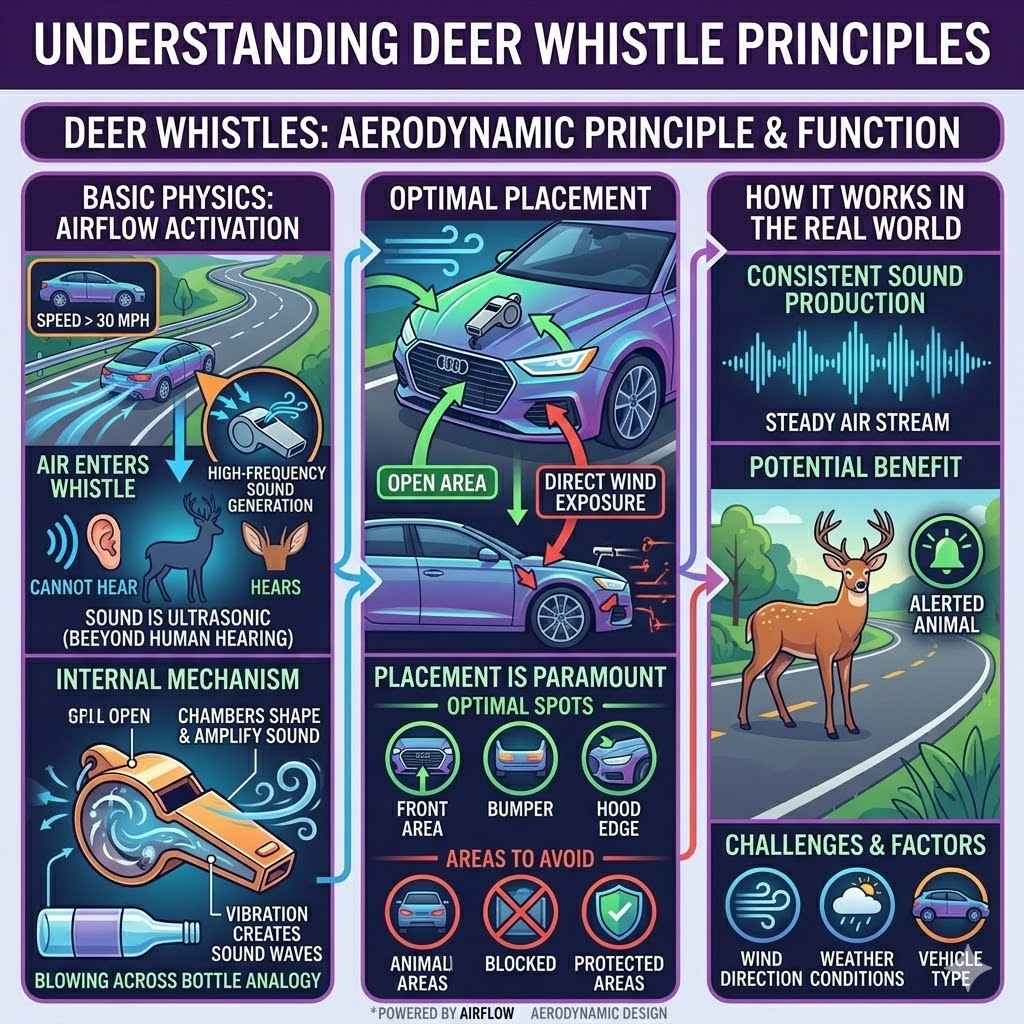
Deer whistles function on a simple physics principle: airflow. As your car moves, air rushes past the whistle. This air enters the whistle and then exits, creating a high-frequency sound.
This sound is often beyond the range of human hearing but is thought to be audible to deer and other animals. The specific design of the whistle, with its internal chambers or openings, helps to amplify and direct this sound.
The effectiveness of a deer whistle is directly linked to how well it can catch the wind. If it’s placed in an area where air can easily flow through it, it will generate sound more consistently. Areas that are protected or have less direct airflow might not activate the whistle properly, reducing its potential benefit.
Therefore, choosing a spot that is exposed to the moving air is paramount.
How Airflow Activates the Whistle
The internal design of most deer whistles features a small opening or series of openings that allow air to enter. As the vehicle travels at speeds typically above 30 miles per hour, the incoming air strikes these openings. This airflow is channeled through internal passages within the whistle.
These passages are designed to create a vibration or turbulence in the air. This turbulence generates a sound wave. The frequency of this sound is what is believed to alert animals.
Think of it like blowing over the top of a bottle. When air moves across the opening, it creates a sound. Deer whistles use a similar, though more sophisticated, mechanism.
The shape and size of the internal chambers control the pitch and volume of the sound produced. For the whistle to work, it needs a steady stream of air passing through it. This means placement on the front of the car where it encounters the most direct wind is usually best.
Common Locations for Deer Whistle Installation
When deciding where to put deer whistles on your car, most people aim for the front. This makes sense because the front of the car is the first part to meet the air as you drive. This direct airflow is what makes the whistles sing.
The most popular spots are on the bumper, the grille, or the lower edge of the front fascia.
These locations are chosen because they are relatively unobstructed and exposed to the wind. Attaching them here ensures they get enough airflow at driving speeds to produce the intended sound. It’s about maximizing their ability to interact with the moving air.
Let’s break down these common spots and why they are good choices.
Mounting on the Front Bumper
The front bumper is a very common place to install deer whistles. Many bumpers have a natural curvature or a flat surface that is perfect for attaching these devices. They can often be mounted discreetly, either individually or in pairs, using adhesive backing or small screws.
The key advantage here is the direct exposure to oncoming air.
When your car is moving, the air hits the bumper head-on. This provides a consistent flow of wind to the whistles. This consistent airflow means the whistles are more likely to be activated whenever you are driving at a speed where they are effective.
It’s a straightforward and effective position.
Attaching to the Front Grille
Another popular spot is the front grille. Many car grilles have openings or slats that can accommodate deer whistles. Some whistles are designed with clips or mounting brackets specifically for this purpose.
Placing them within the grille ensures they are exposed to the wind. It can also offer a bit of protection from minor road debris.
The grille is a good location because it’s right at the front of the car, so it gets plenty of air. Some people like to place them in different openings of the grille to distribute the sound. This placement is also quite common and effective for activating the whistles as you drive.
Using the Lower Front Fascia Area
The lower front fascia, which is the area below the bumper, is also a viable option. This area is usually very exposed to the wind. Some vehicles have specific mounting points or flat surfaces here.
Attaching whistles here can also be effective, as it’s an area with a high volume of airflow.
This spot is often less visible than the bumper or grille, which some car owners prefer. Regardless of visibility, the primary goal is airflow. As long as the whistles are positioned to catch the wind, they can work well in this area.
It’s about getting them into the direct path of the air coming at your car.
Expert Tips for Optimal Deer Whistle Performance
To make sure your deer whistles work as well as they can, there are a few things to keep in mind. It’s not just about sticking them on; it’s about how and where you place them for the best chance of success. We’ll share some expert advice that can help you get the most out of them.
Following these tips can make a real difference. It’s about being smart with your placement and ensuring the whistles are set up to do their job. Let’s look at how to get them working at their best.
Proper Angle and Orientation
The angle at which you mount the deer whistle can affect how well it catches the wind. Most whistles are designed to work best when they are facing directly into the oncoming airflow. This means they should be pointed straight ahead, perpendicular to the direction of travel.
If they are angled too much to the side, they might not get enough wind to produce the sound.
Consider the natural contours of your car’s front end. You want to position the whistle so that the air flows into its openings smoothly. Some whistles come with specific instructions regarding their angle.
Always check the manufacturer’s guidelines. A slight adjustment can make a big difference in how effectively the whistle operates.
Ensuring Unobstructed Airflow
It is crucial that nothing blocks the whistles. They need clear, open air to function. This means they should not be placed behind a license plate, a large badge, or anything else that might disrupt the wind flow.
Even small obstructions can reduce the amount of air reaching the whistle, thus lessening the sound produced.
Before you install, take a good look at the area you plan to use. Imagine the air moving towards your car. Is there anything in the way?
Make sure the whistles are in a spot where the wind can reach them directly and without interruption. This open path is vital for them to generate their warning sound effectively.
Using Pairs or Multiple Whistles
Some drivers choose to install two deer whistles, one on each side of the front of their car. The idea behind this is to create a wider sound dispersion or to ensure that if one whistle is partially obstructed, the other can still function effectively. Having a pair can offer a bit more security.
It’s like having a backup in place.
While a single whistle can work, using two can potentially increase the chances of alerting animals. They can be mounted symmetrically on the bumper or in the grille. This symmetrical placement also helps maintain the car’s appearance.
For drivers in areas with very high deer populations, using two is often recommended.
Regular Cleaning and Maintenance
Like any part of your car that is exposed to the elements, deer whistles can get dirty. Dust, mud, and other debris can accumulate in the openings of the whistle. This buildup can restrict airflow and reduce the whistle’s effectiveness.
Therefore, it’s a good idea to clean them periodically.
A simple wash with water and a soft brush should be enough to remove most dirt. You can do this when you wash your car. Keeping them clean ensures that the air can flow freely through them, allowing them to produce their sound as intended.
This little bit of maintenance goes a long way.
Potential Benefits and Considerations
Deer whistles are designed with the goal of reducing deer-vehicle collisions. The theory is that the ultrasonic sound they emit alerts deer to the approaching vehicle, giving them time to move away from the roadway. This can potentially save lives, prevent injuries, and save on costly car repairs.
However, it is important to understand that their effectiveness is a subject of ongoing discussion and research.
While many people believe in their ability to deter deer, it’s also wise to consider other safety measures. Deer whistles are not a foolproof solution, and their success can depend on many factors, including the animal’s behavior and environmental conditions. We will explore both the reported benefits and the important factors to think about when using them.
Reported Effectiveness in Preventing Collisions
Many drivers who use deer whistles report a reduction in deer encounters or collisions. They often feel more confident on roads known for high deer activity. These anecdotal accounts suggest that the whistles do play a role in warning animals.
Stories from users often highlight close calls that were averted after installing the whistles.
For instance, one driver in a rural area shared that before installing whistles, they would frequently see deer darting across the road. After installation, they noticed fewer deer sightings near the roadway, and they felt a significant decrease in the anxiety associated with driving at dusk or dawn, times when deer are most active. This personal experience is common among whistle users.
Statistics on deer-vehicle collisions are significant. According to some reports, deer-vehicle collisions cause thousands of injuries and hundreds of fatalities annually in the United States. They also result in billions of dollars in damage to vehicles.
Devices like deer whistles are sought after by drivers looking to mitigate these risks. While definitive scientific proof of their universal effectiveness is debated, the perception of increased safety is a strong motivator for their use.
Scientific Studies and Debates
The scientific community has conducted studies on the effectiveness of deer whistles, and the results have been mixed. Some studies suggest that the ultrasonic frequencies produced by whistles may not be loud enough to be consistently heard by deer, or that deer may become accustomed to the sound. Other research indicates that deer may not react to the sound at all.
One notable study involved testing deer whistles in controlled environments and on roads. Researchers used specialized equipment to measure the sound output of the whistles and observed deer reactions. The findings from such studies often conclude that while the whistles do produce sound, their ability to reliably deter deer under real-world driving conditions is not definitively proven.
This leads to ongoing debate among wildlife experts and vehicle safety advocates.
Alternative and Complementary Safety Measures
Given the debate about deer whistles, it is wise to consider other safety measures as well. Driving cautiously, especially at dawn and dusk, is paramount. Reducing speed in areas known for deer activity can give you more time to react if a deer appears.
High-visibility reflective tape on your car, while not directly related to whistles, can also make your vehicle more visible to animals.
Additionally, many automotive safety experts recommend being aware of deer crossing signs. These signs are placed in areas where deer are known to frequently cross roads. Heeding these warnings and being extra vigilant in such zones is a critical part of safe driving.
Combining these practices with any chosen deterrent, like deer whistles, can offer a layered approach to safety.
Here are some important steps for drivers to take:
- Always reduce speed in deer crossing zones, especially during peak deer activity times like dawn and dusk.
- Scan the sides of the road regularly for any signs of movement. Deer often travel in groups, so if you see one, be prepared for more.
- Use your high beams when there is no oncoming traffic to improve your visibility of the road ahead and the shoulders.
- If you see a deer or other animal on the road, brake firmly but do not swerve. Swerving can lead to more dangerous accidents, like hitting another vehicle or rolling your car.
- Keep your car well-maintained, ensuring your brakes and tires are in good condition for emergency stops.
Legal and Insurance Implications
In most places, there are no specific laws mandating or prohibiting the use of deer whistles. They are generally considered an aftermarket accessory. However, it is always a good idea to check local regulations if you are unsure.
Regarding insurance, using deer whistles typically does not affect your car insurance premiums directly.
Insurance companies focus on your driving record and the overall risk profile of your vehicle. While deer whistles are intended to reduce risk, they are not a guaranteed preventative measure that would typically be factored into policy rates. If you are involved in an accident with a deer, regardless of whether you used whistles, your insurance coverage would apply according to your policy terms.
Installation Step-by-Step
Let’s walk through the process of putting deer whistles on your car. It’s a straightforward task that most people can do themselves without any special tools. The goal is to get them securely attached in a spot that gets plenty of airflow.
We’ll break it down into simple, easy-to-follow steps.
Before you start, make sure you have your whistles ready and have identified the best location on your car. Having everything prepared will make the installation smooth and quick. You’ll be done in no time, and your car will be ready for the road.
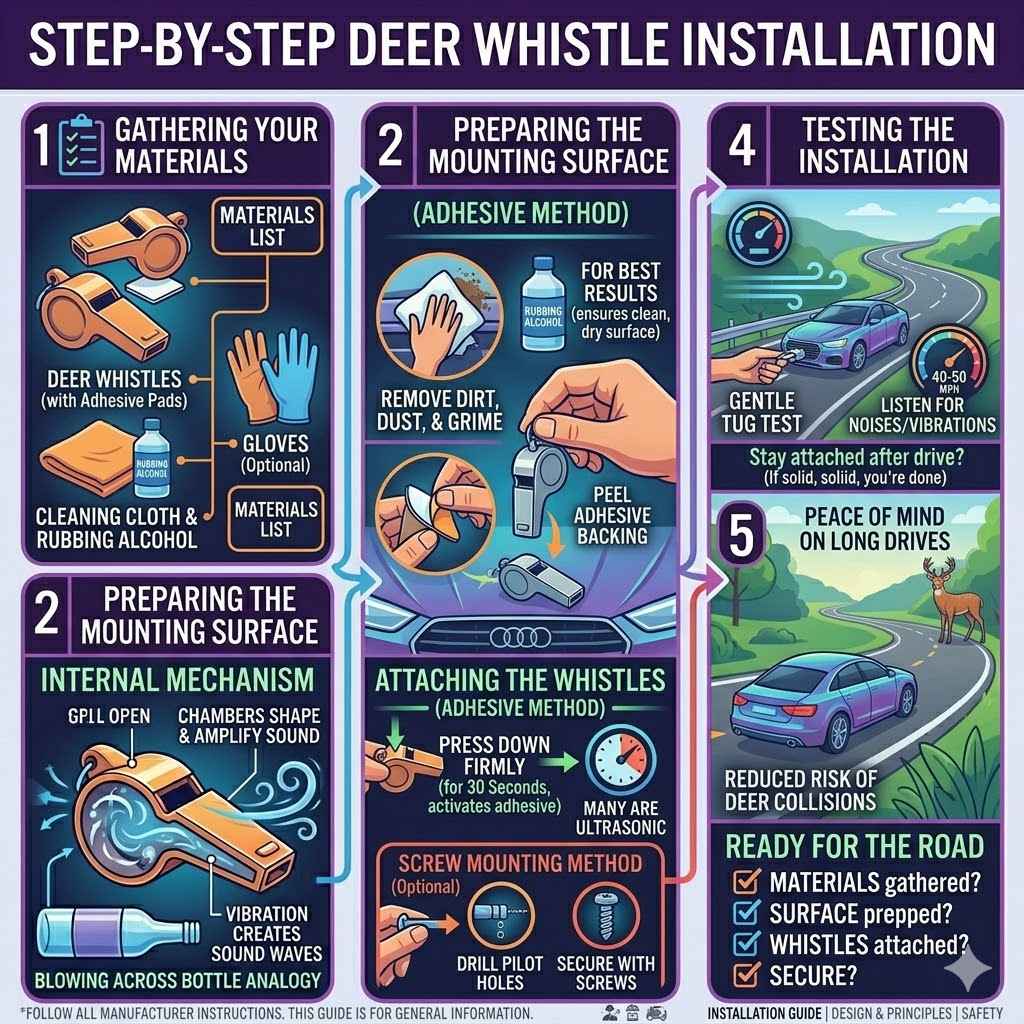
Gathering Your Materials
First, ensure you have everything you need. This usually includes the deer whistles themselves. Most come with adhesive pads or mounting hardware.
You might also need a clean cloth and perhaps some rubbing alcohol to prepare the surface of your car. Some people find a pair of gloves helpful.
Make sure you have the whistles themselves and any accessories they came with. If they require screws, ensure you have the right screwdriver. If they use adhesive, double-check that the pad is included and seems sticky.
Having all your supplies ready makes the job much easier.
Preparing the Mounting Surface
Cleanliness is key for any adhesive to stick well. Find the spot on your car where you want to place the whistles. Use a clean cloth to wipe down the area thoroughly.
Remove any dirt, dust, wax, or grime. For best results, you can use rubbing alcohol to wipe the surface. This removes any residue that might prevent the adhesive from sticking properly.
A clean, dry surface is essential for the adhesive to bond securely. If the surface is dirty or greasy, the whistle might fall off. Take a moment to make sure the area is spotless.
This preparation step is crucial for a lasting installation.
Attaching the Whistles
Most deer whistles come with a strong double-sided adhesive. Peel off the backing from the adhesive pad on the whistle. Carefully position the whistle in your chosen spot, making sure it is facing straight ahead.
Press down firmly on the whistle for about 30 seconds. This ensures the adhesive makes good contact with the car’s surface.
If your whistles came with screws, you would follow the instructions to drill small pilot holes and then secure the whistles with the provided screws. For adhesive-backed whistles, the pressing step is the most important. Give it a good, firm press to activate the adhesive.
Testing the Installation
Once attached, give the whistles a gentle tug to make sure they are secure. Take your car for a short drive, ideally at speeds around 40-50 miles per hour. Listen for any unusual noises or vibrations.
If the whistles are installed correctly and the car is moving fast enough, you might be able to hear a faint sound, though many are ultrasonic.
The real test is whether they stay attached. After your drive, check them again. They should feel solid and firmly fixed to the car.
If they seem loose, you may need to reapply them with new adhesive or consider a different mounting method.
Frequently Asked Questions
Question: Do deer whistles really work
Answer: The effectiveness of deer whistles is debated. Some drivers report success in reducing deer encounters, while scientific studies have shown mixed results. They are believed to work by emitting a sound that alerts animals, but their ability to consistently deter deer is not definitively proven.
Question: Where is the best place to put deer whistles on my car
Answer: The best place is typically on the front of your car, where they will catch the most wind. Common locations include the front bumper, the front grille, or the lower front fascia. Ensure the chosen spot allows for unobstructed airflow directly into the whistle openings.
Question: How fast do I need to drive for deer whistles to work
Answer: Most deer whistles are designed to activate and produce sound at speeds typically above 30 to 40 miles per hour. They rely on airflow to function, so continuous driving at these speeds is necessary for them to operate.
Question: Can deer whistles damage my car
Answer: When installed correctly, deer whistles should not damage your car. If using adhesive, ensure the surface is cleaned properly beforehand. Improper installation, such as using excessive force or drilling into sensitive areas, could potentially cause minor cosmetic damage.
Question: How many deer whistles should I use
Answer: Many drivers opt to use a pair of deer whistles, one on each side of the front of their vehicle. This can provide a wider sound dispersion and a form of redundancy. While one whistle can work, using two is often recommended for potentially enhanced effectiveness.
Conclusion
Properly placing deer whistles on your car is simple. Mount them on the front bumper, grille, or fascia for direct airflow. Ensure they are clean, angled correctly, and unobstructed.
While their effectiveness is debated, they offer drivers peace of mind. This expert guidance helps you install them for their best chance to work.