Do Deer Whistles for Cars Work? What the Research Actually Shows
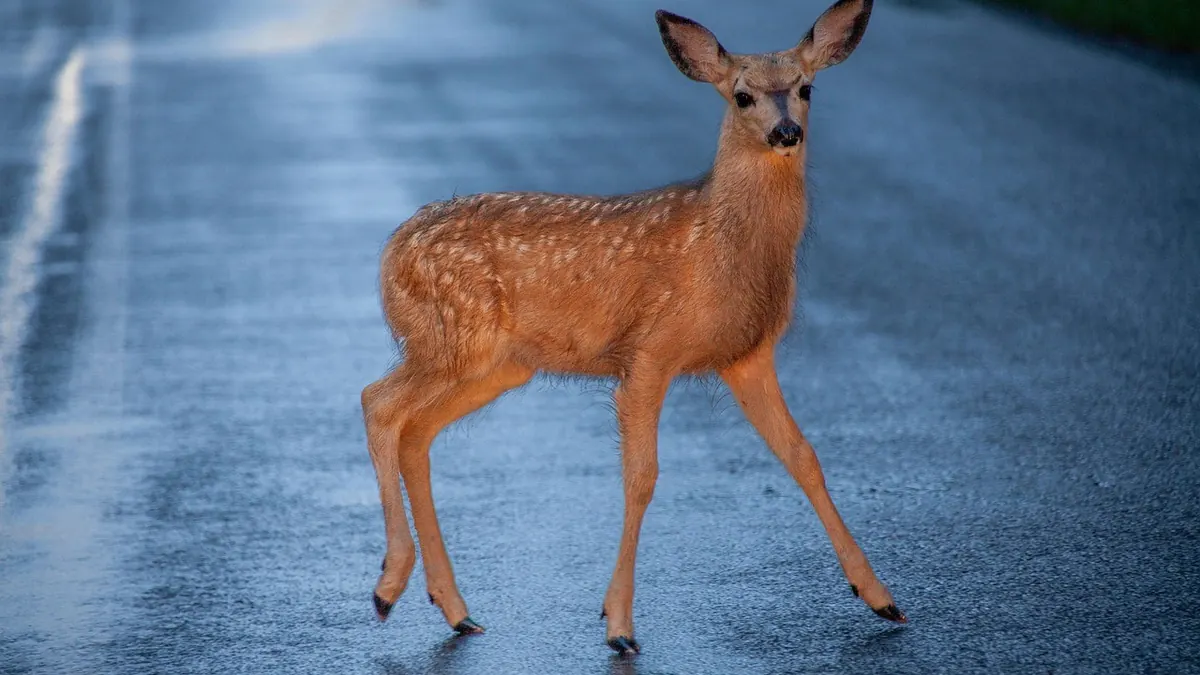
Do deer whistles for cars work? Nothing we could find in the research says they do. The best-documented field tests recorded no change in how deer behaved when whistle-equipped vehicles drove past, and no rigorous study has shown fewer collisions.
This page is built only from the studies and agency pages we read for this update. Below you get each study, what it actually tested, what it found, and what that does and does not prove, followed by the measures that official sources do support. If you have already stuck a pair of whistles on your bumper, nothing here says they will hurt your car. The problem is that they may leave you feeling safer than you are.
Quick Answer
No. The field studies we could find tested deer whistles or the sounds they make and saw no change in deer behavior: Utah mule deer in 1992 and Georgia white-tailed deer in 2009. Lab work in 2003 found the whistles produce different pitches than advertised and that road noise can drown them out. No rigorous study has shown fewer collisions. What the official sources back is slowing down, watching dawn to dusk, high beams where safe, braking instead of swerving, and, on roads where it can be built, fencing with crossing structures.
Introduction To Deer Whistles
Best Deer-Crash Evidence Pick
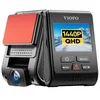 |
VIOFO A119 V3 Dash Cam (2K, GPS) Best for: Recording what happened if a deer strike or a near miss ever does occur, for your insurer or the police. Why we picked it: The listing describes 1440P recording, a STARVIS night-vision sensor, a G-sensor that saves footage after a sudden impact, and GPS speed and time stamps on the video. Main drawback: It does not keep deer off the road or make a crash less likely, and parking mode needs a separate hardwire cable that is sold separately. |
As an Amazon Associate we earn from qualifying purchases. This is a spec-based pick from the product listing, not a hands-on test. We picked a camera, not a whistle, because no whistle has evidence behind it.
Deer whistles are small plastic devices that clip to a bumper or grille. Sellers say they make an ultrasonic sound as air flows through them, and that deer hear it up to about a quarter mile away and stay off the road. They first appeared in the late 1970s, and some insurance companies have even handed them out to drivers at a reduced price, according to a deer-vehicle crash countermeasure summary hosted by Iowa State University’s transportation institute.
For the powered type that plugs into the car, see our separate guide to the electronic deer whistle for car, and for mounting position see which way deer whistles go on your car. If your question is why deer step out in the first place, read why deer run in front of cars.
How Deer Whistles Work
There are two designs. Air-activated whistles have no power source: air forced through the opening is meant to make the sound once the car reaches roughly 30 mph. Electronic whistles use a powered speaker and are meant to sound at any speed. The same Iowa State-hosted summary notes that it found no independent study of the electronic type alone, so almost all the evidence below concerns the air-activated kind.
For a whistle to help, three things would all have to be true: the device must make the sound it claims, deer must be able to hear it over the car, and hearing it must make them move away from the road in time. The studies below test those three links one at a time, and the evidence breaks at each of them.
Effectiveness Of Deer Whistles: What The Research Actually Found
These are the studies we could read a description of this session. Where we only saw a summary, not the paper itself, the table says so.
| Study | Year | What it tested | What it found | Source we read |
|---|---|---|---|---|
| Romin and Dalton, Utah | 1992 (fieldwork winter 1990) | Two brands of 16-20 kHz air-activated whistles on a truck passing 150 groups of wild mule deer (300 passes) at about 40 mph | 31% of deer responded with a whistle vs 39% without; 6% ran away with a whistle vs 12% without. No significant effect. The authors did not know if the whistles made any sound or if deer heard them. | Wildlife Society Bulletin 20:382-384, via the Conservation Evidence database and an Iowa State-hosted summary |
| Scheifele, Browning and Collins-Scheifele | 2003 | Six commercial whistles in the lab and two on cars at 30-45 mph, compared with deer hearing data | Main pitches were 3.3 kHz (closed-end) and 12 kHz (open-end), not the 16-20 kHz advertised. The 3.3 kHz sound was “totally lost” in car road noise at 40 mph; the 12 kHz whistle sits outside deer’s best hearing range. | Acoustics Research Letters Online 4(3):71-76, via the BC Wildlife Collision Prevention Program and the Iowa State-hosted summary |
| D’Angelo and colleagues | 2007 | Hearing range of white-tailed deer by auditory brainstem response | Deer detected sounds from 0.25 to at least 30 kHz, with best sensitivity at 4-8 kHz. The authors said sounds must also be loud enough and change behavior. | Journal of Wildlife Management 71(4):1238-1242, abstract in the BC program summary |
| Valitzski and colleagues, University of Georgia | 2009 | Free-ranging white-tailed deer near roads; a moving car played five pure tones in deer’s hearing range | Deer behavior within 10 m of the road was not altered. The authors concluded whistles are likely not effective at preventing collisions. | Journal of Wildlife Management 73(7):1072-1076, abstract |
| Modoc County Road Department, California | 2003 report (2001-2002 crashes) | 1,648 drivers given free whistles; actual vs expected deer crashes | Six crashes were expected, none occurred, and the authors credited the whistles. They also listed weaknesses: very few crashes, uncontrolled factors, and unchecked installation. | Final report to the California Office of Traffic Safety, as summarized in the Iowa State-hosted summary |
The hearing studies matter for a reason that gets lost in the marketing. Deer can hear into the ultrasonic range, so the claim is not absurd on its face. But hearing a tone is not the same as being scared off the road by one. Valitzski’s team played the tones themselves from a moving car and the deer did not change what they were doing. The British Columbia Wildlife Collision Prevention Program lists the authors’ possible explanations: too little time to react, no ability to process it as an alarm, or no recognition of the sound as a threat.
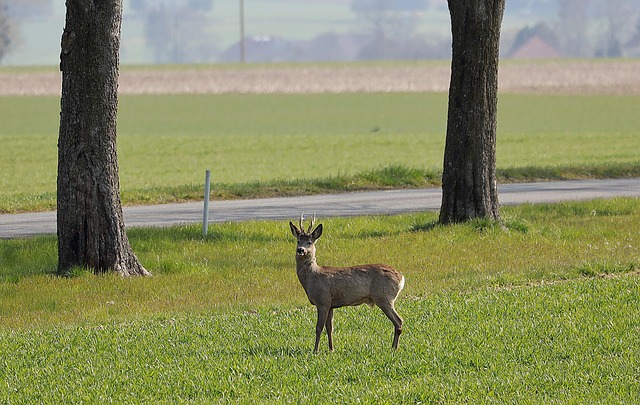
Why the Modoc County result does not settle it
It is fair to mention the one result that favored whistles. In a county program, 1,648 drivers got free whistles and none of them had a reported deer crash over two years, where the program’s math said about six were expected. The summary we read says the authors themselves flagged the weak points: the numbers were tiny, deer crashes vary a lot by winter severity and local wildlife, and drivers who volunteered for free whistles may simply be more alert to deer. The same summary says the other before-and-after counts had small samples and no control group, and that no conclusion can be drawn from them as a whole.
What the sources conclude
- British Columbia Wildlife Collision Prevention Program: it does not recommend deer whistles and says there are no rigorous scientific studies documenting a reduction in wildlife collisions from using them.
- Insurance Institute for Highway Safety (1993 status report, as cited in the Iowa State-hosted summary): University of Georgia biologists found neither deer nor people could hear the ultrasonic sound, and the report cited a Georgia game agency that saw no deer response in hundreds of encounters.
Where Collisions Actually Happen: The Data
Deer crashes cluster in time and place, and that is where the real prevention advice comes from.
- Claims volume: State Farm estimated more than 1.6 million animal-vehicle collision claims in the US from July 2025 to June 2026, costing $1.9 billion, with national odds of 1 in 145 (West Virginia was highest at 1 in 46). Deer are by far the most frequently struck animal, per State Farm’s September 2026 release.
- Peak month: in the Highway Loss Data Institute’s 2013-2022 claims, November animal-strike claim frequency ran more than double the annual average, and November claims averaged $4,600 vs $3,522 in February.
- Deaths: IIHS reports deaths in collisions with animals rose from 89 in 1975 to 210 in 2024. In an IIHS-cited review of 147 fatal animal crashes in nine states (2000-2002), 77% of the animals were deer, and IIHS notes that many of these crashes involve secondary impacts that are more severe than the animal strike itself.
That last point is the one that changes what you should do. When people die, it is often not from the deer. It is from what happens next, which is why the advice below says to brake in your lane instead of swerving.
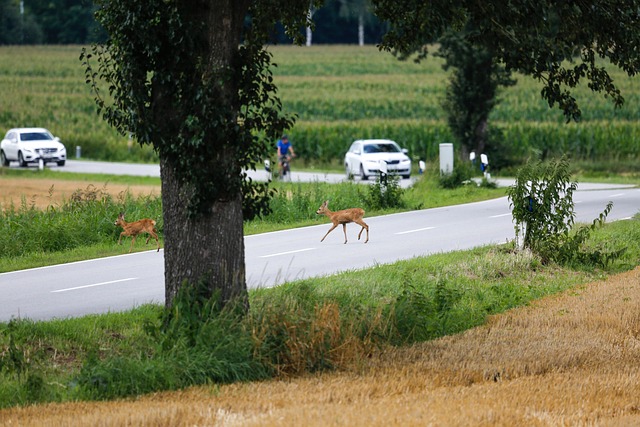
What Actually Reduces Deer Collisions
For drivers
State Farm and the New York State DMV and Department of Environmental Conservation give consistent advice, and none of it requires a purchase:
- Slow down where deer are near the road. New York’s advice is to decrease speed when you approach deer near roadsides.
- Be most careful from dusk to dawn, when animal movement is highest and visibility is reduced (New York DMV and DEC, October 2022; State Farm, 2026).
- Expect more than one. Deer often travel in groups, so expect others to follow the first.
- Use high beams when it is appropriate, meaning when there is no oncoming traffic. State Farm lists this; New York suggests headlight flashes or emergency lights to warn other drivers when deer are on or near the road.
- Brake firmly, do not swerve. Both sources say so. New York’s DEC adds that swerving can cause a collision with another vehicle, a tree, a pole, or other objects.
- Wear your seat belt, as State Farm advises.
For roads
The strongest evidence we found is not a car accessory at all. The Federal Highway Administration’s 2008 Report to Congress said wildlife fencing can reduce collisions with deer and other large animals by 87 percent on average, with a range of 80 to 99 percent. The same report warns that animals are more likely to break through fences where safe crossing opportunities are not provided, so fences work best with underpasses or overpasses. It calls animal detection systems experimental and says little research shows whether public information campaigns work on their own. Details are in the FHWA report executive summary.
Technology and equipment
We found no source that tested a bolt-on accessory for avoiding deer on a moving car, so we make no avoidance claim for any of them. A dash cam is different in kind: it does not prevent a crash, but a recording makes the aftermath simpler. That is the only reason the box above recommends one. Your collision coverage question is separate; see collision vs comprehensive coverage for how animal strikes are usually treated.
If You Hit a Deer: What the Official Advice Says
This follows the New York DMV and DEC guidance. Rules on crash reports differ by state, so check yours.
- Move to a safe place and use your hazard lights if the car can be moved.
- Stay away from the animal. A wounded deer can still cause serious harm, and an animal that looks dead can still react.
- Call for help if anyone is hurt or the animal is blocking traffic and creating a threat to other drivers. Call 911 for injuries.
- Do not assume the car is safe to drive. Look for leaks and for broken lights or damage. If anything looks unsafe, call a tow instead of driving on.
- Report it if your state requires it. In New York, a crash report goes to DMV if someone is injured or killed or damage exceeds $1,000. Other states set their own thresholds.
If you want a fuller list of ways to avoid the situation in the first place, our guide on scaring deer away from your car safely covers lights, speed and driving technique.
Frequently Asked Questions
Do Deer Whistles For Cars Really Work?
No study we found shows that they do. Field tests in Utah (1992) and Georgia (2009) saw no change in deer behavior, and a 2003 lab study found the sound is either lost in road noise or outside the range deer hear best. The one study that credited whistles with fewer crashes, a 2003 Modoc County, California program, had too few crashes to be conclusive, by its own authors’ account.
What Is The Best Deer Deterrent For Cars?
No device has been proven to deter deer from a moving car. The measures with official backing are driver habits (slow down, scan the road edges at dawn and dusk, use high beams when no one is oncoming) and, on the road itself, fencing combined with crossing structures, which FHWA’s 2008 report put at an 87 percent average reduction in collisions with deer and other large animals.
Can People Hear Deer Whistles On Cars?
Mostly not, and that is a clue. Air-activated whistles are advertised at 16 to 20 kHz, above the range most adults hear. But lab testing of six whistles in 2003 found their main pitches were 3.3 kHz and 12 kHz, and the drivers in that test did not notice the 3.3 kHz whistle sound at all.
At What Speed Do Deer Whistles Work?
Air-activated whistles are advertised to sound at 30 mph and above, with a claimed range of about a quarter mile. That is the maker’s claim about when they make noise, not evidence that deer react. The 2003 lab test found a 3.3 kHz whistle would be totally lost in the road noise of a car at 40 mph.
Is There Any Harm In Using A Deer Whistle?
The device itself is unlikely to cause harm, but both the Insurance Institute for Highway Safety summary and the British Columbia Wildlife Collision Prevention Program raise the same concern: a driver who feels protected may pay less attention. The BC program does not recommend deer whistles.
Conclusion
The honest reading of the evidence is that deer whistles are unproven. The best field studies saw no behavior change, the lab work suggests the sound is either lost in the noise or outside deer’s best hearing range, and the only favorable local count came with serious caveats its own authors listed. A whistle will not hurt your car, but it should not change how you drive.
Slow down at dawn and dusk, use high beams when no one is oncoming, stay in your lane and brake if a deer steps out, and keep your seat belt on. If you want to spend money, a dash cam for the aftermath is a more honest purchase than a whistle for the prevention.
Products related to this article
Sponsored / affiliate links. As an Amazon Associate I earn from qualifying purchases. I may earn additional commission from eligible campaigns.