What Year Cars Have GPS Tracking: Essential Data
As of late 2023, most cars manufactured from around 2010 onwards have integrated GPS tracking, often as part of their infotainment systems or emergency services. However, built-in, always-on GPS for tracking purposes is more common in vehicles equipped with advanced telematics or connected car services introduced in newer model years.
Have you ever wondered if your car has built-in GPS tracking? Maybe you’re curious about its technology features or how it helps with navigation and safety. It’s a common question, and the answer isn’t always a simple yes or no. Newer cars are packed with tech, and GPS is a big part of that. Don’t worry if it sounds complicated; we’ll break down exactly what year cars started including GPS tracking, what it does for you, and what you need to know. This guide will make understanding your car’s GPS simple and clear.
Understanding GPS Tracking in Cars
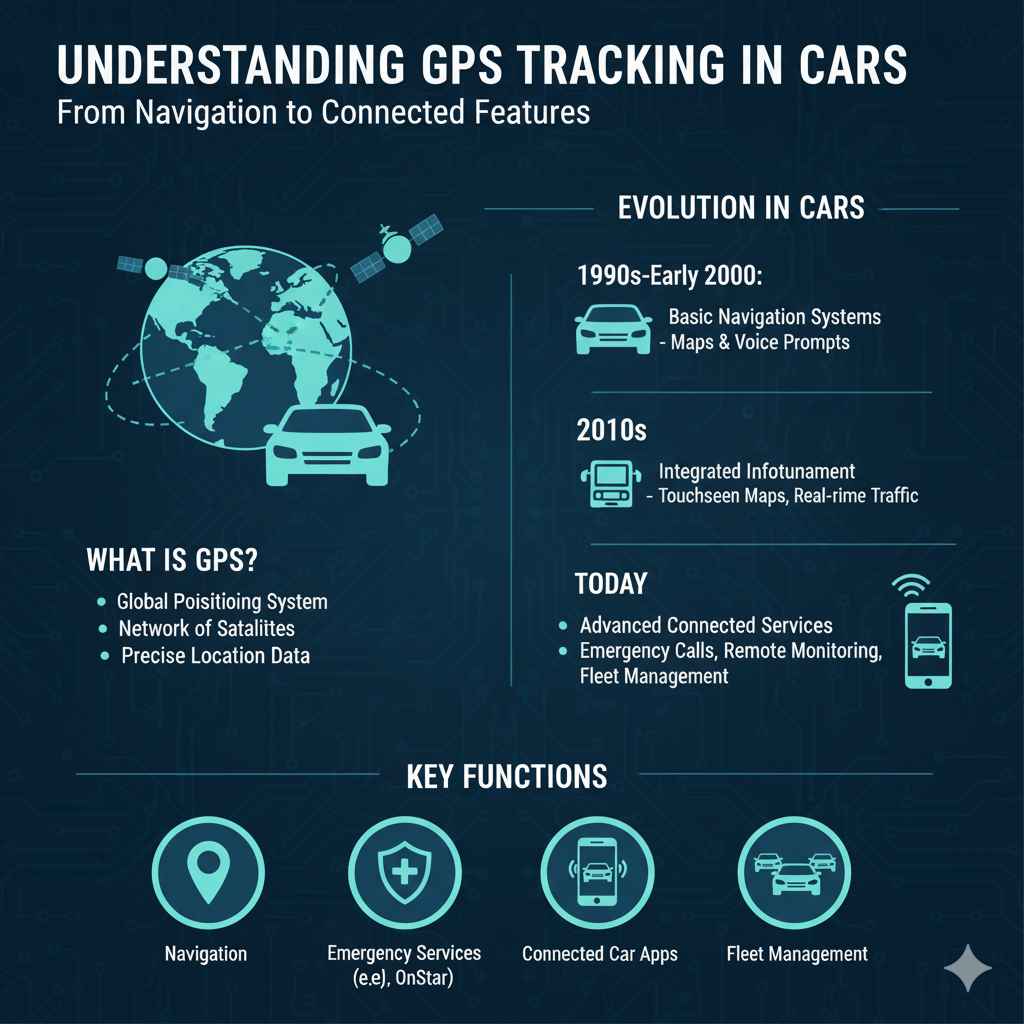
GPS, or the Global Positioning System, is a network of satellites that allows devices to determine their precise location on Earth. For cars, this technology has become incredibly common, evolving from basic navigation systems to sophisticated tracking and safety features.
When people ask “what year cars have GPS tracking,” they’re often thinking about two main things: navigation systems that help them get around, and potentially, systems that can track the car’s location for other reasons, like recovery or monitoring. It’s important to know that these two functions are often related but not always the same.
Early GPS systems in cars were primarily for navigation. You’d input a destination, and the system would guide you with maps and voice prompts. However, as car technology advanced, GPS became integrated into more complex systems. These include:
- Infotainment Systems: Most modern cars have touchscreens that include navigation powered by GPS.
- Emergency Services: Systems like OnStar (in GM vehicles) or similar services use GPS to pinpoint your location if you have an accident or need roadside assistance.
- Connected Car Services: These allow you to monitor your car remotely, often through a smartphone app, and this relies heavily on GPS tracking.
- Fleet Management: For businesses with multiple vehicles, GPS tracking is essential for managing and monitoring their fleet.
The presence and type of GPS tracking can vary greatly by manufacturer, model, and trim level. However, there’s a general timeline for when these technologies became more widespread.
The Evolution of GPS in Vehicles
The journey of GPS in cars has been a rapid one. What started as a specialized tool is now a standard feature in many vehicles.
Early Days: Navigation Focused (Late 1990s – Early 2000s)
The first automotive GPS systems were quite basic and expensive. They were often aftermarket additions or found in high-end luxury vehicles. These systems focused almost exclusively on providing directions. Accuracy could be spotty, and the user interfaces were not as intuitive as what we see today.
These systems typically used:
- CD-ROM Maps: Maps were stored on CDs, meaning you had to update them manually by purchasing new discs.
- Monochrome Screens: Many early systems featured small, monochrome displays.
- Limited Functionality: Primarily for turn-by-turn navigation, with little to no integration with other vehicle systems.
The Rise of Integrated Systems (Mid-2000s – Early 2010s)
As GPS technology became more affordable and satellite coverage improved, car manufacturers began integrating GPS more deeply into their vehicles. This period saw the emergence of:
- Color Touchscreen Navigation: More sophisticated displays made navigation easier and more visually appealing.
- Real-time Traffic Information: Some systems started to offer real-time traffic data, allowing for better route planning.
- DVD-Based Maps: Similar to CD-ROMs, but offering larger map data capacities.
- Pre-installed Telematics: Services like OnStar began to gain traction, using GPS for emergency calls and vehicle location services.
During this phase, you could start finding GPS navigation as an option or standard feature in mid-range to higher-end vehicles. For instance, models from brands like BMW, Mercedes-Benz, Lexus, and Audi were among the first to widely adopt these systems. Domestic manufacturers like Ford and General Motors also started offering them more consistently.
Ubiquitous GPS and Connected Cars (2010s Onwards)
The 2010s mark the era where GPS tracking became almost standard, especially for navigation and safety. Smartphones also played a role, with many drivers opting for phone-based navigation apps. Car manufacturers responded by:
- Advanced Infotainment: GPS navigation became a central part of sophisticated infotainment systems, often integrated with smartphone mirroring technologies like Apple CarPlay and Android Auto.
- Built-in Connected Services: Many manufacturers introduced their own connected car platforms, using GPS for remote diagnostics, vehicle location tracking via smartphone apps (e.g., finding a parked car), and over-the-air software updates.
- Subscription Services: Features like real-time traffic, roadside assistance, and stolen vehicle tracking often became part of a subscription package.
- Emergency Response Systems: Automatic crash notification systems, which use GPS to send your location to emergency services, became more common. The U.S. government even mandated certain aspects of this technology. For more information on government mandates for E911 services, you can refer to the Federal Communications Commission (FCC) website.
By the mid-2010s, it’s safe to say that most new cars offered some form of GPS capability, whether for navigation, safety, or connectivity. Determining “what year cars have GPS tracking” truly becomes dependent on the level of integration and the specific features desired.
Which Model Years Typically Feature GPS Tracking?
Pinpointing an exact year is challenging because it depends on the car’s manufacturer, brand, and specific trim level. However, we can provide a general guide.
General Timeline for GPS Integration:
- Pre-2000: Very rare, mostly limited to high-end luxury vehicles as expensive aftermarket or optional add-ons. Primarily for navigation.
- 2000-2005: Becoming more common as an option in mid-range to luxury vehicles. Navigation systems still somewhat basic.
- 2006-2010: GPS navigation offered on a wider range of vehicles, sometimes as standard on higher trims. Integrated services start appearing.
- 2011-2015: GPS navigation is standard or a widely available option on most new cars. Connected car features and emergency services using GPS become more prevalent.
- 2016-Present: GPS is almost universally present for navigation. Robust connected car features, tracking via apps, and advanced safety systems are common across many vehicle segments.
It’s worth noting that even if a car has GPS capability, it may not be actively “tracking” you in a way that stores your history for external access unless you’ve activated a specific service. The GPS receiver’s main job is to know where the car is at any given moment for navigation or safety functions.
GPS vs. Navigation Systems: What’s the Difference?
This is a point of confusion for many people. While both use GPS technology, their purpose can differ.
Navigation Systems: The primary role is to help you find your way from point A to point B. They use GPS signals to determine your current location and an electronic map database to plot routes and provide directions. These are the systems you interact with to get to a new restaurant or avoid traffic.
GPS Tracking: This term is broader and can encompass several uses:
- Location Services: Used by navigation apps on your smartphone or your car’s infotainment, this is the car reporting its GPS location.
- Emergency Services: Systems like OnStar or eCall automatically transmit your car’s GPS location to emergency responders after a crash.
- Vehicle Recovery: In case of theft, some systems can help police locate the vehicle. This is often part of an OEM (Original Equipment Manufacturer) connected service.
- Monitoring: For fleet management or parental control, specific hardware or software might be installed to log and report the vehicle’s location over time. This is less common as a standard factory feature and more of a specialized add-on.
So, a car might have a fantastic GPS navigation system without necessarily having an active “tracking” feature that you or others can access remotely, beyond what’s needed for the navigation itself or basic safety functions.
How to Tell if Your Car Has GPS Tracking
The easiest way to figure this out is by looking at your car’s features and documentation.
Check Your Car’s Features:
- Infotainment System: Does your car have a touchscreen display with navigation? Look for buttons or menus labeled “Navigation,” “Map,” or “GPS.”
- Owner’s Manual: This is your ultimate guide. It will detail all the technology features your car is equipped with. Look for sections on navigation, infotainment, or connectivity.
- Connectivity Apps: Many manufacturers offer smartphone apps that allow you to remotely lock/unlock your car, check fuel levels, or locate your vehicle. If such an app exists for your make and model, it strongly implies GPS tracking capabilities. Examples include Mercedes me, FordPass, My BMW, etc.
- On-Board Diagnostics (OBD-II) Port: While not a direct indicator of factory GPS, some aftermarket tracking devices plug into the OBD-II port. If you see a device plugged in there that you didn’t install, it could be a tracker. The OBD-II port is usually located under the dashboard on the driver’s side. For more on OBD-II ports, you can check out resources like the EPA’s page on On-Board Diagnostics.
- Emergency Buttons: Look for a dedicated SOS button or a button with a wrench icon (often indicating roadside assistance). These systems almost always incorporate GPS.
Example Table: GPS Features by Vehicle Age & Type
| Vehicle Age Range | Likely GPS Features | Primary Use Cases |
|---|---|---|
| Pre-2000 | Rare; aftermarket or high-end option. Basic turn-by-turn navigation. | Navigation |
| 2001-2007 | Optional in mid-range/luxury. Navigation on DVD/CD. Basic telematics emerging. | Navigation, Basic Safety |
| 2008-2013 | Common on many new cars, either standard or optional. Integrated navigation, early connected services. | Navigation, Emergency Services, Remote Diagnostics |
| 2014-Present | Standard or highly available. Advanced navigation, smartphone integration (CarPlay/Android Auto), robust connected car platforms, stolen vehicle tracking options. | Navigation, Advanced Safety, Remote Control, Vehicle Monitoring |
What About Aftermarket Trackers?
It’s important to distinguish between factory-installed GPS and aftermarket tracking devices. These can be:
- OBD-II Plug-in Devices: Easy to install, often used for fleet management or by parents monitoring teen drivers.
- Hardwired Systems: Installed by a professional, these are more permanent and discreet.
- Dealer-Installed Options: Some dealerships may offer GPS tracking systems, especially for financed vehicles, to help with recovery if payments are missed.
If your car was purchased used, it might have had an aftermarket tracker installed by a previous owner. You wouldn’t typically find these unless they were physically visible or connected to the OBD-II port.
Key Benefits of GPS Tracking in Cars
The integration of GPS tracking offers a surprising number of advantages for drivers.
Navigation and Convenience
- Real-time Directions: Always know the best route, even in unfamiliar areas.
- Traffic Updates: Avoid delays with live traffic information, rerouting as needed.
- Finding Points of Interest: Easily locate gas stations, restaurants, or other amenities along your route.
- Parking Assistance: Some advanced systems can help you find parking or even remember where you parked your car.
Safety and Security
- Emergency Assistance (e.g., OnStar, eCall): In case of a crash, your location is automatically sent to emergency services, speeding up response times. This feature is a significant step forward in vehicular safety. You can learn more about the European eCall initiative on the European Commission’s website.
- Stolen Vehicle Recovery: Many connected car services offer a feature that allows authorities to track and recover your vehicle if it’s stolen, often with your permission.
- Remote Assistance: If you lock your keys in the car or need roadside assistance, the service can help locate you and send help.
- Geofencing: For parents or fleet managers, you can set up virtual boundaries and be alerted if the vehicle enters or leaves a specified area.
Vehicle Monitoring and Maintenance
- Remote Diagnostics: Connected car systems can often monitor your car’s health and alert you to potential maintenance needs before they become major issues.
- Driver Behavior Monitoring: While sometimes controversial, some systems can track driving habits (speeding, harsh braking) which can be useful for fleet management or encouraging safer driving.
Potential Concerns and Privacy
While the benefits are clear, it’s natural to have questions about privacy when it comes to tracking technology.
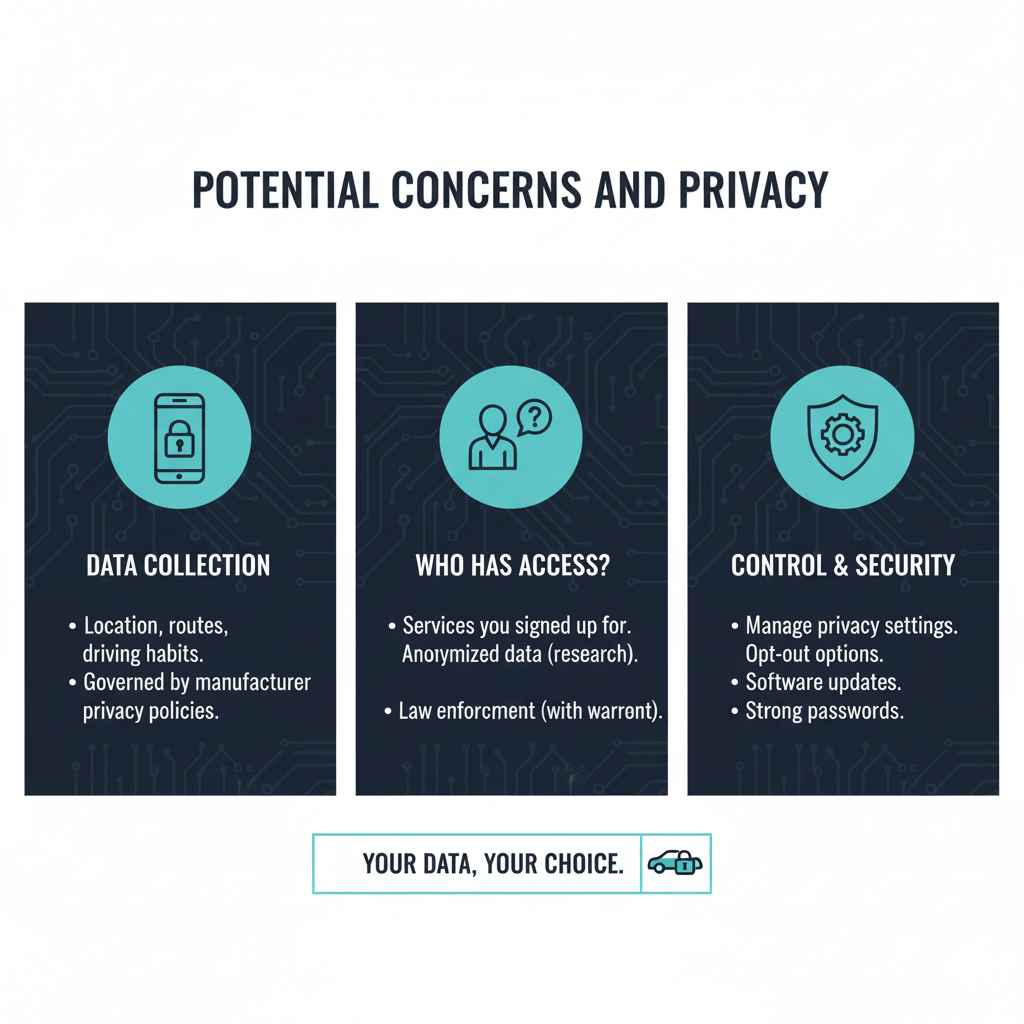
Data Collection: Your car’s GPS system collects data about your location, routes taken, and potentially driving habits. The way this data is used is governed by the privacy policies of the car manufacturer and any connected services you subscribe to.
Who has access? Generally, your location data is used for the services you’ve signed up for. In specific circumstances, manufacturers might share anonymized data for research or aggregate traffic information. Law enforcement may also request location data in cases of suspected criminal activity, typically with a warrant.
Control Over Data: Most connected car services allow you to manage your privacy settings, opt-out of certain data sharing, or even disable some features. It’s crucial to review your car’s specific privacy policy and understand the settings available to you.
Security Risks: Like any connected device, there’s a theoretical risk of hacking. However, manufacturers invest heavily in securing these systems. Keeping your car’s software updated and using strong passwords for associated accounts are good practices.
When Did Fully Integrated GPS Become Standard?
While GPS for navigation became widely available by the mid-2010s, fully integrated GPS tracking for a suite of connected services, including remote location, theft recovery, and advanced safety features, generally became more standard as follows:
- Luxury Brands: Often as early as 2010-2012, with comprehensive connected services starting to appear.
- Mainstream Brands: Increasingly common from 2014-2016 onwards as standard or optional features, especially on higher trim levels.
- Mandatory Safety Features: Systems like automatic crash notification (e.g., in Europe, the eCall system) became more standardized in the latter half of the 2010s. In the US, it was more manufacturer-driven but influenced by safety standards conversations.
So, if you’re looking at cars from around 2015 or newer, you can be fairly certain they have robust GPS capabilities. Cars from 2010-2014 likely have it as an option or standard on many models, offering at least navigation and basic safety features.
FAQ: Your GPS Questions Answered
Here are some common questions car owners have about GPS tracking.
Do all cars have GPS tracking?
No, not necessarily. While most cars manufactured today have GPS capability for navigation, not all have active, integrated “tracking” features beyond what’s needed for the navigation or immediate safety functions. Basic cars, especially older models or entry-level trims, might only have basic GPS for standard navigation.
When did GPS navigation become common in cars?
GPS navigation started appearing in cars in the late 1990s and early 2000s, but it became truly common and widely available as an option or standard feature on many new cars from about 2010 onwards.