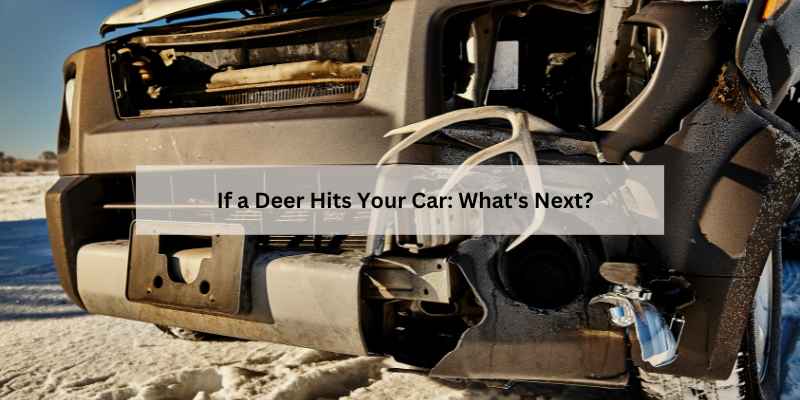
Deer Hit Car What to Do: A Step-by-Step Survival Guide
It happens in a split second. One moment you’re driving down a rural highway at dusk, and the next a 150-pound animal launches itself from the treeline directly into your path — a split-second dash rooted in the same flight instinct that makes deer freeze in headlights instead of avoiding them, not bad luck. The thud is sickening. Your hands shake, the airbags may have deployed, and your car is now sitting on the shoulder with steam rising from a crumpled hood.
Most people freeze. They don’t know whether to call 911 or their insurance first, whether they’re legally required to stay, or whether they can salvage the deer meat. This guide walks you through the entire aftermath of a deer collision in the order you should handle it: safety first, then legal compliance, then the insurance and financial side. You’ll also learn what to do if the deer is still alive, how state laws differ on reporting and salvage, and how to avoid a repeat incident.
Generic
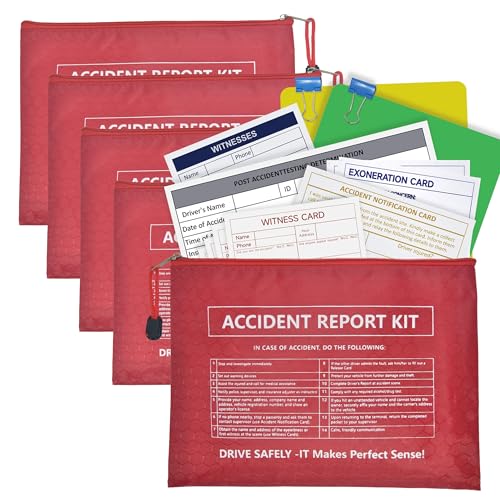
5 Pack Waterproof Vehicle Accident Report Kit…
- All-in-One Vehicle Accident Report Kit for Drivers – This complete car accident kit includes everything a driver needs to effectiv…
- Waterproof & Durable Vinyl Pouch – All contents are safely stored in a high-visibility red waterproof vinyl pouch, designed to res…
- Premium 300g Coated Paper Forms – Made with thick, high-quality coated paper (300g), each form is easy to write on with pens or pe…
Before we get into the steps, one piece of gear worth having in your glove box is a vehicle accident report kit. It’s a waterproof vinyl pouch with pre-printed forms for driver details, witness statements, and damage descriptions. When your brain is scrambled from adrenaline, having a checklist in front of you makes a real difference. I keep one in my own car, and it’s saved me from forgetting things like the other driver’s plate number or the exact time of the incident.
Pull Over Safely and Assess the Scene
Your first move after impact is to get your vehicle off the travel lanes. Use your momentum to coast to the shoulder or a nearby exit. Put on your hazard lights immediately. If it’s dark, turn on your interior dome light so other drivers can see you.
Do not get out of the car right away. Check your mirrors for oncoming traffic, especially if you’re on a curve or hill. In the minutes after a collision, other drivers may not expect a stopped vehicle. Wait until you’re confident it’s safe to open the door.
Once outside, move at least 20 feet away from the roadway if you can. Stand behind a guardrail or in a ditch if one exists. The deer may still be alive and thrashing, so keep your distance from the animal as well. A wounded deer can kick hard enough to break bones.
Check for Injuries (Yours and Passengers)
Adrenaline masks pain. You might feel fine for the first few minutes, then realize your ribs hurt or your wrist is sprained. Check yourself and every passenger for cuts, bruises, or any pain that wasn’t there before the impact. Airbag deployment can cause burns, facial abrasions, and chest contusions.
If anyone is injured, call 911 immediately. Even if you think it’s minor, get it checked. A neck or back injury can take hours to show symptoms. If airbags deployed and you hit your head, don’t drive yourself to the hospital — wait for an ambulance or have someone else drive.
One thing people overlook: the psychological shock. After the immediate danger passes, you may feel shaky, nauseous, or oddly detached. That’s a normal stress response. It’s also why you should never make major decisions, like whether to file a claim, while you’re still in that state. Give yourself 10 minutes to breathe before you start making calls.
Call the Police and File a Report
Call the local police or county sheriff’s department. You need a police report for your insurance claim in most cases. Even in states where it’s not legally required for a deer collision, having an official report makes the claims process smoother. The officer will document the scene, note the damage, and record your statement.
Ask the officer for the report number and the names of any responding officers. You’ll need this when you call your insurer. If the deer is still alive and injured, the officer or animal control will handle it. Don’t attempt to put the animal down yourself — that’s what law enforcement is trained for.
There’s a difference between a police report and an accident report. The police report is the officer’s official documentation. An accident report is what you file with the DMV in some states. Your insurance company will usually handle the DMV filing, but it’s worth asking your agent whether your state requires a separate submission from you.
Document the Scene for Insurance
Take photos of everything. The damage to your vehicle from multiple angles, the position of the car on the road, any debris, and the deer itself if it’s visible. Get shots of the road conditions and weather too. These photos help the claims adjuster understand what happened and can speed up your payout.
Write down the time, date, and exact location. Note the direction you were traveling and your speed if you remember it. If there were witnesses, get their contact information. Witness statements carry weight if there’s any dispute about how the collision occurred.
This is where that accident documentation kit earns its keep. The included witness cards and driver’s report form guide you through collecting the exact information an insurance company wants. Trying to scribble notes on a napkin while your hands are shaking is not ideal. The forms are printed on thick coated paper that won’t tear if it gets damp, and the vinyl pouch keeps everything dry in a rainstorm.
The Live Deer Dilemma: What to Do If It’s Still Alive
This is the moment nobody prepares for. The deer is down, but it’s breathing. Its eyes are open and it’s trying to move. What do you do?
First, stay in your car or keep a significant distance. A wounded deer is unpredictable and can cause serious injury with its hooves and antlers. Do not approach it, do not try to move it, and absolutely do not attempt to put it out of its misery yourself. That requires a firearm and a clear shot to the brain — something untrained civilians should never attempt at a roadside.
Call animal control or the police and let them make the call. They have the training and equipment to handle it humanely. In many cases, the officer will euthanize the deer if its injuries are severe. If the deer gets up and runs off, that’s actually the best outcome for everyone involved — it means the injuries aren’t immediately life-threatening.
One thing to avoid: touching the deer. Beyond the physical danger, there’s a small risk of diseases like chronic wasting disease in certain regions. Let the professionals handle it.
Contact Your Insurance Company (What to Say)
Call your insurer as soon as you’re safe, ideally within 24 hours. Most policies require prompt notification of any accident, even if you’re not sure you’ll file a claim. Delaying can give the insurance company a reason to deny coverage.
When you call, have your policy number, the police report number, and your photos ready. Give them the facts: time, location, what happened, and the extent of the damage. Don’t speculate about costs or admit fault — deer collisions are almost never your fault in the eyes of insurance, but keep your statement factual.
Ask these specific questions:
- Is this covered under my comprehensive coverage?
- What is my deductible?
- Will my premium go up if I file a claim?
- Do I need to get multiple repair estimates?
- Is rental car coverage included while my car is in the shop?
That last one catches people off guard. If you have rental reimbursement on your policy, your insurer will cover a rental car up to a daily limit while repairs are done. If you don’t have it, you’ll be paying out of pocket for a rental or relying on friends and family. Check your policy now — this is one of those coverage types that costs a few dollars a month but saves you hundreds after a collision.
Regarding your premium: comprehensive claims for deer strikes are generally treated differently than at-fault accidents. Many insurers won’t raise your rates for a comprehensive claim, but it’s not guaranteed. Ask your agent directly. If they say your rate will increase, do the math on whether the repair cost minus your deductible is worth paying out of pocket. Sometimes it’s cheaper to skip the claim entirely if the damage is minor.
Understanding Your Deductible and Coverage
Deer collisions fall under comprehensive coverage, not collision coverage. That distinction matters because comprehensive covers non-collision events — theft, fire, hail, and animal strikes. Collision covers accidents with other vehicles or objects.
Your comprehensive deductible is typically $250 to $1,000. If your repair estimate is $1,200 and your deductible is $500, the insurance company pays $700. If the estimate is $400 and your deductible is $500, filing a claim makes no sense — you’d pay the entire repair cost yourself and still have a claim on your record.
Here’s a rough cost breakdown for common deer collision damage:
| Damage Type | Average Repair Cost | Repair Time |
|---|---|---|
| Bumper cover and grille | $500 – $1,500 | 1–3 days |
| Hood and fender damage | $1,500 – $3,500 | 3–7 days |
| Headlight assembly replacement | $300 – $1,000 | 1–2 days |
| Radiator and cooling system | $800 – $2,000 | 2–4 days |
| Windshield and roof damage | $1,000 – $3,000 | 2–5 days |
| Totaled vehicle (frame damage) | Vehicle value minus salvage | N/A – settlement paid |
These numbers vary by region and vehicle make. A luxury SUV with a shattered headlight will cost more than a sedan with a dented bumper. The point is to compare your deductible against the estimate before you commit to filing.
If your car is totaled, the insurance company pays you the actual cash value — what the car was worth just before the crash, not what you paid for it. That’s another reason to keep records of your car’s maintenance and any recent upgrades. They can nudge the valuation upward.
Is It Illegal to Drive Off? (State-by-State Rules)
Hitting a deer and driving away without reporting it is a crime in most states. The legal requirement varies, but the general rule is this: if there’s property damage (your car) or the animal is blocking the roadway, you must report it. Some states require a report only if damage exceeds a dollar threshold, like $500 or $1,000.
Here’s what you need to know about the most common state laws:
- Mandatory reporting states: Most states require you to report any deer collision to law enforcement, regardless of damage amount. Failing to do so can result in fines or even hit-and-run charges.
- Threshold states: A few states only require a report if damage exceeds a specific dollar amount. Check your state’s DMV website for the exact figure.
- Salvage tag states: If you want to keep the deer meat, many states require a salvage permit or tag from law enforcement. Without it, possessing the deer is illegal poaching.
If you’re unsure about your state’s rules, call the non-emergency police line and ask. It’s better to make one extra phone call than to face a citation later.
What to Do If the Deer Runs Away
Sometimes the deer gets up and disappears into the woods before the police arrive. You’re left with a damaged car and no animal at the scene. Does that change your legal obligations?
No. You still need to file a police report and contact your insurance company. The absence of the deer doesn’t change the fact that a collision occurred. Your photos and the damage to your car are sufficient evidence for a comprehensive claim.
One caveat: if the deer ran away, there’s a chance it will die later from internal injuries. That’s unfortunate, but it’s not your responsibility. You’ve done what you can by reporting the incident.
Also, don’t assume the deer is fine just because it ran off. They often run on adrenaline and collapse a few hundred yards away. If you see where it went, mention it to the officer. They may send animal control to check the area.
Handling the Deer Meat (Salvage Permits Explained)
This is a sensitive topic, but it’s a real consideration for many drivers, especially in rural areas. If the deer is dead and you want to take it home for meat, you need to follow state regulations. Most states offer a salvage permit that allows you to possess a road-killed deer. The process varies:
- Some states require you to call a conservation officer and get a permit number on the spot.
- Others let you take the deer and register it online within a set time frame.
- A few states prohibit salvage entirely, so check before you load a 150-pound carcass into your trunk.
If you do take the deer, field dress it as soon as possible. Meat spoils quickly in warm weather. If you’re not experienced with field dressing, it’s better to leave the deer for the authorities. Wasting meat is a shame, but so is ruining a good carcass through improper handling.
The police officer at the scene can usually tell you the salvage rules for your state. If they can’t, call your state’s fish and wildlife department. Don’t rely on a friend’s advice for this one — penalties for illegal possession of wildlife are steep.
How to Avoid Hitting a Deer in the Future
Deer collisions spike during October through December, which coincides with both hunting season and the deer mating season. Dawn and dusk are the highest-risk times. Deer are most active when visibility is lowest, which is a bad combination.
Here’s what actually works:
- Scan the shoulders: Look for eye shine reflecting in your headlights. Deer eyes glow like small flashlights. If you see one, slow down immediately — there are almost always more nearby.
- Don’t swerve: This is the hardest instinct to fight. Swerving to avoid a deer often results in a worse outcome — rolling your vehicle, hitting a tree, or crossing into oncoming traffic. Hitting the deer straight on is usually the safer option. Your car’s crumple zones and airbags are designed for a frontal impact. A side impact from a swerve is far more dangerous.
- Use your horn: A long, steady horn blast can startle a deer and stop it in its tracks. Short honks don’t work as well.
- Slow down in known deer zones: Pay attention to deer crossing signs. They’re placed there for a reason. Reduce your speed by 10-15 mph in those areas, especially at dawn and dusk.
- High beams when possible: On empty roads, use your high beams to spot deer earlier. Flip them to low beams when approaching another vehicle.
There’s also the question of deer whistles — those small devices that mount on your bumper and emit a high-frequency sound. The evidence is mixed. Some drivers swear by them, but studies haven’t shown a consistent reduction in collisions. I’d rather spend the money on a good accident report kit than on a device with questionable effectiveness. If you want to learn more about how they work, check out this deer whistle installation guide.
Final Checklist: Quick Reference Card
Print this or save it to your phone. You won’t remember all the details in the moment, and that’s okay. That’s what this list is for.
- Move your car to a safe location off the road and turn on hazard lights.
- Check yourself and passengers for injuries. Call 911 if anyone is hurt.
- Call the police and file a report. Get the report number.
- Stay away from a live deer. Let law enforcement handle it.
- Take photos of your car, the road, and the deer if visible.
- Write down the time, location, and any witness contact info.
- Call your insurance within 24 hours. Ask about comprehensive coverage, deductible, and rental car coverage.
- Check your state’s salvage rules before taking the deer.
- Don’t swerve next time. Brake firmly and hit the deer head-on if you can’t stop.
If you’re dealing with a different type of collision, the same documentation principles apply. Hitting a parked car or having someone rear-end you at a stoplight requires the same calm, methodical approach. The steps are always the same: safety, documentation, reporting, then insurance. If you want a deeper look at those scenarios, read about what to do after hitting a parked car or how to handle someone else hitting your car.
Deer collisions are scary, but they’re also one of the most common accidents on American roads. With the right preparation — a stocked accident kit, a clear head, and this checklist — you’ll get through it with your safety intact and your insurance claim handled properly.
Products related to this article
Sponsored / affiliate links. As an Amazon Associate I earn from qualifying purchases. I may earn additional commission from eligible campaigns.