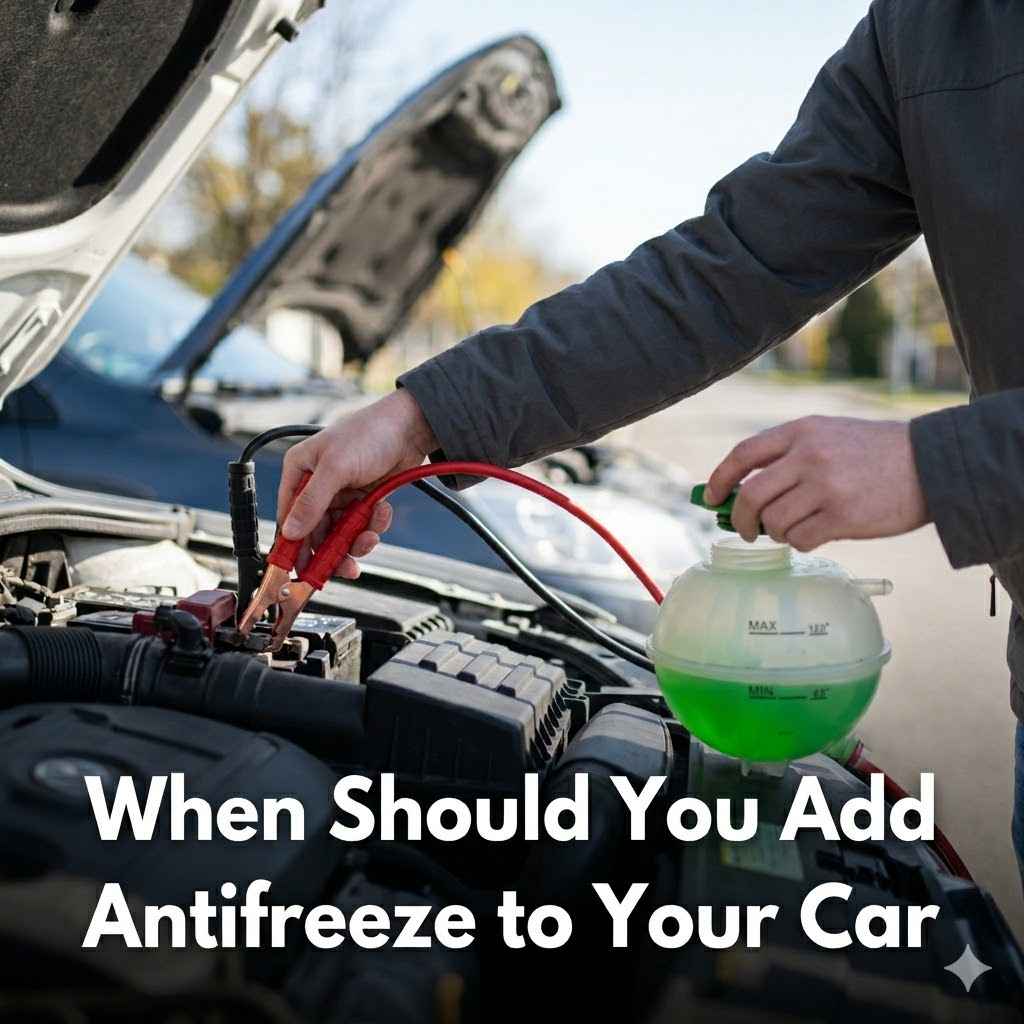
When Should You Add Antifreeze to Your Car
Figuring out exactly when to add antifreeze to your car can feel tricky, especially if you’re new to car care. You want to make sure your engine stays happy and protected, but sometimes the signs aren’t super obvious. Don’t worry!
We’ll walk through this together with simple steps so you can feel confident. Get ready to learn what your car needs and how to keep it running smoothly. We’ll cover all the important stuff you need to know.
Understanding Your Car’s Cooling System
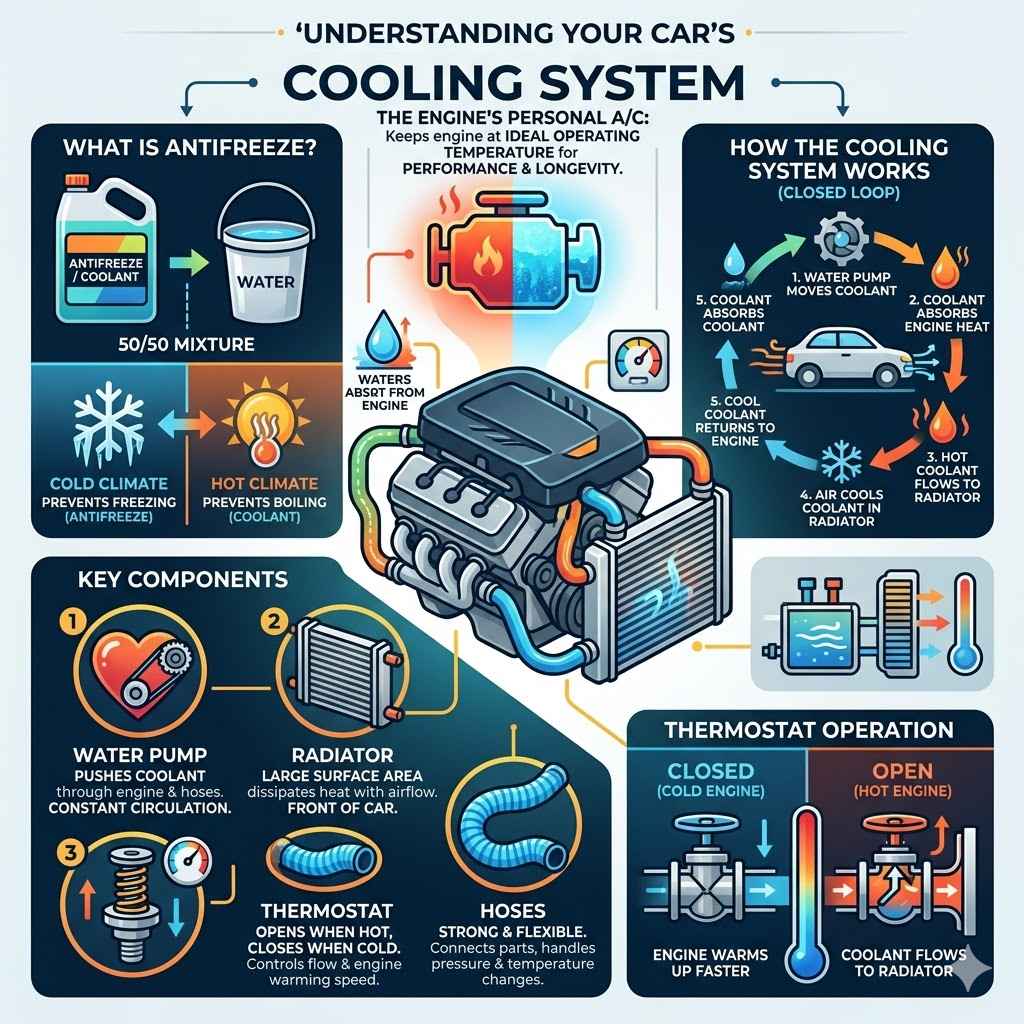
Your car’s engine gets very hot when it runs. This heat needs to go somewhere so the engine doesn’t overheat and get damaged. That’s where the cooling system comes in. It’s like your car’s personal air conditioner for the engine. The main job of the cooling system is to keep the engine at the right temperature, not too hot and not too cold. This is super important for your car to work well and last a long time.
What is Antifreeze?
Antifreeze, also called coolant, is a special liquid that runs through your car’s engine. It has two main jobs. First, it helps keep your engine from getting too hot. It absorbs heat from the engine and carries it away to the radiator. Second, it stops the liquid from freezing when it’s cold outside. This is where the name “antifreeze” comes from.
A common type of antifreeze is ethylene glycol or propylene glycol mixed with water.
The water helps carry the heat. The antifreeze part stops it from freezing in winter and boiling in summer.
The mix is usually about 50/50 water and antifreeze. This gives you the best protection for most weather conditions.
How the Cooling System Works
The cooling system is a closed loop. This means the liquid goes around and around without much escape.
A water pump moves the coolant through the engine.
The coolant picks up heat from the engine parts.
It then flows to the radiator, which is usually at the front of your car.
Air flows through the radiator as you drive. This cools down the hot coolant.
A thermostat controls the flow of coolant. It opens when the engine is hot and closes when it’s cool.
This keeps the engine at its ideal operating temperature.
Radiator
The radiator is like a set of thin tubes with fins. It has a large surface area. This allows air to pass through it easily and cool the liquid inside. When the hot coolant flows into the radiator, the fins help dissipate the heat into the air.
Water Pump
The water pump is driven by a belt connected to the engine’s crankshaft. It acts like a heart for the cooling system. It pushes the coolant through the engine, hoses, and radiator, ensuring constant circulation.
Thermostat
The thermostat is a valve that opens and closes based on temperature. When the engine is cold, the thermostat stays closed. This stops coolant from going to the radiator, allowing the engine to warm up faster. Once the engine reaches its optimal temperature, the thermostat opens, letting coolant flow to the radiator for cooling.
Hoses
Hoses are flexible tubes that connect the different parts of the cooling system. They carry the coolant from the engine to the radiator and back again. They need to be strong and flexible to handle the pressure and temperature changes.
When Should You Add Antifreeze to Your Car?
Knowing when to add antifreeze to your car is important for keeping your engine healthy. It’s not something you do every day, but it’s a key part of car maintenance. Ignoring it can lead to big problems. Let’s break down the signs and times you should check and potentially add more coolant.
Checking Your Coolant Level
The easiest way to know if you need to add antifreeze is to check the coolant level. Your car has a special container for the coolant, often called a reservoir or overflow tank. It’s usually made of clear plastic so you can see the liquid inside.
Look for markings on the side of the reservoir. These will show “Full” or “Max” and “Low” or “Min.” When the engine is cool, the coolant level should be between these two marks. If it’s below the “Low” mark, you need to add coolant. It’s best to check this regularly, maybe once a month.
Finding the Coolant Reservoir
The coolant reservoir is typically a translucent plastic tank connected to the radiator by a small hose. Its location can vary by car model, but it’s usually found in the engine bay, often near the front or side.
Interpreting the Markings
The markings on the reservoir are crucial. They indicate the safe operating range for the coolant level. Checking when the engine is cold ensures an accurate reading because the coolant expands when hot.
Signs Your Coolant is Low
Sometimes, you might not even need to look at the reservoir. Your car can give you clues that the coolant is low.
One of the most common signs is your car’s temperature gauge climbing higher than normal. If it goes into the red zone, that’s a big warning.
You might also notice steam coming from under the hood, especially when the engine is hot. This is a sign that something is overheating.
Another sign could be a sweet smell coming from your car, which can be coolant leaking.
And of course, if you see puddles of colorful liquid (usually green, pink, orange, or blue) under your car, that’s definitely a leak.
Overheating Engine
An overheating engine can cause serious damage. If your temperature gauge is in the red, pull over safely as soon as possible. Turn off the engine and let it cool down completely before checking anything.
Steam from Under the Hood
Steam is a clear indication that the engine is too hot. This often happens when the coolant level is too low to cool the engine effectively.
Sweet Smell
Engine coolant typically has a sweet odor. If you notice this smell, it suggests a coolant leak, even if you don’t see any puddles.
Recommended Coolant Replacement Intervals
Antifreeze doesn’t last forever. Over time, it loses its ability to protect your engine. Most car manufacturers recommend flushing and refilling the cooling system with fresh coolant every 30,000 to 60,000 miles. Some newer coolants can last even longer, up to 100,000 miles or more.
It’s important to check your car’s owner’s manual for the specific recommendation for your vehicle. Using the correct type of coolant is also vital. There are different types, and mixing them can cause problems.
Owner’s Manual is Key
Your car’s owner’s manual is the best source of information for maintenance schedules and fluid types. It’s designed specifically for your vehicle.
Types of Coolant
There are different colors and formulations of coolant. Using the wrong type can lead to corrosion and other issues. Common types include traditional green, OAT (Organic Acid Technology), and HOAT (Hybrid Organic Acid Technology). Always use the type recommended in your manual.
Environmental Factors
The weather outside also plays a role. In very hot climates, your cooling system works harder to prevent overheating. You might need to check your coolant level more often. In very cold climates, it’s crucial that your coolant has enough antifreeze protection to prevent freezing. Freezing can cause serious damage to your engine block and radiator.
Hot Weather
During summer months, engine temperatures can rise significantly. This increases the demand on the cooling system. Regular checks become even more important to ensure sufficient coolant levels.
Cold Weather
In winter, the freezing point of the coolant mixture is critical. A 50/50 mix typically protects down to -34 degrees Fahrenheit (-36 degrees Celsius).
How to Add Antifreeze Safely
Adding antifreeze is a straightforward process, but safety is the number one priority. Never open a hot radiator cap or coolant reservoir. The system is under pressure, and hot coolant can spray out and cause severe burns. Always wait for the engine to cool down completely.
Gathering Your Supplies
Before you start, make sure you have everything you need. You’ll need the correct type of antifreeze for your car. Check your owner’s manual. You’ll also need distilled water, as tap water can contain minerals that can harm your cooling system. A funnel is helpful to avoid spills. And don’t forget gloves and eye protection for safety.
Choosing the Right Antifreeze
There are various colors and types of antifreeze, and they are not always interchangeable. For example, some are silicate-free or phosphate-free. Always refer to your owner’s manual for the specific type recommended for your vehicle. Using the wrong kind can cause damage to your cooling system components.
Distilled Water is Best
While you might be tempted to use tap water, it’s not recommended for your cooling system. Tap water contains minerals and impurities that can build up over time, leading to corrosion and blockages. Distilled water is pure and safe for your cooling system.
The Step-by-Step Process
First, make sure the engine is completely cool. Locate the coolant reservoir. Using a funnel, carefully pour in the correct mixture of antifreeze and distilled water. Most often, you’ll want a 50/50 mix. Some premixed coolants are available, which can be convenient. Fill it to the “Full” or “Max” line on the reservoir.
After adding, close the reservoir cap tightly. Start the engine and let it run for a few minutes. Watch the temperature gauge to make sure it stays in the normal range. You might also want to turn on the heater to help circulate the new coolant through the system. After the engine has run for a bit, turn it off and let it cool down again. Re-check the coolant level in the reservoir and add more if needed to bring it back up to the full line.
Step 1: Cool Engine
This cannot be stressed enough: always wait for the engine to cool down. Hot coolant is pressurized and can cause severe burns if the system is opened.
Step 2: Locate Reservoir and Add Fluid
Open the hood and find the coolant reservoir. Use a funnel to add the antifreeze/water mixture. If you are using concentrated antifreeze, you will need to mix it with distilled water in a separate container before adding it to the reservoir. A common mixture is 50% antifreeze and 50% distilled water.
Step 3: Run Engine and Recheck
Once the fluid is added and the cap is secured, start the engine. Let it run for 10-15 minutes. Turn on the heater to its highest setting. This helps circulate the coolant and purge any air pockets. After the engine has run and cooled down again, check the level one last time and top off if necessary.
Disposing of Old Antifreeze
Antifreeze is toxic and should never be poured down drains or onto the ground. It can harm people, pets, and the environment. Most auto parts stores and many repair shops accept used antifreeze for recycling. Check with your local authorities or auto service centers for proper disposal options in your area.
Environmental Hazards
Antifreeze contains chemicals that are poisonous to humans and animals. Even small amounts can cause serious health problems or death if ingested.
Recycling Options
Many communities have designated drop-off points for hazardous waste, including used automotive fluids. Auto parts stores and service centers are often willing to take your old antifreeze for recycling, as it can be reprocessed and reused.
Troubleshooting Common Coolant Issues
Sometimes, even with regular checks, you might run into issues with your car’s coolant. Leaks are the most common problem, but other issues can also arise. Knowing what to look for can help you fix them before they become major problems.
Dealing with Leaks
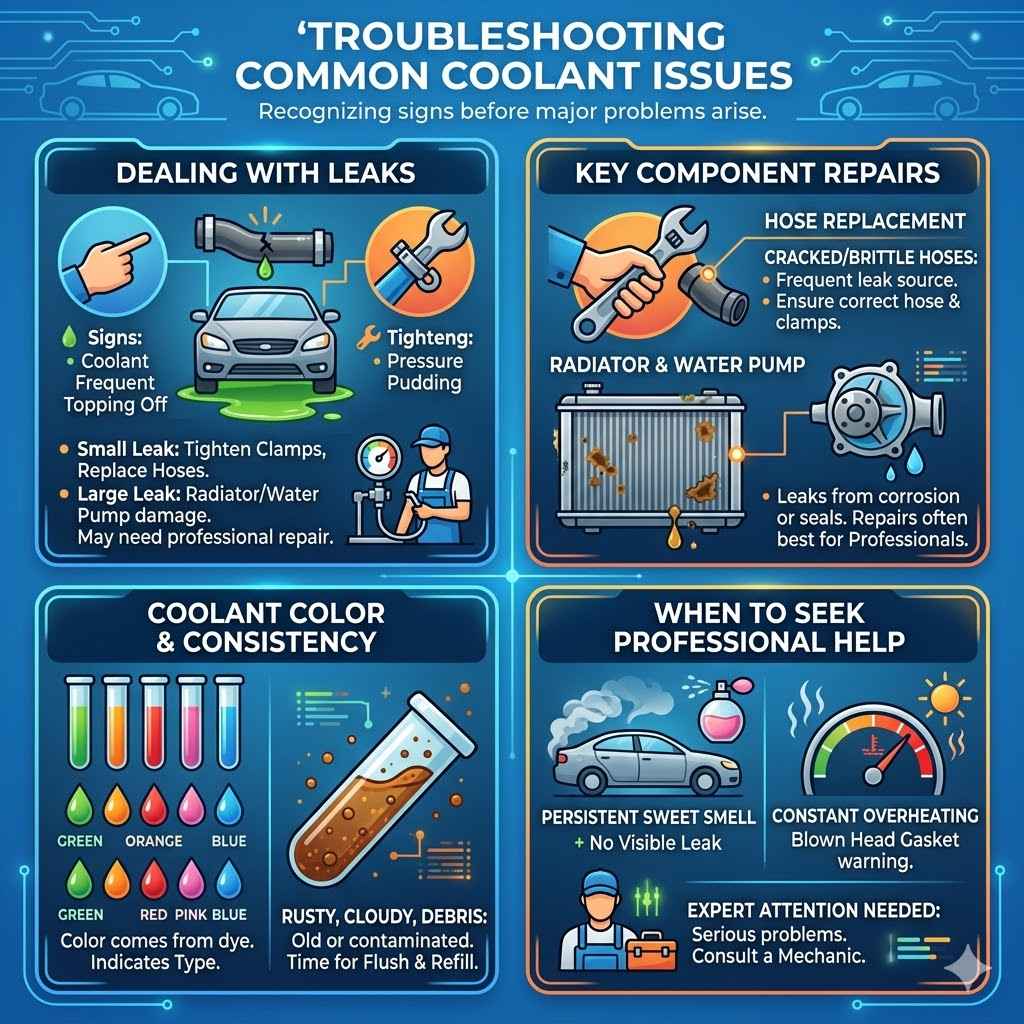
If you notice coolant puddles or a constant need to top off your coolant, you likely have a leak. Leaks can occur in various parts of the cooling system. Common spots include hoses, the radiator, the water pump, or even the engine head gasket.
A small leak might just require replacing a cracked hose or tightening a loose clamp. Larger leaks, especially from the radiator or water pump, may need professional repair or replacement. A mechanic can perform a pressure test on the system to pinpoint the exact location of the leak.
Hose Replacement
Cracked or brittle hoses are a frequent source of coolant leaks. Replacing them is usually a simple DIY job. Ensure you buy the correct hose for your car model and secure it with proper clamps.
Radiator and Water Pump Issues
Leaks from the radiator can be due to corrosion or damage to its core. Water pump leaks often show up as drips from the pump’s seal or weep hole. These repairs are more involved and often best left to a professional.
Understanding Coolant Color and Consistency
The color of your coolant can tell you a lot. As mentioned, common colors are green, orange, red, pink, and blue. This color is from a dye added to the coolant. If your coolant looks rusty, cloudy, or has debris floating in it, it might be old or contaminated. This means it’s time for a flush and refill.
When to Seek Professional Help
While some coolant checks and additions can be done at home, certain problems require a mechanic. If you see a persistent sweet smell and can’t find a leak, or if your car is constantly overheating despite regular maintenance, it’s time to see a professional. Issues like a blown head gasket are serious and need expert attention.
Frequently Asked Questions
Question: How often should I check my car’s coolant level?
Answer: It’s a good idea to check your coolant level at least once a month, especially before long trips or when the weather changes significantly.
Question: Can I use water instead of antifreeze?
Answer: While water can be used in a pinch, it’s not recommended for long-term use. Water alone can freeze in cold weather, potentially damaging your engine, and it boils at a lower temperature than antifreeze, leading to overheating in warm weather.
Question: What happens if I mix different colors of antifreeze?
Answer: Mixing different types of antifreeze can cause chemical reactions that reduce their effectiveness, lead to corrosion, and clog your cooling system. Always use the type recommended in your owner’s manual.
Question: Is it safe to add coolant when the engine is hot?
Answer: No, it is never safe to open the radiator cap or coolant reservoir when the engine is hot. The system is under pressure, and hot coolant can spray out, causing severe burns.
Question: How do I know if my car needs a coolant flush?
Answer: Signs that your car needs a coolant flush include discolored or dirty-looking coolant, rust or sediment in the coolant, or if your car is overheating. Your owner’s manual will also specify recommended flush intervals.
Wrap Up
Knowing when to add antifreeze to your car keeps its engine running smoothly. Regularly check the coolant level in the reservoir when the engine is cool. Watch for warning signs like overheating or steam. Follow your car’s manual for how often to replace the coolant. Adding antifreeze is simple and safe if you wait for the engine to cool. Proper care protects your car from extreme temperatures.