Infant Car Seat Covers for Cold Weather: Safe Types Explained
Yes, infant car seat covers can be used safely in cold weather – but only if the cover fits over the outside of an already-buckled car seat, not underneath the harness straps or between your baby and the seat. A waterproof, windproof canopy-style cover keeps wind, rain, and snow off your baby while the harness still does its job properly.
Safety First: What NHTSA and Pediatricians Actually Say
The American Academy of Pediatrics and NHTSA-trained child passenger safety technicians agree: nothing thicker than a thin sweatshirt should ever go under the harness straps. Puffy snowsuits, winter coats, and padded seat liners compress flat in a crash in a fraction of a second, leaving the harness too loose to protect your baby – even though it looked snug before the crash.
The safe approach: buckle your baby in wearing only thin layers, tighten the harness properly, and then add warmth on top – a blanket, a coat worn backwards over the buckle, or an external cover/canopy that wraps around the outside of the whole seat without touching the straps.
Which Infant Car Seat Covers Are Actually Safe to Use?
Not every product sold as a “car seat cover” is safe. There are two very different categories, and mixing them up is the actual danger:
- Safe: external canopy or shield covers. These wrap around the outside of the entire infant carrier – base, handle, and all – after your baby is already buckled in. They typically have a mesh viewing panel and elastic edges that hook around the carrier itself, never touching the harness. Nothing sits between your baby and the straps.
- Unsafe: liners or inserts placed under the baby or under the straps. Any padded accessory that isn’t sold by your car seat’s manufacturer for that exact model – and that requires threading the harness through slots in extra padding – hasn’t been crash-tested with your seat. It can shift the harness path or add compressible bulk exactly where it matters most.
The rule of thumb from child passenger safety technicians: if a product goes on after your baby is buckled and doesn’t touch the straps at all, it’s generally fine. If it goes on before buckling and the harness has to pass through or over it, skip it.
How to Dress Your Baby Safely for Cold-Weather Car Rides
Before you even reach for a cover, get the layering right:
- Dress your baby in a single thin layer – a onesie or light fleece – nothing bulkier than a sweatshirt.
- Buckle the harness snugly: you should not be able to pinch any webbing at the shoulder.
- Add warmth on top of the buckled harness – a blanket tucked around your baby, a coat worn backwards over the buckle, or a car seat cover that only touches the outside of the carrier.
- Check the harness again once your baby is dressed for the outing – a quick re-tighten takes a few seconds and closes any slack.

Best Waterproof Infant Car Seat Cover
Among the external canopy-style covers on the market, one design shows up repeatedly as a solid, no-frills pick for parents who want full weather protection without touching the harness at all.
TOP-RATED WEATHERPROOF CANOPY COVER
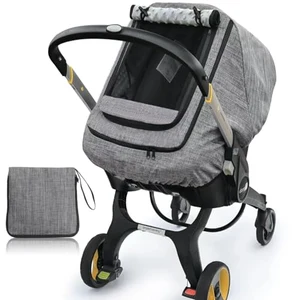 |
Waterproof Baby Car Seat Cover (Gray Melange) – $25.99 A universal-fit canopy that hooks around the outside of your infant carrier, with a mesh viewing panel – it never touches your baby’s harness.
|
Two nearly identical alternatives are worth knowing about if you want a different color or size range. The Waterproof Baby Car Seat Cover in gray uses the same external canopy design and price point as our top pick. If you’d rather have a black colorway, the Car Seat Cover for Babies Winter is a water-resistant option built the same way – it wraps around the outside of the carrier rather than sitting under the harness.
Whichever cover you choose, buckle your baby in first, then add the cover over the top – and double-check that no part of it runs underneath the straps.
Frequently Asked Questions
Are Infant Car Seat Covers Safe to Use in Winter?
Yes, as long as the cover wraps around the outside of the carrier after your baby is buckled in, rather than sitting under the harness or between your baby and the seat. External canopy-style covers with mesh viewing panels are the safe category – they add warmth and weather protection without changing how the harness fits.
Can My Baby Wear a Snowsuit Under the Harness?
No. Bulky snowsuits and winter coats compress flat in a crash, leaving extra slack under the harness even though it looked snug beforehand. Dress your baby in a thin layer, buckle the harness snugly, and add the coat backwards over the buckle or a blanket on top instead.
Do Car Seat Covers Fit All Infant Car Seats?
Most canopy-style covers are labeled “universal fit” and work with standard bucket-style infant carriers, but sizing can vary between brands. Check the listed compatible models before buying, and confirm your infant car seat is installed correctly before you add any accessory.
How Do Car Seat Covers Protect Babies?
A canopy-style cover blocks wind, rain, and cold air from the outside of the seat, creating a sheltered pocket around your baby without touching the harness itself. It’s the same idea as a stroller rain cover – protection from the outside in, not padding underneath.
Are These Covers Suitable for Both Boys and Girls?
Yes. Most canopy covers come in neutral colors like gray or black, so they work for any baby regardless of gender.
What’s the Safest Way to Keep a Baby Warm in a Car Seat?
Dress your baby in thin layers only, buckle the harness snugly first, then add warmth on top: a blanket, a coat worn backwards over the buckle, or an external canopy cover that wraps around the outside of the seat. Never place anything padded under the straps or behind your baby’s back before buckling.
The Bottom Line
Keeping a baby warm during cold-weather car rides comes down to one rule: dress light underneath the harness, buckle snugly, then add warmth on the outside. A waterproof, windproof canopy cover that wraps around the outside of an already-buckled infant seat is a safe, practical way to block wind and rain – just make sure it never touches the straps or sits between your baby and the seat.
Products related to this article
Sponsored / affiliate links. As an Amazon Associate I earn from qualifying purchases. I may earn additional commission from eligible campaigns.
 FLORICH Leather Seat Cover, Car Seat Covers Front Set, Waterproof Car Seat Protectors, Front Seat Covers 2 Pack, Breathable Automotive Seat Covers Protector Fit for Most Cars Trucks SUV
 Teuaktty Car Seat Covers Universal Car Protective Front Seat Covers Washable Non-Slip Seat Protectors for Gym Workouts,Waterproof and Sweatproof Towel Seat Covers for Cars,Trucks, Jeeps (2 Pack Grey)