Where Is Throttle Valve Located: Essential Guide
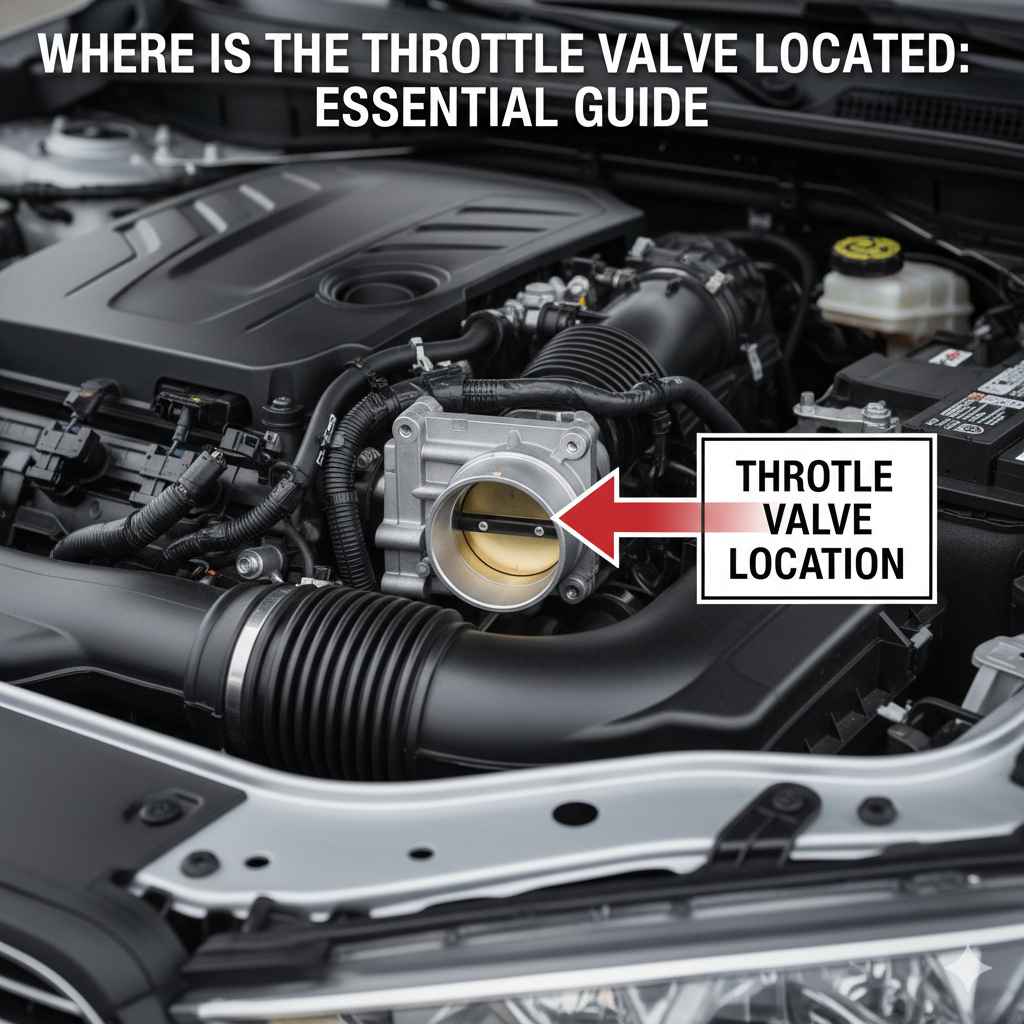
Wondering where your car’s throttle valve is? It’s typically found within the throttle body, a crucial part of the engine’s air intake system, generally located between the air filter and the intake manifold. This guide will pinpoint its exact place and explain its vital role in controlling engine speed.
Welcome! As your go-to automotive friend, Md Meraj, I know that sometimes, just finding a part can feel like a mystery. The phrase “throttle valve” might sound complex, but understanding where it is and what it does is a super helpful step in understanding your car better. Many drivers get confused, which is totally fine! This article is here to shine a light on this important component. We’ll break down exactly where to find the throttle valve, explain its job in simple terms, and help you feel more confident about your vehicle. Let’s get started!
What is a Throttle Valve and Why Does It Matter?
Think of your car’s engine like your own body needing air to run. The throttle valve is like the gatekeeper for that air. It’s a movable plate or disc inside a housing (the throttle body) that opens and closes to control how much air can enter the engine. This directly affects how fast your engine spins, and therefore, how fast your car goes.
When you press the gas pedal, you’re essentially telling the throttle valve to open up, letting more air in. More air means the engine can burn more fuel, creating more power. When you ease off the pedal, the valve closes, restricting airflow and slowing the engine down. It’s a direct connection between your foot and your car’s performance!
Locating the Throttle Valve: A Step-by-Step Approach
Detecting the throttle valve for the first time can seem tricky, but by following a few logical steps, you can usually find it with ease. Remember, safety first! Always ensure your engine is off and cool before you go poking around under the hood.
Step 1: Open the Hood and Locate the Air Intake System
First things first, pop open your car’s hood. Your goal is to find the air intake system. This is the path that air takes from outside the car into the engine. It usually starts with a large plastic or rubber tube connected to a box (the air filter box) and then continues with more tubing.
Look for a large, usually black, plastic or rubber hose that snakes from the front of the engine bay towards the engine itself. This hose’s job is to deliver clean air to be mixed with fuel and ignited.
Step 2: Identify the Throttle Body
Follow that main air intake hose. After the air filter box, you should see a component that the hose connects to, which then connects to the engine’s intake manifold. This component is called the throttle body. It’s typically a round or oval-shaped metal casting.
The throttle body’s main purpose is to house the throttle valve. It’s usually one of the larger components in the air intake path, located closer to the engine than the air filter box.
If you have a modern car, you’ll likely have an Electronic Throttle Control (ETC) system, often called “drive-by-wire.” In these systems, the throttle body will have a visible electrical connector plugged into it. Older cars might have a throttle cable directly connected to the throttle body, showing mechanical linkage.
Step 3: Finding the Throttle Valve Inside the Throttle Body
Now that you’ve found the throttle body, the throttle valve itself is inside it. It’s a flat, disc-like plate mounted on a central shaft. You can usually see this plate if you look into the opening of the throttle body. When the engine is off and the car is not running, the plate should be mostly closed, with only a small gap at the bottom allowing a tiny bit of air in for idling.
When you press the accelerator pedal, this plate pivots open, allowing a much larger volume of air to rush into the engine. You might be able to see it move if you have someone carefully and gently press the gas pedal while you observe the throttle body opening (ensure the engine is off and the ignition is in the “on” position, but not running, for ETC systems, or have someone manually move the linkage for cable systems if you are comfortable and knowledgeable about doing so safely). Always prioritize safety and avoid interfering with moving parts.
Here’s a general visual guide:
| Component | Location | Description |
|---|---|---|
| Air Filter Box | Usually furthest from the engine, often near the front or side of the engine bay. | A plastic or metal box that holds the air filter. |
| Air Intake Hose/Duct | Connects the air filter box to the throttle body. | A large rubber or plastic tube. |
| Throttle Body | Connected to the end of the air intake hose, directly before the intake manifold. | A metal housing where the throttle valve resides. Has electrical connectors (ETC) or a cable linkage. |
| Throttle Valve | Inside the throttle body. | A butterfly-like plate that opens and closes to control airflow. |
Throttle Valve Location: Specifics for Different Car Types
While the general principle remains the same, the exact placement and appearance of the throttle valve can vary slightly depending on your car’s year, make, model, and engine type. Let’s explore some common scenarios.
Modern Cars with Electronic Throttle Control (ETC)
Most cars manufactured in the last 15-20 years use electronic throttle control, often referred to as “drive-by-wire.” In these systems, there’s no physical cable connecting your gas pedal to the throttle body. Instead, a sensor on the pedal tells a computer how far you’ve pressed it, and the computer then signals electric motors in the throttle body to open or close the throttle valve accordingly.
Location: In ETC systems, the throttle body is still situated between the air intake hose and the intake manifold. You’ll easily identify it by the prominent electrical connector(s) plugged into its side. These connectors are a tell-tale sign of electronic control.
Because of the electronic control, tinkering with the throttle valve position manually on these vehicles is generally not recommended without the proper diagnostic tools, as it can affect the car’s computer settings.
Older Cars with Cable-Actuated Throttle
Cars that are a bit older typically use a mechanical cable to operate the throttle valve. When you press the gas pedal, you’re directly pulling on a cable that’s attached to the throttle body, opening the valve.
Location: Similar to ETC systems, the throttle body is found after the air intake hose and before the intake manifold. You’ll notice a metal cable attached to a lever or arm on the throttle body. This cable originates from your accelerator pedal assembly.
These systems can sometimes be easier for DIY enthusiasts to inspect or adjust, but always proceed with caution and consult your vehicle’s service manual.
Cars with Carburetors (Float-Type Carburetors)
This is where things get a bit different and might answer a specific question many of you have! For cars equipped with carburetors, especially float-type carburetors, the throttle valve’s location is integrated directly within the carburetor assembly itself. Carburetors are older fuel delivery systems that have largely been replaced by fuel injection.
Where is the throttle valve located on a float-type carburetor?
On a float-type carburetor, the throttle valve is located at the very bottom of the carburetor’s main body, just above where it connects to the engine’s intake manifold. It’s housed within a casting that also mixes air and fuel. Typically, it’s enclosed in a cylindrical or rectangular housing at the carburetor’s base.
The carburetor itself is a more complex component, often taller and bulkier than a modern throttle body, and it will be located where the air intake hose meets the engine. You won’t find a separate “throttle body” as a distinct unit; the throttle valve is part of the carburetor’s internal mechanism. A throttle linkage (cable or rod) will connect from the accelerator pedal assembly directly to an arm on the carburetor.
Here’s a simplified breakdown of the airflow path for a carbureted system:
- Air enters through the air cleaner (similar to an air filter box).
- The air then passes through the carburetor.
- Inside the carburetor, air is mixed with fuel.
- The throttle valve (also called a butterfly valve) is located at the exit of the carburetor, right before the intake manifold.
- When you press the gas pedal, the throttle valve opens, allowing the air-fuel mixture to be drawn into the engine.
Understanding the carburetor’s role and where its throttle valve sits is key to diagnosing issues on older vehicles. Resources like Ethanol.org’s guide on fuel systems can offer more background on how these older systems worked, which can indirectly help you visualize component placement.
Signs of a Failing or Dirty Throttle Valve
Even though the throttle valve is designed to be robust, it can sometimes develop issues. Because it’s a crucial part of airflow control, problems here can manifest in various ways. Knowing these signs might help you or your mechanic diagnose an issue more quickly.
Common Symptoms
- Rough Idling: The engine might idle too high, too low, or feel unsteady when the car is stopped. This happens when the valve isn’t closing correctly or the surrounding area is dirty, allowing inconsistent airflow.
- Hesitation or Stumbling: When you press the gas pedal, the car might hesitate or feel slow to respond. This can be due to the valve not opening smoothly or being restricted.
- Poor Acceleration: You might notice a lack of power, especially when trying to speed up.
- Check Engine Light: Modern cars have sensors monitoring the throttle body and throttle valve. If performance is outside expected parameters, the computer may trigger a “Check Engine” light. Codes related to throttle position sensors or throttle actuator control are common.
- Stalling: In more severe cases, the engine might stall unexpectedly, particularly when coming to a stop.
Why Do Throttle Valves Get Dirty?
Over time, a fine layer of oily residue from the engine’s crankcase ventilation system can build up around the throttle valve and the bore of the throttle body. This gunk can restrict the valve’s movement and alter the precise airflow needed for smooth engine operation, especially at idle.
Cleaning and Maintenance Tips
Performing a gentle cleaning of the throttle body can often resolve minor idling and hesitation issues. Remember to always follow manufacturer recommendations or consult your car’s service manual for specific procedures and cleaning agents. Using the wrong cleaner or technique could damage sensitive components.
Safety Precautions
- Always disconnect the negative battery terminal before starting any work on the throttle body. This prevents accidental electrical issues and ensures safety.
- Ensure the engine is completely cool.
- Never spray cleaning solutions directly into the throttle body while the engine is running, especially with ETC systems. This can cause damage.
- Avoid using harsh abrasives that could scratch the bore or the valve.
Cleaning Steps (General Guide for ETC Systems)
- Locate the throttle body as described earlier.
- Disconnect the air intake hose that leads to the throttle body. This will give you direct access to the throttle valve inside.
- Inspect the valve and the bore for carbon or oily deposits.
- Use a dedicated throttle body cleaner spray and a clean, lint-free cloth or shop towel.
- Gently spray the cleaner onto the cloth, not directly into the throttle body.
- Carefully wipe around the edges of the throttle valve and the inside bore of the throttle body. If the valve is stiff, you might need to carefully hold it slightly open with a gentle push (on ETC systems, the electronic motors might resist this; if so, refer to specific service procedures for your vehicle. On cable systems, you can usually gently manipulate the linkage).
- Allow the area to air dry completely for a few minutes.
- Reconnect the air intake hose securely.
- Reconnect the battery terminal.
- Start the engine. It might run a bit rough for a few moments as the computer recalibrates. You may need to drive the car for a short period for the idle to stabilize.
External Link: For a deeper dive into engine cleaning and maintenance beyond just the throttle body, you can explore resources like those provided by the U.S. Environmental Protection Agency on vehicle efficiency, which often touches upon the importance of keeping engine components clean for optimal performance.
Throttle Valve vs. Butterfly Valve: What’s the Difference?
It’s common to hear both “throttle valve” and “butterfly valve” used when discussing this component. Are they the same thing?
Essentially, yes. In automotive terms, the throttle valve is the component that controls airflow to the engine. The butterfly valve is the specific design of that throttle valve – it’s a circular disc that pivots on a central shaft, much like a butterfly’s wings opening and closing.
So, while an automotive technician might refer to it as a throttle valve when discussing its function in the engine’s air intake system, the physical shape and mechanism are often described as a butterfly valve.
| Term | Meaning |
|---|---|
| Throttle Valve | The component in the air intake system responsible for regulating airflow to the engine, thereby controlling engine speed and power. |
| Butterfly Valve | The common design of a throttle valve, characterized by a circular disc (the butterfly) that rotates on a shaft to open or close a passage. |
When is it Time to Call a Professional?
While cleaning the throttle body is often a manageable DIY task, there are times when it’s best to leave it to the experts. If you’re uncomfortable working on your car, don’t have the right tools, or if the symptoms persist after cleaning, it’s time to seek professional help.
You should also consult a mechanic if:
- Your “Check Engine” light remains on after attempting a cleaning.
- You suspect a more serious issue, like a malfunctioning throttle position sensor, electronic throttle actuator, or a problem within the intake manifold.
- You have a very old car with a complex quadruple-barrel carburetor that you’re not familiar with.
- Your car has sophisticated electronic systems that you’re hesitant to tamper with.
A qualified mechanic has the specialized diagnostic equipment and expertise to accurately pinpoint the problem and perform any necessary repairs or replacements safely and effectively.
Frequently Asked Questions (FAQ)
Q1: What part of the engine is the throttle valve in?
The throttle valve is located inside the throttle body. The throttle body is a part of the engine’s air intake system, typically found after the air filter and before the intake manifold.
Q2: How do I know if my throttle valve is dirty?
Signs of a dirty throttle valve include rough or unstable idling, hesitation when accelerating, poor engine response, and sometimes a stalling engine. A “Check Engine” light may also illuminate.
Q3: Can I drive with a bad throttle valve?
It depends on the severity of the problem. Minor dirt buildup might cause performance issues, but the car is usually drivable. However, if the throttle valve is stuck open or closed, or a severe electronic issue exists, it could lead to the engine stalling or not running at all, making it unsafe or impossible to drive.
Q4: What is the difference between a throttle body and a throttle valve?
The throttle body is the housing or casing that contains the throttle valve. The throttle valve is the actual movable plate (butterfly valve) inside the throttle body that opens and closes to control airflow.
Q5: Where is the throttle valve located on a float-type carburetor?
On a float-type carburetor, the throttle valve is integrated within the carburetor assembly itself, typically at the bottom of the carburetor’s main body, just above where it attaches to the intake manifold.
Q6: Is cleaning the throttle valve a difficult DIY task?
For most modern cars, cleaning the exterior of the throttle body and the valve itself is a relatively straightforward DIY task that many beginners can accomplish. However, always follow safety guidelines and use the correct cleaning products. Always consult your car’s specific service manual for detailed instructions.