Where to Hide Gun in Car: Essential Guide
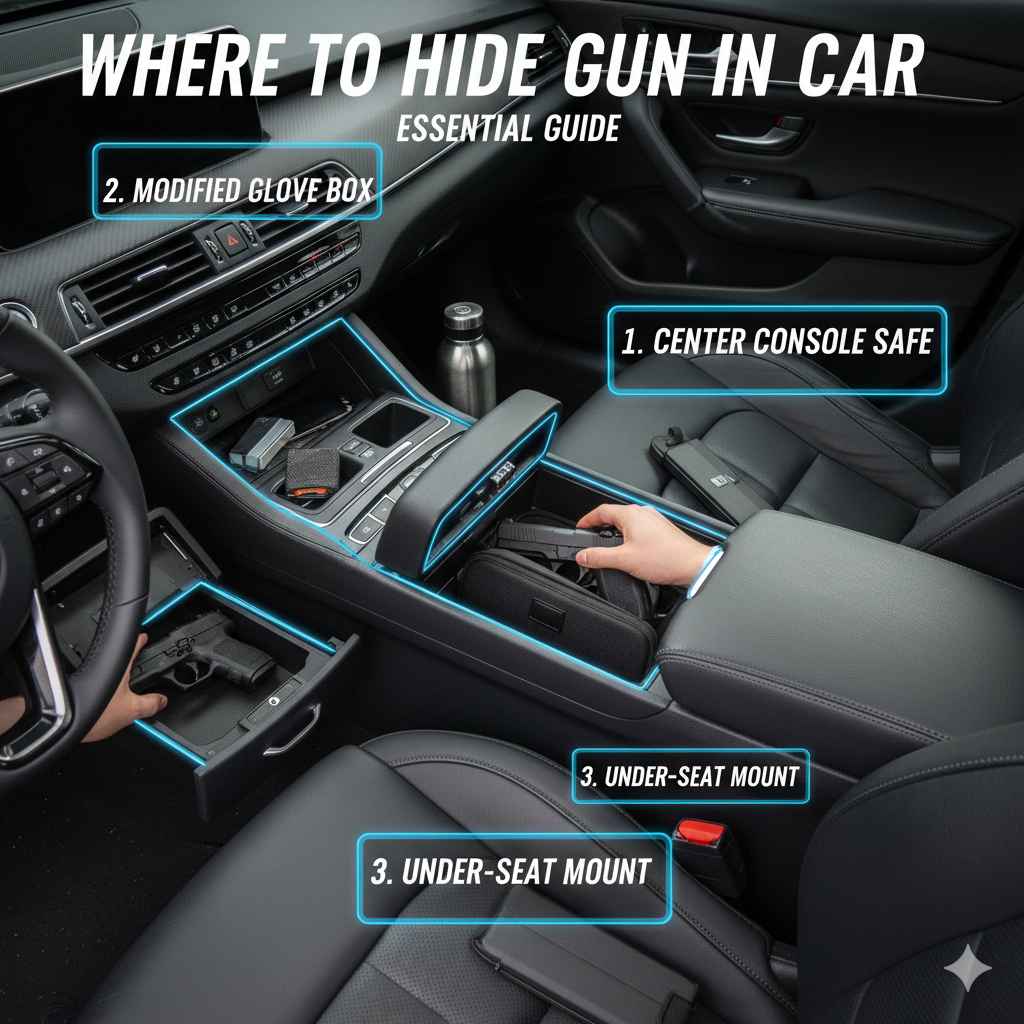
When considering where to hide a gun in a car, prioritization should be on legal compliance, accessibility for authorized users, and secure concealment. Common safe options include under-seat mounts, trunk organizers, dashboard compartments, and lockboxes. Always ensure your chosen location adheres to local laws and prevents unauthorized access.
Hey there, car enthusiasts and safety-conscious drivers! Md Meraj here. Navigating the world of car ownership can sometimes feel like a puzzle, but I’m here to break it down into simple, manageable steps. Today, we’re tackling a question many drivers have: “Where to hide gun in car”. It’s a topic that requires careful thought, balancing convenience with absolute security and legal responsibility. Many of us worry about keeping a firearm safe and secure while on the go. It can be a source of stress, wondering if you’ve chosen the best spot. But don’t worry! This guide is designed to make understanding your options straightforward. We’ll explore effective, safe, and legal ways to store a firearm in your vehicle, giving you peace of mind and clear direction. Let’s get started on finding practical solutions together!
Understanding the Importance of Secure Gun Storage in Vehicles
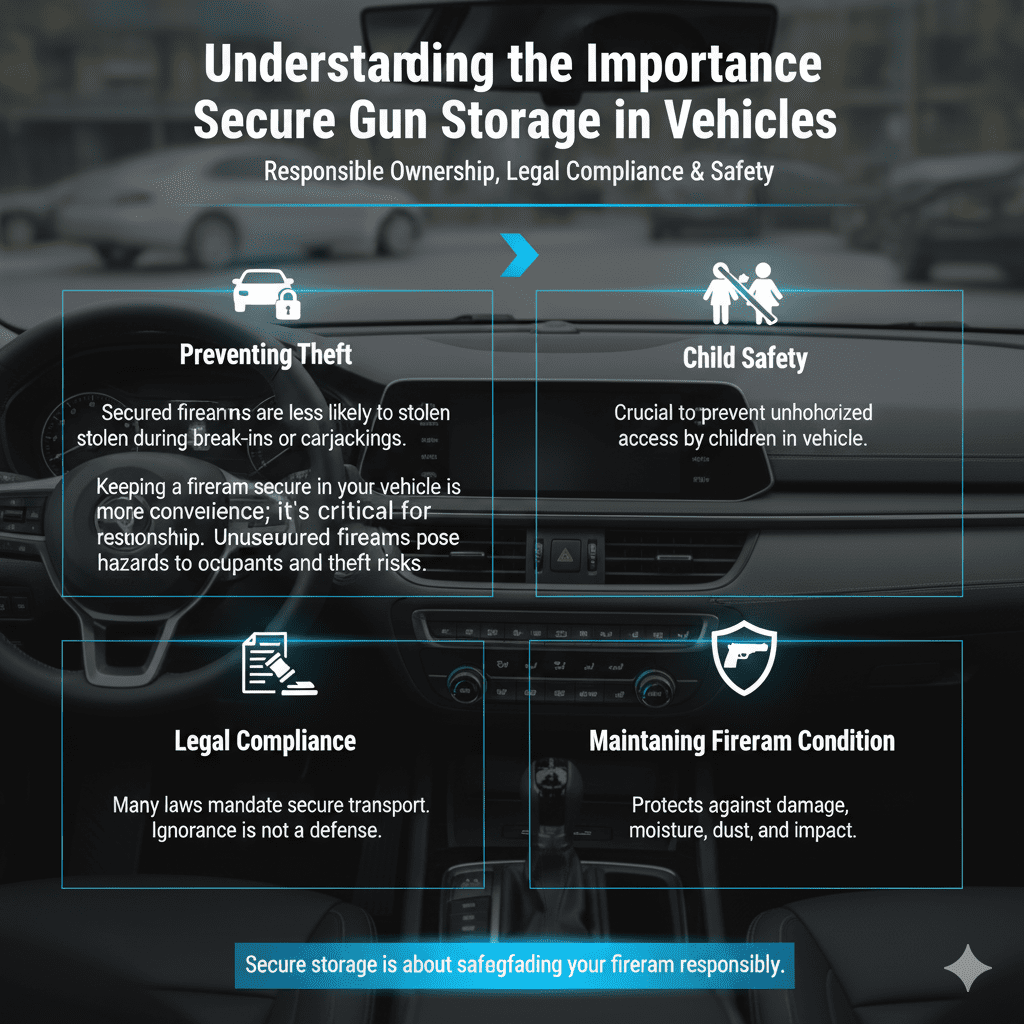
Keeping a firearm secure in your vehicle is more than just a matter of convenience; it’s a critical aspect of responsible gun ownership and a legal requirement in many places. Unsecured firearms in a car can become a safety hazard for occupants, especially children, and pose a significant risk if the vehicle is stolen. The primary goals of vehicle firearm storage are to prevent unauthorized access, ensure the firearm remains protected from the elements, and comply with all applicable laws. This isn’t about making a gun invisible for the wrong reasons, but about safeguarding it responsibly when it’s necessary to transport it.
Responsible storage in a vehicle serves several key purposes:
- Preventing Theft: A securely stored firearm has a lower chance of being stolen if the vehicle is broken into or carjacked.
- Child Safety: If children are in the car, it’s paramount that they cannot access the firearm.
- Legal Compliance: Many states and localities have specific laws regarding firearm transportation and storage in vehicles. Ignorance of these laws is not a defense.
- Maintaining Firearm Condition: Proper storage can protect the firearm from damage due to moisture, dust, or impact.
Legal Considerations: Know Your Local Laws
Before even thinking about where to hide a gun in your car, the absolute first step is to understand the laws governing firearm transport and storage in your specific state and any states you might travel through. These laws vary significantly and can dictate everything from whether the firearm must be unloaded and in a locked case, to specific requirements for vehicle storage. It’s crucial to be informed to avoid serious legal trouble.
Key areas to research include:
- Transport Laws: Are firearms allowed in vehicles? Do they need to be unloaded?
- Concealed vs. Open Carry in Vehicles: Some states treat carrying in a vehicle differently from carrying on your person.
- Storage Requirements: Are there specific requirements for how a firearm must be stored (e.g., locked container, separate from ammunition)?
- Traveling Across State Lines: Laws change when you cross state borders. Research reciprocity laws and travel regulations.
A good starting point for researching firearm laws is the U.S. Concealed Carry Association (USCCA) website, which provides state-by-state breakdowns of firearm laws, or your state’s official legislative website. Understanding these regulations is non-negotiable.
Choosing the Right Storage Location: Factors to Consider
When deciding where to hide a gun in your car, several factors should guide your decision. The best spot for one person might not be the best for another, depending on their vehicle, their firearm, and their specific needs. Safety, security, legal compliance, and accessibility are the main pillars.
Here are some critical factors to weigh:
- Security: The location should prevent unauthorized access and resist tampering. A simple glove compartment might not be sufficient.
- Accessibility: For authorized users, the firearm should be reasonably accessible if it’s being stored for self-defense purposes, while still being secure from others.
- Concealment: The location should not be obvious to someone looking into the vehicle.
- Protection: The chosen spot should protect the firearm from damage, moisture, and extreme temperatures when possible.
- Vehicle Type and Layout: Different cars offer different storage possibilities. A truck, SUV, sedan, or minivan will each have unique spaces.
- Firearm Size: The dimensions of the gun will influence where it can be stored.
Popular and Effective Gun Storage Solutions for Cars
Now that we’ve covered the why and the legalities, let’s dive into practical where and how. These options range from simple modifications to dedicated storage devices, each with its pros and cons.
1. Under-Seat Gun Mounts
These are perhaps one of the most popular solutions for discreet and accessible storage. They are typically mounted to the underside of a car seat, creating a hidden holster or tray.
- How it works: Usually involves screwing or strapping a bracket to the seat frame. The firearm then slides into or rests on the mount.
-
Pros:
- Highly discreet – completely hidden from view.
- Relatively easy to install.
- Keeps the firearm accessible to the driver or front passenger.
- Doesn’t take up valuable cabin space.
-
Cons:
- Requires drilling or secure strapping, which might be a concern for some.
- Firearm can be exposed to dust and debris under the seat.
- May require precise placement to ensure it doesn’t interfere with seat operation.
- Accessibility can be limited if the seat is pushed all the way forward.
When choosing an under-seat mount, look for sturdy construction and a design that accommodates your specific firearm model. Brands like Fobus or G-Outdoors offer various options. For installation, ensure you use appropriate hardware that won’t loosen over time with vehicle vibration. A quick check of your car’s seat frame and available space is essential.
2. Trunk Storage Solutions
The trunk offers more space and can provide a secure environment, especially when combined with locked containers or organizers.
a. Locked Trunk Safes/Containers
These are rigid, lockable boxes designed to secure firearms. Many can be bolted down to the car’s trunk floor or side panels.
- How it works: A heavy-duty metal box with a locking mechanism (key, combination, or biometric). It can be secured to the vehicle’s structure.
-
Pros:
- Provides a high level of security against theft and unauthorized access.
- Protects the firearm from the elements.
- Often designed to comply with state transport laws.
-
Cons:
- Can be expensive.
- Installation often requires drilling into the vehicle.
- Less accessible for quick self-defense needs compared to more open mounts.
- Takes up significant trunk space.
Reputable brands include Faulkner, Vaultek, and Hornady, offering various sizes and locking technologies. Mounting these securely is vital. Resources for automotive security installation might offer tips on finding solid anchor points within your trunk structure.
b. Trunk Organizers with Hidden Compartments
Some trunk organizers come with cleverly hidden pockets or false bottoms designed to conceal smaller items, including firearms.
- How it works: A standard organizer that looks like it’s meant for groceries or tools, but has a concealed section.
-
Pros:
- Discreet; doesn’t draw attention.
- Useful for organizing other items as well.
- Relatively inexpensive.
-
Cons:
- Security is generally lower than a dedicated safe.
- May not be suitable for larger firearms.
- The concealment relies on the organizer’s appearance; a determined searcher might find it.
Look for organizers made from durable materials. While not a primary security device, they can be effective for someone looking for a less obvious compartment within the trunk.
3. Glove Compartment and Center Console Storage
While often the first place people think of, these locations are generally not recommended for secure firearm storage due to their easy accessibility and lack of robust security features.
- How it works: Placing the firearm directly into the glove compartment or center console.
-
Pros:
- Extremely accessible.
- No installation required.
-
Cons:
- Least secure option: Easily accessible to anyone in the vehicle, including children.
- Not truly concealed if the compartment is opened.
- Often not lockable.
- May not be legal in many jurisdictions as a primary storage method.
Recommendation: If you must use these areas, absolutely ensure you use a small, lockable handgun case or a dedicated console vault. Brands like Console Vault specialize in vehicle-specific console safes that significantly enhance security. These vaults are designed to be formidable and prevent casual access.
4. Vehicle-Specific Interior Safes and Compartments
Many modern vehicles are designed with built-in security considerations, or aftermarket solutions exist that integrate seamlessly.
a. Factory-Installed Compartments
Some vehicles have hidden compartments or lockable sections from the factory. These are designed to be unobtrusive.
- How it works: Utilizes existing, often concealed, storage areas within the car’s interior (e.g., under floor mats, behind panels, within specific cubbies).
-
Pros:
- Designed to be hidden and integrated.
- No installation required.
-
Cons:
- Availability is vehicle-dependent.
- Security levels can vary greatly.
b. Aftermarket Interior Lockboxes & Safes
These are designed to fit into specific areas, like under seats, in dashboards, or within center consoles, and are often more robust than basic compartments.
- How it works: Custom-fit or universal lockboxes that are installed in discrete interior locations.
-
Pros:
- Often provide good security.
- Can be unobtrusive and well-integrated.
- Less likely to be discovered than an open storage spot.
-
Cons:
- Can be expensive.
- Installation may be required.
- Accessibility can be a trade-off for concealment and security.
5. Dashboard and Seat-Back Mounted Holsters
These options mount directly to your dashboard or the back of a seat, allowing for quick draw but requiring careful consideration for security.
- How it works: A holster that attaches to surfaces like the dashboard (above the vents) or the side of a seat.
-
Pros:
- Very quick and easy access.
-
Cons:
- Visibility: Can be visible or obvious if not strategically placed.
- Security Risk: Open to anyone entering the vehicle unless locked when unattended.
- May be considered poor storage practice if not secured or locked when the vehicle is empty.
For these types of mounts, it’s crucial to consider whether you can implement a locking mechanism or a cover when the vehicle is left unattended. Often, these are best used in conjunction with a locked safe when you exit the vehicle, or are only used in jurisdictions where open carry in a vehicle is permissible and is your intended mode of carry.
Installation and Safety Tips
No matter where you decide to hide your gun in your car, proper installation and ongoing safety practices are paramount. A poorly installed safe or mount can become a projectile in an accident or a weakness for thieves. Safety isn’t just about where you hide it, but how you maintain that system.
General Installation Best Practices:
- Read Manufacturer Instructions: Always follow the specific installation guide for any product you purchase.
- Use Appropriate Hardware: Ensure you are using high-quality screws, bolts, or straps that are rated for the weight and potential stress.
- Secure Mounting Points: Whenever possible, mount to the vehicle’s frame or solid structural components, not just plastic trim.
- Test Thoroughly: After installation, tug, pull, and shake the mount or safe to ensure it is absolutely secure.
- Avoid Interference: Make sure your storage solution does not interfere with the operation of vehicle controls, airbags, or seat functions.
Ongoing Safety Considerations:
- Lock Up When Unattended: If the firearm is not being carried on your person, ensure it is secured in a locked container, especially when you leave the vehicle.
- Regular Checks: Periodically inspect your storage solution for any signs of wear, loosening, or damage.
- Ambidextrous vs. Right/Left-Handed: Consider if your mount or holster suits your dominant hand and if it might need to be accessed by someone else.
- Firearm Condition: Ensure your firearm is clean and well-maintained, as the car environment can be dusty or humid. A light coat of oil can help prevent rust.
For those considering more permanent modifications, consulting with a professional automotive installer or a licensed gunsmith can provide valuable insights. Some companies even offer custom vehicle outfitting services.
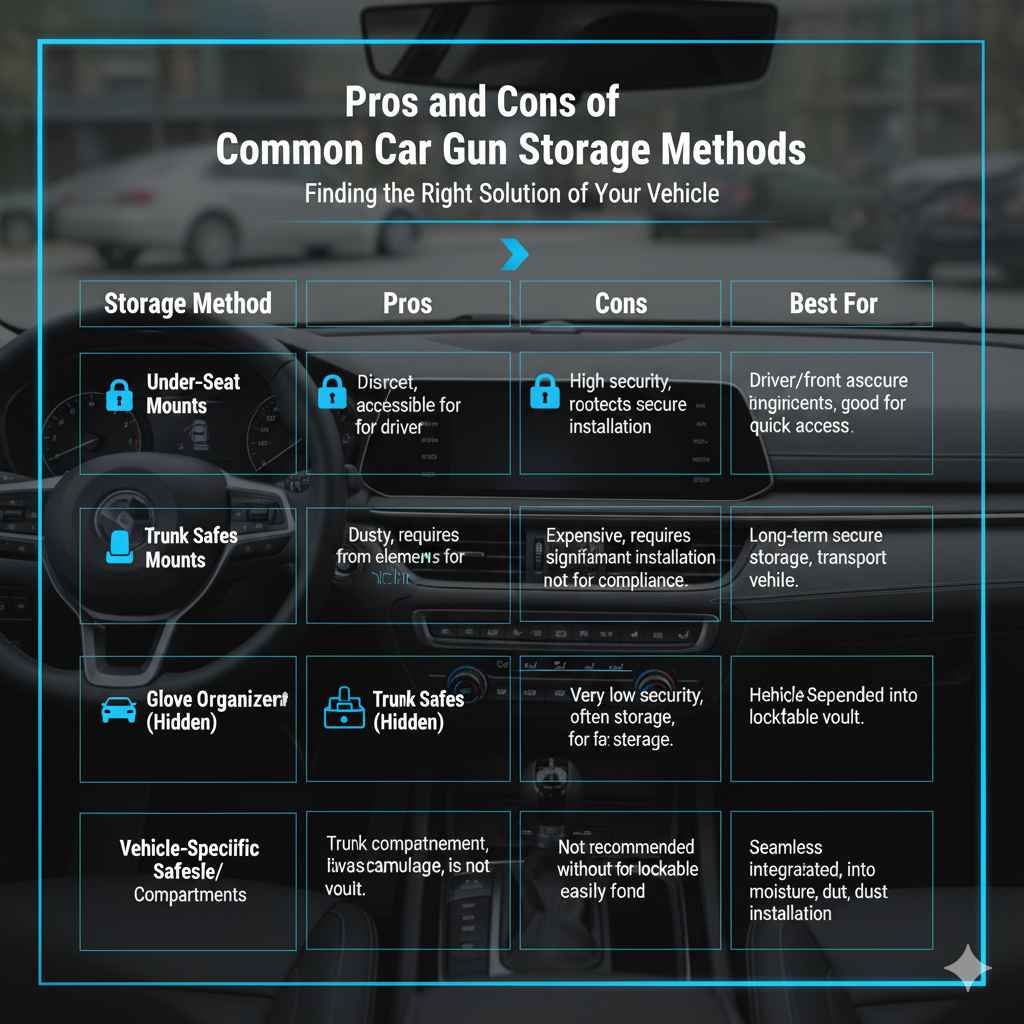
Table: Pros and Cons of Common Car Gun Storage Methods
To help you visualize the trade-offs, here’s a consolidated look at the advantages and disadvantages of popular car gun storage solutions:
| Storage Method | Pros | Cons | Best For |
|---|---|---|---|
| Under-Seat Mounts | Discreet, accessible for driver, doesn’t use cabin space. | Can be dusty, requires secure installation, potential interference with seat. | Driver/front passenger quick access. |
| Trunk Safes | High security, protects from elements, good for compliance. | Expensive, requires significant installation, less accessible, uses trunk space. | Long-term secure storage, transport compliance. |
| Trunk Organizers (Hidden) | Discreet, dual-purpose, inexpensive. | Lower security, relies on camouflage, not for large items. | Light concealment, secondary storage. |
| Glove Compartment/Console | Very accessible. | Very low security unless locked console vault is used, often illegal storage, easily found. | Not recommended without a lockable vault. |
| Vehicle-Specific Safes/Compartments | Integrated, discreet, good security if designed well. | Vehicle dependent, can be costly, installation may be needed. | Seamless integration into vehicle. |
FAQ: Your Questions Answered
Here are some common questions beginners have about storing firearms in vehicles:
Q1: Is it legal to keep a gun in my car?
A: This entirely depends on your local, state, and federal laws. Many states allow firearm transport under specific conditions, such as being unloaded and in a locked case, but rules vary greatly. Always check your state’s laws before storing a firearm in your vehicle. Websites like the NRA-ILA provide state-specific legal information.
Q2: What is the most secure way to hide a gun in my car?
A: The most secure methods generally involve a bolted-down, lockable safe or a secure, hard-sided case that is difficult to access or remove from the vehicle. Trunk safes or integrated console vaults offer high levels of security.
Q3: Can I store my handgun in the glove compartment?
A: While many people do, it’s often considered insecure and may not meet legal requirements for storage in your area. Glove compartments are easily accessible. For better security, consider a dedicated lockable console vault that replaces or fits inside your existing console.
Q4: Do I need to unload my gun when storing it in the car?
A: Many states require firearms transported in vehicles to be unloaded. Some laws also mandate that the firearm be in a separate locked container from ammunition. Crucially, check the specific laws for your state and any state you are traveling through.
Q5: What if I have children in the car?
A: If children are present in the vehicle, securing the firearm to prevent any possibility of access is paramount. This means using a locked container or safe that the child cannot open. Even seemingly accessible spots should be avoided if children might be present.