Who Gets The Car If My Husband Passed Away
It’s a tough question many people face after losing a spouse. Wondering Who Gets the Car If My Husband Passed Away? might feel confusing or overwhelming, especially when you’re dealing with grief. Many begin by looking for simple answers without knowing where to start.
This guide makes it easy. We’ll walk through each step clearly so you know exactly what happens next.
Understanding Car Ownership After Death
When a person passes away, their assets, including vehicles, need to be transferred to the rightful heirs. This process can seem complicated, but it’s designed to be fair and clear. Several factors determine who inherits a car.
These include whether the deceased had a will, how the car was titled, and any local laws.
The goal is to ensure that property is distributed according to the deceased’s wishes or legal guidelines. This section will explore the primary ways a car’s ownership is handled after someone passes. It lays the groundwork for understanding the specific steps involved.
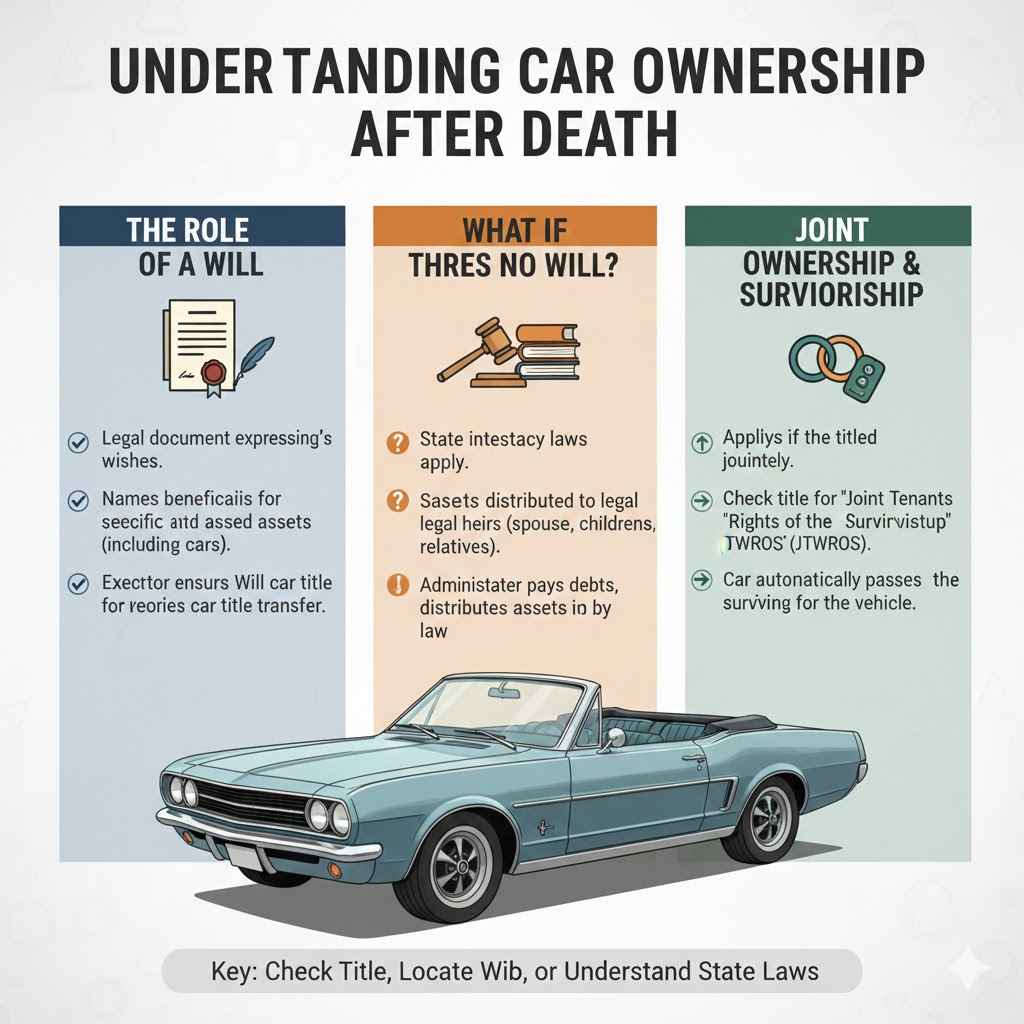
The Role of a Will
A will is a legal document that outlines how a person wants their property to be distributed after their death. If your husband had a will, it will likely specify who should inherit particular items, including vehicles. This is usually the most straightforward way to determine car ownership.
The executor of the will is responsible for making sure the instructions in the will are followed. This person will handle the transfer of the car title to the designated beneficiary. It’s important to locate the will and understand its contents.
- A will acts as a clear roadmap for asset distribution. This document is crucial because it expresses the deceased’s direct wishes. Without a will, the process can become more complicated and depend on state laws.
- The executor’s role is vital in probate. They are legally appointed to carry out the will’s instructions. This includes managing debts, paying taxes, and distributing assets like cars to the named beneficiaries.
- Beneficiary designations can sometimes bypass the will. For example, if the car was jointly owned with rights of survivorship, it might pass directly to the surviving owner without needing the will.
What If There Is No Will
If your husband did not leave a will, the state’s laws of intestacy will guide how his assets are distributed. These laws vary by state but generally prioritize a surviving spouse, children, and other close relatives. The car will become part of the deceased’s estate.
An administrator will be appointed by the court to manage the estate. This administrator’s job is similar to an executor. They will ensure all debts are paid and then distribute the remaining assets according to the intestacy laws.
Intestacy laws aim to distribute property fairly among legal heirs. This usually means the surviving spouse is the primary beneficiary. If there are children, they often share ownership with the spouse, depending on state rules.
Joint Ownership and Survivorship Rights
Sometimes, assets are held in joint ownership. When a car is jointly titled with “rights of survivorship,” it automatically passes to the surviving owner when one owner dies. This avoids the need for probate for that specific asset.
This is a common practice for married couples to simplify the transfer of property. Checking the car’s title is essential to see how it was registered. It might have “Joint Tenants with Rights of Survivorship” or “Tenants by the Entirety” listed.
Checking the title is a primary step. The physical or digital copy of the car’s title document will clearly show the names of the owners and the type of ownership. This is a key piece of information.
“Joint Tenants with Rights of Survivorship” (JTWROS) means that upon the death of one joint tenant, their interest in the property automatically passes to the surviving joint tenant. The car would then belong solely to the surviving spouse.
This bypasses probate for the vehicle. Assets held with rights of survivorship are not considered part of the deceased’s estate for probate purposes. This can significantly speed up the transfer process.
The Probate Process Explained
Probate is the legal process that validates a will and oversees the distribution of a deceased person’s estate. It ensures that debts are paid and assets are transferred to the rightful heirs. Even if there’s a will, probate might be necessary, especially for assets like vehicles that aren’t jointly owned.
The length and complexity of probate can vary greatly depending on the state, the size of the estate, and whether there are any disputes. Understanding this process is important for knowing how and when you will receive the car.
Executor Versus Administrator
The executor is the person named in a will to manage the deceased’s estate. If there is no will, the court appoints an administrator. Both roles involve similar responsibilities regarding asset distribution.
The executor or administrator has the authority to make decisions about the estate’s assets, including selling or transferring ownership of the car. They must act in the best interest of the beneficiaries and follow legal procedures.
The executor is nominated by the deceased in their will. This person is usually a trusted friend or family member. The court officially appoints them after verifying the will’s validity.
An administrator is appointed by the court when there is no will or if the named executor cannot serve. The court typically appoints the closest living relative, often the surviving spouse.
Both roles require managing an inventory of assets, paying debts and taxes, and distributing what remains. They must keep detailed records and report to the court.
Steps in the Probate Process for a Car
The probate process involves several steps, each with specific requirements. For a car, this usually means valuing the vehicle, settling any outstanding car loans or debts, and then formally transferring the title.
The court oversees these actions to ensure everything is handled legally. This protects the heirs and creditors alike. It’s a structured way to manage assets after someone has passed away.
- Petition the Court: The process begins by filing a petition with the probate court. This asks the court to officially open the estate and appoint an executor or administrator.
- Inventory and Valuation: The executor or administrator must create an inventory of all the deceased’s assets, including the car. The car’s value will be determined, often through an appraisal. This is important for tax and distribution purposes.
- Paying Debts and Taxes: Any outstanding debts, such as car loans, and any estate taxes must be paid from the estate’s assets. If the car has a loan, it must be paid off before the title can be transferred clear of liens.
- Distribution of Assets: Once debts and taxes are settled, the court will authorize the distribution of remaining assets. If the will specifies who gets the car, it will be transferred to them. If not, it follows intestacy laws.
- Title Transfer: The final step is transferring the vehicle title to the new owner. This requires specific paperwork and is done at the local Department of Motor Vehicles (DMV) or equivalent agency.
Transferring the Car Title
Once the probate process is complete or if joint ownership dictates, the car title needs to be officially transferred. This process is handled by your state’s Department of Motor Vehicles (DMV) or equivalent agency. It’s the legal step that makes you the official owner.
You will need specific documents to complete this transfer. Having the correct paperwork ready will make the process smoother and faster. This section details what you’ll need and how to go about it.
Required Documentation
To transfer the car title, you’ll typically need the original title, proof of death, identification, and specific forms from your state’s DMV. The exact requirements can vary slightly by state.
It is always best to check your specific state’s DMV website for the most accurate and up-to-date list of required documents. This avoids unnecessary trips and delays.
Original Vehicle Title: This document proves ownership. If it’s lost, you’ll need to get a replacement from the state.
Death Certificate: A certified copy of your husband’s death certificate is essential. This legally confirms the event that triggers the transfer.
Probate Documents: If probate was involved, you’ll need court documents like letters testamentary (for an executor) or letters of administration (for an administrator). These show your legal authority.
Bill of Sale: Even though you might be inheriting the car, some states require a bill of sale for title transfers, often for a nominal fee ($1 or $0) to document the transaction.
Odometer Disclosure Statement: This form records the car’s mileage at the time of transfer. It’s a federal requirement for most vehicle sales or transfers.
Proof of Insurance: You will need to show proof of car insurance for the vehicle in your name before the title can be transferred to you.
Steps at the DMV
Visiting the DMV to transfer the title can seem daunting, but by being prepared, you can make it a straightforward task. The key is having all your documents in order.
You’ll need to fill out specific forms and pay any associated fees or taxes. The DMV staff will guide you through the process once you present your paperwork.
- Gather All Documents: Make sure you have every document listed above. Double-check that they are current and accurate.
- Visit Your Local DMV: Go to your state’s Department of Motor Vehicles office. You may need to schedule an appointment.
- Complete the Application: You will fill out an application for a new title and possibly registration. The DMV employee will provide these forms.
- Submit Documents and Pay Fees: Present all your gathered documents to the DMV representative. You will also need to pay title transfer fees, registration fees, and any applicable sales tax.
- Receive New Title and Registration: Once everything is approved, you will receive a new title and registration in your name. This officially makes you the owner of the car.
Dealing with Car Loans
If your husband had an outstanding loan on the car, this debt typically needs to be settled before the title can be fully transferred to you. The car serves as collateral for the loan. The lender has a legal claim to the vehicle until the loan is paid off.
You have a few options for dealing with a car loan. You might pay it off from the estate, take over the payments yourself, or the lender might repossess the car if payments aren’t made.
One common scenario is that the surviving spouse is also a co-signer on the loan. In this case, the responsibility for repayment falls directly on the surviving spouse. If only the deceased was on the loan, the estate must address it.
Pay Off the Loan: The most straightforward solution is to pay off the remaining loan balance. This can be done using funds from the deceased’s estate. Once paid, the lender will release the lien on the title.
Assume the Loan: In some cases, the surviving spouse or heir may be able to assume the loan. This means taking over the payments yourself. You’ll need to qualify with the lender.
Sell the Car: If paying off the loan or taking it over isn’t feasible, you might need to sell the car. The proceeds from the sale are then used to pay off the loan. If there’s money left over, it goes to the estate.
Lender Involvement: If the loan isn’t paid or assumed, the lender can repossess the car. This is why addressing the loan promptly is critical.
State-Specific Laws and Exceptions
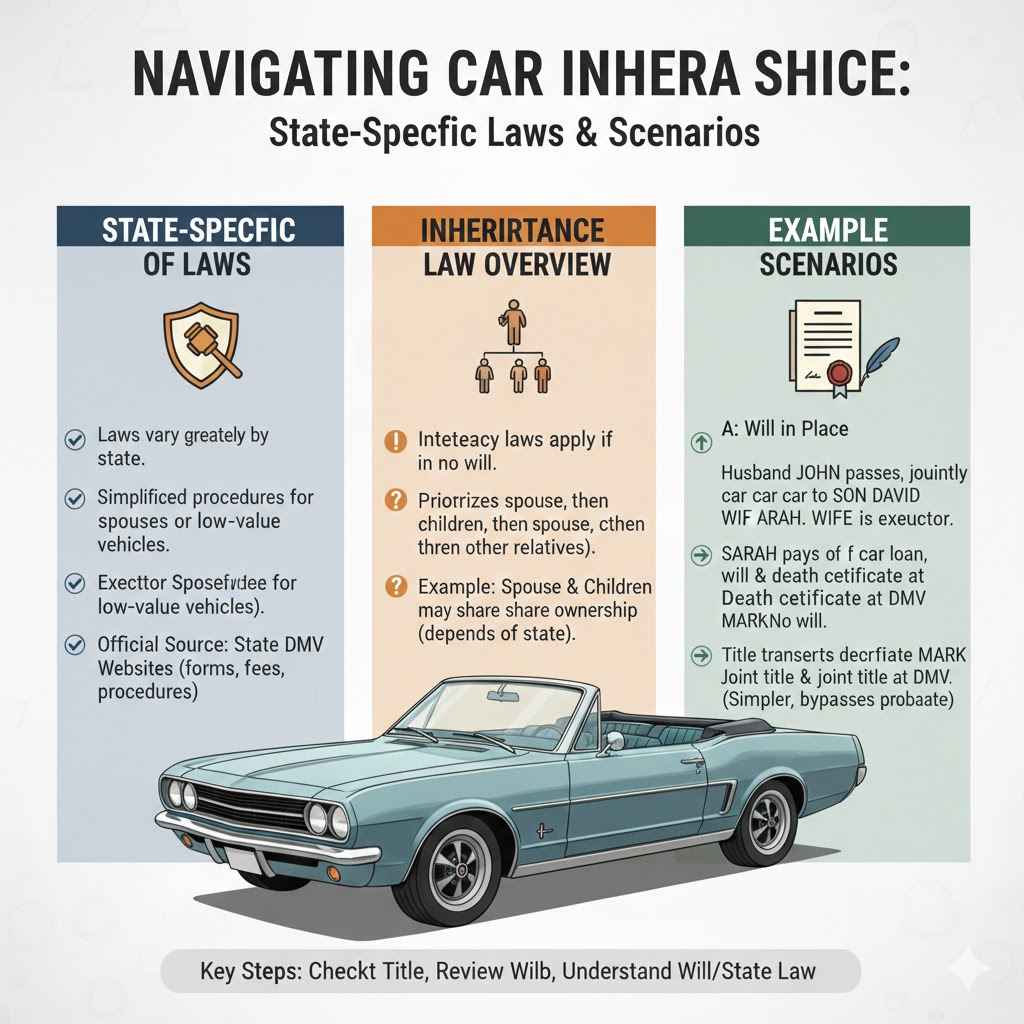
Car ownership laws are primarily governed at the state level. This means the exact process for transferring a car title can differ significantly from one state to another. Understanding your state’s specific rules is very important.
Some states have simplified procedures for surviving spouses or for vehicles with a low value. These exceptions can make the process much easier and faster.
Importance of State DMV Websites
Your state’s Department of Motor Vehicles (DMV) or equivalent agency is the best source for accurate information. Their websites provide detailed guides on title transfers, required forms, fees, and any special provisions for inheritance.
Many states offer online resources, checklists, and even appointment scheduling. This can save you time and prevent frustration. Always refer to the official state DMV site for the most reliable guidance.
- Official Source of Truth: State DMVs are the definitive authority on vehicle titling and registration. Their websites are maintained to reflect current laws and procedures.
- Specific Forms and Fees: Each state has its own unique forms for title transfers, and fee structures can vary widely. The DMV website will list exactly what you need and how much it costs.
- Simplified Procedures: Some states have “small estate affidavits” or other streamlined processes for transferring assets when the estate is below a certain value. This can apply to vehicles.
Inheritance Laws Overview
Inheritance laws, also known as intestacy laws when there’s no will, dictate how property is divided among heirs. These laws prioritize close family members. For example, a surviving spouse is typically the first in line to inherit.
If there are children, they usually share ownership with the spouse, but the exact shares depend on state statutes. These laws are designed to provide a default plan when the deceased hasn’t made their own.
For example, in many states, if a person dies leaving only a spouse, the spouse inherits everything. If there’s a spouse and children, the spouse might inherit a portion (like one-third) and the children the rest. This differs greatly by state.
Example Scenario A: Will in Place
Sarah’s husband, John, passed away and had a will. The will clearly stated that his favorite classic car should go to his son, David. The will named Sarah as the executor.
Sarah followed the probate process. She used estate funds to pay off the remaining loan on the classic car. Then, she obtained the necessary court documents and went to the DMV.
At the DMV, she presented the will, the death certificate, and proof that the loan was paid. The title was then transferred to David. This was a straightforward process because of the will.
Example Scenario B: No Will, Joint Ownership
Mark’s wife, Emily, passed away. They owned their car jointly with rights of survivorship. Emily had not created a will.
Because the car was jointly owned with survivorship rights, it automatically became Mark’s sole property upon Emily’s death.
Mark did not need to go through probate for the car. He only needed to take Emily’s death certificate and the joint title to the DMV. There, he was able to transfer the title into his name alone.
This process was much simpler due to the way the car was titled.
Frequently Asked Questions
Question: Do I need to go to probate court to get the car?
Answer: You may need to go through probate court if the car was solely in your husband’s name and there was no will naming a beneficiary, or if there is a car loan that needs to be settled through the estate. However, if the car was jointly owned with rights of survivorship, or if your husband’s will specifically left the car to you, you might be able to transfer the title directly without full probate.
Question: Can I drive the car before the title is transferred?
Answer: Generally, you can drive the car as long as it is insured and registered. However, you legally cannot transfer ownership or sell it until the title is in your name. It’s important to ensure the car remains insured under your name as soon as possible after your husband’s passing.
Question: What if the car has a loan and I can’t afford to pay it off?
Answer: If there is an outstanding loan on the car and you cannot pay it off from the estate or through other means, you have a few options. You could try to assume the loan yourself if the lender approves. Otherwise, you may need to sell the car and use the proceeds to pay off the loan.
If neither of these is possible, the lender may repossess the car.
Question: How long does it usually take to transfer the title?
Answer: The timeline for transferring a car title can vary greatly. If there is no probate involved and you have all the correct documents, it can often be done at the DMV in a single visit. If probate is required, the process can take several weeks to many months, depending on the court’s schedule and the estate’s complexity.
Question: What happens if the car is left to multiple people?
Answer: If a car is left to multiple people in a will, they will likely become co-owners of the vehicle. You will need to decide together how to handle the car. This could involve selling it and splitting the money, or one person buying out the others.
All co-owners will need to agree and sign for any title transfer or sale.
Final Thoughts
Determining who gets the car after a spouse passes involves checking the car’s title, any existing will, and state laws. Joint ownership often simplifies the process. If probate is needed, follow court and DMV steps carefully.
Always confirm details with your state’s DMV.