Should You Pay Cash for a Car? Pros, Cons and the Real Math
It depends on your credit and your savings cushion. If you would qualify for a low-rate loan and paying cash would drain your emergency fund, financing is usually the smarter move. If your loan rate would be high, or you have no other use for the cash, paying outright can genuinely save you money.
The average new-car loan carried a 6.94% APR in late August 2026, according to Bankrate’s weekly lender survey, while Experian’s Q1 2026 data put subprime borrowers as high as 13.44% and deep-subprime borrowers near 16%. On a typical $35,000 loan, that gap alone is the difference between paying about $4,200 and $16,000 in total interest over five years. That is not a small detail – it is often the whole decision.
This guide walks through the real math: what financing actually costs at today’s rates, when paying cash is worth it and when it is not, the emergency-fund test that should override any interest-rate comparison, and whether cash buyers really do get a better price at the dealership. If you are specifically wondering whether a dealership will even accept a large cash payment, or how to physically hand over that much cash safely, see our companion guides on whether dealerships take cash and the IRS reporting limits and how to pay cash for a car at a dealership step by step.
The Real Cost of Financing a Car Right Now
Auto loan rates vary enormously by credit score, and that variance is exactly what should drive your cash-versus-finance decision. According to Experian’s State of the Automotive Finance Market report for Q1 2026, average new-car APRs ranged from 4.55% for super-prime borrowers all the way up to 16.01% for deep-subprime borrowers. Used-car loans run even higher – Experian’s Q1 2026 average across all credit tiers was 11.43% APR, and deep-subprime used-car borrowers averaged 21.77%.
Here is what that spread means in real dollars on a $35,000 new-car loan paid off over 60 months:
| Credit Tier | Typical FICO Range | Avg. New-Car APR | Total Interest Paid |
|---|---|---|---|
| Super-prime | 781+ | 4.55% | ~$4,200 |
| Prime | 661–780 | 6.23% | ~$5,800 |
| Near-prime | 601–660 | 9.67% | ~$9,300 |
| Subprime | 501–600 | 13.44% | ~$13,300 |
| Deep subprime | 300–500 | 16.01% | ~$16,100 |
If your credit puts you in the super-prime or prime range, financing is far less costly than it looks at first glance – and some manufacturers occasionally offer promotional 0% APR deals to qualified buyers, which make financing essentially free. If you are near-prime or below, the interest cost climbs fast enough that paying cash, or waiting a few months to improve your credit before financing, can genuinely be the better financial move.
PROTECT YOUR PAPERWORK
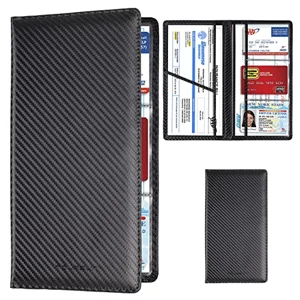 |
TOURSUIT Car Registration & Insurance Card Holder – $7.99 When you pay cash, you own the car outright the day you drive off – there is no lender copy of your paperwork as a backup, so the title, registration, and bill of sale you walk away with are the only proof of ownership you have.
|
Benefits of Paying Cash for a Car
The most obvious benefit is that you pay zero interest. On the credit-tier table above, that is anywhere from roughly $4,200 to over $16,000 you simply do not hand to a lender. You also avoid every fee that comes bundled into financing – origination fees, documentation fees some lenders charge, and the cost of any lender-required add-on products a finance manager might try to sell alongside the loan.
Owning the car outright from day one also means there is no lienholder on the title. You can sell the car whenever you want without paying off a loan balance first, you are never at risk of being “upside down” (owing more than the car is worth), and you have zero monthly car payment competing with the rest of your budget. For some buyers, that peace of mind is worth more than the math – and that is a legitimate reason on its own.

Drawbacks of Paying Cash for a Car
The biggest risk is liquidity. A car is one of the largest single purchases most people make, and pulling $30,000–$45,000 out of savings in one transaction can leave you without a cushion for a job loss, medical bill, or home repair. Financial planners generally recommend keeping three to six months of essential expenses in an easily accessible account – if paying cash for a car would drop you below that line, it is a real cost, not just a theoretical one.
There is also an opportunity cost. Money spent on a depreciating asset cannot simultaneously sit in a high-yield savings account, pay down higher-interest debt like credit cards, or grow in an investment account. And unlike a car loan, paying cash does nothing to build your credit history – a well-managed auto loan, paid on time, is one of the more reliable ways to strengthen a thin or recovering credit file.
The Opportunity-Cost Test: When Financing Actually Wins
The cleanest way to decide is to compare your loan’s APR against what that same money could otherwise do for you. This is not complicated – it comes down to one comparison:
- If you carry higher-interest debt (credit cards typically run 20%+ APR), pay that off before you consider paying cash for a car. No car-buying decision beats eliminating 20% debt first.
- If your loan APR would be low (super-prime or prime tier, or a manufacturer promotional rate), and you could instead keep that cash earning interest in a high-yield savings account or invested, financing and investing the difference usually wins mathematically, even if it feels less “safe.”
- If your loan APR would be high (near-prime or below), the loan is very likely costing you more than any safe, liquid alternative would earn you. In that case, paying cash – or delaying the purchase to save more or improve your credit first – is usually the better financial move.
The math only favors financing when your investment or savings return is realistically higher than your loan rate, after taxes. At a 6–7% loan rate, that is a real but not guaranteed bet; at 13%+, it stops being a reasonable bet for almost anyone.
The Emergency-Fund Test: When Paying Cash Makes Sense
Even when the interest-rate math favors cash, run this test first: after buying the car, would you still have three to six months of essential living expenses left in savings? If yes, paying cash is very likely a sound decision – you avoid interest entirely and you are not exposed to a liquidity crunch. If no, financing even a portion of the purchase, or choosing a less expensive vehicle, protects you from a much bigger financial problem than a car payment.
A middle path many buyers overlook: you do not have to choose all-cash or fully financed. Making a large down payment and financing only the remainder keeps a smaller loan balance (and less total interest) while preserving your emergency fund.

Does Paying Cash Get You a Better Price at the Dealership?
Usually not, and this is one of the most persistent myths in car buying. Many dealerships actually prefer financed sales, because the dealer earns additional profit from the “reserve” or commission a lender pays for arranging your loan – profit they do not get from a cash sale. Some salespeople may even be less willing to negotiate on price once they know you are paying cash, since there is no financing profit to make up for a lower sale price. Your leverage in a negotiation comes from your research, your walk-away willingness, and cross-shopping multiple dealers – not from the payment method itself. For a deeper look at what dealers can and cannot legally require around cash payments, see our guide on whether dealerships take cash and the IRS reporting rules that apply.
A Simple Decision Framework: 4 Questions to Ask
Run through these in order. Your first “no” tells you which way to lean.
- Will I still have 3–6 months of expenses saved after this purchase? If no, do not pay cash – finance some or all of it.
- Do I carry any debt above roughly 10–12% APR? If yes, pay that down before you tie up cash in a car.
- What loan rate would I actually qualify for? Check your rate with your bank or credit union before you shop – a pre-approval also becomes your negotiating leverage at the dealership.
- Is that rate lower than what I could safely earn on the cash elsewhere? If yes, financing and keeping the cash invested is usually the stronger math. If no, or if you would rather have zero debt regardless of the math, paying cash is a reasonable and defensible choice.
Alternatives If You Are Cash-Short
If paying cash outright would strain your finances but you also want to minimize interest, a few middle-ground options exist. Leasing trades ownership for a lower monthly payment and lets you drive a newer car more often, though mileage limits and end-of-lease fees mean it rarely makes sense if you plan to keep a vehicle long-term. A personal loan from a bank or credit union is another option, though rates are often higher than a dedicated auto loan since the lender has no vehicle to repossess as collateral. In most cases, a standard auto loan at your best available rate, paired with as large a down payment as you can comfortably make, beats both alternatives on total cost.
Frequently Asked Questions
Is There a Downside to Paying Cash for a Car?
Yes. Paying cash ties up a large sum of money that could otherwise sit in your emergency fund or grow through savings and investments, and it does nothing to build your credit history the way a well-managed loan does. If the purchase would leave you without a comfortable cash cushion, that liquidity risk usually outweighs the interest you save.
Do You Get a Better Price if You Pay Cash for a Car?
Usually not. Many dealerships actually prefer buyers who finance, since they earn commission from the lender for arranging the loan – money they do not make on a cash sale. Some salespeople have less incentive to discount the price for a cash buyer for exactly that reason. Your best negotiating leverage comes from research and cross-shopping, not from your payment method.
Does the IRS Care if You Pay Cash for a Car?
Yes. Any dealership that receives more than $10,000 in cash in a single transaction, or in related transactions within a short period, must file IRS Form 8300 within 15 days of the payment. This is a reporting requirement on the dealership, not a penalty on you, and it applies to physical cash, cashier’s checks, money orders, and similar instruments totaling over $10,000 – not personal checks or wire transfers, which are not treated as “cash” for this rule.
Is It a Red Flag to Pay Cash for a Car?
No. Paying cash is completely legal and common, and it is not treated as suspicious on its own. It simply triggers the standard IRS Form 8300 reporting requirement described above once the amount passes $10,000. Keep your receipt, the signed bill of sale, and any bank withdrawal records in case you need to document the source of funds later.
What Credit Score Do You Need for a Good Auto Loan Rate?
Lenders generally reserve their best rates for borrowers with FICO scores of 781 or higher (super-prime), who averaged 4.55% APR on new-car loans in Experian’s Q1 2026 data. Scores from 661–780 (prime) still get a reasonable 6.23% average. Below 660, rates climb quickly – near-prime borrowers averaged 9.67%, and subprime borrowers (501–600) averaged 13.44%. If your score is below 660, it is often worth spending a few months improving it before financing a car.
Is It Better to Pay Cash or Finance a Car if You Have Good Credit?
With super-prime or prime credit, financing at 2026’s average rates of roughly 4.5–6.3% is genuinely competitive, and some manufacturers occasionally offer 0% promotional financing to qualified buyers. In that scenario, many financial planners would suggest financing and keeping your cash liquid in savings or investments, rather than paying cash outright – as long as you are disciplined enough to actually keep that money working instead of spending it elsewhere.
Conclusion
There is no universal right answer – the decision comes down to your credit tier, your emergency fund, and what else that cash could realistically do for you. If financing would cost you 9% or more, or if paying cash would not touch your safety net, paying cash is usually the stronger move. If you would qualify for a low rate and paying cash would drain your savings, financing and keeping your cash liquid is usually smarter, even though it feels less final.
Whichever way you go, get your financing rate quote (or your cash total) settled before you talk numbers with a salesperson – that is what actually gives you negotiating leverage, not the payment method itself.
Products related to this article
Sponsored / affiliate links. As an Amazon Associate I earn from qualifying purchases. I may earn additional commission from eligible campaigns.
 4G GPS Tracker Car Anti-Theft Long Battery Life 20000mAh Real Time GPS Tracking Device Magnet No Geographic Restriction Car Tracker with Alerts, Geo Fence, History Playback TK905C
 Auto Car Dent Repair Puller Head Paintless-Dent Repair Removal Kit for Slide Hammer Pulling Tab Adapter Pulling Tabs Car Aluminum-alloy Puller Head Adapter Screw Glue-tabs for Slide Hammer and