When Was Bluetooth Invented in Cars? Full History Timeline
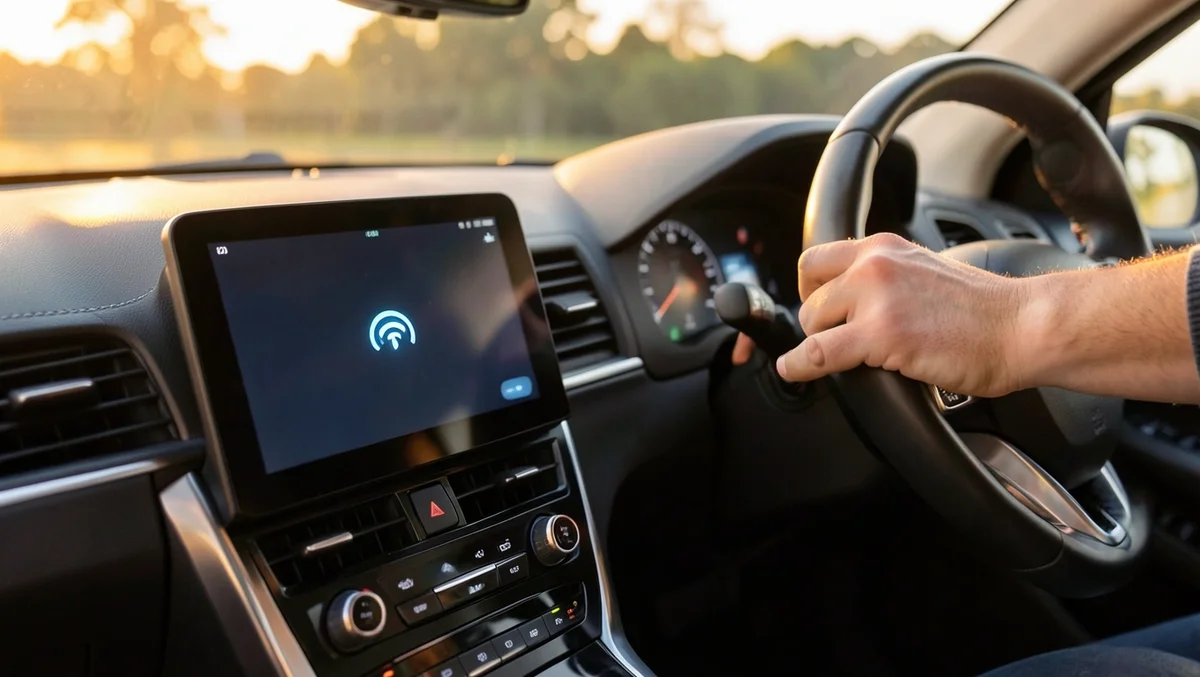
Bluetooth itself was invented in 1994 by engineers at Ericsson, but it took until late 2002 for it to show up in cars. BMW was the first automaker to publicly announce factory-fitted Bluetooth hands-free phone integration that year, with Audi and Chrysler rolling out similar systems around the same time. It stayed a luxury-only extra for most of the 2000s before becoming a mainstream standard feature by the early 2010s.
That gap between “Bluetooth exists” and “Bluetooth is in your car” trips a lot of people up, especially when they are trying to figure out whether a specific used car from 2005, 2007, or 2009 actually has it. Below is the real timeline, plus a quick way to check your own car’s year and add Bluetooth cheaply if it never came with it.
Quick Answer
Bluetooth was invented in 1994. The first cars with factory Bluetooth arrived in late 2002 (BMW, Audi, and Chrysler all had early systems). It became widely available on mid-range cars by around 2007-2010, and it is now standard equipment on nearly every new car sold.
What Is Bluetooth, and When Was It Actually Invented?
Bluetooth is a short-range wireless standard that lets two nearby devices, like a phone and a car stereo, exchange audio and data without a cable. It was developed by Ericsson in 1994 as a way to replace the RS-232 cables used to connect devices, and it takes its name from Harald “Bluetooth” Gormsson, a 10th-century Danish king known for uniting rival factions, a nod to the technology’s goal of unifying different device standards.
The Bluetooth Special Interest Group (SIG), the industry group that still manages the standard today, formed in 1998 with Ericsson, Nokia, IBM, Intel, and Toshiba as founding members. The first consumer Bluetooth products, mostly headsets and phone accessories, hit the market around 1999 to 2001. Cars came a few years after that.
When Was Bluetooth First Added to Cars?
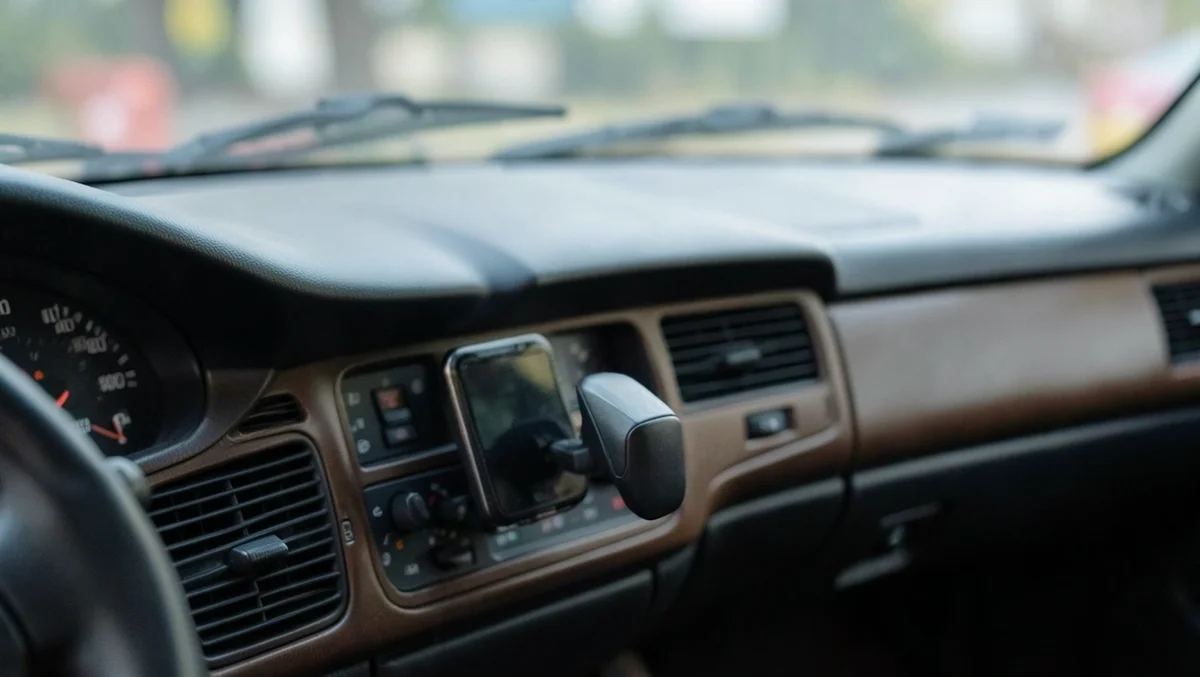
Late 2002 is the year most automotive historians point to. BMW’s own press materials state that toward the end of 2002, it became the first automaker to introduce a Bluetooth-based mobile phone system across its lineup, letting drivers pair a compatible phone and make hands-free calls through the car’s own microphone and speakers. Audi launched a similar Bluetooth phone-preparation option on the redesigned A8 the same year.
Chrysler is often credited alongside them. Its UConnect hands-free system, which used Bluetooth for phone pairing, first appeared on the Chrysler Town & Country and other minivans in the same 2002-2003 window. Acura made a narrower but still notable claim a couple of years later: the 2004 Acura TL was marketed as the first vehicle sold in North America with Bluetooth hands-free calling as standard equipment, not an option.
So rather than one single inventor moment, Bluetooth in cars arrived as a wave, with BMW, Audi, and Chrysler all shipping early systems within roughly the same year, and Acura pushing it from an option to a standard feature soon after.
Bluetooth Version Timeline (And What Changed in Cars)
Bluetooth itself kept improving after cars adopted it, and those version bumps are why a 2005 car’s Bluetooth feels clunkier than a 2015 car’s.
| Version | Released | What it meant for cars |
|---|---|---|
| Bluetooth 1.0/1.1 | 1999 | First commercial version; short range, unreliable pairing, mostly used in early aftermarket headsets, not cars |
| Bluetooth 1.2 | 2003 | Faster, more stable connections; the version behind the first factory car systems |
| Bluetooth 2.0 + EDR | 2004 | Roughly 3x faster data transfer, better call audio quality |
| Bluetooth 2.1 + EDR | 2007 | Simpler “secure simple pairing,” fewer PIN-code hassles when connecting a phone |
| Bluetooth 3.0 + HS | 2009 | Optional high-speed data channel; rarely used for phone calls, more relevant to file transfer |
| Bluetooth 4.0 (BLE) | 2010 | Added low-energy mode; the basis for phone-as-key and low-power in-car sensors |
| Bluetooth 5.0 | 2016 | Roughly double the range and speed of 4.0; the version in most current infotainment systems |
When Did Bluetooth Become a Standard Feature in Cars?
There is no single federal mandate that forced Bluetooth into cars; it spread because of market demand and, later, state hands-free driving laws. Roughly:
- 2002-2006: Bluetooth hands-free calling, mostly on luxury brands (BMW, Audi, Mercedes-Benz, Lexus) and a handful of minivans, usually as a paid option.
- 2007-2010: Mainstream brands like Ford, Chevrolet, and Toyota began offering it widely, still often as part of a technology package rather than every trim.
- 2011-2015: Bluetooth became standard or near-standard across most new vehicles as states began passing hands-free-only cellphone laws, giving automakers a strong reason to include it by default.
- Today: Bluetooth hands-free calling and audio streaming is standard on essentially every new car sold in the U.S., across every trim level.
Does Your Car Have Bluetooth? Quick Answers by Year
These are the model years people search for most, since Bluetooth adoption in this stretch depended heavily on the specific brand, model, and trim rather than the calendar year alone.
| Model Year | Likely Bluetooth Status |
|---|---|
| 2005 | Rare outside luxury brands (BMW, Lexus, some Audi/Mercedes). Most mid-range and economy cars did not have it. |
| 2007 | Spreading, but usually an optional add-on. Many base trims still lacked it; check the build sheet or window sticker. |
| 2009 | Common on mid-to-upper trims of most brands, but still not universal on the cheapest base models. |
| 2010-2012 | Standard or widely available across nearly all brands, though a few budget base trims held out a little longer. |
| 2013 and newer | Effectively standard equipment across the entire market. |
The most reliable way to confirm your exact car is to look up your VIN on the manufacturer’s site or check the original window sticker, since trim level (not just model year) is usually what decided whether Bluetooth was included.
How to Add Bluetooth to a Car That Does Not Have It
If your car predates factory Bluetooth, or it was never offered on your trim, you do not need to replace the whole stereo. A plug-in Bluetooth FM transmitter or aux adapter connects to your phone wirelessly and broadcasts audio through your existing radio or a spare aux/USB port, giving you hands-free calling and music streaming for well under the cost of a new head unit.
EASIEST RETROFIT OPTION
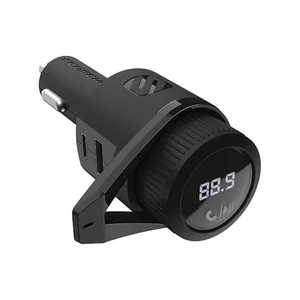 |
Scosche BTFM9 FM Bluetooth Transmitter – $19.99 Plugs into any 12V outlet and broadcasts your phone’s audio to an open FM station on your existing radio, no wiring or new head unit needed.
|
Frequently Asked Questions
When Did Bluetooth Become Common in Cars?
Bluetooth became common in cars during the mid-to-late 2000s, roughly 2007 to 2010, as mainstream brands like Ford and Toyota added it beyond just luxury models. By 2012 to 2013 it was standard equipment on the vast majority of new vehicles sold in the U.S.
Do Cars From 2009 Have Bluetooth?
Many 2009 cars have Bluetooth, but not all of them. By that year it was common on mid-range and upper trims across most brands, but many base trims still did not include it. Check your specific car’s window sticker, owner’s manual, or a VIN lookup to confirm.
Do Cars From 2010 Have Bluetooth?
Most 2010 model-year cars offered Bluetooth, and it was standard on many mainstream trims by then, though a few budget-focused base models still sold it as an option. 2010 sits right in the transition window where Bluetooth went from “common” to “expected.”
Did Cars in 2005 Have Bluetooth?
Some cars in 2005 had Bluetooth, but it was still mostly limited to luxury brands like BMW, Lexus, and higher trims of Audi and Mercedes-Benz. Most mid-range and economy cars from 2005 did not offer it at all.
Do 2007 Cars Have Bluetooth?
Many 2007 cars did not come with built-in Bluetooth as standard, though some models offered it as an optional feature for the first time that year. If your 2007 car lacks it, an aftermarket Bluetooth FM transmitter or adapter is an inexpensive way to add it.
Which Automaker Was First to Put Bluetooth in a Car?
There is no single, universally agreed-upon answer. BMW’s own press materials claim it was first to market with factory Bluetooth in late 2002, but Audi launched a similar system on the A8 the same year, and Chrysler’s early UConnect system arrived around the same window. Acura separately claims the first North American car with Bluetooth as standard equipment, the 2004 Acura TL.
Conclusion
Bluetooth was invented in 1994, but it took about eight years to reach cars, arriving through BMW, Audi, and Chrysler in late 2002. From there it spent most of the 2000s as a luxury extra before becoming standard equipment across nearly every new car by the early 2010s. If your own car falls in that in-between window and never got factory Bluetooth, a cheap plug-in adapter closes the gap in a few minutes.
Products related to this article
Sponsored / affiliate links. As an Amazon Associate I earn from qualifying purchases. I may earn additional commission from eligible campaigns.