Car AC Vent Thermometer Review: Is It Worth It the Money?
Yes, buy one if you need to spot vent temperature changes by 2 to 3°F or compare left, right, and rear ducts. Skip it if you only want a rough “cold enough” check. Without a thermometer, you can chase compressor, blend-door, or refrigerant problems in the wrong order and waste time and parts. This guide shows which probe, clip, or digital style fits single-zone, dual-zone, and rear-vent layouts.
This guide is part of our Car cooling and climate control guide series.
Verdict


For most DIY AC checks, a probe thermometer is the safest default because it reads air temperature more directly than infrared. A clip-on dial can work for a quick side-by-side vent comparison if the vent shape fits. If your dash vents are deep, oddly shaped, or split across rear and front zones, the wrong tool can lead to a bad diagnosis fast.
Pros and cons
- Pros: simple way to confirm whether vent air is actually changing after a repair, recharge, or blend-door adjustment.
- Pros: helps compare driver, passenger, and rear ducts instead of relying on feel alone.
- Pros: can stop you from replacing parts for a problem that is really a vent, thermostat, or door issue.
- Cons: infrared models read surface temperature, not airflow, so they can mislead on vent testing.
- Cons: clip-on fit varies by vent shape, and some dash vents are too narrow or too deep for a clean mount.
- Cons: cheap tools can be good enough for rough checks, which makes some buyers overspend.
📊 The Tallew clip-on thermometer kits come in 2-packs. Source: Best Car AC Vent Thermometers for Quick Temperature Checks and….
Specs at a glance
| Item | Main point |
|---|---|
| Product type | Digital automotive AC vent thermometer |
| Display | LCD display |
| Temperature range | -50 to 300°C |
| Use case | Car air-conditioning vent checks, engine, and water tank diagnostics |
| Form factor | Compact, single-channel tool |
| Low-light use | Large LCD is the key benefit for darker cabins |
Who it is for
This is for DIY drivers who want a low-cost way to verify whether vent air is changing by a few degrees after a repair, and for owners of single-zone cars who only need one front vent to check. It is less useful for anyone who needs repeated comparisons across driver, passenger, and rear ducts in one session.
Say your sedan’s center vent feels “cool enough,” but the passenger side is 4°F warmer after a recharge. A thermometer matters there because touch alone will not tell you whether the issue is charge level, blend-door position, or a bad assumption about airflow.
What it does well
The main value is diagnosis control. A thermometer gives you a number, so you can tell whether one vent is truly warmer, whether a recharge made a real difference, and whether a left-right mismatch is large enough to suspect a blend door or duct problem. That matters more than the sticker price.
For a basic tool, the useful floor is simple: if you only need a rough “cold enough” answer, a cheap kitchen thermometer can be enough. If you need repeatable vent-to-vent comparisons, especially in a dual-zone cabin, a purpose-built thermometer earns its keep quickly.
What does not
It will not diagnose a compressor, expansion valve, or refrigerant leak by itself. It only tells you what the air or surface near the vent is doing, and that can still be misleading if the probe is not seated consistently or if the infrared spot is too wide for the target.
Clip-on dials are the easiest to misread when the vent clip is loose or the dial is small in a dark cabin. Infrared tools are even more limited for vent work because they measure surface temperature, not airflow, so they can make a vent look “normal” when the air stream is not.
What features matter most in a car AC vent thermometer?
Probe length, display readability, and how the tool fits your vents matter more than brand gloss or extras. If you cannot see the reading in a dim cabin, cannot reach deep vents, or cannot secure the clip to the grille, the thermometer may create more uncertainty than it removes.
Probe length and vent depth
Longer stems help reach deep vents and get the sensor into the air stream instead of hovering at the grille. That is especially useful on vans, SUVs, and some rear AC outlets where a short stem reads too close to the trim.
Display readability in low light
Look for a display you can read without opening the door wide or pulling out a flashlight every time. In a dark cabin, a small dial or dim screen slows the whole check and increases the chance that you compare bad readings.
Range and measurement mode
The range should cover HVAC temperatures comfortably. For vent work, the useful issue is less about extreme upper limits and more about whether the tool can resolve small changes cleanly enough to compare left and right ducts, especially after a repair.
Clip fit versus freehand placement
Clip-on tools depend on dash vent shape. A vent clip that fits one car may fail on another because blade width, depth, and louvers vary. If your vents are unusually thin, rounded, or vertical, a clip-on dial may be a poor fit.
Probe vs infrared vs clip-on: which one matches your vents?
For vent testing, a probe thermometer is usually the most direct option because it reads air temperature more directly. Infrared tools are useful for surface checks only. Clip-on dials are convenient for fast comparisons, but only if the vent shape holds them securely and the dial is easy to read.
Probe thermometer for direct air checks
A probe thermometer is the best fit when you need a number from the air stream itself. The Supco ST02, for example, has a 5-inch stem and a 0 to 220°F range, which makes it a practical choice for hard-to-reach vents and basic HVAC checks.
Infrared thermometer for surface checks only
Infrared models measure surface temperature, not airflow, so they are better for checking the temperature of vent trim, surrounding panels, or other surfaces that are easy to aim at. Distance-to-spot ratio matters here; the Etekcity 774 uses a 12:1 ratio, the Klein Tools IR07 uses 8:1, and the Fluke 62 Max uses 10:1.
Clip-on dial thermometer for quick comparison
Clip-on dial thermometers are handy for side-by-side checks, and some two-pack options let you compare two vents at once. The tradeoff is fit. A clip that holds tightly in one vent may wobble in another, and a small analog dial can be hard to read in low light.
Will a clip-on vent thermometer fit my dash vents?
Maybe, but not universally. Fit depends on vent shape, blade spacing, and depth, so a clip-on thermometer that works on one sedan can slide poorly on a different SUV or van. If the vent opening is narrow, curved, or deeply recessed, a probe thermometer is usually safer.
Two-pack clip-on kits can still be useful when you want left-right comparison, especially on dual-zone systems. The Tallew clip-on thermometer kits come in 2-packs and have a magnifying lens, which can help with reading the dial, while the KT THERMO instant-read thermometer is also a 2-pack with a 0 to 220°F range.
Do I need a probe thermometer or an infrared thermometer for vent testing?
For vent testing, a probe thermometer is usually the better choice because it measures air temperature more directly. Infrared is better for surfaces, and it can mislead when you are trying to judge whether a vent is truly blowing colder air or just has a cooler-looking grille.
Use infrared when access is awkward and you need a non-contact check on a surface, not on airflow. The Klein Tools IR07 combines a probe with infrared checking, which makes it more complete for mixed diagnostics than a pure infrared gun alone. Its 8:1 distance-to-spot ratio matters when you need to aim at smaller targets.
How do I compare driver and passenger vent temperatures?
Compare both vents under the same setup: same fan speed, same recirculation setting, same engine state, and the same probe depth or clip position. If one side is 2 to 3°F warmer and that difference is repeatable, the gap is worth attention. If the reading changes when you move the probe slightly, the setup is the problem.
Say a dual-zone crossover has cold air on the driver side but lukewarm air on the passenger side. A probe in each vent, or two clip-on units side by side, will tell you whether the difference is real enough to suspect a blend door, actuator, or duct imbalance instead of guessing at refrigerant.
Simple comparison checklist
- Set fan speed and recirculation the same on both sides.
- Let the system stabilize before taking readings.
- Place each thermometer at the same depth and angle.
- Take three readings per side and compare the repeatable result.
- Do not compare a probe in one vent with an infrared reading from another surface.
Symptom-to-tool matrix and cost-avoidance guide
The right thermometer is the one that prevents the most wrong repairs for your symptom pattern, vent layout, and budget. A weak tool can push you toward a refrigerant recharge when the issue is really a blend door, or toward compressor suspicion when the vents themselves are reading inconsistently.
| Symptom pattern | Best thermometer type | Why it fits | Bad diagnosis it helps prevent |
|---|---|---|---|
| Single front vent feels weak or warm | Probe thermometer | Direct air reading at the vent | Unnecessary refrigerant recharge |
| Driver and passenger sides disagree | Two probe units or two-pack clip-on | Side-by-side comparison matters more than absolute number | Blend-door confusion and parts swapping |
| Rear AC is warmer than front | Probe thermometer with longer stem | Reaches deep or rear vents better | False compressor blame |
| Need a quick, non-contact surface check | Infrared thermometer | Fast surface reading when access is tight | Assuming airflow is normal when it is not |
| Deep vents, van, or SUV with awkward trim | Probe thermometer | More direct and less dependent on clip fit | Wasted time on a clip that will not hold |
| Tool type | Typical budget tier | Wrong repair it can help avoid | Why that savings matters |
|---|---|---|---|
| Basic clip-on dial | Budget | Replacing parts based on a rough guess | Stops you from acting on feel alone |
| Probe thermometer | Midrange | Unnecessary refrigerant recharge | Useful when the symptom is temperature, not noise |
| Dual-mode or infrared-plus-probe | Premium | Chasing the wrong subsystem across multiple vents | Pays off when you need repeated comparisons |
A cheap kitchen thermometer can be enough if you only want a rough check from one vent. The pass/fail line is simple: if you need to compare vents, diagnose dual-zone complaints, or separate airflow issues from surface-temperature readings, buy a purpose-built tool.
Alternatives
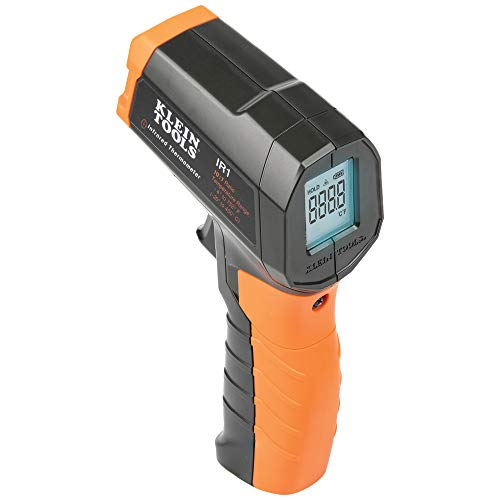
Klein Tools IR1 Infrared Thermometer is the simple non-contact option if you want quick surface readings and laser aiming. Based on the spec sheet and reviews, it is easier to point at a small target than a bargain no-name gun, but it still has the same core limitation as any infrared tool: it does not read vent airflow directly.

Gain Express dual-channel K-type thermometer is better when you want to compare more than one point at once. The four thermocouples and MAX/MIN/AVG functions make it more diagnostic than a single cheap display, but the setup is bulkier than a simple vent thermometer, so it fits best for careful DIYers who do not mind extra leads.
Generic digital automotive AC thermometer is the budget-first choice for straightforward vent checks. Its compact body and large LCD suit tight dashboards and dark cabins, but the single-channel design means it is less useful when you need to compare two vents at the same time.
Specific pick notes
Klein Tools IR07 is the most complete diagnostic option in this set because it combines infrared and probe checking. Its 8:1 distance-to-spot ratio makes the infrared side more controlled than very cheap guns, but the real value is flexibility: you can switch between surface checks and direct air measurement without changing tools.
Supco ST02 is the most practical probe-style choice for awkward vents. The 5-inch stem and 0 to 220°F range suit hard-to-reach areas, which is exactly where many rear AC outlets and deeper dash vents become annoying to test with a short stem or a clip that keeps slipping.
Etekcity 774 is a clean infrared option for quick surface work. Its 12:1 distance-to-spot ratio is the standout spec, but the surface-temperature limitation remains. It is not the first pick if your goal is to understand actual vent air performance.
Fluke 62 Max is the more durable infrared option, with a -22 to +932°F range, a 10:1 distance-to-spot ratio, and IP54 rating. Those specs make it well suited to a broad range of non-contact checks, but it still measures surface temperature, so it should not be mistaken for a direct vent-air tester.
Should you buy it
Buy a car AC vent thermometer if you need more than a rough feel check, especially for dual-zone systems, rear AC, vans, or any symptom that depends on comparing vents. If your goal is a quick “cold or not” answer, a cheap kitchen thermometer may be enough. If you want to avoid wrong repairs, the right thermometer pays off.
A practical rule is this: if the next likely mistake would cost more than the tool, the tool is worth buying. That is often true when the alternative is an unnecessary recharge, a guess at a compressor fault, or swapping parts because one vent felt different from another.
Frequently asked questions
Is a car AC vent thermometer worth it for troubleshooting?
Yes, if you need to compare vents or confirm small changes after a repair. It is most useful when a symptom could be caused by refrigerant level, blend-door position, or rear-duct imbalance. If you only need a rough “cold enough” answer, a cheaper thermometer can be enough.
What temperature should my car AC vent blow?
There is no single universal number because ambient heat, humidity, fan speed, and cabin layout all affect the reading. A better check is whether the vent temperature is dropping consistently after the system stabilizes and whether both sides match closely on a dual-zone vehicle.
Do I need a probe thermometer or an infrared thermometer for vent testing?
For vent testing, a probe thermometer is usually the better choice because it reads air temperature more directly. Infrared tools measure surface temperature, so they are better for panels or trim than for judging airflow. If you need both, a dual-mode tool is the most flexible option.
How do I compare driver and passenger vent temperatures?
Use the same fan speed, the same recirculation setting, and the same probe depth on both sides. Take multiple readings and look for a repeatable difference, not a one-off spike. If the gap stays around 2 to 3°F or more, it is worth investigating further.
Will a clip-on vent thermometer fit my dash vents?
Not always. Clip fit depends on vent shape, blade spacing, and depth, so it can be perfect in one vehicle and sloppy in another. Two-pack clip-on kits help with comparison, but if your vents are narrow or deeply recessed, a probe thermometer is the safer bet.
Can an infrared thermometer measure AC vent air accurately?
Not directly. Infrared thermometers read surface temperature, not airflow, so they can be useful around a vent but not as a direct air-reading tool. Distance-to-spot ratio matters, and a laser helps aim, but the measurement still depends on the surface you are pointing at.
What features matter most in a car AC thermometer?
Readability in low light, probe length, measurement range, and fit matter most. For infrared units, distance-to-spot ratio matters too. For clip-on models, secure fit matters more than extra extras, because a loose clip or unreadable dial can turn a simple check into a bad diagnosis.
Is a more expensive digital thermometer better for car AC testing?
Only if the higher price buys you a better fit for your symptom pattern. A dual-mode tool or a longer probe can be worth it for rear AC, dual-zone cabins, or repeated diagnostics. If you only need one rough reading, a basic model may be enough.
Products related to this article
Sponsored / affiliate links. As an Amazon Associate I earn from qualifying purchases. I may earn additional commission from eligible campaigns.