Is Deionized Water Good for Car Batteries? Full Guide
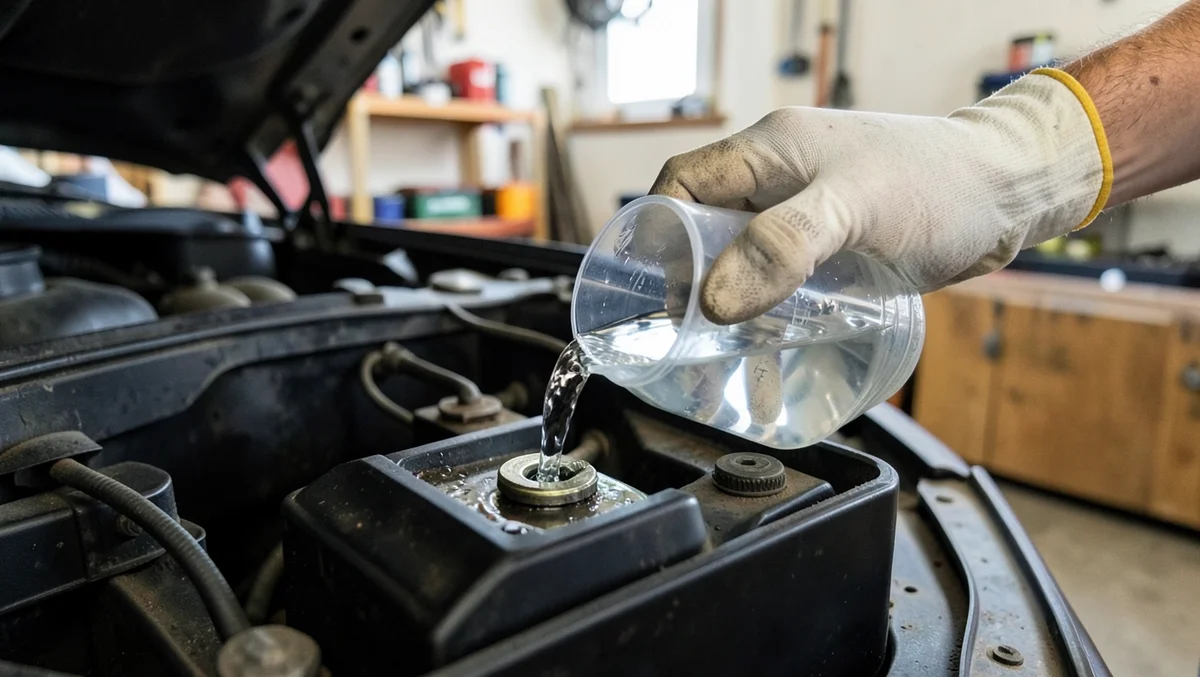
Yes, deionized water is good for car batteries. It has been stripped of the minerals and ions found in tap water, so it will not leave behind deposits that cause sulfation, reduce conductivity, or corrode the internal plates of a lead-acid battery. Distilled water works just as well and is the more common choice at auto parts stores, but deionized water is chemically just as safe to use.
The important part is not the exact purification method used, it is avoiding tap water and adding the water carefully so you do not overfill the cell or expose yourself to battery acid. Here is how deionized water compares to the alternatives, and how to add it safely.
Deionized vs. Distilled vs. Tap Water for Car Batteries
MESS-FREE REFILLS
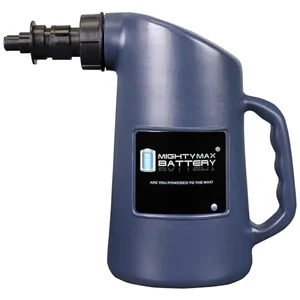 |
Battery Filler Jug w/Auto Shut Off – $13.49 Fill each cell with deionized or distilled water and this jug shuts off automatically once the level is right, so you never overfill above the plates.
|
Both deionized and distilled water are made to remove the minerals that damage batteries, they just get there through different processes. Tap water is the one to avoid, even though it looks identical.
| Water Type | How It Is Purified | Safe for a Battery? |
|---|---|---|
| Deionized water | Ion-exchange resin removes dissolved minerals and salts | Yes |
| Distilled water | Boiled to steam, then condensed back into liquid | Yes |
| Reverse osmosis water | Forced through a fine membrane; usually low in minerals but not guaranteed mineral-free | Usually, check the TDS reading first |
| Tap water | Untreated, still contains calcium, magnesium, iron, and chlorine | No |
The minerals in tap water react with the battery’s electrolyte and plate to form a hard sulfate crust, a process known as sulfation. Sulfation reduces the surface area available for the chemical reaction that produces electricity, which lowers cranking power and shortens the battery’s overall lifespan. Deionized and distilled water sidestep that problem entirely because there is nothing left in the water to deposit.
Does Your Battery Even Need Water?
Not every car battery has a removable cap to check or fill. Only flooded (wet cell) lead-acid batteries do, and they use liquid electrolyte that can slowly evaporate from heat and normal charging cycles. Sealed AGM and gel batteries recombine their internal gases and are designed to never be opened, so adding water to one is not possible and not needed.
Here is the part that trips people up: a battery labeled “maintenance-free” is not always sealed. Many maintenance-free flooded batteries still have caps underneath a label or cover, and they can still lose water over time even though the manufacturer designed them to need less frequent topping off than older designs. If you are not sure which type you have, our guide to whether car batteries have water walks through how to tell the two apart before you reach for a jug of deionized water.
How to Safely Add Deionized Water to a Car Battery
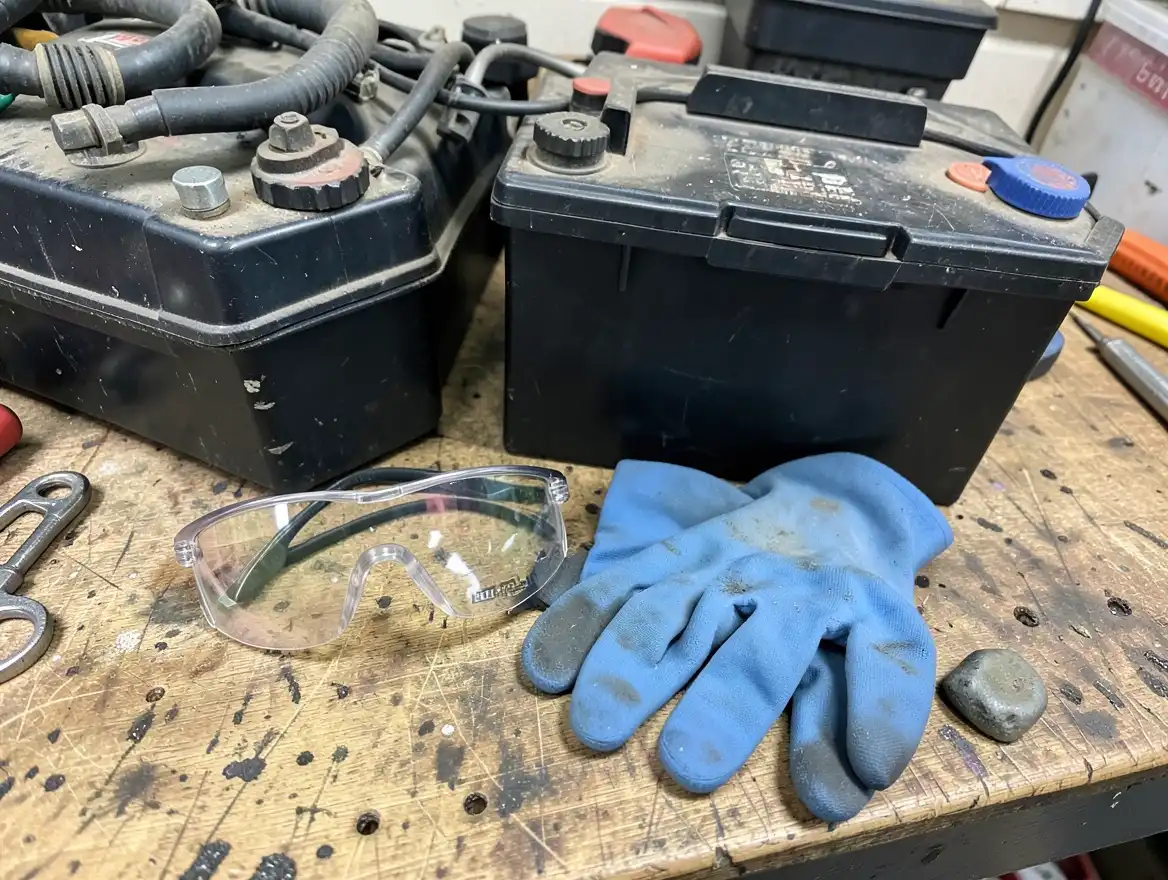
The liquid already inside a flooded battery is a corrosive mix of sulfuric acid and water, so a few precautions matter before you ever pop a cap. For more on handling that liquid safely if you ever spill it, see our guide on what liquid is inside a car battery.
- Park the car in a well-ventilated area and let the battery cool if it was recently charged or driven.
- Put on wrap-around safety goggles and acid-resistant or heavy rubber gloves before opening any cell caps.
- Remove the caps and look down into each cell. If the electrolyte does not cover the lead plates, that cell needs water.
- Using a funnel, syringe, or an auto-shut-off filler jug, add deionized or distilled water slowly until the liquid covers the plates by about 1/8 to 1/4 inch, or up to the fill ring molded inside the cell opening.
- Stop as soon as the level reaches that mark. Do not fill to the very top of the cell opening, the electrolyte expands during charging and will overflow if there is no room left.
- Replace the caps, wipe away any drips with a damp cloth, and wash your hands even if you wore gloves.
Keep a box of baking soda and a source of clean water nearby whenever you work on a flooded battery. Baking soda neutralizes sulfuric acid on contact, so it is the right first response for a spill on skin, clothing, or the battery tray. If acid reaches your eyes or skin, rinse immediately with water and get medical attention.
How Often Should You Check the Water Level?
Check a flooded battery every one to three months, and always before a long trip or a hot summer stretch, since heat speeds up evaporation. Golf cart and deep-cycle batteries that see frequent deep discharges and recharges tend to lose water faster than a standard car starting battery, so those often need a check every few weeks during heavy use. If you also maintain golf cart batteries, the same deionized-water rule applies there, just expect to refill more often.
Between water checks, a good battery maintainer keeps the charge topped up without overcharging, which also slows down how fast the water inside evaporates.
Frequently Asked Questions
Is Deionized Water Good for Car Batteries?
Yes. Deionized water has had its minerals and ions removed, so it will not cause the sulfate buildup or corrosion that tap water causes inside a flooded lead-acid battery. It is safe to use in any battery that calls for distilled water.
Is Deionized Water the Same as Distilled Water?
Not exactly, but both are safe for batteries. Distilled water is purified by boiling and condensing steam, while deionized water is purified with ion-exchange resin. Either one removes the minerals that would otherwise damage a battery’s plates.
Can You Use Tap Water in a Car Battery?
You should not. Tap water contains dissolved minerals such as calcium and magnesium that build up on the battery plates over time, causing sulfation, reducing conductivity, and shortening the battery’s service life.
Does a Sealed or Maintenance-Free Battery Need Water?
Truly sealed AGM and gel batteries do not have removable caps and should never be opened. Some batteries marketed as maintenance-free are still flooded lead-acid batteries with caps underneath, and those can still need an occasional top-off. Check your owner’s manual or the battery case for removable caps to be sure which type you have.
How Much Water Should You Add to a Battery Cell?
Add just enough deionized or distilled water to cover the plates by about 1/8 to 1/4 inch, or up to the fill ring inside the cell opening if your battery has one. Never fill all the way to the top, the electrolyte expands when the battery charges and needs room to do so without overflowing.
How Do You Know if a Battery Needs Water?
Remove the cell caps and look inside. If you can see the tops of the lead plates poking above the liquid, or the level sits below the fill ring, that cell needs water. Checking every one to three months catches low cells before they affect performance.
Products related to this article
Sponsored / affiliate links. As an Amazon Associate I earn from qualifying purchases. I may earn additional commission from eligible campaigns.