Who Made the Yugo Car? Zastava, Fiat & Its 1985 US Debut
Zastava Automobiles built the Yugo in Kragujevac, Yugoslavia (now Serbia), under a manufacturing license from Fiat — using running gear and engines from the Fiat 128 fitted into a shorter body. Malcolm Bricklin’s Yugo America Inc. sold it stateside for just $3,990 starting August 24, 1985, making it the cheapest new car in the country, but Yugoslav wars and UN sanctions ended U.S. imports by 1992. This guide covers Zastava’s history, Fiat’s exact role, the U.S. import story, and why the Yugo earned its reputation as one of the worst cars ever sold — see our related guide, What Is the Worst Car in the World? Notorious Flops.
Quick Answer
The Yugo was built by Zastava Automobiles in Kragujevac, Yugoslavia (now Serbia), under license from Fiat using Fiat 128 mechanicals. Series production began November 28, 1980, and Malcolm Bricklin’s Yugo America imported it to the U.S. from 1985 to 1992, when the Yugoslav Wars and UN sanctions cut off Zastava’s parts supply.
The Simple Answer: Who Made The Yugo Car?
The pursuit of knowing where your car comes from is a smart first step for any owner. When it comes to the Yugo, the answer points directly to a specific region and company that relied heavily on international partnerships.
Zastava Automobiles: The Core Manufacturer
The main company responsible for building every Yugo model you see is Zastava Automobiles.
Zastava was, and still is, a major Serbian vehicle manufacturer based in Kragujevac, Yugoslavia (now Serbia). Think of Zastava as the local factory that physically stamped the metal, bolted on the wheels, and installed the engine. They were the hands-on builders. Zastava itself dates back to 1953, growing out of the historic Zastava Arms munitions works that had operated on the same site since the 19th century.
However, Zastava didn’t invent the Yugo from scratch. They were masters at licensed production, meaning they had permission to build cars designed by other, larger companies — a relationship with Fiat that stretched back to the 1950s.
The Crucial Italian Connection: Fiat Licensing
This is the most important piece of the puzzle for a beginner: Zastava built the Yugo using technology and designs licensed from the famous Italian automotive giant, Fiat. You can see the full scope of what Fiat licensed to other manufacturers on the list of car companies Fiat owns and has licensed technology to.
The Yugo — first sold as the Yugo 45, later the Yugo Koral — used running gear, engines, and underpinnings from the Fiat 128, a design Fiat had introduced in the late 1960s. Zastava had already been building licensed Fiats, including the older Fiat 128 itself, for years before adapting that mechanical package into the shorter, cheaper Yugo body.
This Italian heritage explains why, despite being assembled in Yugoslavia, the basic engineering often felt distinctly European from the late-1960s/early-1970s era. It was the marriage of Italian design expertise and Yugoslavian manufacturing capability.
Was the Yugo Really the “Worst Car Ever Made”?
The Yugo’s reputation isn’t just internet exaggeration — it comes from real automotive journalism at the time. Car and Driver’s technical director, Csaba Csere, reviewed the Yugo GV and wrote plainly: “It’s obvious to me that the Yugo GV is inferior to every other car sold in America.”
“It’s obvious to me that the Yugo GV is inferior to every other car sold in America.”
That review wasn’t an outlier. In 2000, listeners of NPR’s Car Talk voted the Yugo the “Worst Car of the Millennium.” Years later, TIME magazine put the 1985 Yugo GV on its list of the 50 Worst Cars of All Time, and Complex Magazine ranked the earlier Yugo 45 as the single worst car of the 1980s.
The reputation traces back to real, documented problems: rushed U.S. homologation, inconsistent quality control at the Kragujevac plant, and safety engineering that lagged well behind 1980s Western standards. Zastava built the Yugo to be cheap to buy and simple to fix — not to compete on refinement, and American reviewers judged it against cars that cost two or three times as much.
Best Book on the Yugo’s Story
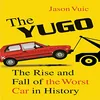
The Yugo: The Rise and Fall of the Worst Car in History
Historian Jason Vuic’s full account of Zastava, Malcolm Bricklin, and how the cheapest car in America became its most infamous.
- Best for: readers who want the full Zastava/Bricklin story beyond this article
- Why we picked it: the most-cited, best-researched book on the Yugo’s actual history
- Main drawback: a full-length book, not a quick reference
Compare more Yugo-era car history collectibles
 Option 1 Fiat 128 1:43 Diecast Model
|
 Option 2 Pack of 2 3″ Stickers – Trabant 601 Blue Front Sticker Graphic – Die Cut Sticker, High Resolution To
|
 Option 3 Lada 2106 1:24 Diecast Model
|
As an Amazon Associate we earn from qualifying purchases.
The Birth of the Yugo: A Timeline of Creation
Understanding the timeline helps put the car into context. The car wasn’t just suddenly dropped into the market; it evolved from specific political and economic needs in Yugoslavia.
1. The Need for Affordable Transport in Yugoslavia
In the late 1970s, the Yugoslavian government wanted a modern, reliable, and most importantly, affordable car that could be produced domestically. This plan secured jobs and kept capital within the country — the same “people’s car” goal that drove the VW Beetle in Germany and the Citroën 2CV in France.
2. The Fiat Foundation (The Design Source)
Zastava already had a strong relationship with Fiat dating back to the 1950s. They were already successfully building cars based on the Fiat 128. The designers essentially took that proven, rugged Fiat 128 mechanical package and adapted it into the specific, shorter Yugo body they wanted to create.
3. Debut and Export Goals
Series production of the Yugo began on November 28, 1980, in Kragujevac. While popular locally, the true global claim to fame came later when the car was redesigned slightly for export markets, most notably the United States, starting August 24, 1985. See how that compares to other foreign-market cars sold in America for a sense of how unusual a Yugoslav car in a U.S. showroom really was.
📊 The Yugo GV went on sale in the U.S. at $3,990 on August 24, 1985 — and dealers sold 1,050 cars on that first day alone. Zastava and Yugo America went on to sell 141,651 Yugos in the U.S. between 1985 and 1992, peaking at 48,812 units in 1987. — Source: Yugo production history, Wikipedia (2026)
Who Else Was Involved? The Key Partners
While Zastava did the heavy lifting in assembly, a car is a product of many suppliers. For a beginner looking at the Yugo’s identity, it’s helpful to know the major players that contributed to its final form.
The Engine Suppliers
While the overall architecture was Fiat-based, the specific engines installed in many Yugos (especially the early export models) were often sourced from Zastava’s own specialized production lines, sometimes incorporating slight modifications or using older Zastava-built Fiat derivatives. Reliability was often tied to how well these ancillary components held up.
The Role of U.S. Importers
When the Yugo came to America, Zastava didn’t handle the direct sales. They partnered with an American company called Yugo America, Inc., founded by entrepreneur Malcolm Bricklin. This importer was responsible for getting the cars approved for U.S. safety standards (which proved challenging for many early models) and distributing them across dealerships. They were the “face” of the Yugo in the US, even if they didn’t build it.
Malcolm Bricklin: The Man Who Brought the Yugo to America
Bricklin had already built a career importing cheap, unusual cars into the U.S. He negotiated the rights to sell Zastava’s car stateside, priced the entry-level GV at $3,990 — cheap enough to undercut the Chevrolet Chevette by over $1,500 — and launched it on August 24, 1985. The gamble paid off immediately: Yugo America sold 1,050 cars on the very first day. But quality problems caught up fast, and by the end of 1985 only 3,895 had actually left dealer lots. Yugo America filed for Chapter 7 bankruptcy in April 1992, the same year the Yugoslav Wars cut off Zastava’s parts supply for good.
Table: Key Players in the Yugo Story
| Entity | Role in Yugo Production | Country of Origin |
|---|---|---|
| Zastava Automobiles | Primary Manufacturer and Assembler | Yugoslavia/Serbia |
| Fiat | Licensor of Core Technology and Design (Fiat 128) | Italy |
| Yugo America, Inc. (Malcolm Bricklin) | U.S. Importer and Distributor, 1985–1992 | USA |
The Most Common Yugo Models and Their Origins
If you see a Yugo on the road today, knowing which version it might be can tell you a bit more about its engineering roots. The defining characteristic of nearly all Yugos is that they carry DNA from an older Fiat design.
Yugo 45 (The Original)
This was the foundational model. It used the shortened body style built around Fiat 128 mechanicals. It was praised locally for being simple and cheap to run.
Yugo 55 and 65
These variations were essentially the same car with larger or slightly more powerful engines (hence the numbers referring roughly to horsepower). They were still fundamentally rooted in the Zastava/Fiat collaboration framework.
Yugo GV (The American Export)
The letters GV stand for “Great Value.” This version was specifically adapted (often stripped down further or slightly modified for emissions) to meet the US market demands of the mid-1980s. This model is what most Americans recall.
Why Understanding the Maker Matters for Maintenance
As a new DIY enthusiast, knowing that Zastava, utilizing Fiat technology, made your car isn’t just trivia—it’s practical information for maintenance.
1. Parts Sourcing Today
Because the parts are heavily based on the Fiat 128, mechanics and knowledgeable owners sometimes look for compatible parts from older Fiat models manufactured around the same time period (the late 1970s and early 1980s). Knowing the Fiat connection opens up alternative repair avenues.
2. Understanding the Engineering Philosophy
The Yugo was built to be a straightforward, simple machine, often using carburetor technology long after fuel injection became standard in Western cars. This simplicity can actually be a blessing for a beginner mechanic. There are fewer complex sensors and computer systems to troubleshoot!
If you need help understanding older, simpler engine types, checking reliable resources like the Society of Automotive Engineers (SAE) publications on historical engine design can offer great comparative insight into why these older motors tick the way they do.
Steps to Identify Your Yugo’s True Origin
While the badge says Yugo, a quick look at the VIN or engine details can confirm the origin. This is helpful if you are buying parts online:
- Check the Vehicle Identification Number (VIN): The first character of the VIN usually indicates the country of origin. For Yugoslavian/Serbian built cars, the VIN often starts with a “Y” or “W” depending on the year and market standardization applied.
- Look at the Engine Bay Sticker: Many Zastava vehicles had production stickers under the hood listing the assembly plant (Kragujevac being the main one) and engine specifications provided by Zastava.
- Examine the Owner’s Manual: Early manuals often clearly state that the vehicle is “Manufactured by Zastava Automobiles, Kragujevac” under license from Fiat Auto S.p.A.
Common Misconceptions About the Yugo’s Manufacturer
Because the Yugo gained such an infamous reputation in the US, many assumptions were made about its origin, often incorrectly labeling it as a poorly designed car from a non-automotive nation.
Myth 1: It Was Made Entirely by Fiat
Fact: Fiat licensed the technology, but they did not manufacture the final Yugo vehicles. Zastava was the manufacturer. Fiat’s involvement lessened over time as Zastava began using more of its own components.
Myth 2: It Was Built by a Single Person or Government Agency
Fact: Like any major car company, Zastava was a large industrial complex involving thousands of workers, engineers, and suppliers across Yugoslavia. It wasn’t the work of one inventor, but a complex industrial effort.
Myth 3: It Was Built in Russia or Eastern Europe
Fact: While many Eastern Bloc countries had their own car production (like Lada from Russia), the Yugo was distinctively a product of Yugoslavia (specifically Serbia). This distinction is important because Yugoslavian manufacturing processes sometimes differed from those in the Soviet sphere.
The Technology Transfer: How Fiat Defined the Yugo
To truly appreciate who made the Yugo, you must appreciate what they were using. The relationship with Fiat was foundational to the Yugo’s entire existence.
Table: Comparing Yugo Foundations to Fiat Predecessors
| Yugo Component/Feature | Italian Predecessor Basis | Engineering Era |
|---|---|---|
| General Body Structure | Shortened Fiat 128 platform | Late 1960s/Early 1970s |
| Engine Technology | Fiat 128 (903cc “Fiat 100”) Engine Family | Early 1970s |
| Basic Drivetrain Layout | Front-engine, Front-Wheel Drive (FF) | Proven Mass-Market System |
The brilliance of the Zastava operation was its ability to take established, proven, and relatively simple Fiat mechanicals and put them into a slightly updated shell. This kept manufacturing costs extremely low, which was the primary goal. They utilized robust designs that did not require the continuous, expensive updates that Western automakers demanded of their models year after year.
Pros and Cons of Zastava’s Manufacturing Approach
Zastava’s style of manufacturing—relying on licensed, older tech—created a unique set of benefits and drawbacks for the end user.
Pros (Why Simplicity Can Be Good)
- Simplicity for Repair: Fewer electronic components mean many repairs can be done with basic tools—perfect for the beginner DIYer.
- Low Parts Cost (Historically): Because the designs were old, parts were often inexpensive when they were readily available.
- Light Weight: The simple construction kept the vehicle light, which helped its meager engine performance.
Cons (The Trade-Offs)
- Outdated Safety: The design relied on 1960s/70s safety standards, which were far below what was standard by the 1980s.
- Inconsistent Quality Control: Assembly quality depended heavily on the specific factory shift and year, leading to variability in how long individual cars might last.
- Limited Performance: The original engines were low on power, with the Yugo GV needing roughly 14 seconds to reach 60 mph and topping out around 86 mph — making highway driving challenging in modern traffic.
If you are working on a Yugo, remember that safety first is paramount. Always ensure that any structural repairs meet modern—or at least the best available—standards, perhaps by reviewing guidelines from organizations like NHTSA (National Highway Traffic Safety Administration) regarding older vehicle safety considerations.
What Happened to Zastava and the Yugo?
The story of who made the Yugo has a bittersweet ending tied to major geopolitical shifts. See a similar story play out with Saab’s own collapse and aftermath for another state-linked automaker undone by outside forces.
The Collapse of Yugoslavia
The dissolution of Yugoslavia in the early 1990s severely impacted Zastava’s operations. International sanctions and economic instability made sourcing necessary imported components incredibly difficult. Production volumes plummeted immediately, and the disruption didn’t end quickly — in 1999, during the Kosovo War, NATO bombed the Kragujevac factory complex because Zastava’s parent group was also a major military supplier; some of the car-manufacturing buildings were damaged in the strikes.
Why Yugo Imports to the US Stopped in 1992
Yugo America filed for Chapter 7 bankruptcy in April 1992 and was liquidated. Two forces hit at once: the Yugoslav Wars triggered United Nations sanctions that made it illegal to import cars or parts from Yugoslavia, and Zastava itself couldn’t source components from suppliers now cut off in Croatia, Bosnia, and Macedonia. By mid-1992, Yugo production for export had effectively ended, and no Yugo was ever officially imported to the U.S. again.
The Fiat Re-Engagement
After political stability began to return, Fiat gradually increased its involvement again. Zastava kept building the Yugo (by then called the Zastava Koral) in reduced numbers through the 1990s and 2000s, with the final Koral rolling off the line on November 11, 2008, after roughly 794,000 total Yugos/Korals had been built since 1980.
Today, the Kragujevac plant is no longer branded “Fiat Chrysler Automobiles Serbia” — that entity dissolved when FCA merged into Stellantis in 2021. The factory now operates as Fiat Serbia, part of Stellantis, jointly owned by Stellantis Europe S.p.A. (67%) and the Government of Serbia (33%). It currently builds the Fiat Grande Panda and Citroën New C3, with an EV platform expansion planned for later this year — a very different lineup from the Yugo, but the same factory floor that started it all.
Frequently Asked Questions (FAQ) About the Yugo Car
Was the Yugo considered a dangerous car to drive when new?
When initially released in the US, the Yugo lagged far behind in modern safety features like airbags and crumple zones, as it was based on much older Fiat designs. Local use in Yugoslavia was less scrutinized regarding export safety standards.
Did Zastava ever build their own car without Fiat’s help?
Zastava built many variants based on Fiat platforms, often modifying engines or bodywork, but the core mechanical architecture for the Yugo line was licensed from Fiat. Their history is almost entirely based on licensed production and collaboration.
What does “Yugo” actually mean?
The name “Yugo” is simply a shortening of “Yugoslavia,” the country where it was manufactured by Zastava Automobiles.
Where were the Yugos sold in the USA made?
All Yugos sold in the United States, regardless of the specific model year (1985–1992), were manufactured and assembled by Zastava in Kragujevac, Yugoslavia (Serbia).
Are Yugos hard to find parts for now?
Parts can be challenging to find new, especially engine and body components specific to the US-market GV. However, because of the Fiat lineage, some mechanical parts can sometimes be cross-referenced with older European-market Fiat 128 parts found through specialty suppliers.
Did the Yugo have a reliable engine?
The original engines were relatively basic but functional. Their reliability often depended heavily on the maintenance they received, as they lacked the protective electronics found in more modern cars. They were generally simple to fix but prone to wear if neglected.
Who owns the Zastava factory today?
The Kragujevac factory that once built the Yugo is no longer a standalone Zastava operation. It’s now owned by Stellantis Europe S.p.A. (67%) and the Government of Serbia (33%), operating as Fiat Serbia and currently building the Fiat Grande Panda and Citroën New C3.
Conclusion: Remembering the Zastava Legacy
The question of “who made the Yugo car?” has a clear answer: Zastava Automobiles of Yugoslavia, using Fiat 128 technology licensed from Italy and imported to America by Malcolm Bricklin’s Yugo America. It was a product of industrial ambition in a unique geopolitical environment, designed to be accessible and economical — and it earned a lasting reputation as one of the worst cars ever sold in the process. For anyone exploring the automotive history of these unique vehicles, remembering the Zastava-Fiat-Bricklin story is key to understanding both their engineering and their place in pop culture. While the Yugo might not be remembered for luxury or speed, it stands as a testament to what focused, licensed manufacturing — for better and worse — can achieve. If you ever find yourself working on one, remember you are dealing with simple, solid European engineering heritage—and that’s a great place to start your DIY journey!
Products related to this article
Sponsored / affiliate links. As an Amazon Associate I earn from qualifying purchases. I may earn additional commission from eligible campaigns.