Sparco Racing Seat Review: Is It Worth It for Street Use?
A Sparco racing seat can make sense if you want more hold than a stock seat, but the right model depends on use: street comfort, track safety, or sim rig fit; budget roughly in the mid-hundreds to low-thousands per seat before brackets. Buy the wrong one and you get poor fit, bad ergonomics, extra noise, and a much higher total install bill.
This guide is part of our Race car types and specs series.
Verdict


That is the real money question. Sparco is an Italian automotive company founded in 1977 and headquartered in Volpiano, Metropolitan City of Turin, Italy, and its catalog spans seats, steering wheels, belts, racewear, helmets, and even simulation cockpits and gaming chairs. That breadth helps buyers, but it also means the seat choice has to match the job. For many street cars, the answer is “maybe.” For track-day cars and sim rigs, it is often “yes,” provided the mounting hardware and fit are sorted first. (en.wikipedia.org)
Pros and cons
- Pros: Better side support than most factory seats.
- Pros: Clear split between street and competition use.
- Pros: Stronger position control for track sessions and sim rigs.
- Cons: Install cost can climb fast once rails and labor are added.
- Cons: Some cars lose factory airbags, sliders, or easy entry.
- Cons: Tall and broad drivers can run into shoulder or helmet clearance issues.
Who it’s for
This suits drivers who want more support than a soft OEM chair, especially if the car sees track days or long sim sessions. It does not suit anyone who needs airbag retention, frequent rear-seat access, or the broad comfort of a reclining factory seat for long commutes.
According to Sparco – Wikipedia — Sparco was founded in 1977. (source)
Specs at a glance
| Item | What to know |
|---|---|
| Brand | Sparco |
| Brand type | Italian automotive safety and accessories brand |
| Founded | 1977 |
| Headquarters | Volpiano, Metropolitan City of Turin, Italy |
| Seat categories | Street and Competition |
| Mounting styles | Bottom-mount, side-mount, rails, brackets, sliders, adapter plates |
| Compliance angle | FIA certification matters for sanctioned motorsport use and seat compliance |
| Typical seat cost | About $348.47 to $978.60 for the listed examples |
| Installed cost | Often much higher once hardware and labor are added |
Seat types and construction choices
Sparco USA organizes seats into Street and Competition categories, and that split matters more than the logo on the shell. Street seats usually give up some lateral hold so they stay easier to live with and get in and out of. Competition seats usually hold the torso better, but they ask more from the buyer in fitment and mounting.
The common mistake is treating every racing seat like a generic bucket. Bottom-mount versus side-mount changes seat height, clearance, and bracket choices. Side-mount fixed-back seats can sit lower and feel better in a helmeted car, while bottom-mount styles often fit street builds with fewer packaging headaches.
Mounting style, rail compatibility, and FIA status
Racing seat mounting hardware is where the bill grows. A seat rail, bracket, slider, or adapter plate may be needed, and factory sliders rarely bolt in without compromise. The platform matters too; some cars accept a clean swap, while others need custom brackets or a mix of parts to keep the seat low enough.
FIA certification matters when the car is used in sanctioned motorsport or when rules require an approved seat. It is not a universal street requirement. Buyers should check whether the model they want is compliant for the events they plan to enter, because a nice seat that misses the rulebook can become a costly shelf item.
Typical price range and installed cost
The listed examples appear to start with a lower-priced reclining seat and rise to a higher-priced XL seat in the comparison set. That is only the shell price, before hardware and labor are added. Rails, brackets, sliders, adapter plates, and labor can push the out-the-door number far beyond the sticker, especially on cars with airbags or unusual mounting points.

Who is it for?
Street drivers who want firmer support without going full race-bucket can make a Sparco seat work, especially a reclining model. Track-day drivers benefit most from the stronger body control and repeatable position. Sim-rig buyers also have a strong case, because fixed seating and stable hip position matter more there than easy ingress.
Street drivers
For street use, the best fit is usually a reclining Sparco seat or another model with enough padding and adjustability to handle traffic, parking lots, and moderately long drives. Fixed-back competition seats can wear on you when the car is used daily.
Track-day drivers
Track-day buyers care about restraint, steering precision, and repeatability. A seat that holds the shoulders and hips in place reduces bracing and helps the driver stay relaxed under lateral load. That is where a good fixed-back Sparco can make sense, especially with matching belt setup and compliant mounting.
Sim-rig buyers
For a sim rig, Sparco’s gaming and seat background pays off in a practical way: fixed seating, decent shell shape, and predictable position. Comfort still matters, but daily entry and street legality do not. This is one of the easiest use cases to justify.
What works well
The strongest case for Sparco is body control. Side support matters when the car is cornering hard, and a seat with better bolstering cuts down on fatigue from sliding around. On track, that means less time using your legs and core to stay in place and more time doing the actual driving.
Build quality and trim options are another plus. Sparco offers street and competition seats in different shapes, so buyers are not forced into one shell style. That matters because shoulder width, torso length, and helmet clearance vary a lot from one driver to the next.
Lateral support and body control
In practice, better bolstering is the main payoff. The seat keeps the pelvis planted and stops the torso from wandering in fast transitions. On a short commute, that may feel firm. On a track session, it usually feels right.
Track-day and sim use advantages
Track cars benefit from repeatable seating position. Sim rigs benefit from fixed posture and a solid backrest. In both cases, the seat’s job is to hold position, not to pamper the occupant. Sparco makes sense when that trade is acceptable.
What does not
Daily comfort can fall off fast once the seat gets firm or narrow. Over 30- to 90-minute drives, some drivers will notice pressure points, reduced thigh support, or a backrest that feels too fixed for a long commute. That is the trade-off many glossy reviews skip.
Tall-driver fit is another weak spot. Helmet clearance can disappear quickly in cars with a high seating position or a sunroof. Wide-shouldered drivers can also hit the bolsters. Seat belt geometry may get awkward too, especially if the belt now crosses the body at a poor angle after the swap.
Failure cases to check before ordering
- Helmet hits the roof or headliner.
- Shoulders bind against the side bolsters.
- Factory belt angle becomes uncomfortable or unsafe.
- Airbag warning lights appear after the swap.
- Entry and exit become irritating in a daily driver.
Factory sliders and airbags are often the first things affected. Many cars need a delete or workaround for the occupant sensor, side airbag, or seat wiring. That is not a small detail. It can change insurance questions, inspection readiness, and the car’s day-to-day ease.
What does it cost to install one?
The installation bill is usually the part buyers underestimate. Seat price is only the start. Add rails, brackets, sliders, adapter plates, and labor, and the install can cost as much as the seat itself on some platforms. On difficult cars, it can cost more.
Seat price versus all-in price
A realistic budget for a single seat often lands in the mid-hundreds to low-thousands all-in for a straightforward setup, and can be higher on cars that need custom mounting or electrical work. A $348.47 reclining seat can still become an expensive project once the hardware stack is complete.
What goes into the bill
- Choose the seat type: street or competition.
- Check whether the car needs bottom-mount or side-mount hardware.
- Confirm rail and slider compatibility.
- Account for adapter plates if the bolt pattern does not line up.
- Budget labor if airbag wiring, sensors, or custom brackets are involved.
Car platform changes everything. A popular coupe with off-the-shelf rails may be simple. A newer street car with side airbags and integrated sensors can turn into an afternoon of trim work, warning-light troubleshooting, and fit checks. Buyers should price the install before they price the seat.
Use-case decision table: which Sparco seat is worth it?
The cleanest way to judge Sparco is by use case, not brand loyalty. The table below scores ownership on a 1 to 5 scale, where 5 is best for the buyer. Total cost reflects the seat plus a realistic hardware and labor stack, not just the shell price.
| Use case | Street comfort | Track support | Install complexity | Total out-the-door cost | Tall-driver fit risk | Verdict |
|---|---|---|---|---|---|---|
| Street commuter with occasional weekend use | 4 | 2 | 3 | 3 | 3 | Worth it only if comfort loss is acceptable |
| Track-day car with fixed-back seat | 2 | 5 | 2 | 3 | 4 | Strong buy if fit and rules check out |
| Street car with factory airbags and sliders | 3 | 3 | 5 | 4 | 3 | Usually skip unless the car is being built around the seat |
| Sim rig | 3 | 4 | 2 | 4 | 2 | Usually good value |
Alternatives worth comparing


The NRG Innovations black bucket racing seat is the lower-cost comparison point for buyers who want a universal side-mount package and a faux-suede grip surface. Based on the spec sheet and owner feedback, it can make sense for budget track builds, but the trade-off is less brand depth in seat-specific fitment guidance than Sparco, and that matters when the car needs a cleaner install or tighter compliance planning.
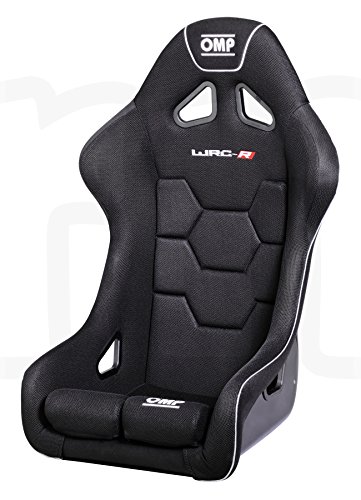
The OMP WRC-R XL is the better comparison for larger drivers who need more room than a standard bucket offers. Its XL sizing is the point, and that can solve the shoulder-pinching problem that scares off taller buyers. The drawback is cost; at $978.60, it is a more serious commitment, and the install still needs proper brackets and platform-specific checking.
When a reclining sport seat is the smarter buy
If the car still sees commuting, errands, or passengers, a reclining seat is often the smarter choice. It gives more usability and less fatigue while still improving support versus a worn stock chair. The Sparco R100 fits that logic better than a hard fixed-back shell.
When the stock seat is enough
Some cars already have supportive OEM seats. If the driver is not running track sessions, is tall, or needs airbags and factory adjustability, the stock seat with better padding or a steering-wheel position change may be the better money move.
Should you buy one?
Buy a Sparco seat if the car is driven hard, the fit has been checked, and the owner can live with losing some comfort or convenience. Skip it if airbags, easy entry, broad daily comfort, or low install cost matter more than support. Wait if the seat type has not been matched to the car and driver yet.
The best-fit buyer is usually a track-day driver, a sim-rig builder, or a street enthusiast who knows the car is being set up around the seat. The worst-fit buyer is someone hoping a race seat will feel like a stock recliner after the swap.
Frequently asked questions
Is a Sparco racing seat worth it?
Yes, if the driver needs more support than a stock seat and is willing to pay for the hardware and fitment work that go with it. It is most worth it for track use and sim rigs. For a daily driver, the answer depends on comfort tolerance and airbag needs.
Which Sparco seat is best for street and track use?
A reclining street-oriented Sparco is usually the safest compromise for mixed use, because it gives more everyday flexibility than a fixed-back racing shell. The right pick depends on the car’s mounting points, the driver’s size, and whether the seat must work with factory equipment.
Are Sparco racing seats comfortable for daily driving?
Some are, especially the street category and reclining models. Fixed-back competition seats are much less forgiving over long commutes. Comfort also depends on body shape; tall drivers and wide-shouldered drivers often feel the shortcomings sooner than smaller drivers do.
What do I need to install a Sparco racing seat?
At minimum, a seat, the correct rails or brackets, and any adapter plates needed for the car. Many installs also need sliders, wiring work, or sensor solutions if the car has airbags or seat occupancy detection. Labor can be modest or messy depending on platform.
Do Sparco seats work with factory sliders and airbags?
Sometimes, but not reliably enough to assume. Factory sliders may not line up with aftermarket seats, and airbags often need to be disabled, deleted, or otherwise addressed. That can create warning lights and compliance issues, so the car’s exact platform must be checked before buying.
Are Sparco racing seats FIA approved?
Some are, and that matters for sanctioned motorsport use where seat compliance is required. FIA approval is model-specific, not automatic just because the brand is Sparco. Buyers should verify the exact seat and event rules before counting on it for competition.
Products related to this article
Sponsored / affiliate links. As an Amazon Associate I earn from qualifying purchases. I may earn additional commission from eligible campaigns.