Why a Car Runs Hot Causes and Fixes
It’s a worry for any driver when the temperature gauge on the dashboard starts climbing into the red zone. Understanding Why Does a Car Run Hot? Causes and Fixes can seem tricky, especially if you’re not a car expert.
But don’t fret! This guide will break it down simply. We’ll walk through the common reasons your car might overheat and show you easy ways to fix them.
Get ready to learn how to keep your engine cool and your car running smoothly.
Common Reasons a Car Runs Hot
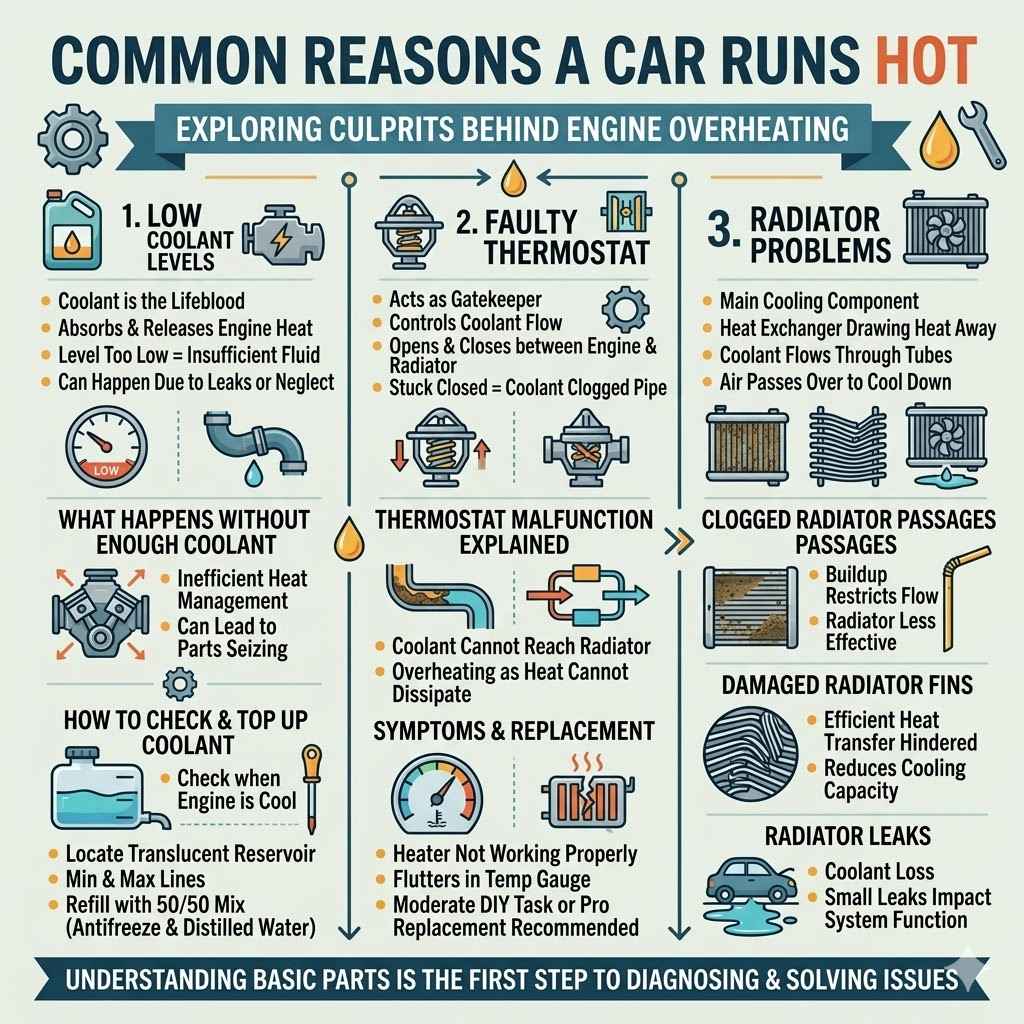
When your car’s engine temperature gauge creeps higher than normal, it’s a clear sign that something isn’t quite right. An overheated engine can lead to serious damage if not addressed promptly. This section will explore the most frequent culprits behind a car running hot.
We’ll look at issues with the cooling system, including coolant levels, thermostat problems, and radiator concerns. Understanding these basic parts is the first step in diagnosing and solving overheating issues.
Low Coolant Levels
Coolant, also known as antifreeze, is the lifeblood of your car’s cooling system. Its primary job is to absorb heat from the engine and release it through the radiator. If the coolant level is too low, there isn’t enough fluid to effectively manage the engine’s temperature.
This can happen due to leaks in the system or simply because it hasn’t been topped up in a while.
What Happens Without Enough Coolant
A low coolant level means the engine’s heat isn’t being carried away efficiently. This causes hotter spots within the engine, which can lead to parts expanding and even seizing up if the problem persists. It’s like trying to cool a hot oven with only a tiny bit of water; it just won’t do the job.
How to Check Coolant Levels
Always check your coolant when the engine is cool to avoid burns. Locate the coolant reservoir, usually a translucent plastic tank, and look for the “min” and “max” lines. If the level is below the “min” line, it needs to be refilled.
Topping Up Your Coolant
Use a 50/50 mix of antifreeze and distilled water. Never use plain water, as it can freeze in cold weather or boil at lower temperatures. Pour the mixture into the reservoir until it reaches the “max” line. If you frequently need to top up, it likely indicates a leak somewhere in the system that needs professional attention.
Faulty Thermostat
The thermostat is a small but vital component that acts like a gatekeeper for your engine’s coolant. It opens and closes to control the flow of coolant between the engine and the radiator. When the engine is cold, the thermostat stays closed, allowing the engine to warm up quickly.
Once the engine reaches its optimal operating temperature, the thermostat opens, letting coolant flow to the radiator to be cooled.
Thermostat Malfunction Explained
If the thermostat gets stuck in the closed position, coolant cannot reach the radiator. This prevents the system from dissipating the heat generated by the engine, leading to overheating. Imagine a clogged pipe preventing water from flowing; the same principle applies here.
Symptoms of a Bad Thermostat
Besides the engine running hot, you might notice the heater in your car not working properly or taking a very long time to blow warm air. This is because the heater core relies on hot coolant circulating from the engine. Sometimes, the temperature gauge might fluctuate erratically.
Replacing a Thermostat
Replacing a thermostat is a moderately difficult DIY task for those with some mechanical experience. It usually involves draining some coolant, removing a housing, swapping the old thermostat for a new one, and then refilling and bleeding the cooling system. Professional replacement is recommended if you’re unsure.
Radiator Problems
The radiator is the main component responsible for cooling the engine’s coolant. It’s essentially a heat exchanger. Hot coolant from the engine flows through a series of small tubes within the radiator.
Air passes over these tubes, drawing heat away from the coolant and dissipating it into the atmosphere. This cooled coolant then circulates back to the engine.
Clogged Radiator Passages
Over time, rust, sediment, and debris can build up inside the radiator’s passages. This buildup restricts the flow of coolant, making the radiator less effective at cooling. It’s like trying to breathe through a straw that’s partially blocked.
Damaged Radiator Fins
The radiator has many thin fins that increase its surface area, allowing for better heat transfer. If these fins become bent, corroded, or damaged, they can’t efficiently transfer heat to the air. This reduces the radiator’s cooling capacity.
Radiator Leaks
Leaks in the radiator itself, or in the hoses connected to it, will obviously lead to a loss of coolant. Even small leaks can significantly impact the cooling system’s ability to function. You might notice puddles of coolant under your car if there’s a leak.
Other Potential Causes of Overheating
While low coolant, thermostat issues, and radiator problems are the most common reasons a car runs hot, several other factors can contribute to engine overheating. These less frequent, but still important, causes often involve other parts of the cooling system or even issues outside of it. Diagnosing these can sometimes require a bit more investigation, but understanding them is key to a complete fix.
Water Pump Failure
The water pump is the heart of your car’s cooling system. It’s responsible for circulating the coolant throughout the engine, radiator, and heater core. Without a functioning water pump, the coolant would simply sit stagnant, unable to absorb heat from the engine and release it through the radiator.
How the Water Pump Works
Driven by the engine’s serpentine belt or timing belt, the water pump has an impeller that spins, pushing coolant through the system. It ensures a continuous flow, maintaining the correct temperature balance. A failure here means no circulation, leading to rapid overheating.
Signs of a Failing Water Pump
Common signs include a whining or grinding noise coming from the front of the engine, a visible coolant leak from the pump itself (often around the shaft seal), or a puddle of coolant under the car. The temperature gauge will likely spike quickly after the engine starts.
Consequences of a Bad Water Pump
If the water pump fails entirely, the engine will overheat very quickly, often within minutes of driving. This can cause severe engine damage, including warped cylinder heads or a blown head gasket, which are very expensive repairs.
Cooling Fan Malfunctions
The cooling fan plays a critical role in keeping the engine cool, especially when the car is moving slowly or stopped, such as in traffic. At higher speeds, the natural airflow through the radiator is usually sufficient for cooling. However, when the vehicle is stationary, the fan is responsible for pulling air through the radiator to help cool the coolant.
Electric vs. Belt-Driven Fans
Cars use either electric fans or fans driven by a belt connected to the engine. Electric fans are controlled by sensors and a computer module. Belt-driven fans are always running when the engine is on, but their effectiveness can be reduced if the belt is worn or loose.
Common Fan Issues
For electric fans, the common culprits are a faulty fan motor, a blown fuse, a bad relay, or a malfunctioning temperature sensor that doesn’t tell the fan when to turn on. For belt-driven fans, a slipping or broken belt will prevent it from spinning properly.
The Impact on Cooling
When the cooling fan isn’t working correctly, especially at low speeds or while idling, the radiator cannot dissipate enough heat. This causes the coolant temperature to rise rapidly, leading to the engine running hot. You might notice the temperature climbing when you’re stuck in traffic but dropping back to normal once you start driving at speed.
Issues with Radiator Hoses
Radiator hoses are flexible tubes that connect the engine to the radiator and other components of the cooling system. They carry the hot coolant to the radiator for cooling and then return the cooled coolant to the engine. These hoses are made of rubber and are subject to wear and tear over time.
Degradation of Rubber Hoses
Exposure to heat, pressure, and engine fluids can cause the rubber to degrade, becoming brittle, cracked, or mushy. This makes them prone to bursting or leaking.
Collapsed Hoses
Hoses can also collapse internally, especially under vacuum. A collapsed hose restricts coolant flow, preventing the system from cooling the engine effectively. You might see a hose that looks kinked or flattened.
Checking and Replacing Hoses
It’s important to inspect radiator hoses regularly for any signs of damage. Squeeze them gently to check for firmness; they should feel solid but not rock-hard or excessively soft. Replace any hoses that show cracks, bulges, or signs of wear.
Blocked Heater Core
The heater core is essentially a small radiator located inside your car’s dashboard. It uses hot engine coolant to provide heat to the cabin. While its primary function is comfort, a severely blocked heater core can impede the overall flow of coolant through the system.
How a Blockage Occurs
Just like the main radiator, the heater core can become clogged with sediment or corrosion over time. If the blockage is severe enough, it can create a restriction that slows down the coolant circulation throughout the entire system.
Symptoms Beyond Overheating
The most obvious symptom of a blocked heater core, besides potential overheating, is a lack of heat from your car’s vents. If you turn on your defroster or cabin heater and get only cool air, it’s a strong indicator of a heater core issue.
Impact on Engine Cooling
While less common than other causes, a significant blockage in the heater core can contribute to a car running hot. This is because it creates a bottleneck in the coolant’s path, reducing the overall efficiency of the cooling system.
Troubleshooting and Solutions
When your car starts to run hot, the immediate concern is to prevent further damage. The good news is that many overheating issues can be addressed with some simple troubleshooting steps. This section will guide you through the process of identifying the cause and applying the appropriate fixes, ranging from simple checks to more involved repairs.
Immediate Steps When Your Car Overheats
If you notice your car’s temperature gauge climbing rapidly or see steam coming from under the hood, it’s crucial to act fast. Your priority is to stop the engine from causing further damage.
Pull Over Safely
Find a safe place to pull over as soon as possible. Turn off the engine immediately.
Let It Cool Down
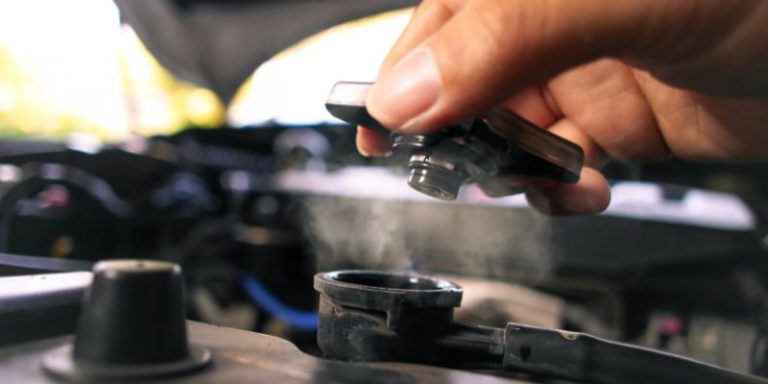
Do not open the radiator cap while the engine is hot. The system is under pressure, and opening it can cause serious burns from scalding hot coolant. Wait at least 30 minutes, or until the engine is cool to the touch.
Check Coolant Level (When Cool)
Once the engine has cooled, carefully check the coolant level in the reservoir. If it’s low, you can add a 50/50 mix of antifreeze and distilled water. If you don’t have any on hand, plain water can be used as a temporary fix, but you’ll need to get the correct coolant mixture as soon as possible.
Inspect for Leaks
Look for any visible signs of leaks under the car or around hoses and the radiator. Brightly colored puddles of fluid (usually green, orange, or pink) indicate a coolant leak.
DIY Fixes for Common Issues
Some overheating problems are relatively easy to fix yourself if you have basic tools and a willingness to learn.
Topping Up Coolant
As mentioned, if the coolant is low and there are no obvious leaks, simply refilling the reservoir can solve the problem. This is the easiest and most common DIY fix.
Replacing a Radiator Cap
A faulty radiator cap can fail to hold pressure in the cooling system, causing coolant to boil at a lower temperature. Replacing the cap is a simple and inexpensive fix. Ensure you get the correct pressure rating for your vehicle.
Flushing the Cooling System
Over time, sediment can build up, restricting flow. A coolant flush involves draining the old coolant, running a cleaning solution through the system, and then refilling it with fresh coolant. This can help clear minor blockages.
When to Call a Professional Mechanic
While DIY repairs are great for simple issues, some problems require the expertise of a professional mechanic.
Persistent Overheating After Checks
If you’ve checked your coolant, replaced the cap, and still experience overheating, it’s time to call a mechanic. There might be a more complex issue like a head gasket leak or a failing water pump.
Suspected Major Leaks
If you see significant coolant leaks, especially from the radiator itself or the water pump, these are often complex repairs that require specialized tools and knowledge.
Unusual Noises or Smells
Grinding, whining noises from the engine area, or a sweet smell of burning coolant can indicate serious problems like a failing water pump or internal engine damage.
Preventing Your Car From Running Hot
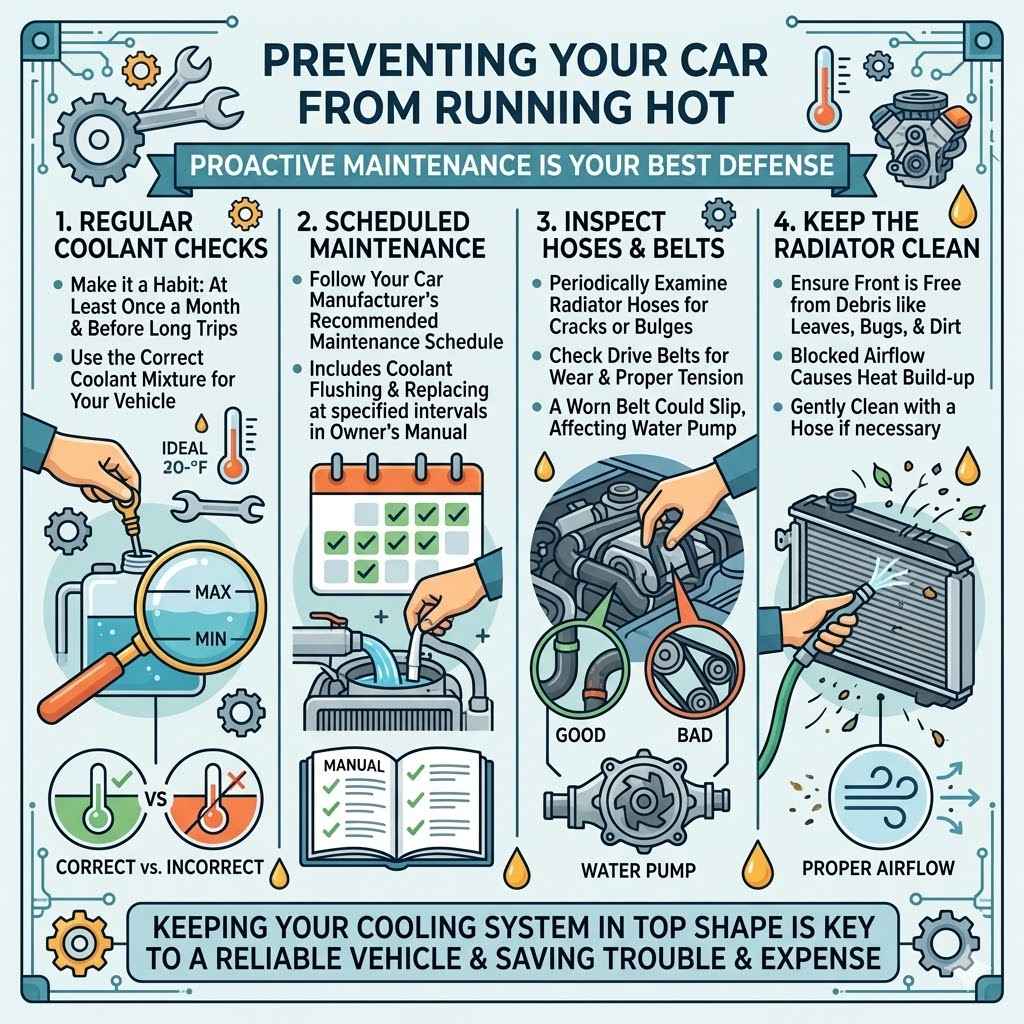
The best way to deal with a car running hot is to prevent it from happening in the first place. Regular maintenance and proactive checks can save you a lot of trouble and expense down the road. Keeping your cooling system in top shape is key to a reliable vehicle.
Regular Coolant Checks
Make it a habit to check your coolant level at least once a month, and especially before long trips. Use the correct coolant mixture for your vehicle.
Scheduled Maintenance
Follow your car manufacturer’s recommended maintenance schedule. This includes flushing and replacing the coolant at the intervals specified in your owner’s manual.
Inspect Hoses and Belts
Periodically examine your radiator hoses for cracks or bulges and check the drive belts for wear and proper tension. A worn belt could slip and affect the water pump’s operation.
Keep the Radiator Clean
Ensure the front of your radiator is free from debris like leaves, bugs, and dirt, which can block airflow. Gently clean it with a hose if necessary.
Frequently Asked Questions
Question: What is the most common reason a car overheats?
Answer: The most common reason a car overheats is a low coolant level in the cooling system. This can be due to leaks or simply not being topped up regularly.
Question: Can I drive my car if the temperature gauge is in the red?
Answer: No, it is not safe to drive your car if the temperature gauge is in the red. This indicates severe overheating and can cause significant engine damage.
Question: How often should I check my car’s coolant?
Answer: You should check your car’s coolant level at least once a month, and more frequently if you suspect a problem or before long drives.
Question: What kind of fluid should I use to top up my coolant?
Answer: You should use a 50/50 mixture of antifreeze (coolant) and distilled water. Never use plain tap water, as it can cause corrosion and boil at a lower temperature.
Question: Will a bad thermostat cause my car to run hot immediately?
Answer: A bad thermostat that is stuck closed will cause the engine to overheat relatively quickly because coolant cannot circulate to the radiator to be cooled.
Conclusion
Addressing why a car runs hot involves understanding key components like coolant, the thermostat, and the radiator. Simple checks like monitoring coolant levels and inspecting hoses can prevent minor issues from becoming major problems. Regular maintenance is your best defense against unexpected overheating.
Keep these tips in mind to ensure your car stays cool and reliable on every drive.