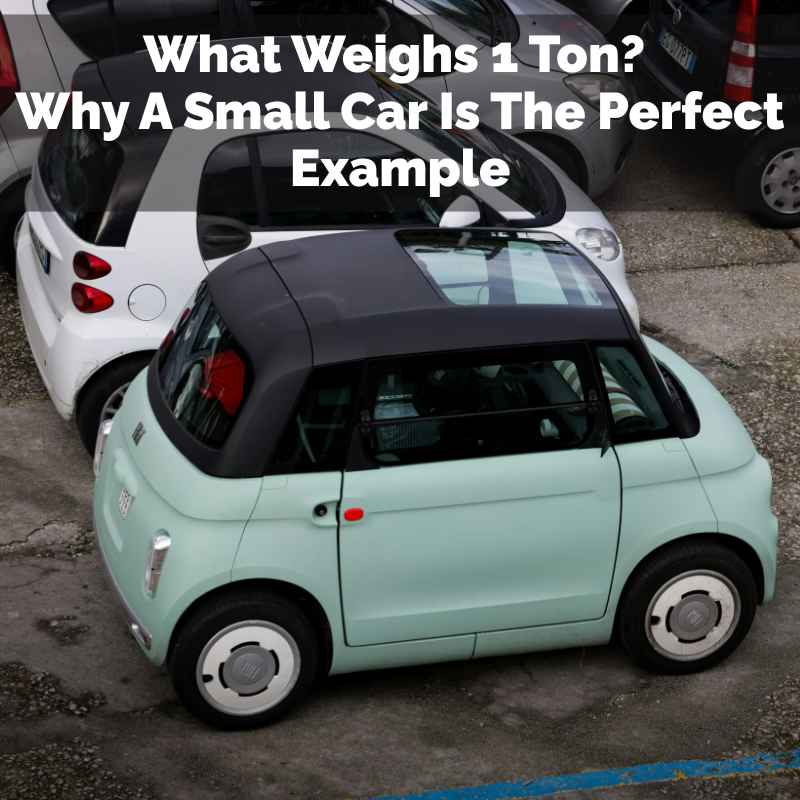
What Weighs 1 Ton? Why A Small Car Is The Perfect Example
Understanding this weight can help us picture size and capability better. It’s a common point of reference in everyday life and for many industries. Let’s break down this significant weight and see what fits the bill.
A ton is a unit of weight. In the United States, a ton usually means 2,000 pounds. This weight is equal to about 907 kilograms. A small car often weighs around this amount, making it a good example for understanding what a ton feels like. Many common items and vehicles can weigh a ton or more.
The Weight of a Ton Explained
The word “ton” can be a little confusing because different countries use different definitions. For us in the U.S., a ton is almost always 2,000 pounds. This is often called a short ton.
There’s also a long ton, used more in the UK, which is 2,240 pounds. And then there’s the metric ton, used in most of the world, which is 1,000 kilograms. That’s about 2,205 pounds. But when we’re talking about cars, trucks, or common objects in American settings, we mean 2,000 pounds.
So, 1 ton = 2,000 pounds. Think of it as a big pile of things. How much is 2,000 pounds? It’s like 20 bags of sugar, each weighing 100 pounds. Or it’s like 13 average men. It’s a solid chunk of weight.
Why a Small Car is the Perfect Example
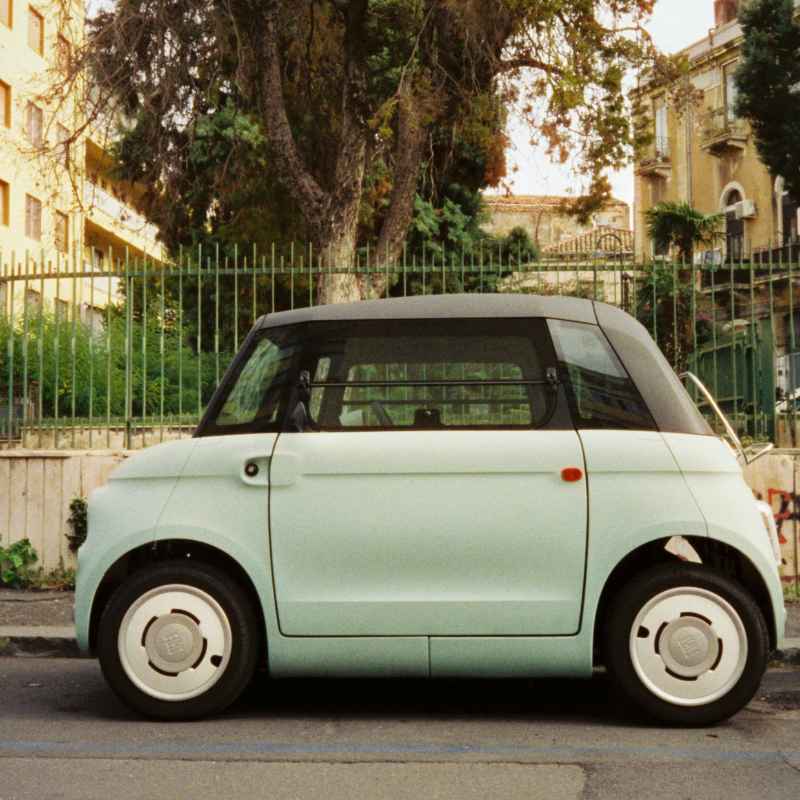
When people talk about weight, they often use a small car as an example. Why is that? Well, many popular compact cars and sedans fall right into that 1 ton range. Think about common cars like a Honda Civic or a Toyota Corolla. Many models of these cars weigh between 2,500 and 3,000 pounds.
Some might be a bit less, and some might be a bit more. But a smaller, lighter car, like a Honda Fit or a Mitsubishi Mirage, can be very close to the 2,000-pound mark. You can even find some very tiny, specialized cars that weigh under a ton.
This makes a small car a great way to visualize the weight. Most people have seen cars. They have a sense of their size and heft. Imagining a car sitting on a scale and reading “2,000 lbs” gives a real-world feel for that amount of weight. It’s not an abstract number anymore. It’s something tangible you can see and even imagine lifting (though you’d need a lot of help!).
Car Weight Categories
Compact Cars: Often weigh between 2,500 – 3,000 lbs (1.25 – 1.5 tons).
Mid-size Cars: Usually range from 3,000 – 3,500 lbs (1.5 – 1.75 tons).
Small SUVs/Crossovers: Typically start around 3,000 lbs and go up.
Full-size Sedans: Can easily be 4,000 lbs or more (2 tons).
1 Ton Trucks (Payload): These trucks are rated to carry 2,000 lbs in their bed. The truck itself weighs much more.
What Else Weighs 1 Ton?
Beyond cars, many other things can reach the 1 ton mark. It’s amazing what adds up. Let’s look at some common items and groups of items that might weigh around 2,000 pounds.
Common Items That Weigh About a Ton
A Piano: A grand piano can weigh between 500 to 1,200 pounds. So, two or three grand pianos could easily reach a ton.
A Small Shed: Depending on the size and materials, a pre-fabricated shed could weigh around 1,500 to 2,500 pounds.
A Large Refrigerator: Some commercial or very large residential refrigerators can push 500-1,000 pounds. You’d need a few of them.
A Small Tractor: Many sub-compact or garden tractors weigh between 1,500 and 2,500 pounds. That’s right around a ton.
A Horse: An average adult horse weighs about 1,000 pounds. So, two horses together would be a ton.
A Pallet of Concrete Mix: A standard pallet of concrete mix might have 40-50 bags, each around 50 lbs. That totals 2,000-2,500 pounds.
A Large Hot Tub: When filled with water, a large hot tub can weigh over 4,000 pounds (2 tons). But an empty, smaller one might be around 500-1000 lbs, so a couple could be a ton.
A Small Forklift: Some electric or compact forklifts can weigh just over a ton.
Understanding “One Ton” in the Trucking World
The term “one ton” is used a lot in the world of pickup trucks. When people say they have a “one-ton truck,” they usually aren’t talking about the truck’s total weight. They are talking about its payload capacity. Payload is the maximum weight a vehicle can carry.
So, a truck with a one-ton payload capacity can carry 2,000 pounds in its bed and cabin. This includes passengers, cargo, and anything else you load into it. The truck itself, its curb weight, will be much heavier, often 5,000 pounds or more.
Think of a Ford F-250 or a Ram 2500. These are often considered “heavy-duty” trucks. Their payload ratings can be 2,000 pounds or more. So, they fit the “one-ton” class for carrying ability.
It’s a bit like saying a suitcase can hold 50 pounds. The suitcase itself might weigh 5 pounds, but its capacity is 50 pounds. Truck ratings work similarly.
Truck Payload Classes (Approximate)
Half-Ton (e.g., F-150, Ram 1500): Payload around 1,500 – 2,000 lbs.
Three-Quarter Ton (e.g., F-250, Ram 2500): Payload around 2,000 – 3,000 lbs.
One-Ton (e.g., F-350, Ram 3500): Payload 2,000 lbs and up, often much more.
Note: These are general ranges. Specific models and configurations vary greatly.
Weight vs. Volume: What’s the Difference?
It’s important to remember that weight and volume are different. One ton of feathers would take up a huge amount of space. One ton of lead would fit into a much smaller box. So, when we think about what weighs 1 ton, we also need to consider the material.
For example, a small car is made of metal, plastic, and glass. These materials are relatively dense. So, a whole car fits within a reasonable volume for 2,000 pounds. Now imagine trying to gather 2,000 pounds of cotton balls! That would be an enormous fluffy pile.
This is why certain items might seem surprising to weigh a ton. A small shed, for instance, is mostly wood or metal panels. These materials are not as dense as a car’s engine block, but over the whole structure, the weight adds up.
Real-World Scenarios Where Ton Weight Matters
Understanding the weight of a ton isn’t just a fun fact. It has practical uses in many parts of our lives. From construction to moving house, knowing these weights helps avoid problems.
Construction and Building Materials
When building a house, materials are delivered by the ton. A bundle of lumber, a load of bricks, or a bag of cement all have specific weights. Contractors need to know how much their trucks can carry safely. They also need to know if the ground can support heavy loads, like a concrete mixer or a stack of materials.
A standard skid of drywall might weigh around 2,000 pounds. This is precisely 1 ton. So, a single pallet of drywall is a perfect example of a building material that hits that weight.
Moving and Transportation
When you’re hiring a moving company, they often charge based on weight or volume. Knowing the weight of furniture and appliances helps estimate the cost. A large, heavy piece of furniture, like an old solid wood wardrobe, might weigh 400-600 pounds. You’d need several such pieces to reach a ton.
Delivery trucks have weight limits too. A delivery driver needs to ensure they aren’t overloading their vehicle. Overloading can damage the truck, cause accidents, and lead to fines.
Home and Garden
Even in our own yards, we deal with weights that add up. A large bag of soil can be 40-50 pounds. So, 40-50 bags would make a ton. A load of gravel or mulch for landscaping can easily be several tons.
If you’re planning a DIY project, like building a stone patio, you’ll be ordering materials by the ton. Understanding what a ton of stone looks like, and how heavy it is to move, is crucial.
A Ton of Common Landscaping Materials
Gravel: About 1 cubic yard of gravel weighs 1.4 – 1.6 tons (2,800 – 3,200 lbs).
Mulch: About 1 cubic yard of mulch weighs 0.4 – 0.8 tons (800 – 1,600 lbs).
Sand: About 1 cubic yard of sand weighs 1.2 – 1.5 tons (2,400 – 3,000 lbs).
Pavers: A pallet of pavers can weigh anywhere from 1,800 lbs to over 4,000 lbs, often hitting the 1-ton mark.
What This Weight Means for Everyday People
For most of us, thinking about a ton is about context. When you see a “1 Ton Rating” on a trailer hitch, it means that hitch is designed to safely tow or support up to 2,000 pounds. If you’re buying a used piece of heavy equipment, its weight is a key specification.
It also helps when planning trips or moving large items. Knowing that a standard refrigerator might weigh 500 pounds means you’ll need at least two strong people, maybe a dolly, and possibly a ramp to move it.
If you’re helping a friend move a piano, and you know it’s around 800 pounds, you know that alone is almost half a ton! This requires careful planning, the right equipment, and a few extra pairs of hands.
The 1 ton mark is a common threshold for many things. It’s the point where things start getting very heavy to move by hand. It’s the capacity of many common vehicles for carrying loads. It’s a standard weight class for certain types of trucks.
When is a Ton NOT 2,000 Pounds?
While the 2,000-pound ton is standard in the U.S. for most everyday uses, it’s good to be aware of the other definitions. If you encounter information from other countries or in specific scientific or industrial contexts, the meaning can change.
Long Ton: Used in the UK and for certain maritime measurements. It equals 2,240 pounds. This is about 1016 kilograms.
Metric Ton (Tonne): Used worldwide in the metric system. It equals 1,000 kilograms. This is about 2,204.6 pounds.
So, if you see a weight mentioned, especially in international contexts, it’s worth double-checking which “ton” is being used. For most U.S. consumers, though, 2,000 pounds is the number you need to remember.
Weight Comparison: 1 Ton (US) vs. 1 Tonne (Metric)
US Ton: 2,000 pounds (907.18 kg)
Metric Tonne: 2,204.6 pounds (1,000 kg)
Difference: A metric ton is about 205 pounds heavier than a US ton.
Things to Check If You’re Moving Heavy Items
If you’re planning on moving something that you suspect is around a ton, or even just very heavy, there are a few things to consider. Safety is the most important aspect.
First, try to find out the exact weight. Check the item’s manual or specifications if it’s an appliance or piece of machinery. If it’s a vehicle, look up its curb weight. For building materials, the supplier should be able to tell you the weight per unit.
Next, assess how you will move it. Do you have the right equipment? This could mean a heavy-duty dolly, a furniture dolly rated for the weight, a furniture strap system, or even a small forklift or engine hoist if the item is particularly bulky or awkward.
Consider the path you’ll take. Are there stairs? Tight corners? Narrow doorways? These can make even lighter items incredibly difficult to move. For items weighing around a ton, these obstacles can be impossible to overcome without professional help.
Finally, get enough help. Never try to move something that heavy by yourself. Ensure everyone involved knows the plan and their role. Communication is key to preventing accidents. If in doubt, always hire professionals. They have the experience and equipment to handle heavy lifting safely.
The Takeaway: What Weighs 1 Ton?
So, what weighs 1 ton? In the U.S., that’s 2,000 pounds. A small car is a great way to picture this weight because many of them are in that general range. But it’s also the weight of many other things, from construction materials like drywall to large appliances and even two horses.
Remember, “one ton” in truck terms usually refers to payload capacity, not the truck’s own weight. This unit of weight is a practical measure that impacts our decisions in building, moving, and understanding the world around us. Keeping the 2,000-pound figure in mind helps translate abstract numbers into concrete realities.

Frequently Asked Questions
Is a ton always 2,000 pounds?
In the United States, a ton most commonly refers to 2,000 pounds, known as a short ton. However, other definitions exist, like the long ton (2,240 pounds) and the metric ton or tonne (1,000 kilograms, about 2,205 pounds). For everyday U.S. contexts, 2,000 pounds is the standard.
How much does a typical car weigh?
Typical cars vary widely. Compact cars often weigh between 2,500 to 3,000 pounds. Mid-size cars are usually between 3,000 to 3,500 pounds. Larger sedans and SUVs can weigh 4,000 pounds or much more. Some very small or lightweight cars can be close to or even under 2,000 pounds.
What is a “1-ton truck” referring to?
When people talk about a “1-ton truck,” they usually mean its payload capacity, which is the maximum weight it can safely carry. This capacity is typically around 2,000 pounds. The truck itself, its curb weight, is much heavier, often 5,000 pounds or more.
Can 1 ton of feathers weigh the same as 1 ton of rocks?
Yes, 1 ton of feathers weighs exactly the same as 1 ton of rocks. A ton is a measure of weight. However, 1 ton of feathers would take up a vastly larger amount of space (volume) than 1 ton of rocks because feathers are much less dense than rocks.
What are some common household items that weigh close to a ton?
While few single household items weigh a full ton, several combined could. For example, two large grand pianos could reach a ton. A very large, heavy-duty commercial refrigerator might be around 500-1,000 pounds. So, two or three of those could equal a ton. A standard pallet of drywall is often right around 2,000 pounds.
How heavy is a cubic yard of concrete?
A cubic yard of concrete typically weighs between 3,500 to 4,500 pounds. This is between 1.75 and 2.25 tons. So, a single cubic yard of concrete is heavier than one ton.
What is the difference between a short ton and a metric ton?
A short ton is used in the U.S. and equals 2,000 pounds. A metric ton, also called a tonne, is used in most of the world and equals 1,000 kilograms, which is about 2,204.6 pounds. The metric ton is heavier than the U.S. short ton.
Conclusion
Understanding what weighs a ton helps us grasp scale and capacity better. From the familiar weight of a small car to the tons of material moved in construction, this benchmark helps us visualize significant mass. It’s a practical measure for everyday life.
Products related to this article
Sponsored / affiliate links. As an Amazon Associate I earn from qualifying purchases. I may earn additional commission from eligible campaigns.