Why Are My Car Windows Wet on the Inside in Winter?
Inside windows that are wet or frosty in winter usually mean humid cabin air is condensing on cold glass. If it returns after defrost, suspect trapped moisture. Persistent dampness, a sweet odor, or wet carpets can point to a leak or heater core. Ignoring it can fog your view, ice the glass, and soak the interior. This guide shows how to tell normal condensation from trapped humidity and an actual water or coolant leak.
This guide is part of our Winter Car Care: The Complete Cold-Weather Guide series.
How to tell if it’s normal condensation


- Finds cooling system leaks before repairs get bigger
- Vacuum refill helps remove trapped air pockets
- Includes many adapters for broader vehicle coverage
Warm, moist air turns to droplets when it hits cold glass. In winter, that happens fast on a windshield or side window, and extreme cold can turn the same moisture into frost on the inside. Fog that clears with heat and fresh air is often normal. Fog that keeps coming back may need a closer look.
What the first signs tell you
The pattern matters more than the fog itself. Clear morning fog after an overnight park often points to normal condensation, while fog that comes back after defrost suggests trapped humidity, recirculation, or a cabin airflow problem. Wet carpet, a greasy film, or a sweet smell points away from simple condensation.
Picture a sedan left outside overnight after a rainy commute. The inside of the windshield is foggy at 7 a.m., then clears once defrost and fresh air run for a few minutes. That points to moisture in the cabin air, not necessarily a leak.
A common winter mistake is assuming every foggy side window means the glass is leaking, when the real cause is moist cabin air condensing on a cold surface. Fog that shows up only after parking overnight is a different clue from fog that returns while driving with the heater on. The second case usually means the cabin is still holding too much moisture or not getting enough dry airflow.
Inside-window diagnosis table
| Symptom | Likely cause | Quick test | Next step |
|---|---|---|---|
| Clear morning fog | Normal condensation from overnight humidity | Run defrost with heat and fresh air; see if it clears within a few minutes | Dry the cabin and remove moisture sources |
| Fog returns after defrost | Recirculation, damp cabin air, or reduced airflow | Switch recirculation off and watch whether fog fades faster | Use fresh air, inspect the cabin air filter, and dry wet items |
| Greasy film plus sweet smell | Heater core leak | Check whether the smell gets stronger with the heater running | Book a mechanic inspection promptly |
| Wet carpet or pooling water | Water leak from seals, drains, or sunroof area | Lift floor mats and press the carpet padding for hidden dampness | Inspect door seals, window seals, and trunk or cargo-area leaks |
| Fog only when parked | Cabin humidity rising while the car sits | Look for wet boots, snow, clothing, or mats left inside | Remove moisture sources and air the cabin out |
Why does the fog keep coming back?
Repeated fog usually means the cabin air is staying humid or the airflow is recycling that humid air instead of replacing it. Recirculation mode keeps the same humid air moving around inside the cabin. Wet mats, snow-covered boots, and damp clothing can keep feeding moisture into the air even after the glass clears.
Recirculation mode traps humid air
Recirculation is useful for cooling quickly in some weather, but it is a bad choice for clearing winter fog. It keeps moisture in the cabin instead of flushing it out with drier outside air. If fog returns after you press defrost, check whether recirculation is still on.
Wet mats, boots, and clothing keep adding moisture
Wet shoes, jackets, towels, and floor mats all add moisture to the cabin air. That moisture builds every time someone gets in with snow on their clothes or slush on their boots. If the fog is worse after school drop-off, shopping, or a rainy commute, the source may be right under your feet.
Suppose two passengers climb in with snow-covered boots and damp coats, then the cabin fogs again ten minutes later. The car may not have a leak at all. It may just be holding more water than the defogging system can remove fast enough.
Cabin air filter restriction can slow airflow
A clogged cabin air filter can reduce defogging performance because it limits how much air reaches the glass. That does not create moisture by itself, but it can make a small humidity problem feel much worse. If the fan seems weak and fog clears slowly, the filter belongs on the checklist.
How do you clear the windows fast?
Use defrost, heat, and dry air together. Most vehicles have a windshield defrost setting designed to clear foggy windows, and turning on air conditioning helps pull moisture from the air. Fresh outside air works better than trapped cabin air, and some cars automatically switch on A/C, fresh air, and higher fan speed when defrost is pressed.
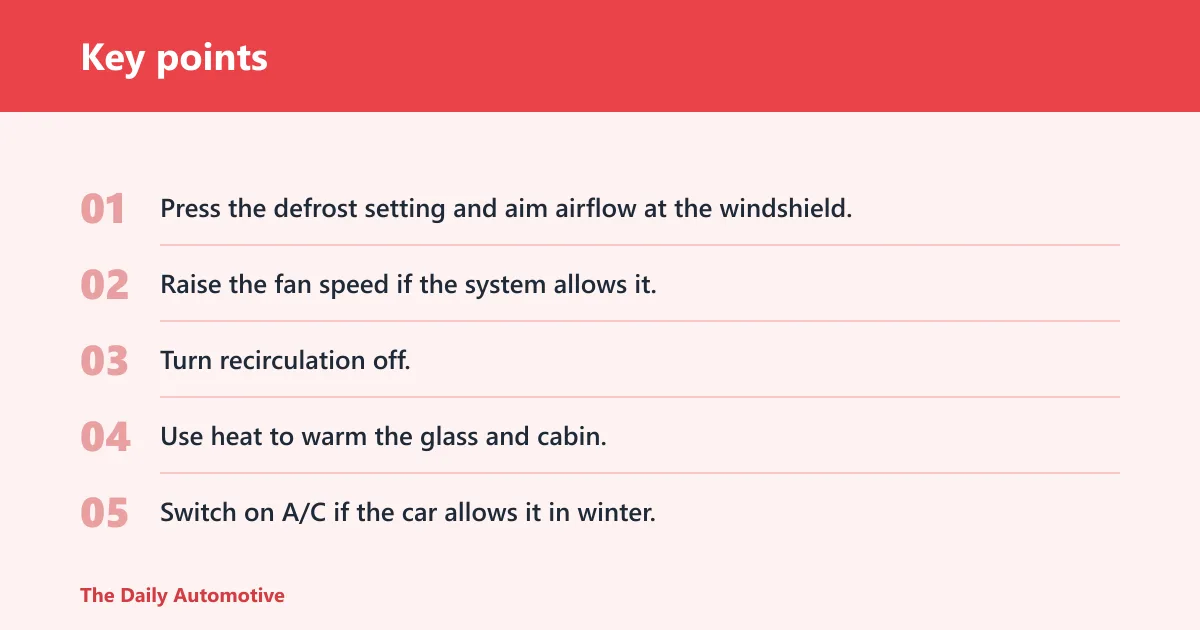
- Press the defrost setting and aim airflow at the windshield.
- Raise the fan speed if the system allows it.
- Turn recirculation off.
- Use heat to warm the glass and cabin.
- Switch on A/C if the car allows it in winter.
- If conditions are safe, crack a window slightly to exchange humid air.
Why heat and A/C work together
Heat warms the glass, while A/C dries the air. That combination is more effective than heat alone, because warm air can hold more moisture before it condenses. If the inside of the glass is already wet, drying the cabin air matters as much as warming the windshield.
Why fresh air helps more than recirculation
Fresh outside air replaces humid cabin air with drier air in many winter conditions. Recirculation keeps the same moist air moving around, so it can keep fogging the glass even when the fan is running. If the windows clear and then fog again, the mode setting deserves attention first.
Could a leak be feeding the moisture?
Yes. If the car stays damp, the problem may be water entering the cabin rather than simple condensation. Door and window seals can let rain or snow into the car, and wet floor mats or carpets can keep releasing moisture long after the outside weather has changed.
Door and window seals
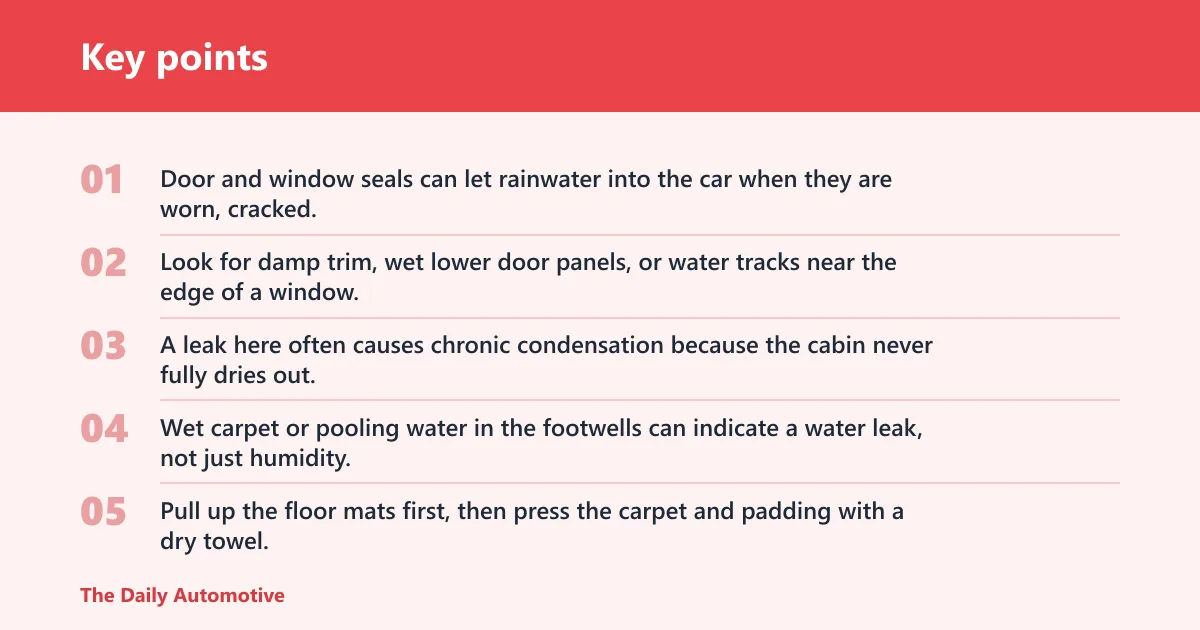
Door and window seals can let rainwater into the car when they are worn, cracked, or out of place. Look for damp trim, wet lower door panels, or water tracks near the edge of a window. A leak here often causes chronic condensation because the cabin never fully dries out.
Wet floor mats and carpets
Wet carpet or pooling water in the footwells can indicate a water leak, not just humidity. Pull up the floor mats first, then press the carpet and padding with a dry towel. If the padding feels heavy or cool and damp, the source may be hidden under the surface.
Trunk and cargo-area leaks
Water in the trunk can move forward under trim panels or carpet, especially in hatchbacks and SUVs. Check the spare tire well, cargo floor, and rear corner trim for dampness. A leak back there can still show up as fog on the windshield the next morning.
When is a heater core the likely cause?
A heater core becomes a strong suspect when the windows fog repeatedly and the cabin also smells sweet or leaves a greasy film on the glass. A damaged heater core can create a sweet smell inside the cabin. That is not simple condensation, and it needs mechanic-level inspection.
Sweet smell and greasy film
A greasy film with a sweet smell can indicate a leaking heater core. The film often looks harder to wipe off than ordinary fog residue, and the smell may be strongest when heat is on. If both signs show up together, do not keep guessing at vents or weather patterns.
Coolant loss and constant fogging
Coolant loss, unexplained moisture inside, and fog that returns regardless of which vents are used can point toward a more serious problem. The cabin can fog because coolant vapor is entering the air stream, not because people breathed on the glass. That is the point where diagnosis should stop being a winter-care chore and start being a repair issue.
Why this needs a mechanic
Heater core work is buried in the heating and ventilation system, so it is not a simple cleanup fix. If the smell is sweet, the film is greasy, or coolant level is dropping, the safe next step is a mechanic inspection. Continued driving can leave the interior damp and the defrost system unreliable.
How to check the car in the right order
Start with the easiest moisture sources and move toward hidden leaks. That keeps you from replacing parts you do not need. Check the cabin first, then the floor, then the seals, and finally the heater core clues.
- Remove wet boots, jackets, towels, and floor mats.
- Check whether recirculation is on.
- Inspect the cabin air filter if fogging keeps returning.
- Lift floor mats and feel the carpet and padding.
- Look for damp door trims, window edges, and trunk carpet.
- Watch for sweet smell or greasy film after using heat.
Frequently asked questions
Why are my car windows wet inside?
Inside windows usually get wet when humid cabin air touches cold glass and condenses. Breathing, wet clothing, snow, and damp floor mats raise the moisture level. If the fog clears with defrost but returns later, look for recirculation, a weak cabin filter, or a hidden leak.
What causes moisture inside car windows?
Common causes include passengers breathing, wet shoes, jackets, towels, and floor mats, plus rain or snow brought into the cabin. Dirty glass can make condensation worse because grime gives moisture something to cling to. Poor airflow and recirculation can keep the moisture from leaving.
Why is there water on the inside of my windows in winter?
Cold glass encourages condensation when the cabin air is warm and damp. In very cold weather, that moisture can freeze into frost on the inside. If the problem is heavier than a light morning film, inspect the floor, mats, seals, and heater core clues.
Why does condensation keep coming back after I defog the windows?
Repeated fog usually means the cabin is still humid or the air is not being exchanged well enough. Recirculation mode traps humid cabin air, and a clogged cabin air filter can slow airflow. If the fog returns with a sweet smell or wet carpet, suspect a leak or heater core.
Could wet carpets or a heater core cause inside-window moisture?
Yes. Wet carpet or pooling water in the footwells can add a lot of moisture to the cabin air, especially overnight. A leaking heater core can also fog the windows and leave a sweet smell or greasy film. Those signs call for a mechanic, not just another pass on defrost.
Why do my car windows fog up inside in winter?
Winter makes the glass colder, so the same amount of cabin moisture condenses faster. Breathing is one of the main causes of condensation inside a car, and the effect gets worse when the heater is on but recirculation is left engaged. Defrost, heat, and fresh air usually work best together.
Products related to this article
Sponsored / affiliate links. As an Amazon Associate I earn from qualifying purchases. I may earn additional commission from eligible campaigns.