Why Do My Car Fuses Keep Blowing? Causes And Quick Fixes
This article will guide you through the common reasons why car fuses blow. We’ll explore electrical shorts, overloads, and faulty components. You’ll learn how to identify potential issues and understand when it’s time to call in a professional. Our goal is to help you feel more confident about your car’s electrical system.
Understanding Your Car’s Fuses
Think of fuses as tiny guardians for your car’s electrical parts. Each fuse is a small wire designed to melt and break the circuit if too much electricity flows through it. This prevents more expensive or dangerous damage, like a fire.
When a fuse blows, it’s telling you something isn’t right with the electrical system it’s protecting.
Cars have many electrical systems. Things like your headlights, radio, power windows, and even the engine computer all rely on electricity. Each of these systems has its own fuse.
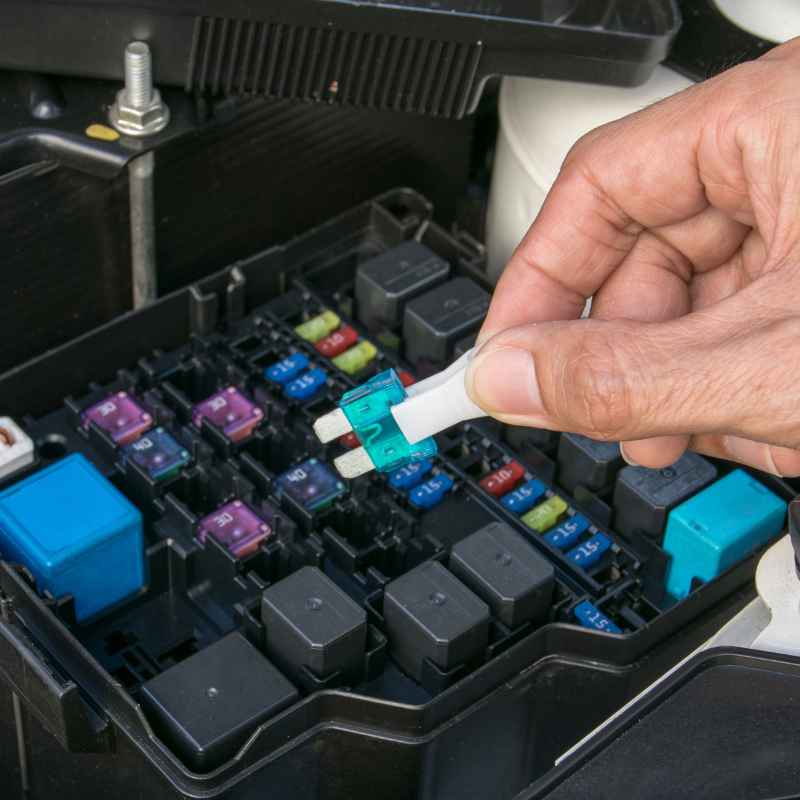
These fuses are usually located in fuse boxes found under the dashboard or in the engine bay. Your car’s manual will show you where they are and what each fuse does.
The Job of a Fuse
A fuse has a specific job. It protects a circuit from too much current. This current could come from a few different things.
Sometimes, it’s just too many things running at once. Other times, it’s a sign of a deeper problem. The fuse is the sacrificial lamb here.
It breaks the circuit to save the wires and components.
Different fuses have different ratings. You’ll see numbers on them, like 10A or 15A. This number tells you how much current the fuse can handle before it blows.
It’s super important to always
Common Culprits: Why Fuses Blow
Several things can cause a fuse to blow. Most of them fall into a few main categories. Knowing these categories helps you think about what might be happening in your car.
It’s like being a detective for your vehicle’s electrical system. You’re looking for clues.
The most frequent reasons are electrical shorts, circuit overloads, and faulty components. We’ll break down each of these. Understanding these can save you a lot of stress and money down the road.
It’s about prevention and knowing what to look for.
1. Electrical Shorts
An electrical short is probably the most common reason for a fuse blowing suddenly. This happens when the electrical current takes an unintended path. Usually, electricity flows from the positive side of the battery, through the circuit, and back to the negative side.
A short circuit bypasses the intended path.
Imagine a wire that is supposed to be insulated. If that insulation gets damaged, maybe from rubbing against metal or being pinched, the wire’s metal can touch another metal part. This can be another wire, or even the car’s frame.
When this happens, the electricity has a very easy path to follow, and a lot of it flows very quickly. This surge is too much for the fuse, and it blows.
How Shorts Happen
Damage to wiring is a big cause. This damage can happen over time. Wear and tear, heat, and movement can break down insulation.
Rodents can also chew through wires, creating shorts. Sometimes, a repair job might not have been done perfectly. A loose wire or a poorly connected component can also lead to a short.
A common place for shorts is around moving parts. Think about things like the trunk lid, doors, or steering column. Wires that go through these areas can get pinched or rubbed over time.
This can expose the metal and cause a short. You might notice the problem only happens when you do something specific, like opening the trunk or turning the steering wheel.
2. Circuit Overloads
A circuit overload happens when too many electrical devices are drawing power from the same circuit. Each circuit is designed to handle a certain amount of electrical load. If you add too many things to that circuit, or if the devices themselves start using more power than they should, the fuse can blow.
Think of it like trying to plug too many appliances into one wall outlet. Eventually, the circuit breaker in your house will trip. Your car’s fuse does the same thing.
It protects the wiring from overheating. Overloads are often less sudden than shorts but can still cause a blown fuse.
Examples of Overloads
A common example is adding aftermarket accessories. If you install a powerful sound system or extra lights without properly upgrading the wiring or adding a new circuit, you could overload the existing one. Maybe you have a phone charger, a dashcam, and a GPS all plugged into one cigarette lighter adapter.
If that adapter is on a circuit meant for just one device, it could blow the fuse.
Sometimes, a component itself can start to draw more power than it should. This isn’t quite a short, but it’s an increase in resistance that makes the component work harder. This increased workload means it’s drawing more current.
The fuse sees this as an overload and blows to protect the system.
3. Faulty Components
Sometimes, the problem isn’t the wiring or the load, but the device or component itself. If a part that uses electricity fails in a way that causes it to draw too much power, it can blow a fuse. This is a bit like the component going haywire and demanding more electricity than it’s supposed to.
This can happen with many parts. For example, a faulty power window motor might start to draw excessive current as it struggles to move the window. An old, failing radio could develop an internal short.
Even a simple light bulb can sometimes fail in a way that causes a fuse to blow.
Component Failure Scenarios
Let’s say your power seats stop working, and the fuse for the power seats blows. It could be the switch, the motor for the seat, or the wiring connected to them. If the motor is starting to seize up, it will require more power to move.
The fuse will blow to stop it from damaging the wiring or the car’s computer.
Another example is an alternator. If the alternator starts to fail, it might draw too much current from the battery and charging system. This can sometimes cause fuses related to the charging system to blow.
You might also notice other symptoms like dimming headlights or a battery warning light.
Quick Fuse Check: What To Look For
Visual Inspection: When you pull out a blown fuse, look closely at the metal strip inside. If it’s broken or looks melted, it’s definitely blown. Compare it to a known good fuse of the same type.
Amperage Rating: Always match the amperage rating (the number like 10A, 15A, 20A) of the blown fuse. Never go higher!
Fuse Box Map: Refer to your car’s owner’s manual. It has a diagram showing which fuse controls which component. This is crucial for diagnosis.
My Own Fuse Frustration Story
I remember this one time, a few years back. It was a sweltering August afternoon, and I was heading out for a client meeting. My car’s air conditioning suddenly died.
Not just weak, but completely off. Then, maybe five minutes later, the radio cut out too. My dashboard lights flickered.
Panic started to set in. I pulled over, heart pounding.
I knew it had to be an electrical issue. My first thought was the fuse. I popped the hood, found the fuse box, and flipped through my manual.
The AC and radio were on the same circuit. That felt odd, but okay. I found the fuse, pulled it out, and sure enough, the little metal strip was broken.
I had a spare of the right amperage in my glove box, so I popped it in.
Success! The AC and radio came back to life. I breathed a sigh of relief and continued on my way, slightly sweaty but relieved.
About a week later, the same thing happened. AC and radio gone. Another blown fuse.
This time, I was more annoyed than panicked. Was I just destined to keep buying fuses?
I decided to dig deeper. I remembered seeing a wire that looked a bit frayed near the passenger side footwell, tucked under the carpet. It was for the interior lights, I think.
But could it affect the AC and radio? I checked that wire more closely. It had been pinched, and the insulation was worn through.
It was touching the metal frame of the car.
This was causing a partial short. It wasn’t always bad enough to blow the fuse immediately, but it was stressing the circuit. Sometimes, when the AC compressor kicked in, or when I hit a bump, it would draw just enough extra power to blow that fuse.
It took me a few blown fuses to realize the initial problem wasn’t just a random fuse failure. It was a hidden wiring issue.
Common Circuits Sharing Fuses
Why share? Car manufacturers sometimes group less critical or related accessories on the same fuse to save space and wiring complexity. It’s designed to work within limits.
- Interior Lights & Radio: Often share a fuse.
- Power Windows & Sunroof: Can sometimes be on the same circuit.
- Accessory Power (Cigarette Lighter): May power multiple outlets or charging ports.
Note: Critical systems like the engine computer, airbags, or anti-lock brakes usually have their own dedicated fuses.
Where Problems Hide: Real-World Scenarios
Understanding the general causes is one thing. Seeing how they play out in real cars helps you connect the dots. Electrical issues can be sneaky.
They often appear when you least expect them, or when you do something specific.
The environment your car lives in, your daily habits, and even how the car was designed all play a role. Let’s look at some common places these problems like to hide.
Wiring Damage Locations
As I mentioned in my story, wiring is often the culprit. Look in places where wires bend, flex, or rub. This includes:
- Door Jambs: Wires pass through these areas. Repeated opening and closing can wear down insulation over time.
- Engine Bay: Wires are exposed to heat, moisture, and vibration. Look for cracked or brittle insulation.
- Under the Dashboard: Wires can be pinched by seat rails, pedals, or other components.
- Trunk Area: Similar to door jambs, wires can get stressed when the trunk is opened and closed.
Aftermarket Accessories and Modifications
Adding things to your car that weren’t there from the factory can be a common source of trouble. While many installers do great work, sometimes corners are cut. Or, the added load simply exceeds what the original wiring was designed for.
- Stereo Systems: Upgraded speakers and amplifiers can draw a lot more power.
- Lighting: Extra headlights, fog lights, or interior LEDs can overload circuits.
- Remote Starters/Alarms: Complex wiring can sometimes interfere with existing circuits.
- Phone Chargers/Adapters: Cheap or overloaded adapters can cause issues.
Always ensure any new accessory is installed correctly and doesn’t overload existing circuits. It’s best to have a professional do this work.
Moisture and Corrosion
Water is an enemy to car electronics. If your car has been in heavy rain, floods, or has a water leak, moisture can get into electrical connectors and fuse boxes. This can cause corrosion.
Corrosion creates resistance. This resistance can make components draw more power. It can also create false connections or short circuits.
You might notice that issues appear after a car wash or a rainy spell. Look for green or white powdery buildup on metal electrical contacts.
Contrast Matrix: Normal vs. Concerning Fuse Behavior
| Characteristic | Normal Fuse Behavior | Concerning Fuse Behavior |
|---|---|---|
| Frequency of Blowing | Rarely blows, only when a specific component fails catastrophically. | Blows repeatedly, even with new fuses. Affects multiple unrelated systems. |
| Component Affected | A single, specific component stops working. | Multiple accessories or systems fail simultaneously. |
| Timing of Blow | When the component is activated or under specific stress. | Randomly, or immediately after replacing the fuse. |
| Other Symptoms | None, other than the component not working. | Smoke, burning smell, flickering lights, battery warnings, unusual noises. |
What This Means for Your Car
When a fuse blows, it’s a symptom. It’s your car’s way of saying, “Hey, something’s wrong here!” It’s rarely just a faulty fuse itself that causes repeat blowing. The fuse is just the messenger.
The real problem is usually upstream.
Understanding when it’s normal and when to worry is key. This helps you decide whether you can fix it yourself or if it’s time to seek professional help. Don’t ignore persistent blown fuses.
When is a Blown Fuse Normal?
A single blown fuse that protects a specific component is often normal. For example, if your dome light suddenly stops working and the fuse for the dome light is blown, it could mean the light bulb itself failed. Or maybe a wire leading to it got shorted out.
If you replace the fuse and the light works, and it doesn’t blow again, then it was likely a one-off event. This is the ideal scenario. It’s a sign the fuse did its job to protect the system.
When Should You Worry?
You should definitely worry if:
- Fuses blow repeatedly: If you
- Multiple fuses blow: If several different fuses blow around the same time, it could indicate a larger electrical system issue, perhaps with the alternator or a main power distribution point.
- You smell burning or see smoke: This is a serious warning sign. Stop driving immediately and have the car towed to a mechanic.
- The problem affects critical systems: If fuses for brakes, steering, engine control, or airbags are blowing, it’s a safety hazard.
These situations mean there’s likely a short circuit, a significant overload, or a component failure that needs immediate attention.
Simple Checks You Can Do
Before calling a mechanic, you can do a few simple checks:
- Check the fuse rating: Make sure you are using the correct amperage fuse.
- Inspect the fuse visually: Look for breaks in the metal strip.
- Check obvious wiring: Look for any visible damage to wires, especially in easily accessible areas.
- Disconnect aftermarket accessories: If you recently installed something, try disconnecting it to see if the fuse stops blowing.
If these simple checks don’t reveal the problem, it’s time to consider professional help.
Quick Scan: Troubleshooting Flowchart
Start: Fuse blows.
Step 1: Identify the blown fuse and its circuit using the owner’s manual.
Step 2: Visually inspect the fuse. Is the metal strip broken?
- If Yes:
- If No (unlikely if it blew): The fuse might be weak or faulty. Replace anyway.
Step 3: After replacing, does the component work? Does the fuse blow again?
- If it works and the fuse stays intact: Likely a one-off issue. Monitor.
- If it blows again immediately or soon after: Proceed to Step 4.
Step 4: Look for obvious wiring damage on the affected circuit. Check for shorts to ground or between wires.
- If damage is found: Repair or replace the damaged wire.
- If no obvious damage: Consider a faulty component or a hidden wiring issue.
Step 5: If the problem persists, seek professional diagnosis. (Faulty component, hidden short, etc.)
When to Call a Professional Mechanic
While simple fuse replacement is a DIY job, complex electrical issues are not. Modern cars are intricate systems. Diagnosing electrical problems requires specialized tools and knowledge.
If you’ve replaced a fuse and it blows again, it’s time to call it. Especially if you’re not comfortable poking around electrical systems. A mechanic has tools like multimeters and circuit testers that can pinpoint shorts and faulty components much faster and more accurately than you can.
A mechanic can also identify problems you might miss. These could be internal component failures, intermittent shorts that only show up under specific conditions, or issues with the car’s computer modules. Safety is always the priority, and it’s better to get it right than risk more damage or a dangerous situation.
Conclusion
Seeing your car fuses blow can be worrying. But by understanding the common reasons – shorts, overloads, and faulty parts – you can approach the problem with more confidence. Remember, the fuse is a protector.
When it blows, it’s doing its job.
Pay attention to your car’s symptoms. Do simple checks if you feel comfortable. But don’t hesitate to call a trusted mechanic when the problem seems bigger than a simple fuse replacement.
Keeping your car’s electrical system healthy keeps you safe and your ride running smoothly.
Products related to this article
Sponsored / affiliate links. As an Amazon Associate I earn from qualifying purchases. I may earn additional commission from eligible campaigns.