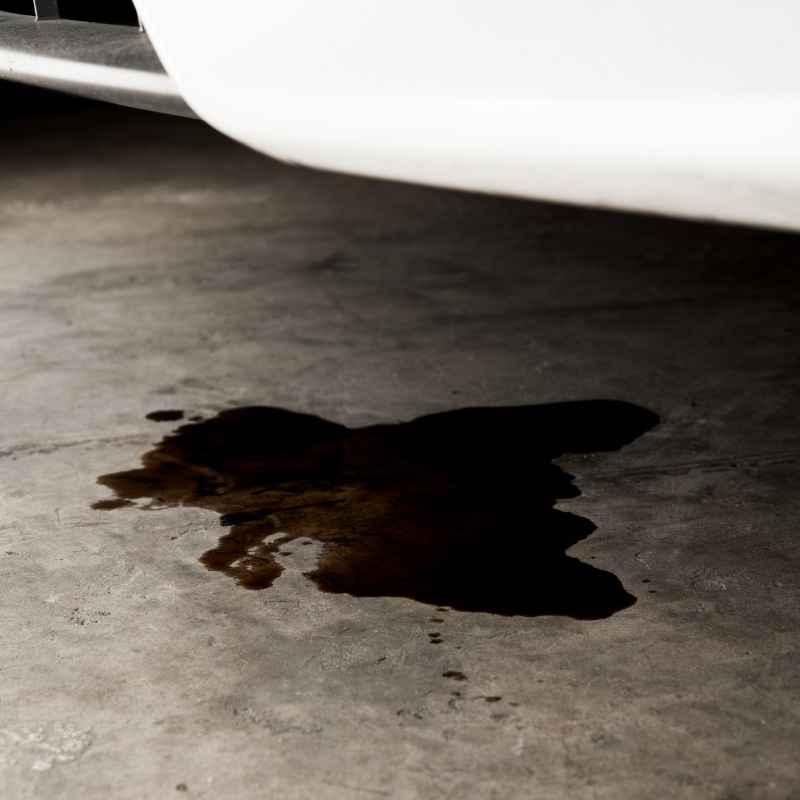
How to Tell What’s Leaking From Your Car (Quick Guide)
Leaking from your car can be alarming, but you can often identify the problem just by looking at the fluid’s color and texture. This guide will help you quickly diagnose common car leaks so you know whether to head to a mechanic or simply top off a fluid.
Simply put, you can identify most car leaks by placing a clean piece of cardboard under your vehicle overnight. The color, consistency, and location of the stain tell you exactly which fluid is leaking, from engine oil and coolant to transmission fluid and brake fluid.
Key Takeaways
- Color is your first clue: Brown/black means oil, green/orange/pink means coolant, red means transmission fluid, and clear/amber means brake fluid.
- Texture matters too: Oily fluids (oil, transmission fluid) feel slick, while water-based fluids (coolant, windshield washer fluid) feel thin.
- Location on the ground helps: Front-center often means coolant or oil, while rear leaks point to the differential or fuel system.
- Never ignore brake fluid or gasoline leaks — these are immediate safety hazards that require a tow truck.
What Are the Most Common Car Fluid Leaks?
Every car uses several fluids to operate safely. When one of these fluids escapes, it leaves a tell-tale stain. The most common leaks involve engine oil, coolant, transmission fluid, power steering fluid, brake fluid, and windshield washer fluid.
According to the Car Care Council, 74% of vehicles on the road have at least one under-inflated tire or fluid leak that needs attention. Knowing the basics helps you catch problems early before they become expensive repairs.
Here is a quick overview of the main fluids and their typical colors:
| Fluid | Typical Color | Common Leak Location |
|---|---|---|
| Engine Oil | Brown / Black | Front-center under engine |
| Coolant | Green / Orange / Pink | Front-center near radiator |
| Transmission Fluid | Red / Pink | Middle of vehicle |
| Brake Fluid | Clear / Amber | Near wheels or rear axle |
| Power Steering Fluid | Red / Amber / Clear | Front driver side near steering rack |
| Windshield Washer Fluid | Blue / Green / Clear | Front bumper area |
This table gives you a fast reference when you spot a puddle under your car. Match the color to the fluid, then check the location to confirm.
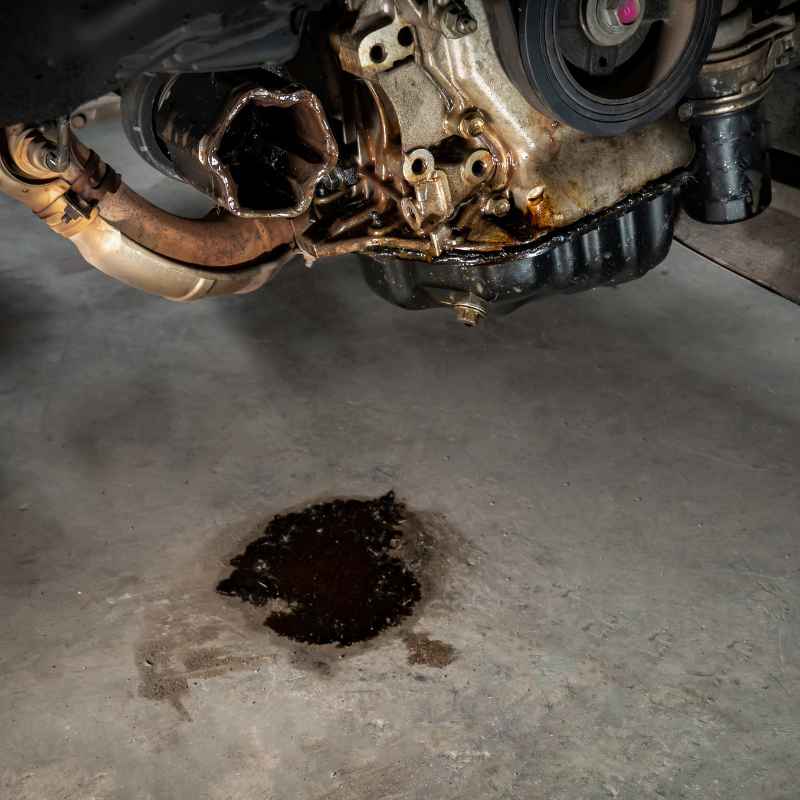
How to Identify a Leak by Color and Texture
Your sense of sight and touch are your best tools for identifying what is leaking from your car. Each fluid has a distinct color and texture, and these characteristics rarely lie.
Here is a detailed breakdown of each fluid’s signature traits:
- Engine oil: Brown to black, feels slippery and thick. Smells like petroleum. It leaves a dark, greasy stain that does not evaporate quickly.
- Coolant (antifreeze): Bright green, orange, or pink fluorescent color. Feels watery but slightly slippery. Smells sweet like syrup or candy. This is a strong clue.
- Transmission fluid: Red or pinkish when fresh, turning darker brown over time. Feels thin and oily. It has a distinct petroleum smell, slightly sweeter than engine oil.
- Brake fluid: Clear to amber, thin and watery. Feels similar to vegetable oil. It does not have a strong smell but can damage painted surfaces immediately.
- Power steering fluid: Red or amber, similar in texture to transmission fluid but usually thinner. It leaks near the front driver side area.
- Windshield washer fluid: Blue, green, or clear. Very watery and leaves no oily residue. Smells like alcohol or detergent.
- Gasoline: Clear with a rainbow sheen. Smells unmistakably like fuel. It evaporates quickly and is a serious fire hazard.
Important: If you suspect a gasoline or brake fluid leak, do not drive the car. Both pose immediate safety risks. Call a tow truck instead.
Step 1: Position Your Car and Gather Supplies
Before you can identify the leak, you need a clean workspace. Pull your car onto a dry, level section of your driveway or garage floor. Park it in the same spot you have been parking to see fresh drips.
Gather these simple tools:
- A large piece of white cardboard or an old white sheet
- A flashlight with good battery life
- Clean paper towels or a white rag
- Gloves (optional but helpful)
- A phone camera to take photos of the stain
Place the cardboard or sheet under the area where you suspect the leak. Leave it overnight or for at least 6-8 hours. This gives the leak time to accumulate and create a visible stain.
Do not park over leaves, dirt, or gravel. These surfaces absorb the fluid and make identification nearly impossible. A clean, hard surface is essential.
Step 2: Check the Color and Location of the Stain
After several hours, remove the cardboard and look at the stain. The color tells you the fluid type. The location on the cardboard tells you roughly where the leak originates on the vehicle.
Use this simple location guide:
- Stain under the front half of the car: Likely engine oil, coolant, or power steering fluid. These components sit in the front engine bay.
- Stain under the middle of the car: Likely transmission fluid. The transmission sits under the center tunnel area.
- Stain under the rear half of the car: Likely differential oil (rear axle), fuel from the gas tank, or brake fluid from the rear lines.
- Stain near the driver or passenger door: Could be brake fluid from a caliper or clutch fluid if you own a manual transmission car.
Match the color from your stain to the table in the previous section. That gives you an immediate answer on what is leaking. Take a photo for reference before you clean it up.
Step 3: Touch the Fluid and Smell It
Your fingers and nose provide two more clues. Wear gloves if you prefer, but a small touch is safe for most fluids. Rub the fluid between your thumb and index finger to gauge its texture.
- Oily and thick: Engine oil or gear oil. Engine oil feels slippery and leaves a residue that takes effort to wash off. Gear oil is even thicker.
- Thin and watery: Coolant, windshield washer fluid, brake fluid, or gasoline. These run off your fingers quickly.
- Sweet smell: Coolant. This is one of the most distinctive signs of a coolant leak. It smells like sugary candy.
- Gasoline smell: Fuel leak. This is unmistakable and dangerous.
- Slight chemical smell: Transmission or power steering fluid. Both have a mildly sweet petroleum odor.
Tip: Keep a small sample of the fluid in a clean jar. A mechanic can quickly identify it by sight and smell alone, often without needing diagnostic tools.
Step 4: Check Fluid Levels Under the Hood
Once you have a good guess from the puddle, open the hood and verify. Check each fluid reservoir and dipstick to see which one is low. This confirms the source.
Here is how to check each fluid quickly:
- Engine oil: Pull the dipstick, wipe it clean, reinsert it, and pull again. The oil level should be between the two marks. Low oil confirms an oil leak.
- Coolant: Look at the plastic reservoir tank. There are “MIN” and “MAX” lines on the side. If the level is below MIN, you have a coolant leak.
- Transmission fluid: Most cars need the engine running and warm to check. Pull the dipstick, wipe, reinsert, and check. Low fluid indicates a leak.
- Brake fluid: The reservoir is on the driver side near the firewall. If it is below MIN, you likely have a brake fluid leak somewhere in the system.
- Power steering fluid: Look for a small reservoir with a cap labeled with a steering wheel icon. Low level suggests a leak.
Always check these levels when the engine is off and the car is on level ground for accurate readings. Refer to your owner’s manual for exact procedures for your make and model.
How to Tell a Water Leak From a Coolant Leak
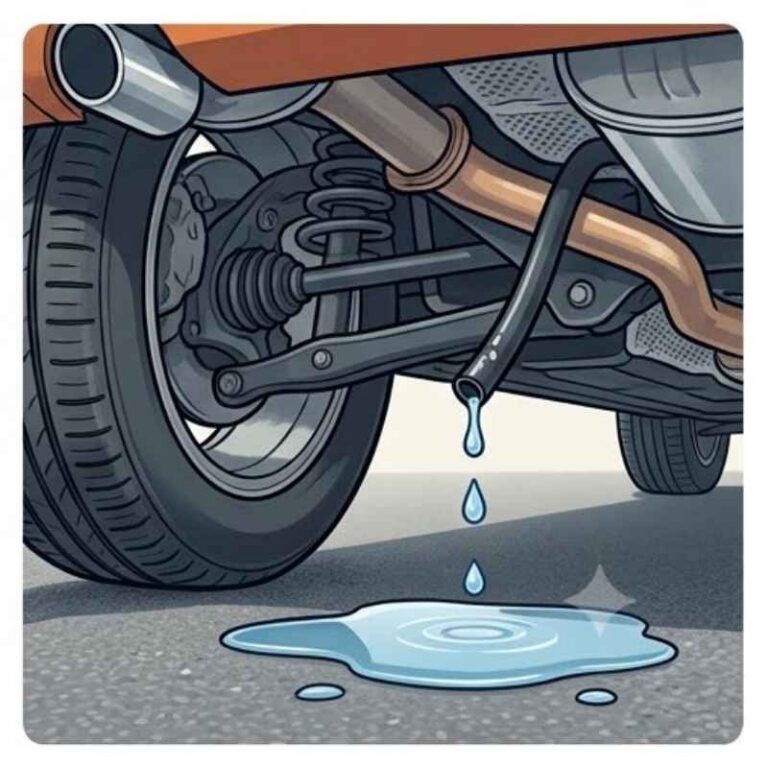
Water drips are common after running the air conditioner. They can confuse drivers who think something is wrong. Here is how to tell them apart quickly.
Air conditioner condensation produces clear, odorless water that drips from the passenger side near the firewall. It is perfectly normal. The puddle disappears within minutes after you stop driving and leaves no stain on cardboard.
| Characteristic | Water (AC Condensation) | Coolant Leak |
|---|---|---|
| Color | Clear, like tap water | Green, orange, pink, or yellow |
| Smell | No smell | Sweet, syrupy smell |
| Texture | Thin, evaporates quickly | Slightly oily, leaves a residue |
| Stain on cardboard | No stain or very faint water ring | Bright colored, visible stain |
| Location | Passenger side, near center firewall | Front-center near radiator or hoses |
If the puddle is clear and has no smell, it is almost certainly just water from your AC. If it has color or smells sweet, you have a coolant leak that needs immediate attention.
Warning: Never remove the radiator cap when the engine is hot. Coolant is under pressure and can cause severe burns. Always wait for the engine to cool completely before checking coolant levels.
Common Mistakes When Diagnosing Car Leaks
Even experienced drivers can misidentify a leak. Avoid these frequent errors to save time and prevent costly misdiagnosis.
- Mistaking water for a coolant leak: As explained above, AC condensation is normal. Do not panic if you see a clear puddle on the passenger side after running the AC.
- Ignoring a small leak: A few drops per day might seem minor, but they can indicate a failing gasket or seal. Over time, small leaks become large ones. According to AAA, even a slow oil leak can cause engine damage if left unchecked.
- Assuming color alone is enough: Some aftermarket coolants and fluids come in unusual colors. Always use the texture and smell as additional confirmation.
- Forgetting to check the differential: Rear-wheel-drive cars have a differential at the rear axle. A leak there looks like thick, dark gear oil under the back of the car. Many drivers ignore this area.
- Not checking the ground after a rainstorm: Rain can wash away fluid stains or mix with them. Park on dry pavement for an accurate diagnosis.
Tip: Take a photo of the puddle before cleaning it. If you go to a mechanic, showing them the color and location can speed up the repair process significantly.
When Should You Worry About a Car Leak?
Not every leak is an emergency, but some require immediate action. Use this guide to decide your next move:
- Immediate tow required: Brake fluid leaks (low pedal, spongy brakes), gasoline leaks (strong smell, visible fuel puddle), or large coolant leaks (engine overheating). Do not drive the car.
- Schedule a repair soon: Engine oil leaks (small to medium puddles), transmission fluid leaks (shifting issues), or power steering fluid leaks (whining noise). You can drive to a shop but monitor levels closely.
- Monitor and decide: Small coolant leaks (one drop every few hours), windshield washer fluid leaks (no safety issue), or water from AC (normal). These are low urgency but should still be addressed over time.
A good rule of thumb: if the leak leaves a puddle larger than the size of a dinner plate after sitting overnight, you should address it before driving again. According to the National Highway Traffic Safety Administration, fluid leaks are a contributing factor in roughly 1.5% of all vehicle fires, so taking leaks seriously matters.
How to Temporarily Handle a Car Fluid Leak
If you cannot get to a mechanic immediately, you can take short-term steps to minimize the leak and stay safe. These are NOT permanent fixes.
- For oil leaks: Check and top off the oil level daily. Use a thicker oil (e.g., 10W-40 instead of 5W-30) temporarily to slow the leak. Do not exceed 500 miles without a proper repair.
- For coolant leaks: Top off the coolant reservoir and carry a jug of premixed coolant with you. Do not overheat the engine. If the temperature gauge rises, stop immediately.
- For transmission leaks: Check the fluid level weekly with the engine running. Top off with the correct type of transmission fluid. A leaking seal usually gets worse quickly.
- For brake fluid leaks: Do not drive. Period. Call for a tow. There is no safe temporary fix for a brake system leak.
- For power steering leaks: Top off the reservoir. If the pump starts whining loudly, stop driving to avoid pump damage.
None of these temporary measures replace a professional repair. They simply buy you time to get to a shop. Always prioritize safety over convenience.
Frequently Asked Questions
How can I tell if my car is leaking oil or transmission fluid?
Oil is brown to black, thick, and smells like petroleum. Transmission fluid is red or pink when fresh, thinner, and has a slightly sweeter petroleum smell. If the stain is red and located in the middle of the car, it is likely transmission fluid.
If it is dark brown and under the front, it is engine oil.
What does a coolant leak look like on the ground?
Coolant leaves a bright green, orange, or pink puddle. It has a sweet, syrupy smell that is very distinctive. The fluid feels watery but slightly slippery.
It often pools near the front center of the car, close to the radiator.
Is it normal for a car to leak water after using the AC?
Yes, this is completely normal. Air conditioner condensation produces clear, odorless water that drips under the passenger side of the car. It evaporates quickly and leaves no stain.
It is not a cause for concern.
How do I find where a leak is coming from under my car?
Place a large piece of white cardboard under your car overnight. The stain’s color tells you the fluid type, and its position on the cardboard tells you the general location. Then check the corresponding fluid reservoir or dipstick under the hood to confirm.
Can I drive my car if it has a small fluid leak?
It depends on the fluid. Small oil or coolant leaks are usually safe to drive with short-term, but you should monitor levels and schedule a repair soon. Brake fluid, gasoline, and large coolant leaks require a tow truck.
Never drive with a brake fluid leak.
Final Thoughts
Identifying what is leaking from your car comes down to three simple clues: color, texture, and location. A white cardboard test overnight provides all the answers you need. Check fluid levels under the hood to confirm, and always prioritize safety for brake fluid and fuel leaks.
With this guide, you can walk into a repair shop confident about what needs attention and avoid unnecessary diagnostic fees.
Sponsored / affiliate links. As an Amazon Associate I earn from qualifying purchases. I may earn additional commission from eligible campaigns.
Products related to this article