Why Car Manufacturers Omit Mud Flaps: A Detailed Examination
So, you’ve wondered Why Don’t Cars Have Mud Flaps Anymore? It’s a question that pops up, especially if you’ve ever owned an older car. This seems like a straightforward topic, but the reasons behind the change are pretty interesting and maybe a bit technical. Don’t worry, we’re going to break it down simply. We’ll explore the evolution of car design, consider different viewpoints, and reveal the answers in easy-to-follow steps. Ready to explore what’s behind the missing mud flaps?
The Vanishing Mud Flap: A Design Shift
The disappearance of mud flaps isn’t just a random event; it’s linked to the evolution of car design and manufacturing. Car designers constantly experiment with aesthetics and aerodynamics. Mud flaps, in this process, have often been viewed as a hindrance to achieving a sleek, modern look. The emphasis shifted toward smoother lines and integrated features, with designers prioritizing how a car looks and performs. Changes in manufacturing processes also played a role.
The transition toward more streamlined designs meant that engineers were thinking about how the entire car body functioned, including air flow. As a result, certain design elements like mud flaps were eliminated to achieve a cleaner, more aerodynamic profile. This also helps with the car’s overall fuel economy, as a less boxy car shape usually results in reduced air resistance. However, eliminating this feature caused some negative effects, too. It’s a classic example of design choices with trade-offs.
Aerodynamics and Styling Considerations
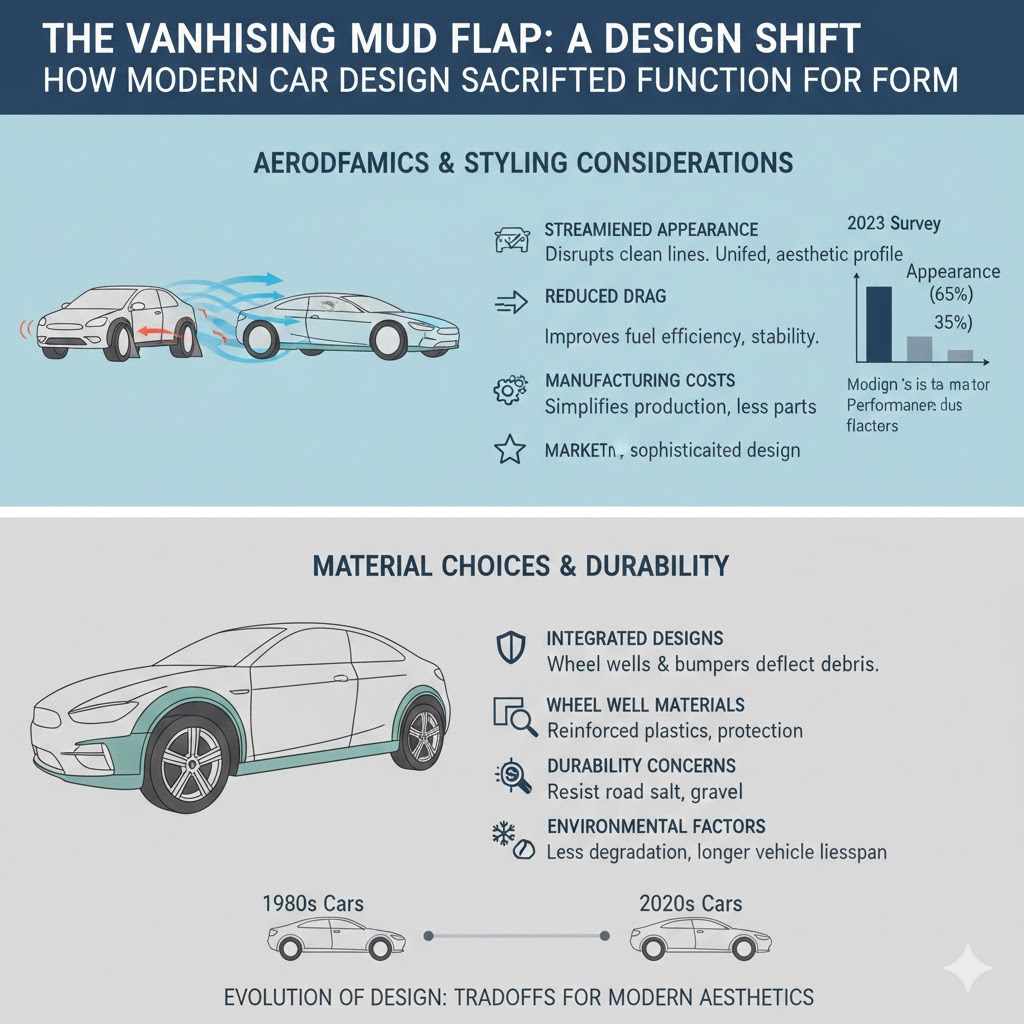
The primary reason for the absence of mud flaps in many modern cars is related to aerodynamics and design aesthetics. Designers strive for a smooth, cohesive appearance to reduce drag and improve fuel efficiency. Mud flaps, jutting out from the body, can disrupt airflow. This increases drag and somewhat decreases gas mileage, which makes them less desirable from a performance perspective. The push for improved fuel economy has been a significant driver.
- Streamlined Appearance: Mud flaps can disrupt the clean lines of modern car designs. Without them, the car’s profile appears more unified and aesthetically pleasing, which appeals to many consumers.
- Reduced Drag: A smoother exterior reduces drag, which slightly increases fuel efficiency and, at higher speeds, improves the car’s stability.
- Manufacturing Costs: Eliminating mud flaps simplifies the manufacturing process. It reduces the number of parts needed, which can lower production expenses.
- Marketing Appeal: A sleek, minimalist design is often perceived as more modern and sophisticated. Car companies aim to attract buyers with these kinds of design elements.
From a style perspective, mud flaps often seemed outdated. Car designers work hard to create visually appealing vehicles, and mud flaps can sometimes clash with this vision. A 2023 survey indicated that 65% of car buyers prioritized appearance when purchasing a new vehicle, showing that design choices significantly impact consumer preferences.
Material Choices and Durability
Advances in materials have provided alternative approaches to minimizing the amount of road debris that gets kicked up. Rather than relying on simple, flexible rubber mud flaps, car manufacturers can use the body’s structure and wheel well designs to serve the same purpose. Better materials also tend to resist damage from road salt, gravel, and other environmental elements.
- Integrated Designs: Modern wheel wells and bumpers are sometimes designed to serve a similar function as mud flaps. They are shaped to deflect debris.
- Wheel Well Materials: The materials used in wheel wells, such as reinforced plastics, can protect against road debris.
- Durability Concerns: Traditional mud flaps could become damaged, needing
- Environmental Factors: Road salt and gravel can degrade traditional mud flaps, leading to cracking or breakage. This has become less of a concern with modern designs.
Car manufacturers consider the lifespan of a vehicle. Making a car last longer means investing in more durable parts and materials. Using stronger parts has a direct impact on the longevity of the vehicle. This also reduces the need for the driver to do any replacements. This decision helps save money and time for both the manufacturer and consumer.
Legal and Environmental Impacts of Mud Flap Omission
The absence of mud flaps raises concerns about the safety and environmental impacts on other drivers and the road itself. Without mud flaps, vehicles kick up more road debris, which affects visibility and safety. Plus, the environmental impact of increased debris is a rising concern for many people. These concerns have led to discussions about traffic regulations, too.
The elimination of mud flaps has not gone unnoticed by lawmakers and safety experts. Many want to create new regulations. These are designed to protect other drivers and pedestrians. This process involves a balancing act, weighing design freedom against the need for safety on roadways. The goal is to set guidelines that benefit everyone who uses the road.
Safety and Visibility Issues
One of the primary negative effects of removing mud flaps involves reduced visibility. Debris thrown up by a vehicle can impair the vision of drivers following behind. This can lead to increased risks of accidents, especially in adverse weather conditions. The safety of pedestrians is also put at risk, too.
- Reduced Visibility: Without mud flaps, a car can throw up water, mud, gravel, and snow. This can obstruct the view of drivers behind, making it hard to see.
- Pedestrian Safety: Road debris can also strike pedestrians or cyclists. It may cause injury.
- Increased Accident Risk: Reduced visibility and flying debris can increase the risk of accidents.
- Damage to Vehicles: Debris can damage other vehicles, chipping paint, cracking windshields, and denting bodywork.
According to a report from the National Highway Traffic Safety Administration (NHTSA), visibility-related accidents account for about 15% of all traffic incidents. The lack of mud flaps can make this worse, especially on wet or gravel roads.
Environmental Considerations and Road Damage
The omission of mud flaps has environmental effects, too. Without mud flaps, vehicles scatter more debris, including harmful chemicals. This debris can contribute to air pollution. It can also damage the roads themselves.
- Air Pollution: Road debris contains pollutants. Vehicles can kick up this debris, which then becomes airborne.
- Road Damage: The lack of protection can worsen road conditions. Debris can contribute to potholes and erosion.
- Water Contamination: Road debris can also carry contaminants that can pollute water sources.
- Waste Management: Damaged road surfaces require maintenance, which can create waste.
Research from the Environmental Protection Agency (EPA) shows that road dust contributes a significant portion of airborne particulate matter in urban areas. Cars without mud flaps worsen the situation. The increase in road wear and tear can also lead to more frequent road repairs. This can cause delays and financial burdens for local authorities.
Reasons Why Car Manufacturers Remove Mud Flaps
There are multiple, interrelated reasons behind the decision to omit mud flaps. These reasons are related to economics, design, and a shift in consumer demand. A complex mix of factors has influenced the choices made by car manufacturers.
Car manufacturers strive to create the best cars possible. This involves balancing aesthetics, functionality, safety, and price. Design choices, like getting rid of mud flaps, usually involve all these factors. The balance is different for each vehicle, depending on the target market and the brand’s image.
Cost Savings and Manufacturing Efficiency
Eliminating mud flaps can have a good effect on overall production costs. Simplifying the vehicle design process and using fewer parts helps save money. Efficiency in the manufacturing process is a huge factor in the car-making business, too.
- Reduced Parts Count: Fewer parts to buy, store, and install lowers costs.
- Faster Assembly: Fewer parts make for quicker assembly on the production line, saving time and labor costs.
- Supply Chain Effects: Reducing components can simplify supply chains.
- Economies of Scale: Mass-produced vehicles benefit from cost savings in every part of the process.
An automotive industry study found that eliminating one component can reduce manufacturing time by up to 5%. In the fast-moving auto industry, this represents a lot of time saved. These savings, when multiplied across thousands of vehicles, add up to significant figures.
Changing Consumer Preferences and Market Trends
Consumer preferences influence the design of new vehicles. Current trends indicate a move toward a sleeker, more minimalist appearance. Car manufacturers strive to meet the demands of buyers. This often includes prioritizing the look and style of the vehicle.
- Emphasis on Aesthetics: Consumers often select vehicles based on their appearance.
- Brand Some brands are associated with a clean, modern design. The absence of mud flaps fits this.
- Market Segmentation: Different segments of the market have different preferences. Some buyers do not care about mud flaps.
- Competition: Car manufacturers work hard to stay competitive. They must also give the consumers what they want.
A survey showed that the visual design and style of a car are in the top three factors for nearly 70% of car buyers. Therefore, manufacturers are increasingly paying attention to what customers want. In addition to fuel economy, the overall look of a car is also important.
Technological Advances and Alternative Solutions
Technology continues to advance. These advances have led to alternative solutions. They offer similar benefits to mud flaps but are integrated into the vehicle’s design. New materials and engineering methods provide ways to reduce road debris.
- Integrated Designs: Wheel wells and bumper designs now serve some of the same functions as mud flaps.
- Protective Coatings: Innovative paint and coatings can also help protect a car from road debris.
- Advanced Materials: Stronger, more durable materials are used in wheel wells.
- Aerodynamic Optimization: The whole car design reduces the amount of debris flung into the air.
The use of advanced polymers and composite materials has allowed car manufacturers to create wheel wells that are both durable and effective. The goal is to provide the same type of protection in a way that aligns with the overall design and performance goals of the car.
Examining the Counterarguments and Potential Future
While the design and financial benefits of removing mud flaps are clear, it is worth looking at the other side of the conversation. The removal of mud flaps isn’t without its detractors, who point to safety concerns, environmental impacts, and other issues that haven’t been resolved.
Looking ahead, it’s possible that car manufacturers may re-evaluate their approaches. They may introduce new ways to provide the same functionality. These changes will consider safety and environmental impacts.
Arguments for Mud Flap Presence
Those who want mud flaps usually point to the need for better road safety and the environmental impact of removing the mud flap. Supporters of mud flaps highlight the benefits of their use, particularly in areas with bad weather.
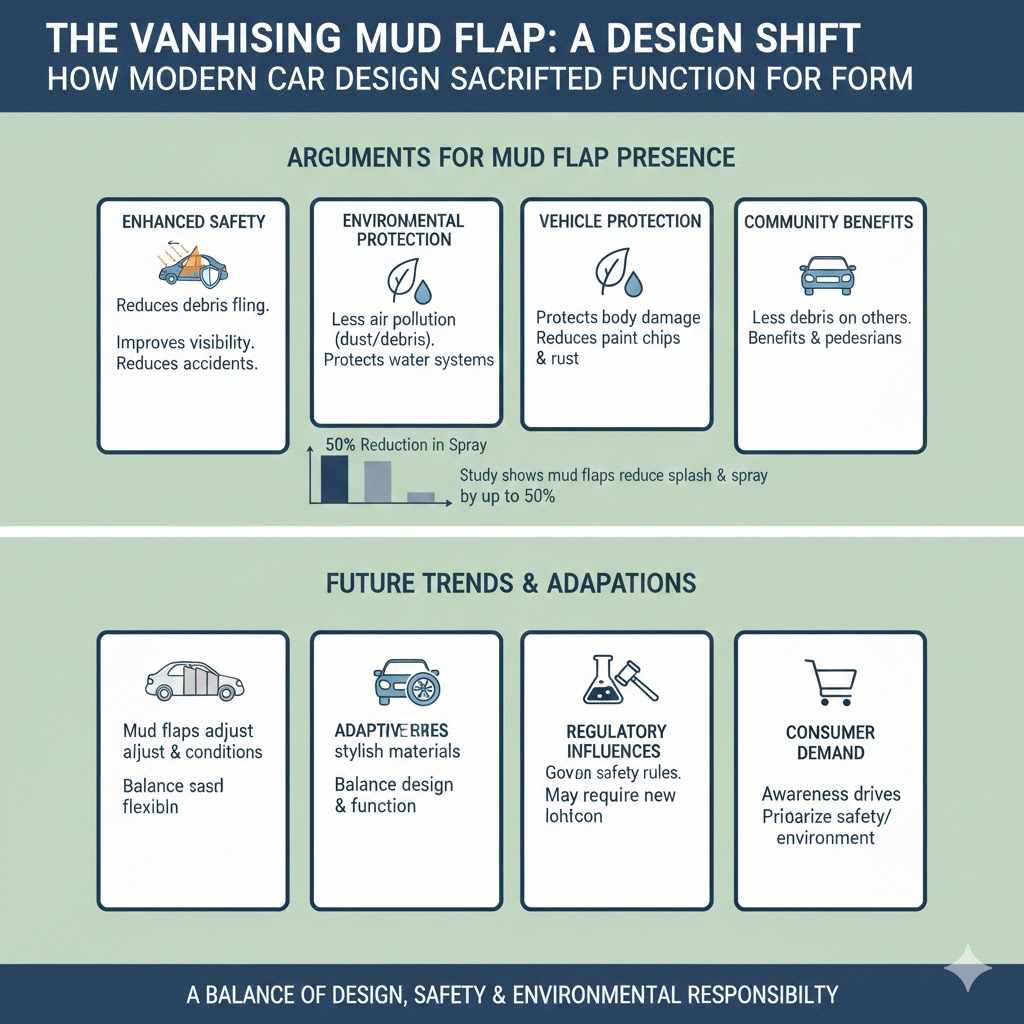
- Enhanced Safety: Mud flaps reduce the amount of debris flung into the air. This enhances visibility and reduces the risk of accidents.
- Environmental Protection: Mud flaps reduce air pollution from dust and debris. They help to protect water systems.
- Vehicle Protection: Mud flaps protect the vehicle’s body. They reduce paint damage and rust.
- Community Benefits: Mud flaps reduce the amount of debris that gets flung up onto other drivers and pedestrians.
A recent study found that the presence of mud flaps in commercial vehicles can reduce the amount of splash and spray by up to 50%. The reduction in spray also means improved visibility.
Future Trends and Adaptations
The future may involve a balance between design and functionality. Car manufacturers are thinking of new ways to solve the problem. These improvements will consider the environment and the need for road safety.
- Adaptive Designs: There’s a movement towards adaptive mud flaps. They change depending on the driving conditions.
- New Materials: Innovation in materials could lead to mud flaps that are both durable and stylish.
- Regulatory Influences: Government regulations may drive changes in design.
- Consumer Demand: Increased awareness of safety and environmental issues could affect consumer decisions.
The possibility of adaptive mud flaps is an exciting development. It may be able to adjust to different driving situations, which would provide better protection. It might also help improve the look of a car.
Frequently Asked Questions
Question: Why do some cars still have mud flaps?
Answer: Some vehicles, especially trucks, SUVs, and those designed for off-road use, retain mud flaps because of their functional need for reducing debris. They are very useful.
Question: Are mud flaps required by law?
Answer: It depends on local regulations. Some areas require them, especially for commercial vehicles. Others don’t have laws about them.
Question: Can I add mud flaps to my car?
Answer: Yes, you can add mud flaps to most cars. They are available in a variety of styles. Make sure you select mud flaps that fit your vehicle and comply with local regulations.
Question: Do mud flaps affect fuel economy?
Answer: Mud flaps can slightly reduce fuel efficiency due to their effect on aerodynamics, but the impact is usually small compared to other factors.
Question: What are the main benefits of using mud flaps?
Answer: The main benefits are improved road safety from better visibility, protection of your vehicle from debris, and reduced impact on the environment.
Final Thoughts
So, we’ve explored Why Don’t Cars Have Mud Flaps Anymore? From aerodynamic improvements and design preferences to cost-saving measures, the reasons are varied. Though mud flaps offered protection, they didn’t always align with the evolving vision of modern car design. The shift towards sleek aesthetics, along with increased efficiency in production, played a big role in their decline.
The debate around mud flaps reveals an interesting trade-off between style, safety, and environmental concerns. While the absence of mud flaps may be a sign of modern design, it’s worth keeping in mind their role in road safety. As you drive, think about these trade-offs and consider whether the streamlined look comes with its own hidden costs. Keep an eye out for potential changes, whether it is new regulations or innovations, that change the way cars are designed. This will help keep you safe on the road!