Top-Rated Tire Applicator Pads for Easy Shine
Choose a tire applicator pad by failure mode: dense foam for liquid dressings and low sling, microfiber-covered pads for wider coverage, and handled or contoured pads if you want cleaner hands. Pick badly, and you waste dressing, stain paint with sling, or leave patchy sidewalls. This guide compares pad designs by tire type, dressing thickness, and cleanup tolerance.
Quick picks
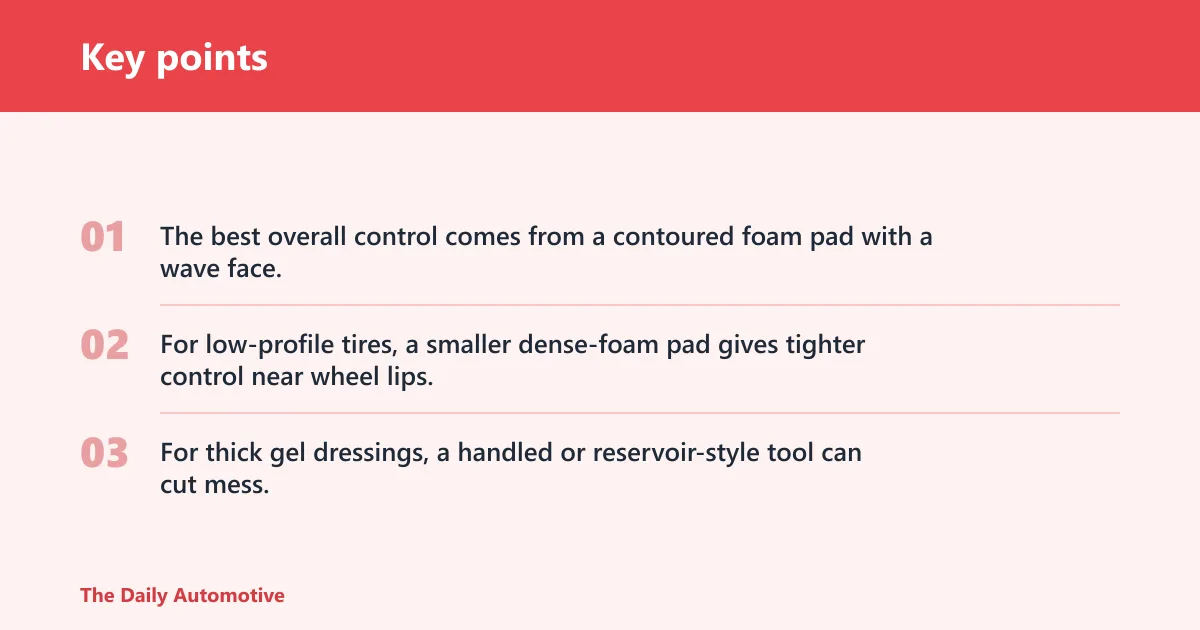
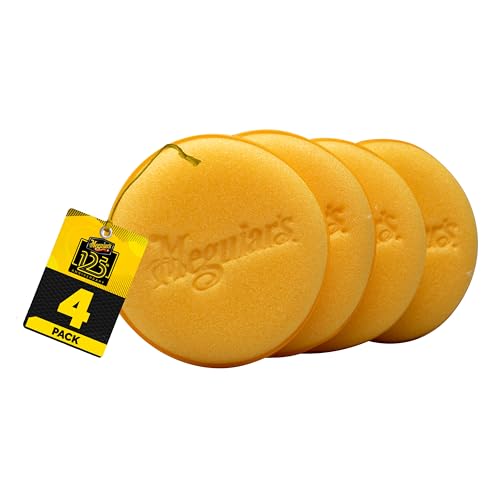


The best overall control comes from a contoured foam pad with a wave face, because it spreads dressing evenly and keeps product off your fingers. For low-profile tires, a smaller dense-foam pad gives tighter control near wheel lips. For thick gel dressings, a handled or reservoir-style tool can cut mess.
| Best for | Pick | Key spec | Price |
|---|---|---|---|
| General control and multi-surface use | Meguiar’s applicator pads | 4-inch, ultra-soft tight-cell foam, machine washable, works on paint, wheels, and tires | $7.99 for 4 |
| Cleaner grip and reduced waste | IPELY hex-grip pad | 2-pack, hex-grip design, wave-pattern foam face | $9.99 for 2 |
| Contoured sidewall coverage | Chemical Guys Wonder Wave | 2-pack; also sold as a 4-pack contoured version | Price not provided |
| No-drip application on liquid and gel dressings | ExoForma applicator | No-drip, streak-free design | Price not provided |
| Brush-style storage and upright keeping | VIKING tire applicator kit | Includes a storage stand | Price not provided |
| Handled application with premium price | G Force Tire Shine Handle & Pad | Handle-and-pad format | $24.90 |
Tire pad decision matrix
Match the applicator to the problem you want to avoid. A good pad does more than spread dressing, it controls dose, reduces hand mess, and covers textured sidewalls without flooding them. The wrong shape usually fails in the same places: near the bead, around wheel lips, and on dusty rubber.
| Applicator type | Use case | Sling risk | Cleaning effort | Best tire size | Ideal dressing type |
|---|---|---|---|---|---|
| Basic foam pad | General hand-held application with good control | Low if not overloaded | Low to moderate | Most passenger cars | Liquid or medium-gel dressing |
| Wave-pattern foam pad | More even spread on curved sidewalls | Low | Moderate | Cars, crossovers, SUVs | Liquid dressing and lighter gels |
| Contoured pad | Sidewall-conforming use near shoulders and lips | Low to moderate | Moderate | Low-profile tires and SUVs | Liquid dressing, thin gel |
| Brush-style applicator | Fast coverage on larger sidewalls | Moderate if loaded heavily | Higher | Trucks and SUVs | Gel dressing and thicker protectants |
| No-drip flow applicator | Controlled dose with an integrated reservoir | Very low | Higher | Any size, especially low-profile tires | Liquid and gel dressings |
Cost per use
Use cost per use only after you estimate wash cycles. A reusable detailing tool can be cheaper than it looks if the foam survives repeated washing; a disposable pad looks cheap only until you replace it often.
| Product | Pack price | Pad count | Example wash cycles per pad | Estimated cost per use |
|---|---|---|---|---|
| Meguiar’s | $7.99 | 4 | 20 | About $0.10 |
| IPELY | $9.99 | 2 | 20 | About $0.25 |
| Chemical Guys Wonder Wave | Price not provided | 2 | 20 | Not calculated here |
Foam pad or brush for tire shine?
Foam pads give better dose control and usually make it easier to avoid sling on the paint. Brush-style applicators can cover broad sidewalls faster, but they can also load too much product into the bristles if you are careless. If your main concern is mess, foam is the safer starting point.
Foam pad strengths and limits
A foam applicator pad uses foam or sponge construction and fits in the hand, so you can press lightly at the bead and lighten pressure near raised lettering. Ultra-soft tight-cell foam, like Meguiar’s 4-inch pad, helps spread dressing without soaking it up as fast as open-cell material.
Foam is also easier to control around wheel lips. That matters when you want shine on the sidewall, not on the rim or fender liner. The tradeoff is coverage speed on large tires; you may need more passes than with a brush.
Brush-style tradeoffs
Brush-style applicators can be useful for thick gel dressings and big SUV sidewalls because they move product quickly across a wide area. The downside is cleanup. Bristles can hold dressing deep in the head, so they may take longer to wash and dry fully.
A storage stand helps here. When a brush-style applicator comes with one, it keeps the head upright between uses and helps limit dirt pickup in a tire detailing kit.
When a storage stand helps
A storage stand matters most when the applicator has a brush head or an open face that can pick up dust from a shelf or cabinet. Keeping the tool upright can reduce contamination before the next application, which matters if you are trying to avoid streaking on freshly cleaned tires.
Which pad design gives the most even shine?
A wave-pattern or contoured face usually gives the most even shine because it keeps more of the pad in contact with the tire’s curves. Flat pads can still work, but they often leave lighter bands on deep grooves or shoulder transitions if you rush the pass.
Wave-pattern faces
Wave-pattern foam faces help distribute dressing more evenly by increasing contact points on a curved sidewall. IPELY uses a wave-pattern foam face and a hex-grip design, which is aimed at cleaner handling and less product waste.
Contoured sidewall contact
A contoured tire applicator is the better choice when the sidewall shape changes quickly near the bead or shoulder. Chemical Guys offers a contoured version in a 4-pack, and that style is aimed at streak-free application on cars, trucks, and SUVs.
Grip shape and hand control
Ergonomic grip shapes help you keep pressure even. That matters because uneven pressure leaves dark stripes in wet dressing and can push excess product into the shoulder. A handled design or hex grip helps if your hands get slick during repeated tire work.
Best applicator for low-profile tires
Low-profile tires need a smaller face and tighter control because the sidewall is short and the wheel lip sits close to the area you are coating. A dense foam pad or handled applicator works best here if you want to avoid hitting the rim or overloading the rubber with dressing.
Small sidewalls and tight wheel lips
With a 35-series or similar low-profile setup, the work area is fairly narrow. A 4-inch foam pad gives about enough surface to spread product on low-profile tires, while still helping avoid forcing dressing onto the rim. Narrower or more contoured pads are easier to place near the lip without mess.
Dense foam and narrow faces
Dense foam matters more than plush foam on short sidewalls. It holds less liquid at the surface, which lowers sling risk. That is useful if you are applying a liquid dressing before a drive or want a cleaner edge near the wheel face.
Avoiding over-application on short sidewalls
Say your car has 18-inch wheels with a very short sidewall and you see dark drips around the bead after the first pass. The fix is usually less product, not more pressure. Wipe the pad on a clean towel first, then make one light pass and inspect the finish.
Best applicator for SUVs and trucks
Large sidewalls need broader coverage and a pad that stays even across textured rubber. For SUVs and trucks, a washable reusable pad with a wave or contoured face usually makes more sense than a tiny flat pad, because it can cover more area in fewer passes.
Large sidewalls and broader coverage
Truck and SUV sidewalls often have more surface area and more texture. A foam applicator pad with a contoured face helps reach those surfaces without leaving dry patches between tread shoulder lines. A handled pad can also help keep your knuckles away from dirty tire edges.
Washable reusable pads
Reusable detailing tools are worth considering when you dress several tires at once or use dressing often. Machine washable pads like Meguiar’s can lower cost per use if you clean them promptly and keep them out of the trash after one job.
Handling textured sidewalls
Textured sidewalls need a bit more patience. Work the pad into the pattern with light pressure, then check for streaks at the high points. If the tire has deep grooves, a wave-pattern or contoured pad usually leaves fewer missed spots than a flat sponge.
Start with the dressing, then the sidewall shape, then the cleanup you are willing to do. Liquid dressings usually pair well with tight-cell foam and no-drip flow tools, while thicker gels often benefit from contoured foam or brush-style heads that can carry more product without immediate runoff.
Foam density and construction
Ultra-soft tight-cell foam is a good middle ground for many drivers because it limits waste while still spreading product smoothly. Open, thirsty foam can soak up too much dressing. Dense foam leaves more on the sidewall and less in the pad.
Reservoir and no-drip features
No-drip flow applicators use an integrated reservoir and pump control system, which is useful if you want to meter out product carefully. ExoForma is described as no-drip and streak-free, which points to a design aimed at controlled sidewall coverage with less mess.
Dressing type and viscosity
Liquid dressing flows fast and can sling if overapplied. Gel dressing stays put better, but it can leave heavy bands if the pad is too loaded. Match the applicator to the thickness: foam for control, brush or reservoir tool for thicker products, and contoured faces when the sidewall is uneven.
Cleaning, reuse, and replacement timing
Wash reusable pads soon after use so dressing does not harden inside the foam. If a pad stays stained, stiff, or starts spreading products unevenly, replace it rather than forcing another few washes. A worn pad can transfer old dressing into a fresh coat and create streaks.
- Knock off loose dirt after each use.
- Rinse until the water runs mostly clear.
- Wash with a mild cleaner and massage the foam.
- Rinse again, then dry fully before storage.
- Keep tire pads separate from wax pads and other chemicals.
Can you use the same applicator for tire dressing and wax? You can, but it is a poor habit unless the pad is fully cleaned and dried first. Tire dressing residue can contaminate wax, and wax residue can change how dressing spreads. Separate pads are the safer choice for cleaner results.
A common first-timer mistake is using one pad for tire shine and later for exterior trim wax. The next coat often streaks because residue moves from one chemical to the other. Labeling pads by task is simpler than trying to remember what touched what.
Frequently asked questions
What is the best tire applicator pad for even shine?
A contoured foam pad with a wave-pattern face is usually the best bet for even shine. It follows the tire’s curves better than a flat sponge, so it spreads dressing more uniformly across the sidewall and reduces patchy bands near the shoulder and bead.
How do I stop tire shine from slinging onto the paint?
Use less product, apply to a clean tire, and avoid loading the applicator until it drips. Dust on the tire and excess dressing are common causes of sling. Let the dressing settle before driving, and wipe any visible buildup from the shoulder and tread edge.
Are reusable tire applicator pads worth it?
Yes, if you clean them properly and use tire dressing often. Machine washable pads can lower cost per use and reduce waste. They stop being worth it when the foam loses shape, starts holding dirt, or no longer spreads dressing evenly.
What size tire dressing applicator works best for low-profile tires?
A smaller applicator, often around 4 inches, gives better control on low-profile tires because it is easier to place near the wheel lip and short sidewall. Bigger pads can work, but they are more likely to reach the rim or overload the narrow surface.
How do I clean and reuse tire shine applicator pads?
Rinse the pad right away, then wash out the remaining dressing until the foam no longer feels slick. Let it dry fully before storing it. Keep tire pads away from wax pads and other chemical products so residue does not mix on the next job.
Products related to this article
Sponsored / affiliate links. As an Amazon Associate I earn from qualifying purchases. I may earn additional commission from eligible campaigns.