Why Don’t Electric Cars Have Gears? (Instant Torque Explained)
Electric cars don’t have gears because their motors produce maximum torque instantly, from 0 RPM, and stay efficient up to 15,000+ RPM — a gas engine only makes peak torque in a narrow band near 4,000-6,000 RPM. That’s why nearly every EV uses one fixed-ratio reduction gear instead of a multi-speed transmission. This guide covers the torque-curve difference, the single-speed reduction gear, and the rare Porsche Taycan 2-speed exception.
How Electric Motors Deliver Instant Torque (No Gears Needed)
An electric motor is a device that converts electrical energy into rotational force (torque) using electromagnetic fields — reaching its peak torque the instant current flows, with no RPM buildup required. A gasoline engine works the opposite way: it needs the crankshaft spinning at several thousand RPM before it reaches peak torque and power, which is exactly why a transmission with multiple gear ratios exists — to keep the engine inside that narrow “power band” no matter how fast the car is going.
It helps to separate two terms that are often blurred together: peak (instant) torque is the maximum twisting force a motor can produce the moment power is applied, while continuous torque is a separate rating — the torque a motor can sustain over time without overheating. An EV’s instant, off-the-line punch comes from peak torque; its ability to keep pulling hard at highway speed comes from a wide, flat torque curve across a huge RPM range. Neither of those requires shifting gears.
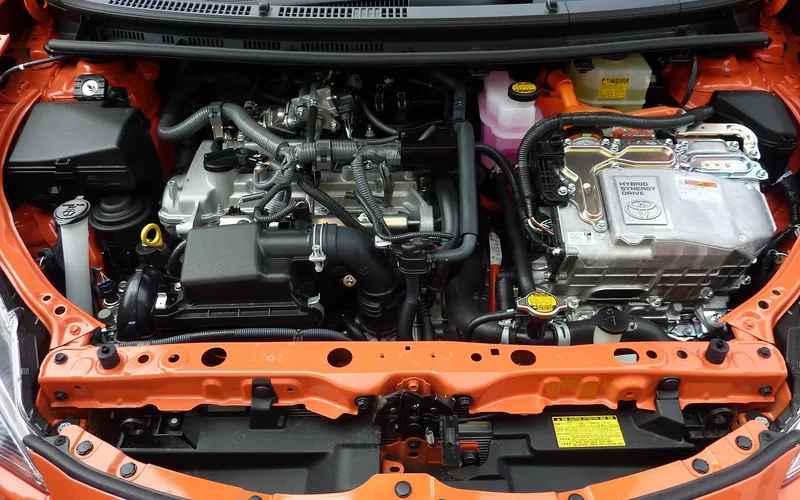
According to the U.S. Department of Energy’s fueleconomy.gov, electric motors “provide quiet, smooth operation and stronger acceleration” while requiring less maintenance than a combustion engine — a direct result of skipping the gearbox and clutch assembly a traditional car needs.
Gas Engine vs. Electric Motor: Torque and RPM Range Compared
A traditional gearbox exists to solve one problem: a gasoline engine only produces usable torque and power inside a narrow RPM window. Multiple gear ratios let the engine stay in that window at any road speed — low gears multiply torque for takeoff, high gears keep the engine from over-revving on the highway. Electric motors don’t have that narrow window, so the table below shows why one fixed ratio is enough.
| Spec | Gasoline Engine | Electric Motor |
|---|---|---|
| Peak torque arrives at | ~4,000–6,000 RPM | 0 RPM (instant) |
| Usable power band | ~1,500–6,500 RPM | 0–15,000+ RPM |
| Redline | ~6,000–6,800 RPM (typical) | 15,000–20,000 RPM (typical) |
| Gearing needed | 5–10 speed transmission | 1 fixed-ratio reduction gear (rarely 2) |
Because a gasoline engine’s torque and power both live in that narrow band, a car built with only one gear ratio would either stall at low speed or scream past redline at highway speed. An electric motor’s torque curve is wide enough to cover 0 mph to well past 100 mph without ever leaving its efficient range, which is why a traditional car engine needs a multi-speed gearbox and most EVs don’t.
What Is a Single-Speed Reduction Gear? (It’s Not “No Transmission”)
It’s a common misconception that EVs have no transmission at all. In reality, almost every EV has exactly one gear — a single-speed reduction gear — permanently fixed between the motor and the wheels. Its job isn’t to shift; it’s to convert the motor’s very high rotational speed (thousands of RPM) down to a much lower wheel speed, while multiplying torque in the process, the same way any single gear pair does.
Because the motor’s torque curve is already flat and wide enough to cover the car’s full speed range, that one fixed ratio never needs to change. There’s no clutch, no synchros, and nothing for the driver to shift — just a permanent gear reduction quietly doing its job every time the car moves.
Are There Any Electric Cars With Gears? The Porsche Taycan Exception
Yes — a small handful of high-performance EVs use more than one gear, and the best-documented example is the Porsche Taycan, which pairs its rear motor with a genuine 2-speed transmission (its platform-mate, the Audi e-tron GT, shares the same unit). Porsche uses the extra gear to solve a real trade-off: a single reduction ratio optimized for blistering acceleration would over-rev the motor at very high speed, while a ratio optimized for top speed would blunt the launch.
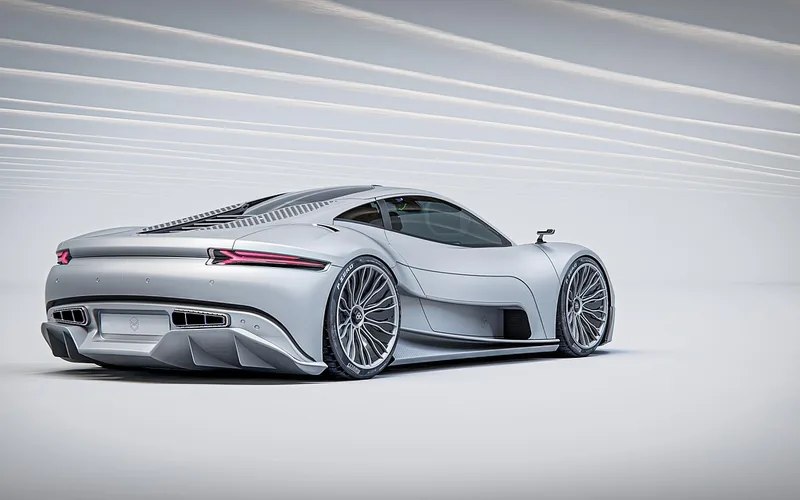
📊 In first gear, the Taycan’s rear motor produces almost 12,000 Nm of wheel torque for launches; its taller second gear needs roughly eight motor revolutions per wheel revolution, letting the car sustain a 260 km/h top speed without over-revving the motor. — Source: Porsche Newsroom, Taycan powertrain overview
“First gear gives the Taycan even more acceleration from a standing start, while the long second gear ensures high efficiency and power reserves even at very high speeds.”
— Porsche Newsroom, official Taycan powertrain description
Cars like the Taycan are the exception because most EVs simply don’t need it — a commuter EV’s single motor and one reduction gear already cover its entire real-world speed range efficiently. The 2-speed unit only earns its extra cost, weight, and complexity when a car is chasing both a sub-3-second 0-60 time and a genuine 260 km/h top speed in the same package. For a full breakdown of which other EVs offer multiple gears and how single-speed EV transmissions hold up over time, see our companion guide, Does an Electric Car Have a Gear? A Comprehensive Guide.
Why Gearless Design Also Means Less to Maintain
Skipping the multi-speed gearbox isn’t just a performance choice — it’s a mechanical one. A traditional transmission has a clutch (or torque converter), synchronizer rings, and several sets of gears, any of which can wear out or fail. A single-speed reduction gear has far fewer moving parts, so there’s no clutch to replace, no transmission fluid to change on a schedule, and one less system that can leave a car stranded. Combined with regenerative braking, which also reduces wear on the physical brakes, EVs tend to need noticeably less driveline maintenance over their lifespan than a comparable gas car — see our guide on whether electric cars need oil changes for more on what EV maintenance actually looks like.
Watch Engineering Explained break down the physics of EV torque and gearing in more depth below.
Frequently Asked Questions
Will Electric Cars Ever Have Gears?
Most electric cars will likely stay gearless, since a single-speed reduction gear already covers the full 0-to-top-speed range efficiently. A few high-performance EVs — like the Porsche Taycan — already use a 2-speed transmission to boost both acceleration and top-speed efficiency, so more multi-gear EVs could appear as automakers chase extreme performance targets.
Why Can’t Electric Cars Be Manual?
A clutch and gearshift exist to match engine RPM to road speed and prevent stalling — problems electric motors don’t have. Since an electric motor produces full torque instantly at 0 RPM and never stalls, there’s no gap for a driver to bridge with a clutch pedal, so a traditional manual transmission serves no functional purpose in an EV.
Why Don’t EVs Need Gears?
EVs don’t need gears because electric motors make maximum torque the instant current flows and stay efficient across a far wider RPM range — often 0 to 15,000+ RPM — than a gasoline engine’s narrow 1,500-6,000 RPM power band. One fixed-ratio reduction gear is enough to match that entire range to the wheels.
Why Doesn’t Tesla Have Gears?
Tesla’s motors, like most EV motors, deliver peak torque from a standstill and keep pulling strongly to well beyond highway speeds, so a single-speed reduction gear handles both acceleration and top speed without shifting. This keeps the drivetrain lighter and simpler than a multi-speed transmission, with one less system to maintain or fail.
Does the Porsche Taycan Have Gears?
Yes — the Porsche Taycan is one of the only EVs sold with a 2-speed transmission, built into its rear motor. First gear multiplies torque for launches (Porsche cites nearly 12,000 Nm at the wheels), while a taller second gear keeps the motor from over-revving at speed, supporting a 260 km/h top speed.
How Fast Can an Electric Motor Spin Compared to a Gas Engine?
A typical gasoline engine redlines around 6,000-6,500 RPM, with peak power usually arriving above 5,000 RPM. Electric motors used in EVs commonly spin usefully to 15,000-20,000 RPM, and Porsche/Audi-style two-speed units multiply that further at the wheels — one reason gears aren’t needed just to keep the motor “in range.”
Conclusion
Electric cars skip the gearbox because their motors don’t need one: peak torque arrives instantly at 0 RPM, and one wide, efficient RPM range covers everything from a stoplight launch to highway speed. A single fixed-ratio reduction gear handles the whole job, which is also why EVs need less driveline maintenance than a gas car. The Porsche Taycan’s 2-speed transmission is the well-documented exception that proves the rule — it exists only because a handful of performance EVs push both ends of that range harder than a single ratio can efficiently cover.
Products related to this article
Sponsored / affiliate links. As an Amazon Associate I earn from qualifying purchases. I may earn additional commission from eligible campaigns.