Why Is My BMW 330e Fitted with a Tracker?
Finding a tracker on your BMW 330e might leave you scratching your head, especially if you’re new to car tech. It’s a common question, and understanding its purpose can feel tricky at first. Don’t worry, we’ll walk through this simply.
This guide will explain everything you need to know about Why Is My BMW 330e Fitted with a Tracker?. We will break down the reasons and what it means for you, making it easy to follow.
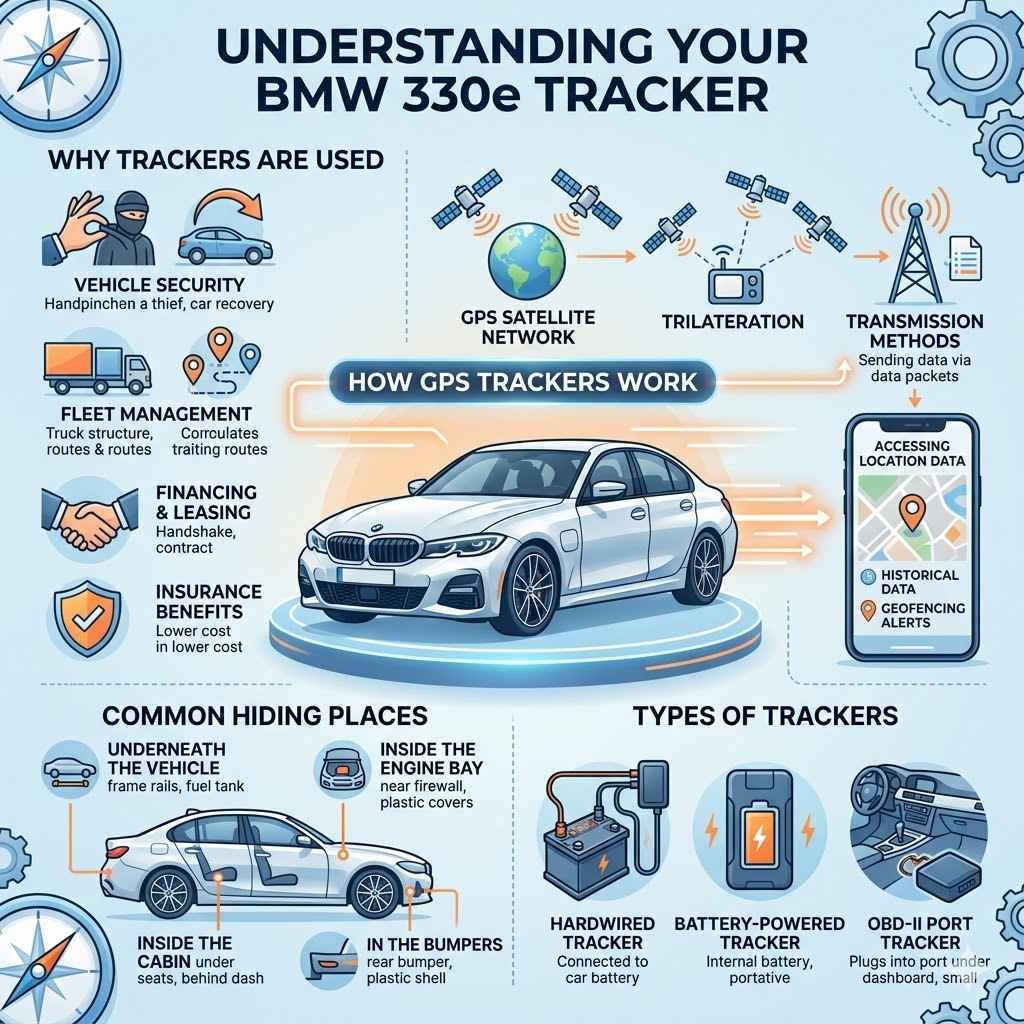
Understanding Your BMW 330e Tracker
This section explains why a tracker might be installed on your BMW 330e. It covers the main reasons, from security to legal requirements. You will learn about the technology involved and what to look for if you find one.
This knowledge helps you understand your vehicle better.
Why Trackers Are Used on Cars
Car trackers are small devices that help locate a vehicle. They use GPS technology to send the car’s position to a service provider. This is often done for security reasons, to help recover the car if it’s stolen.
Many new cars come with built-in tracking systems. Sometimes, a tracker is added by a previous owner or as part of a financing agreement. It’s important to know if your car has one and why.
These systems can also be used by leasing companies or loan providers to keep tabs on the vehicle. This is usually part of the contract you agree to when you lease or finance the car.
Vehicle Security
The most common reason for a tracker is enhanced vehicle security. If your BMW 330e is stolen, the tracker helps law enforcement pinpoint its location. This significantly increases the chances of recovering your car quickly and without damage.
Fleet Management
For businesses that manage a fleet of vehicles, trackers are essential. They help monitor driver behavior, optimize routes, and track fuel efficiency. While this is less common for a personal 330e, it’s a general use case for tracking technology.
Financing and Leasing Agreements
If you financed or leased your BMW 330e, the lender or leasing company might have required a tracker to be installed. This is a security measure for them, ensuring the vehicle is not moved to unauthorized locations or used in ways that violate the agreement.
Insurance Benefits
Some insurance companies offer discounts for vehicles fitted with approved tracking devices. This is because a tracker can reduce the risk of theft and aid in recovery, lowering potential claims costs.
How GPS Trackers Work
A GPS tracker uses the Global Positioning System (GPS) satellite network. This network allows the device to determine its precise location on Earth. The tracker then transmits this location data wirelessly.
The data is typically sent via cellular networks to a server. From there, it can be accessed through a web portal or a mobile app. This allows the owner or authorized personnel to view the vehicle’s real-time position.
Some trackers also use other positioning technologies, like Wi-Fi triangulation or LBS (Location-Based Services), especially in areas where GPS signals are weak, such as underground parking garages.
GPS Satellite Network
The Global Positioning System (GPS) is a satellite-based navigation system owned by the United States government. It consists of a constellation of satellites orbiting Earth. These satellites continuously broadcast signals containing their orbital position and time information.
A GPS receiver, like the one in a car tracker, picks up signals from at least four satellites. By calculating the time it takes for these signals to arrive from each satellite, the receiver can determine its distance from each one. Using these distances, the receiver can then calculate its precise latitude, longitude, and altitude, along with the exact time.
This process is known as trilateration. The accuracy of GPS positioning can vary, typically ranging from a few meters to tens of meters, depending on factors like atmospheric conditions and signal obstruction.
Transmission Methods
Once a GPS tracker determines its location, it needs to send that information somewhere accessible. This is where transmission methods come into play. The most common method for vehicle trackers is using cellular networks, similar to how your smartphone sends and receives data.
The tracker contains a SIM card that connects to a mobile network. When it has a location fix, it sends this data, often in small packets, to a central server. This server is managed by the tracking service provider.
The data can then be viewed online or through an app. Some advanced trackers might also use satellite communication, which is more expensive but can work in remote areas where cellular coverage is absent.
Accessing Location Data
You can typically access your vehicle’s location data through a dedicated online portal or a smartphone application provided by the tracking service. After logging in with your username and password, you will usually see a map displaying your BMW 330e’s current position.
These platforms often offer more than just real-time tracking. You can usually view historical data, such as past routes taken, speed, and stops. Some systems also allow you to set up geofences, which are virtual boundaries.
You will receive an alert if the vehicle enters or leaves these predefined areas. This makes it a useful tool for monitoring usage, especially for leased vehicles.
Types of Trackers
There are several types of trackers, differing in how they are powered and installed. Some are wired into the car’s electrical system, while others are battery-powered and can be hidden more easily.
The type of tracker can affect how it’s detected and its reliability. Understanding these differences helps you identify what might be on your car.
Hardwired Trackers
Hardwired trackers are permanently connected to your car’s battery and electrical system. This means they have a continuous power supply and do not need regular recharging. They are often installed by professionals and are difficult to tamper with or remove without specialized knowledge.
Installation involves running wires from the tracker to the car’s power source. This ensures the device is always active and reporting. Because they are powered directly, they can often transmit data more frequently.
This makes them ideal for high-security applications or fleet management where constant monitoring is crucial.
Battery-Powered Trackers
These trackers run on internal batteries, making them portable and easy to install or hide. They don’t require any connection to the car’s wiring. The downside is that the batteries need to be recharged or replaced periodically, which can be a challenge if the tracker is hidden.
Battery life varies significantly, from weeks to months or even a year or more, depending on the model and how often it reports its location. Some advanced battery-powered trackers are designed to go into a low-power sleep mode, waking up only at set intervals to report their position, thus conserving battery life. This type of tracker is often used for personal use or when a discreet installation is preferred.
OBD-II Port Trackers
These trackers plug directly into the On-Board Diagnostics (OBD-II) port, which is standard on most modern vehicles, including your BMW 330e. This port is usually located under the dashboard. These trackers draw power from the car and can often access diagnostic data in addition to location.
Installation is as simple as plugging the device in. They are easy to remove and transfer between vehicles. However, they are also more visible and can be easily found and removed by someone who knows where to look.
The OBD-II port is primarily used for emissions testing and vehicle diagnostics, but it also provides a convenient power source and data access point for tracking devices.
Common Hiding Places for Trackers
Trackers are often small and can be concealed in various locations on a vehicle. Knowing these common spots can help you in your search.
Professionals or installers typically choose places that are out of sight but still allow for a clear GPS signal. Some areas are more popular due to ease of access or discretion.
Underneath the Vehicle
The underside of a car offers many hidden nooks. Installers might attach trackers to the frame rails, near the fuel tank, or behind plastic underbody panels. Magnetic cases are often used to secure them in place.
It’s important to check areas that aren’t easily visible from casual inspection.
The metal body of the car can sometimes interfere with GPS signals. Installers try to find spots that balance concealment with good signal reception. Areas like the chassis frame, suspension components, or inner wheel wells are sometimes used, though care must be taken to avoid heat or moving parts.
Inside the Engine Bay
While exposed to heat and vibration, some trackers can be hidden within the engine bay. Installers might secure them to wiring harnesses or behind larger components, ensuring they are out of direct sight. However, the extreme conditions here can limit the lifespan of some devices.
Specific locations within the engine bay might include tucked away corners near the firewall, behind the battery, or nestled among various plastic covers. It’s crucial to ensure the tracker isn’t placed near hot exhaust components or moving belts and pulleys. Professionals are aware of these considerations and will choose a spot that minimizes risk to the device.
Inside the Cabin
Within the passenger cabin, trackers can be placed under seats, behind dashboard panels, inside door panels, or even within the trunk. These locations can offer good protection from the elements and are less likely to be visually inspected during a quick check.
For instance, a tracker could be placed behind the glove compartment, inside the spare tire well in the trunk, or even within the lining of the rear seat cushions. Some installers might even integrate them into existing electronic modules to make them harder to find. The advantage of cabin placement is better protection from weather and easier access for maintenance if needed, but it can be more challenging to achieve a completely hidden installation.
In the Bumpers
The plastic bumpers, especially the rear bumper, are common hiding spots. They are often hollow and easily accessible from behind. A tracker can be secured to the inside of the bumper structure, remaining completely hidden from view.
Installers will typically use zip ties or specialized mounting brackets to affix the tracker to the internal reinforcement bar or the plastic shell of the bumper. This location offers good concealment because few people would think to look inside a bumper unless they were performing specific repairs or inspections. The plastic material generally does not interfere with GPS signals significantly.
Locating and Identifying the Tracker
This part guides you on how to find the tracker on your BMW 330e. It provides a step-by-step approach to help you identify it. You’ll learn about visual checks and what to do if you’re unsure.
Performing a Visual Inspection
Start by looking in the most common places where trackers are hidden. A thorough visual inspection inside and out of your car is the first step.
Be patient and methodical. Remove any floor mats or covers that might obstruct your view in key areas. Sometimes, a tracker is simply stuck on with adhesive or zip ties.
You can also use a flashlight to help illuminate darker areas. Look for any wires that seem out of place or any small boxes that don’t look like they belong.
Exterior Check
Walk around your car and carefully examine the exterior. Pay close attention to the wheel wells, the undercarriage, and the bumpers. Look for anything that is taped, tied, or magnetically attached where it shouldn’t be.
Small, black or gray boxes are common for trackers.
Specifically, check the areas around the fuel tank, the chassis frame rails, and the inside of the bumpers. Sometimes, installers will place trackers in less obvious spots like behind the license plate mounting bracket. A gentle tap on plastic panels can sometimes reveal if something is loose behind them.
Interior Search
Once you’ve checked the outside, move to the inside. Look under the seats, in the glove compartment, the center console, and the trunk. Check for anything that seems unusual or out of place.
Remove floor mats and check beneath them.
Pay attention to the area under the dashboard, especially near the steering column. Also, examine the door panels and the headliner. Sometimes, devices are concealed within the interior trim pieces or behind access panels that are not immediately obvious.
Engine Bay Inspection
Open the hood and carefully inspect the engine bay. Look for any small devices attached to the engine, wiring, or firewall. Be cautious of hot components and moving parts.
A flashlight is essential here.
Check areas around the battery, air intake system, and any unused spaces. Sometimes, trackers are intentionally placed in less accessible parts of the engine bay to deter detection. Note any unusual wiring or components that don’t appear to be part of the car’s original setup.
Using a Signal Detector
Signal detectors, also known as RF (Radio Frequency) detectors, can help you find active transmitting devices. These devices scan for radio frequencies emitted by trackers.
When a detector picks up a signal, it will alert you, often with an audible beep or a visual indicator. The closer you are to the source, the stronger the signal will typically be.
This is a more advanced method and requires understanding how these devices work. They can detect the wireless signals that trackers use to communicate.
Understanding RF Detectors
RF detectors are designed to scan for a broad range of radio frequencies. Trackers, like most wireless devices, emit radio waves when they are transmitting their location data. An RF detector will pick up these emissions and indicate their presence.
These detectors vary in sensitivity and the frequency ranges they cover. Some are simple, handheld devices, while others are more sophisticated with directional capabilities. They are useful for sweeping an area and identifying potential sources of radio signals, which could include bugging devices as well as trackers.
How to Use an RF Detector
To use an RF detector, slowly sweep it over the areas where you suspect a tracker might be hidden. Start with broad sweeps of the car’s interior and exterior. As the detector beeps or lights up, move the detector closer to the potential source to pinpoint its exact location.
It’s best to conduct this search in a quiet environment to avoid interference from other radio signals. Turn off any unnecessary electronic devices in the vicinity that might emit RF signals. Some detectors have a feature that allows you to adjust sensitivity, which can be helpful in narrowing down the search.
Interpreting the Alerts
When an RF detector picks up a signal, it usually provides feedback through sound or visual cues. A simple detector might just emit a series of beeps, with the frequency of the beeps increasing as you get closer to the signal source. More advanced detectors might display the signal strength on a meter.
It’s important to note that other devices in your car, like your phone or Bluetooth devices, can also emit RF signals. An RF detector might pick these up. However, trackers are typically designed to be covert, so their signals might be more consistent or appear in unexpected places.
You’ll need to differentiate between common signals and those that seem out of place.
Consulting a Professional
If you’ve searched thoroughly and still can’t find anything, or if you’re not comfortable searching yourself, it’s a good idea to consult a professional. Auto electricians or specialized security installers can help.
They have the tools and expertise to detect even well-hidden trackers. They can also advise you on the implications of having a tracker.
A professional can perform a more thorough sweep of your vehicle, ensuring no device is missed. This is especially important if you suspect the tracker was installed for reasons beyond basic security.
When to Call a Professional
If you’ve done a visual inspection and used an RF detector without success, it’s time to seek professional help. You might also consider a professional if you believe the tracker was installed by a party with a vested interest in hiding it, such as a lender or a former partner.
Another reason to call a professional is if you are uncomfortable with dismantling parts of your car, or if you lack the technical knowledge to properly identify the device. Some trackers are very sophisticated and require specialized tools to locate.
What Professionals Offer
Professionals have access to advanced detection equipment that can scan for a wider range of frequencies and signal types than typical consumer RF detectors. They also have the knowledge to interpret the results and identify the exact nature of the device. This can include determining if it’s a GPS tracker, a listening device, or something else entirely.
They can also safely and correctly remove the device without causing damage to your vehicle. Their expertise ensures that if a tracker is present, it will be found and identified efficiently.
Understanding the Purpose and Implications
This section delves into the meaning behind why a tracker is on your BMW 330e. It discusses the common reasons and what you should do next. Understanding the purpose is key to deciding on your course of action.
Reasons for Tracker Installation on a 330e
The BMW 330e is a hybrid vehicle, combining electric and gasoline power. This makes it an attractive target for theft due to its advanced technology and higher resale value.
Trackers are often installed to deter theft. They can also be part of lease agreements, ensuring the vehicle is used as agreed upon and returned in good condition. Sometimes, they are installed by previous owners for security.
If you bought the car used, the previous owner might have installed it. It’s also possible a dealership or financing company installed it as part of a program or loan condition.
Theft Deterrence and Recovery
The primary reason for installing a tracker on any vehicle, including a high-value model like the BMW 330e, is to prevent theft and aid in recovery. The presence of a visible or known tracking system can deter potential thieves. If the vehicle is stolen, the tracker’s GPS capabilities allow authorities to locate and recover it much faster, often minimizing damage and loss.
BMW itself offers sophisticated security systems, but aftermarket or dealer-installed trackers add another layer of protection. The ability to track a vehicle remotely provides peace of mind for owners and significantly boosts the chances of reclaiming the car. This is particularly relevant for plug-in hybrid models like the 330e, which might be desirable targets.
Financing or Leasing Requirements
If your BMW 330e was financed or leased, the lender or leasing company might have stipulated the installation of a GPS tracker. This is a common practice, especially for vehicles with a high value or for buyers with a less-than-perfect credit history. The tracker serves as a safeguard for the lender, allowing them to repossess the vehicle if payments are not made or if the terms of the agreement are violated.
These trackers are usually integrated into the car’s system and are managed by the financing entity. They often have features that allow the lender to remotely disable the vehicle or set geographical restrictions on its use. It’s crucial to review your financing or lease agreement to understand if such a requirement was in place.
Previous Owner Installation
If you purchased your BMW 330e used, the previous owner may have installed a tracker for their own security or for monitoring purposes. They might have forgotten to remove it, or they may have installed it to monitor the vehicle’s usage if they lent it out or were concerned about its security.
It’s important to consider the circumstances of the sale and whether the previous owner might have had reasons to install such a device. If you bought from a private seller, asking them directly about any installed tracking systems would be the first step. Dealerships are usually more diligent in removing such devices before resale, but it’s not impossible for one to be overlooked.
Dealer or Manufacturer Options
BMW offers its own integrated telematics and tracking systems, such as BMW ConnectedDrive, which can include location services. While not typically referred to as just a “tracker” in the aftermarket sense, these systems allow for vehicle location tracking via a smartphone app. It’s possible that your 330e has such a factory-installed system enabled.
Additionally, dealerships might offer optional or mandatory tracking devices as part of their sales package or for specific warranty programs. These could be for enhanced security or to monitor vehicle usage for maintenance reminders. It’s always best to check your vehicle’s documentation or contact the dealership to understand what factory or dealer-installed systems are active.
Legal and Privacy Considerations
The presence of a tracker on your vehicle raises important legal and privacy questions. In many places, it is legal for a vehicle owner or a party with a legitimate interest (like a lender) to install a tracker.
However, if you are not the owner and the tracker was installed without your knowledge or consent, it could be a privacy violation. Laws vary by region, so it’s good to be aware of them.
Understanding these implications is vital. If the tracker was installed by a third party without your informed consent, you may have legal recourse.
Consent and Ownership
Generally, installing a tracker on a vehicle requires the consent of the owner or, in the case of leased or financed vehicles, the consent of the party holding the title. If you purchased the car outright and did not consent to a tracker being installed, its presence might be questionable, depending on local laws. If the vehicle is leased or financed, the agreement likely includes clauses permitting the installation of tracking devices.
It is a matter of property rights and privacy. If the vehicle is registered in your name and you were not informed or did not agree to the tracker, it can be considered a breach of privacy. However, the lender’s right to monitor their collateral (the car) is often legally protected through the financing agreement.
Data Usage and Retention
The data collected by a tracker can be extensive, including your travel patterns, speeds, and locations. How this data is used and stored is a critical privacy concern. Reputable tracking companies will have clear privacy policies outlining this.
If the tracker was installed by a lender or leasing company, they likely have specific terms regarding data usage outlined in your contract.
This data can be used for various purposes, from vehicle recovery to analyzing driving habits. It’s important to know who has access to this data, how long it is retained, and what measures are in place to protect it from unauthorized access. Laws like GDPR in Europe and various state-level privacy laws in the US govern how personal data, including location data, can be collected and used.
Local Laws and Regulations
Laws regarding the installation and use of GPS trackers vary significantly by country, state, and even local municipality. In some jurisdictions, it is illegal to place a tracker on a vehicle without the owner’s consent. In other places, specific rules might apply if the tracker is used by law enforcement, or if it’s part of a commercial agreement.
For example, some laws might require clear notification to the driver that a tracker is in use. If you are unsure about the legality of a tracker on your vehicle, it is advisable to consult with a legal professional or research the specific regulations in your area. Ignorance of the law is generally not a valid defense.
What to Do If You Find a Tracker
If you find a tracker on your BMW 330e, the first step is to remain calm. Don’t immediately remove it without considering the implications.
The best course of action depends on who installed it and why. If it’s part of a lease or financing agreement, removing it could violate your contract.
Documenting its existence is also a good idea. Take photos before you do anything else.
Identify the Installer or Owner
The most crucial step is to determine who installed the tracker and why. If you bought the car new, contact the dealership to understand if it’s a factory-installed system or a dealer option. If you bought it used, try to reach out to the previous owner.
If the car is leased or financed, check your contract for any clauses related to tracking devices. Contacting the leasing company or lender is essential to clarify their requirements. They are usually the ones who would have authorized or installed the tracker.
Review Your Contract (Lease/Financing)
If you are leasing or financing your BMW 330e, carefully review your agreement documents. Look for sections that mention vehicle monitoring, telematics, GPS tracking, or similar terms. These clauses often give the lender or leasing company the right to install and monitor a tracking device on the vehicle.
Understanding these terms will clarify whether the tracker’s presence is a contractual requirement. Removing it without the lender’s or lessor’s permission could lead to penalties, breach of contract, or even repossession of the vehicle. Therefore, it’s vital to know what your contract says before taking any action.
Consult with a Specialist
If you are unsure about the tracker’s origin or implications, or if you suspect it was installed without your legal consent (e.g., if you own the car outright and didn’t authorize it), it is wise to consult with a legal professional or a vehicle security specialist. They can advise you on your rights and the best course of action.
A security specialist can also help confirm the type of tracker and how it’s functioning. A lawyer can guide you through the legal aspects, especially if you believe your privacy has been violated. This professional advice will help you make an informed decision without violating any agreements or laws.
Removal Considerations
If you have determined that the tracker was installed without your consent and is not required by a contract, and you wish to have it removed, do so cautiously. If it’s hardwired, it’s best left to a professional to avoid damaging your car’s electrical system. If it’s a simple plug-in or battery-powered device in an accessible location, you might be able to remove it yourself.
However, always proceed with caution. Document the removal process with photos or videos. If there is any doubt about how to remove it safely, it is always better to hire a qualified technician or auto electrician.
Improper removal could lead to electrical issues or damage to your vehicle’s components.
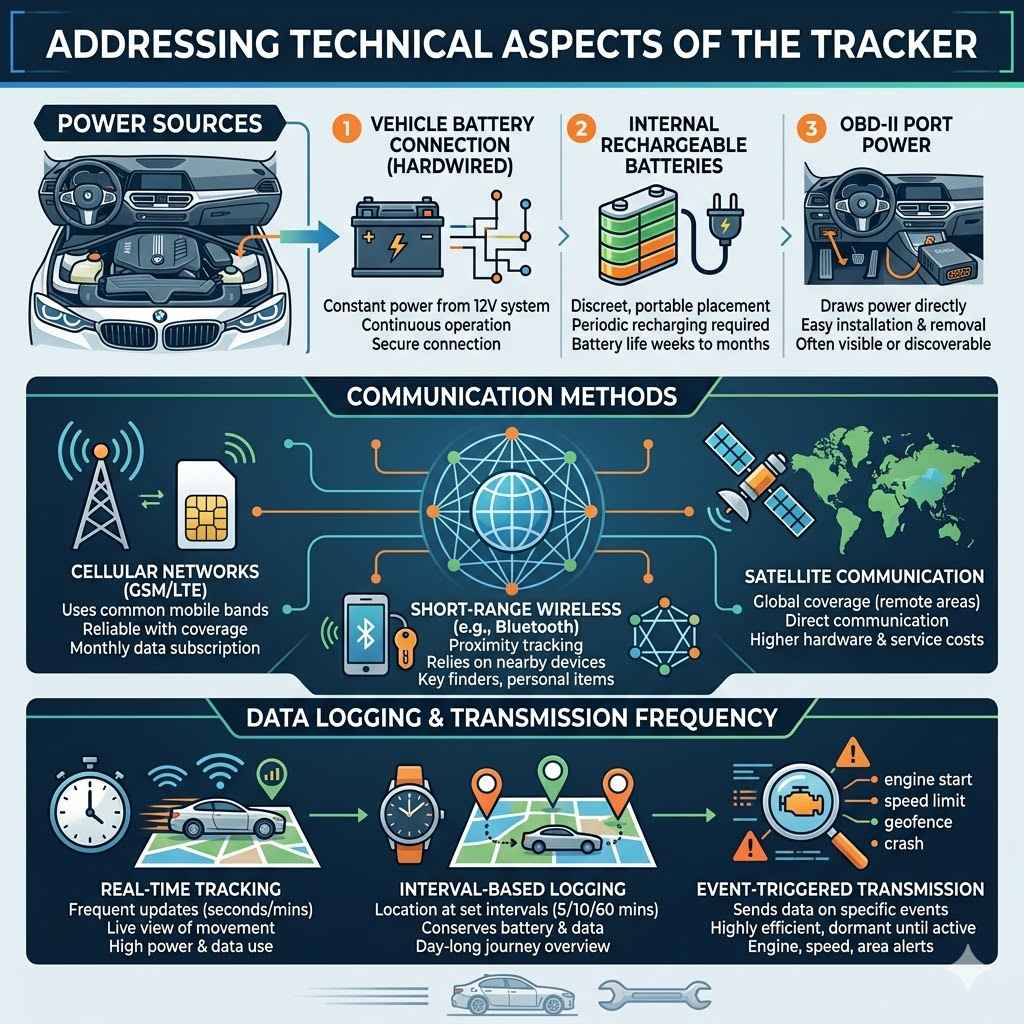
Addressing Technical Aspects of the Tracker
This section covers the technical details of the tracker, including its power source and communication methods. It aims to give you a deeper understanding of how the device operates and how it might be integrated with your BMW 330e.
Power Sources for Trackers
Trackers require power to operate and transmit data. The way they are powered influences their visibility and reliability. Understanding the power source helps in locating and identifying the device.
Some trackers draw power directly from the vehicle’s battery, ensuring continuous operation. Others rely on internal batteries that need periodic recharging or replacement.
The power source is often a clue to how the tracker was installed and its intended duration of use.
Vehicle Battery Connection (Hardwired)
When a tracker is hardwired, it is directly connected to your BMW 330e’s 12-volt battery system. This provides a constant and reliable power source, meaning the tracker will operate as long as the car’s battery has power. This method is common for sophisticated tracking systems that require frequent data transmission.
The connection is typically made to a power wire that is always live or to a circuit that is activated when the car’s ignition is on. Installers ensure the connection is secure and does not drain the car’s battery excessively. Some systems include power management features to prevent battery drain when the car is parked for extended periods.
Internal Rechargeable Batteries
Many portable or discreet trackers use internal rechargeable batteries. These devices can be placed in various locations without needing to be wired into the car. The trade-off is that they must be periodically removed and recharged, or they may have a limited operational life before requiring battery replacement.
The battery life can range from a few days to several months or even a year, depending on the tracker’s model, its reporting frequency, and whether it has power-saving features like motion detection or sleep modes. Users need to be aware of the battery status and have a plan for recharging.
OBD-II Port Power
Trackers that plug into the OBD-II port of your BMW 330e draw their power directly from the vehicle through that connection. The OBD-II port is designed to provide power to diagnostic tools, and it’s a convenient way for a tracker to obtain a continuous power supply without needing to be wired into the main battery.
This method offers the convenience of easy installation and removal. The OBD-II port is usually located under the dashboard. Devices plugged into this port are often visible or easily discoverable, making them less discreet than hardwired or hidden battery-powered units.
Communication Methods
Trackers need to send the location data they collect to a central server or directly to a user’s device. This communication happens wirelessly. Different methods offer varying levels of reliability and cost.
The choice of communication method often depends on the tracker’s intended use and the available infrastructure.
Cellular Networks (GSM/LTE)
The most common communication method for GPS trackers is using cellular networks, such as GSM or LTE. These trackers contain a SIM card that connects to the mobile network, just like your smartphone. When the tracker acquires a GPS fix, it sends the location data as small text messages or data packets over the cellular network.
This method is reliable in areas with good cellular coverage. The cost of data transmission is usually a factor, often covered by a monthly subscription fee from the tracking service provider. These networks are widely available, making them a practical choice for most tracking applications.
Satellite Communication
For tracking in remote areas where cellular coverage is non-existent or unreliable, satellite communication is used. These trackers communicate directly with satellites, which then relay the data to a ground station. This offers global coverage but comes at a significantly higher cost for both the hardware and the service fees.
Satellite trackers are often used for assets in transit across oceans, in very remote wilderness, or by maritime and aviation industries. While highly reliable for connectivity, the data transmission can sometimes be slower, and the devices themselves might be larger and more expensive than cellular trackers.
Short-Range Wireless (e.g., Bluetooth)
Some tracking devices, particularly those designed for proximity tracking (like key finders or personal item trackers), use short-range wireless technologies such as Bluetooth. These devices do not have their own cellular or satellite connection. Instead, they rely on a nearby smartphone or a network of other devices to relay their location data.
For example, a Bluetooth tracker might communicate its location to your smartphone when you are within range. If the device is lost, your phone’s last known location for it can be displayed. Some services use a crowd-sourced network where other users’ phones anonymously detect and report the location of lost Bluetooth trackers.
Data Logging and Transmission Frequency
The frequency at which a tracker records and transmits data is a critical factor in its performance and battery life. More frequent transmissions provide real-time updates but consume more power and data.
Understanding this helps explain why a tracker might be more or less active. It also relates to the type of information you can obtain from it.
Real-Time Tracking
Real-time tracking means the device sends updates of its location very frequently, often every few seconds or minutes. This provides an almost live view of the vehicle’s movement, which is ideal for immediate security monitoring or dispatch services. This high frequency of transmission demands more power and data bandwidth.
For example, if your car is in motion, a real-time tracker will show its path as it unfolds on a map. This level of detail is crucial for tracking stolen vehicles or for managing logistics where immediate situational awareness is paramount.
Interval-Based Logging
Interval-based logging involves the tracker recording its location at set intervals, such as every 5 minutes, 10 minutes, or even once an hour. The data is then transmitted either after each interval or batched and sent periodically. This method significantly conserves battery power and reduces data usage compared to real-time tracking.
This is a common setting for trackers that are battery-powered or when constant real-time updates are not strictly necessary. It’s still effective for tracking a vehicle’s journey over a day, but it won’t capture instantaneous movements or exact stop times with the same precision.
Event-Triggered Transmission
Some advanced trackers use event-triggered transmission. This means the tracker only sends data when specific events occur, such as the engine starting, the vehicle exceeding a certain speed, entering or leaving a geofenced area, or a significant impact being detected (like in an accident). This approach is highly efficient in terms of power and data usage.
For instance, a tracker might remain dormant until the car is started. Once moving, it might report its location every few minutes. If it detects a sudden stop or crash, it could immediately send an alert with its current location to emergency contacts.
This makes it a smart and adaptive tracking solution.
Frequently Asked Questions
Question: Can I legally remove a tracker from a leased BMW 330e?
Answer: Generally, no. If your lease agreement requires a tracker for monitoring purposes, removing it without the lessor’s permission would likely violate your contract and could lead to penalties or repossession of the vehicle. Always review your lease agreement carefully.
Question: What if I bought my BMW 330e used and found a tracker?
Answer: If you purchased the car outright and did not authorize a tracker, it’s advisable to try to contact the previous owner. If you cannot reach them or confirm authorization, consider consulting a legal professional to understand your rights regarding privacy and property.
Question: How can I be sure a device is a tracker and not something else?
Answer: While many small electronic devices can be hidden, trackers typically have GPS components and transmit location data. Using an RF detector and professional inspection can help distinguish them from other electronics. If it’s consistently reporting location, it’s likely a tracker.
Question: Will removing a tracker affect my car’s warranty?
Answer: If the tracker is hardwired into your car’s electrical system and you remove it improperly, it could potentially cause damage and affect your warranty. If it’s a simple plug-in device and you remove it carefully, it’s unlikely to have an impact. Professional removal is recommended for hardwired units.
Question: Can a tracker drain my BMW 330e’s battery?
Answer: Yes, some trackers, especially older or poorly installed ones, can drain your car’s battery if they draw too much power or if they are not designed to enter a low-power state when the car is off. This is less common with modern, professionally installed systems.
Conclusion
Finding a tracker on your BMW 330e can be surprising, but now you know why it might be there. Reasons range from security and theft recovery to lease requirements or previous owner choices. We’ve explored how these devices work, where they are hidden, and what to do if you find one.
Always check your contracts and consider professional advice for safe removal. You now have the information to understand your car better.