Why Is My Car Horn Blaring Nonstop
It can be pretty startling when your car horn starts honking all by itself, especially if you don’t know why. For many folks, figuring out Why Is My Car Horn Blaring Nonstop? feels like a big puzzle. You might worry about what’s broken or how much it’ll cost to fix.
Don’t worry, though. We’re going to break down the common reasons for this problem in a simple, step-by-step way. By the end, you’ll have a good idea of what’s going on and what you can do about it.
Common Causes For A Car Horn Blaring
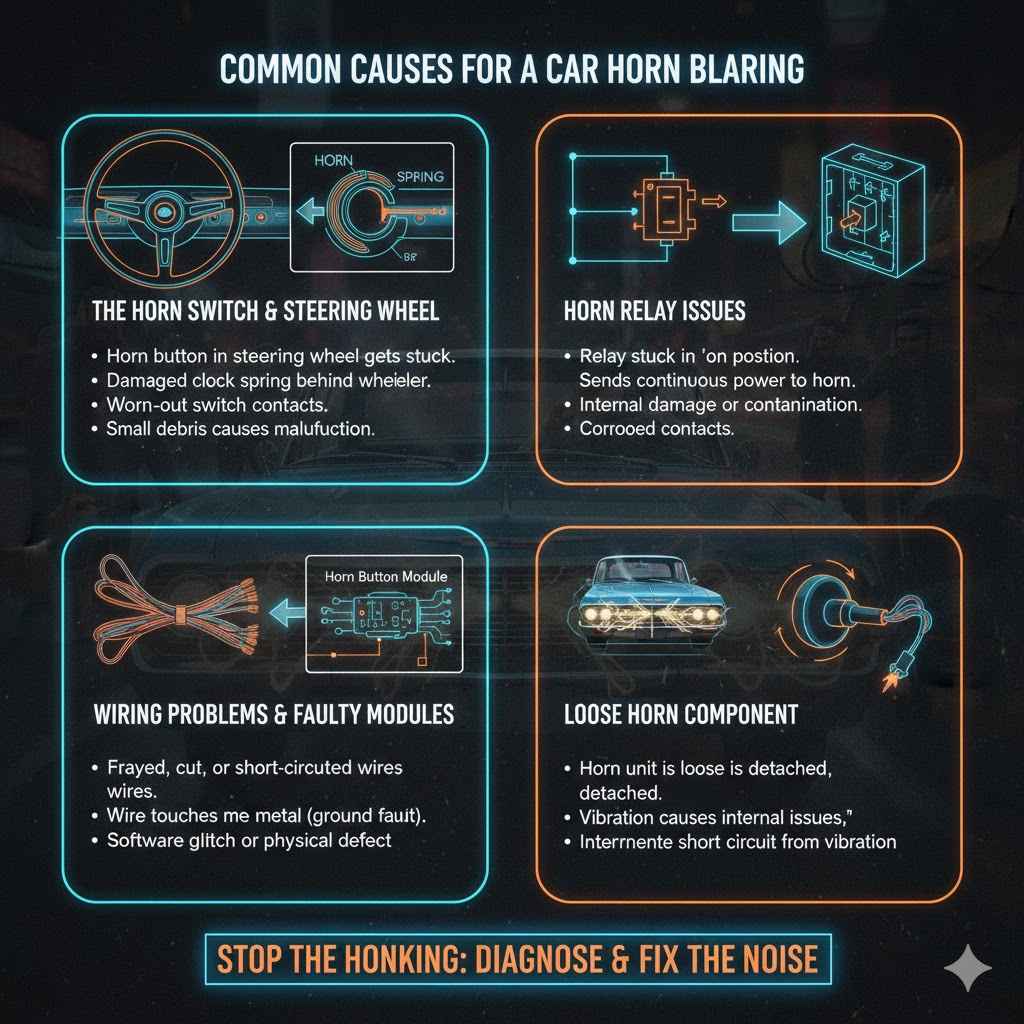
When your car horn won’t stop making noise, it’s usually due to a few key areas in your vehicle. These components are all linked together to make your horn work. If one part has an issue, it can cause the horn to sound when it shouldn’t.
We’ll look at the most common culprits that lead to this annoying situation. Understanding these parts helps you pinpoint the problem more easily.
The Horn Switch And Steering Wheel
The horn button is typically found right in the center of your steering wheel. When you press it, you complete an electrical circuit. This sends a signal to activate the horn.
If this switch gets stuck, damaged, or has a short circuit, it can act as if it’s being pressed all the time. This is a very frequent reason for a horn to honk non-stop. Even a small piece of debris or wear and tear can cause it to malfunction.
Sometimes, the problem isn’t the button itself but the clock spring located behind the steering wheel. The clock spring is a coiled wire that allows electrical connections to pass through from the steering column to the steering wheel. This includes the horn, airbag, and cruise control.
If the clock spring breaks or gets damaged, it can cause a constant connection to the horn. This often happens after the steering wheel has been turned many times. It’s a more involved fix, but it’s a clear cause for a horn that won’t quit.
A damaged or worn-out horn switch can also lead to this issue. Over time, the internal contacts might corrode or become loose. This can cause them to stick together, resulting in a continuous signal to the horn.
Many drivers find that a faulty horn switch is the easiest fix for a perpetually honking horn. It’s a direct electrical path that’s easy to interrupt.
Horn Relay Issues
Your car uses a relay to control the horn. Think of a relay as an electrical switch. A small amount of electricity from the horn button tells the relay to close a larger electrical circuit.
This larger circuit then powers the horn itself. If the relay gets stuck in the “on” position, it will keep sending power to the horn, making it sound continuously. Relays are designed to be very durable, but like any electrical component, they can fail over time.
A stuck relay is often caused by internal damage or contamination. For example, if moisture gets into the relay, it can corrode the contacts and cause them to stick. Sometimes, the electromagnet inside the relay can fail, preventing it from opening the circuit.
Replacing a horn relay is often a straightforward repair. It involves locating the relay in your car’s fuse box and swapping it out with a new one. This is a good DIY fix for many car owners.
The horn relay is a critical component that acts as a gatekeeper for the horn’s power supply. When the horn button is pressed, it sends a low-current signal to the relay. This signal energizes an electromagnet within the relay, which then closes a set of contacts.
These contacts allow a higher-current circuit to power the actual horn. If these contacts become welded together due to overheating or a fault, the horn will remain engaged even after the button is released. This is a common failure point.
Faulty Horn Button Module
Some modern cars have more complex horn button modules. These modules might include integrated circuits that control not just the horn but also other steering wheel functions. If the electronics within this module malfunction, they can send a false signal to the horn.
This could be due to a power surge, a software glitch, or a physical defect in the module itself. These systems are more advanced than a simple button.
These modules are designed for safety and convenience, combining multiple functions into one unit. However, their complexity also means more potential points of failure. For instance, a faulty sensor within the module could misinterpret inputs, leading to the horn activating unexpectedly.
Repairing these can sometimes be more costly as they may require specialized diagnostic tools and programming.
The horn button module is essentially the brain of the horn system within the steering wheel. It receives input from the driver (when the horn is pressed) and communicates with other vehicle systems to activate the horn. In some cases, a failure within this module can lead to a continuous activation signal being sent.
This often requires replacement of the entire module rather than just a simple button component.
Wiring Problems
The horn system relies on a network of wires to transmit electrical signals. If any of these wires become frayed, cut, short-circuited, or corroded, it can cause problems. A short circuit, where a wire touches a metal part of the car or another wire it shouldn’t, can cause the horn to sound continuously.
This is because it creates a completed circuit without the horn button being pressed.
Wiring issues can be tricky to diagnose because the wires are often hidden within the dashboard or behind panels. They can get damaged from age, vibration, or even from previous repairs. Sometimes, a rodent might chew through a wire, causing a short.
Tracing the wiring harness to find the exact point of the fault is key. This requires patience and a good understanding of automotive electrical systems.
The wiring harness for the horn runs from the steering column, through the firewall, and to the horn itself. Along this path, wires can become damaged. For example, if a wire rubs against a sharp metal edge under the dash, the insulation can wear off.
This exposes the conductor, which can then touch the car’s metal body, creating a ground fault that activates the horn. This unintended electrical path is a common source of continuous honking.
Loose Horn Component
The horn itself is usually mounted on the front of the car, often behind the grille or bumper. If the horn unit becomes loose or detached, it might vibrate in a way that causes internal issues. It could also be that the mounting bracket itself is loose, allowing the horn to shift and potentially causing electrical contact problems.
While less common for a non-stop blare, it’s still a possibility.
A loose horn might also have its electrical connectors vibrating against something metallic. This can create an intermittent short circuit. Over time, this constant contact and vibration can lead to corrosion or damage to the connector.
Ensuring the horn is securely mounted and its connections are clean and tight is a simple but important check.
The horn itself is an electro-mechanical device. It has a diaphragm that vibrates rapidly to create sound. If the horn unit is not properly secured, this vibration could cause internal components to shift or make contact where they shouldn’t.
This can lead to a continuous activation of the vibrating mechanism, resulting in a constant, loud noise. A loose mounting can also strain the electrical connectors, leading to poor contact or accidental grounding.
Troubleshooting Steps To Identify The Cause
When you’re faced with a car horn that won’t stop, it’s natural to feel a bit overwhelmed. But by taking a systematic approach, you can often figure out what’s wrong. We’ll walk through some easy steps you can follow at home.
These steps will help you narrow down the possibilities and hopefully find the solution without needing to be a car expert.
Check The Horn Button First
The simplest place to start is the horn button itself. Gently press and release the horn button a few times. Listen for any sticking or unusual sounds.
If you have floor mats or objects near the steering column, make sure they aren’t accidentally pressing against the horn pad. Sometimes, a simple obstruction is the cause. Also, inspect the steering wheel area for any visible damage.
If the button feels loose, wobbly, or stuck in the down position, that’s a strong indicator of the problem. Try wiggling the steering wheel slightly while pressing the button. This can sometimes free up a stuck switch.
If the button seems okay, move on to other checks. This initial step is quick and can save you a lot of time if it’s the culprit.
Visual inspection of the horn button is crucial. Look for any cracks, signs of impact, or foreign objects lodged around it. Gently push and pull on the button to feel for any resistance or looseness that isn’t normal.
A properly functioning horn button should have a consistent feel and return to its original position smoothly. If it feels “mushy” or stays depressed, it’s a likely cause.
Locate And Inspect The Horn Relay
Your car has a fuse box, often located under the dashboard or in the engine bay. Inside, you’ll find various relays and fuses. You’ll need your car’s owner’s manual to identify the horn relay.
It’s usually labeled with a horn symbol or “Horn.” Once located, you can try to tap it gently to see if it frees up. If it’s a simple stuck relay, this might work.
If tapping doesn’t help, you can often swap the horn relay with a similar relay for a non-essential function (like the fog lights, if they use the same type of relay). If the horn stops blaring when you swap them, you’ve found your faulty relay. Just remember to replace the swapped relay back into its original spot later.
This test is a great way to confirm a relay issue.
The horn relay is designed to be a reliable component. However, like any mechanical part exposed to electrical currents and heat, it can eventually fail. The internal contacts can become pitted or stuck due to arcing or overheating.
A visual inspection of the relay’s casing might reveal signs of damage or discoloration, though internal failures are often invisible without testing. Swapping with an identical relay is the most practical diagnostic test for home mechanics.
Examine The Horn Wiring
This step can be more challenging. You’ll need to safely access the wiring that leads to the horn. The horns are usually located at the front of your car.
You might need to remove a grille or splash guard to get a clear view. Look for any wires that are cut, frayed, or show signs of melting or scorching. Also, check the connectors to the horn to ensure they are clean and securely attached.
If you find a damaged wire, especially one that appears to be touching the car’s metal frame, this is likely your problem. You can temporarily insulate the damaged area with electrical tape. However, a proper repair might involve splicing in a new section of wire or replacing the damaged harness.
If you’re not comfortable with electrical work, it’s best to leave this to a professional.
The wiring harness is a bundle of wires protected by a sheath. Over time, this sheath can degrade, or wires can be chafed by vibrations or sharp edges. A short to ground is the most common wiring fault that causes a horn to blare continuously.
This means a “hot” wire is touching a metal part of the car’s body, completing the circuit and sending power to the horn. Locating this specific point of contact is key to diagnosis.
Consider The Clock Spring
If the horn button and relay seem fine, and there are no obvious wiring issues, the clock spring is a strong suspect. The clock spring allows electrical connections to pass through the steering column to the steering wheel. It’s located behind the steering wheel.
If it’s damaged, it can create a constant connection for the horn circuit.
Replacing the clock spring usually requires removing the steering wheel, which can be a more complex job. It also involves working with the airbag system, which requires caution. If you suspect the clock spring, it’s often best to have a qualified mechanic diagnose and replace it.
They have the proper tools and knowledge to do this safely.
The clock spring, also known as a spiral cable, is a critical safety and functional component in modern vehicles. It’s a compact, coiled electrical ribbon that allows electrical signals to travel from the stationary steering column to the rotating steering wheel. This enables functions like the horn, airbag, and steering wheel controls to work without wires getting tangled.
Its failure is a common cause of horn issues after steering wheel work or due to wear and tear.
When To Call A Professional Mechanic
Sometimes, diagnosing and fixing car problems can be tricky. If you’ve tried the basic troubleshooting steps and can’t find the issue, or if the repair involves complex parts like the steering wheel or airbag system, it’s time to call in the experts. Professional mechanics have special tools and knowledge to quickly identify and fix the problem safely.
You should consider calling a mechanic if you’re uncomfortable working with electrical systems, airbags, or anything under the steering wheel. Safety is always the priority. A mechanic can also perform advanced diagnostics that might reveal less common causes for your horn issues.
They can ensure the repair is done correctly the first time.
Mechanics have access to detailed repair manuals and diagnostic equipment that can pinpoint the exact cause of electrical faults. This saves you time and the potential for making the problem worse. For instance, a persistent electrical short might require specialized meters and knowledge of your car’s specific wiring diagrams.
They can also source the correct replacement parts.
Common Scenarios And Their Fixes
Let’s look at a few typical situations and what the likely fix is. This can help you relate to your own car’s problem.
-
Scenario: Horn starts honking after hitting a pothole.
Fix: This often points to a loose horn component or a wiring issue that was jarred loose by the impact. A quick check of the horn’s mounting and its wiring connectors might reveal the problem. Sometimes, the impact can also damage the horn itself, requiring replacement.
-
Scenario: Horn honks randomly, especially in hot weather.
Fix: Heat can sometimes cause electrical components to expand or behave erratically. This might indicate a failing relay or a slightly corroded connection that’s more sensitive to temperature changes. A thorough cleaning of electrical contacts or replacing the relay might solve this.
-
Scenario: Horn stopped working for a while, then started blaring nonstop.
Fix: This pattern can suggest a relay that was starting to fail and eventually got stuck in the “on” position. The initial period of not working might have been due to intermittent contact issues within the relay, and then it failed completely in a stuck state.
These scenarios highlight how different events can trigger horn problems. Understanding these links can guide your troubleshooting efforts. For example, if the issue started after steering wheel work, the clock spring or steering wheel wiring becomes a prime suspect.
If it happened after a bump, focus on physically secured components.
The underlying principle in these scenarios is that a continuous signal is being sent to the horn. This signal bypasses the normal operation of the horn button. Whether it’s a faulty switch, a stuck relay, a shorted wire, or a problem with the clock spring, the outcome is the same: the horn receives power when it shouldn’t.
Diagnosing requires tracing this unintended signal path.
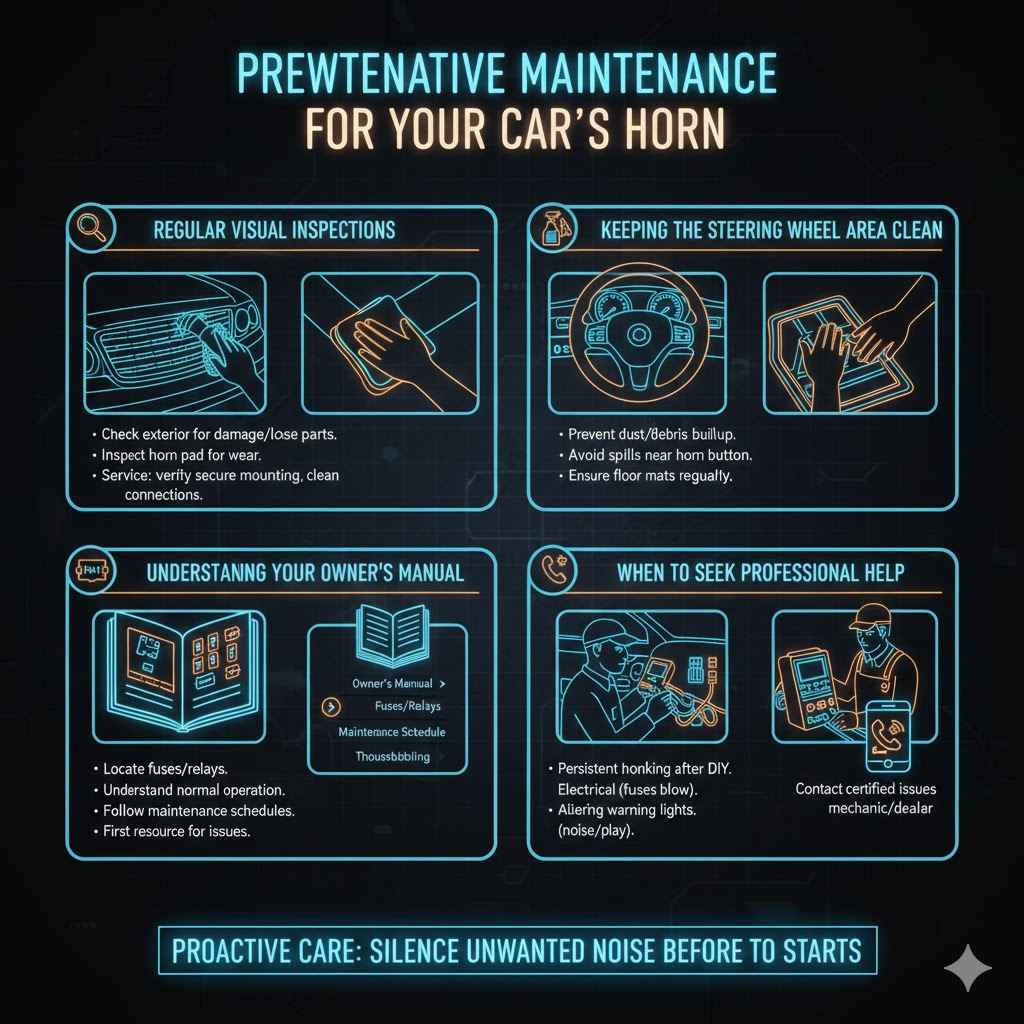
Preventative Maintenance For Your Car’s Horn
Keeping up with regular maintenance can help prevent many car problems, including issues with your horn. Simple checks can go a long way in ensuring all your car’s systems, including the horn, function as they should. Taking a little time for prevention can save you from a lot of hassle later on.
Regular Visual Inspections
Make it a habit to visually check your car’s exterior, especially the front grille area where the horns are often located. Look for any obvious damage or loose parts. When washing your car, you can also pay attention to the steering wheel area.
Check for any unusual wear or damage on the horn pad. These simple checks are easy and can catch minor issues before they become major problems.
During your car’s regular service appointments, ask your mechanic to check the horn system. They can verify that the horn is securely mounted and that the wiring connections are clean and tight. This small step during routine maintenance can prevent future headaches.
It’s about proactive care for your vehicle.
A visual inspection involves looking for physical damage, loose connections, or signs of corrosion. For the horn itself, this means ensuring it’s firmly bolted in place and that its electrical connectors are seated properly and free from debris. For the steering wheel area, it involves checking the horn pad for cracks or any foreign objects that might interfere with its operation.
These visual checks are the first line of defense.
Keeping The Steering Wheel Area Clean
The steering wheel area is where you interact with your car the most. Keeping it clean can help prevent dust and debris from accumulating around the horn button. A clean environment around the horn switch can help ensure it operates smoothly.
Avoid spilling drinks or food near the steering wheel, as sticky residues can gum up the works. Regular cleaning with appropriate interior cleaners can maintain its condition.
If you have floor mats that are too thick or don’t fit correctly, they could potentially interfere with the pedals or even the steering column. Ensure all floor mats are securely in place and not obstructing any controls. This is a safety issue as well as a maintenance point.
A clean and well-maintained interior contributes to the overall health of your car’s systems.
The horn button module within the steering wheel is sensitive to dust and grime. Over time, these contaminants can work their way into the mechanism, causing sticking or creating electrical resistance. A simple cleaning with a mild interior cleaner and a soft cloth can help prevent these issues.
Ensuring no loose items are around the steering column also prevents accidental activation or damage.
Understanding Your Owner’s Manual
Your car’s owner’s manual is a valuable resource. It contains information about your vehicle’s specific components, including the location of fuses and relays. Knowing where these are and what they do can be very helpful when troubleshooting.
It also explains normal operation for various systems. Familiarize yourself with the sections related to the electrical system and safety features.
The manual can also guide you on recommended maintenance schedules. Following these schedules can help keep your car in good working order. If you’re unsure about a particular procedure or warning light, the owner’s manual is the first place to look.
It’s written by the manufacturer to help you understand and care for your vehicle.
The owner’s manual provides diagrams and descriptions of your car’s systems. For example, it will show the layout of the fuse box and identify each fuse and relay by its function and location. This information is critical for any DIY diagnostics, such as checking or swapping relays.
It’s an essential tool for any car owner.
Frequently Asked Questions
Question: Why is my car horn blaring non-stop when it’s raining?
Answer: Rain can introduce moisture into electrical components, leading to short circuits or corrosion. This is especially true if seals are compromised. It might indicate a faulty horn relay, wiring issues that have been exposed to moisture, or a problem with the horn button module itself reacting to the damp conditions.
Question: Can a car horn blaring non-stop drain my car battery?
Answer: Yes, a continuously blaring horn will definitely drain your car battery. The horn uses a significant amount of electrical power, and if it stays on for an extended period, it can deplete the battery’s charge, potentially leaving you with a dead battery.
Question: How much does it typically cost to fix a car horn that is blaring non-stop?
Answer: The cost can vary widely. A simple fix like replacing a horn relay might cost $50-$150. If it’s a faulty horn switch or wiring issue, it could be $100-$300.
Replacing a clock spring or a complex steering wheel module can range from $300-$700 or more, depending on the car model.
Question: My car horn only blares when I turn the steering wheel. What could be the problem?
Answer: This is a classic symptom of a failing clock spring. The movement of the steering wheel can cause intermittent contact issues within the clock spring, leading to the horn activating only when the wheel is turned.
Question: I accidentally spilled soda on my steering wheel. Now my horn is honking. What should I do?
Answer: The soda has likely seeped into the horn button mechanism and caused it to stick or short out. You should try to clean the area gently with a damp cloth, but be careful not to get too much moisture inside. If it doesn’t resolve, the module might need to be professionally cleaned or replaced.
Summary
If your car horn is blaring non-stop, it’s likely due to a stuck horn switch, a faulty relay, wiring issues, or a problem with the clock spring. By checking these common areas and following basic troubleshooting steps, you can often identify the cause. If you’re uncomfortable with repairs or suspect a complex issue, a professional mechanic can safely and effectively resolve the problem for you.