Will Duct Tape Take Off Car Paint? Safe Removal Guide
Duct tape often leaves residue on car paint, and it can pull weak clear coat or fresh paint if left on, baked by heat, or peeled fast. Bad removal can mean adhesive cleanup, dull spots, or repaint work. This guide explains when duct tape is only messy, when it is risky, and how to remove it safely.
Will duct tape take off car paint?
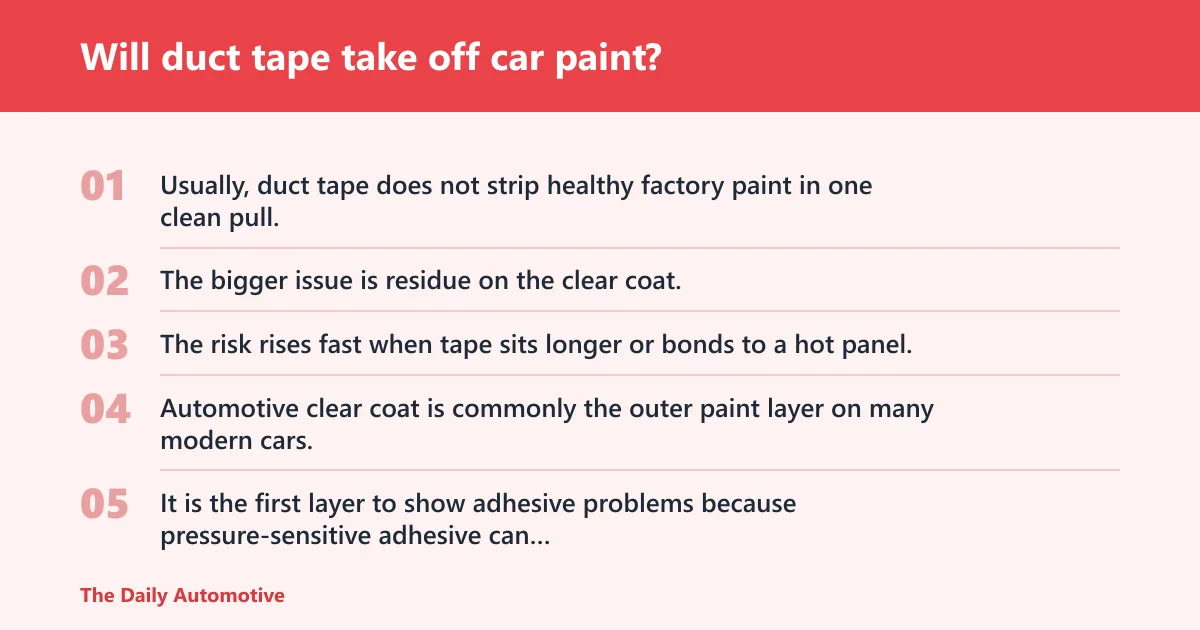


Usually, duct tape does not strip healthy factory paint in one clean pull. The bigger issue is residue on the clear coat, then possible finish lifting if the paint is weak, uncured, aged, or overheated. The risk rises fast when tape sits longer or bonds to a hot panel.
Why clear coat changes the risk
Automotive clear coat is commonly the outer paint layer on many modern cars. It is the first layer to show adhesive problems because pressure-sensitive adhesive can cling to the surface, leave residue, or mar it during removal. Aggressive pulling can also dull the finish before the base color is touched.
Duct tape is a reinforced repair tape for sealing, temporary mounting, and quick fixes. Its polyethylene backing uses woven mesh, and its hotmelt adhesive grabs right after application. That quick hold helps it stay put, but it also makes removal on paint harder.
When does duct tape damage paint versus leave residue?
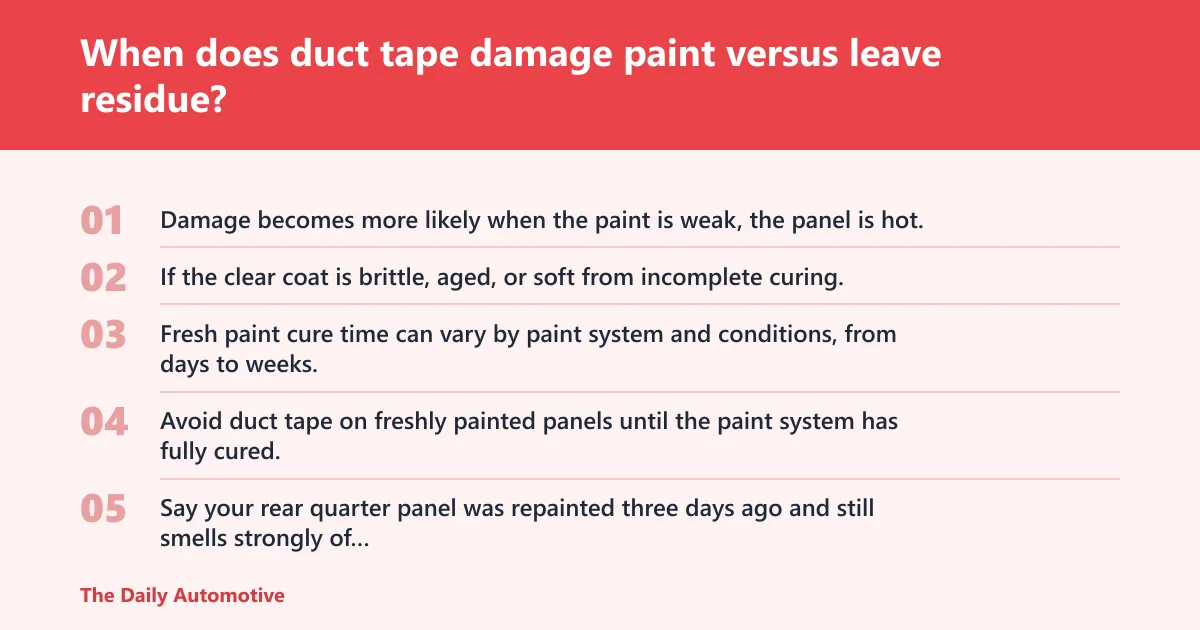
Duct tape often leaves residue. Damage becomes more likely when the paint is weak, the panel is hot, the tape sits too long, or the finish is still curing. If the clear coat is brittle, aged, or soft from incomplete curing, the adhesive can bond harder than the paint layer itself.
Paint age and cure time
Fresh paint cure time can vary by paint system and conditions, from days to weeks. Uncured paint is the highest-risk case. Avoid duct tape on freshly painted panels until the paint system has fully cured, unless the instructions clearly allow it.
Say your rear quarter panel was repainted three days ago and still smells strongly of solvent. Duct tape added for a temporary badge cover can leave adhesive marks or lift soft clear coat when removed. That is not a residue-only situation; it is a finish-damage risk.
Heat, sun exposure, and panel temperature
Surface temperature matters because hot panels increase adhesive bonding. Sun-exposed paint is higher risk than shaded paint, and warm clear coat can make duct tape stick harder than expected. Cold paint can create a different problem: the tape may remove more cleanly at first, but become brittle on pull and snap residue apart.
The tape’s stated temperature resistance is from -10 to 50 °C. That is a product figure, not a paint-safety promise. A car hood in direct sun can run hot enough to make removal much harder than the temperature printed on the roll suggests.
How dwell time changes adhesion
How long the tape sits on the panel matters. Short dwell time usually means residue only. Longer dwell time gives the adhesive more time to wet the clear coat, collect dust, and harden at the edge, which raises the chance of stubborn residue or finish lift.
A common mistake is assuming a strip used to hold a loose side mirror cover in place can stay on for days; on a painted door, that extra time can make the adhesive bond harder to remove and raise the risk of dull spots or residue.
Why old or weak finish is higher risk
Aged clear coat can be more fragile, especially if it has oxidation, prior repair work, or sun wear. Weak finish may not fail in a dramatic sheet, but it can haze, chip, or lift during tape removal. Older repaints are often less predictable than original factory finish.

How safe is duct tape on freshly painted car panels?
It is not safe enough to recommend on uncured paint. Fresh paint cure time is variable, but before full cure the surface can be soft, solvent-rich, and easy to mark. Duct tape on that kind of finish is the highest-risk case for residue, imprinting, and pull-up.
What to do instead while paint cures
Follow the paint system’s cure guidance, then use a low-tack alternative only if the refinish instructions allow tape contact. Automotive masking tape is often the safer short-term option for painted surfaces because it is made for temporary masking.
Do not assume all paint is ready just because it feels dry. Dry to the touch is not the same as cured through the film thickness. If a panel was recently sprayed, the safest move is to keep adhesive off it until cure time is complete.
How do you remove duct tape from car paint safely?
Remove duct tape by softening the bond, peeling slowly at a low angle, and stopping if the clear coat starts to haze or lift. Gentle heat can help, but the goal is to warm the tape area slightly, not bake the panel. Use paint-safe adhesive remover only after a spot test.
Step-by-step removal workflow
- Test a small, hidden area first.
- If the tape resists, warm the panel gently with low heat from a safe distance.
- Lift one corner and peel slowly at a low angle, keeping tension low.
- If adhesive remains, apply a paint-safe adhesive remover to a soft cloth, not directly to the panel.
- Wipe residue lightly, then clean the area with a mild wash.
Residue removal without marring the clear coat
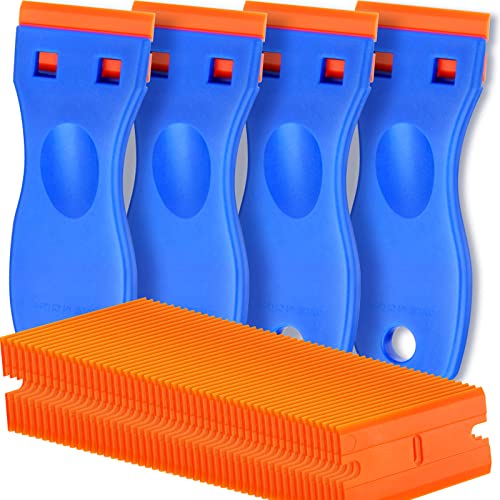
Adhesive remover should be treated as a paint-safe solvent, not a general cleaner. Spot-test it first, because some finishes react differently. Apply it to a soft cloth and work in small sections. If residue is stubborn, repeat the soft wipe rather than scrubbing harder.
Detailing clay can remove leftover adhesive when used correctly, but it requires lubrication. Used dry or with pressure, it can mar the clear coat. Stop if you see micro-marring, dulling, or the residue begins to smear without lifting.
What should you use instead of duct tape on a car?
For temporary work on painted panels, automotive masking tape is the first choice. It is paint-safe for short-term use and is built with a low-tack adhesive profile that is easier to remove than duct tape. For delicate trim or short positioning jobs, choose the gentlest tape that holds.
Other low-tack options for temporary placement
Look for tapes labeled for automotive masking or paint-safe temporary hold. The right choice depends on dwell time, panel temperature, and finish age. If the goal is holding a cover, marking a line, or protecting an edge, avoid using duct tape as the default.
Duct tape’s own product profile shows why it is a blunt tool on paint: 160 microns thick, sold in 48 mm by 10 m, 48 mm by 25 m, and 48 mm by 50 m rolls, and built for general repair rather than finish-sensitive work. Those details help for repairs; they do not make it gentle on clear coat.
Car-paint risk matrix: paint age, heat, dwell time, and tape type
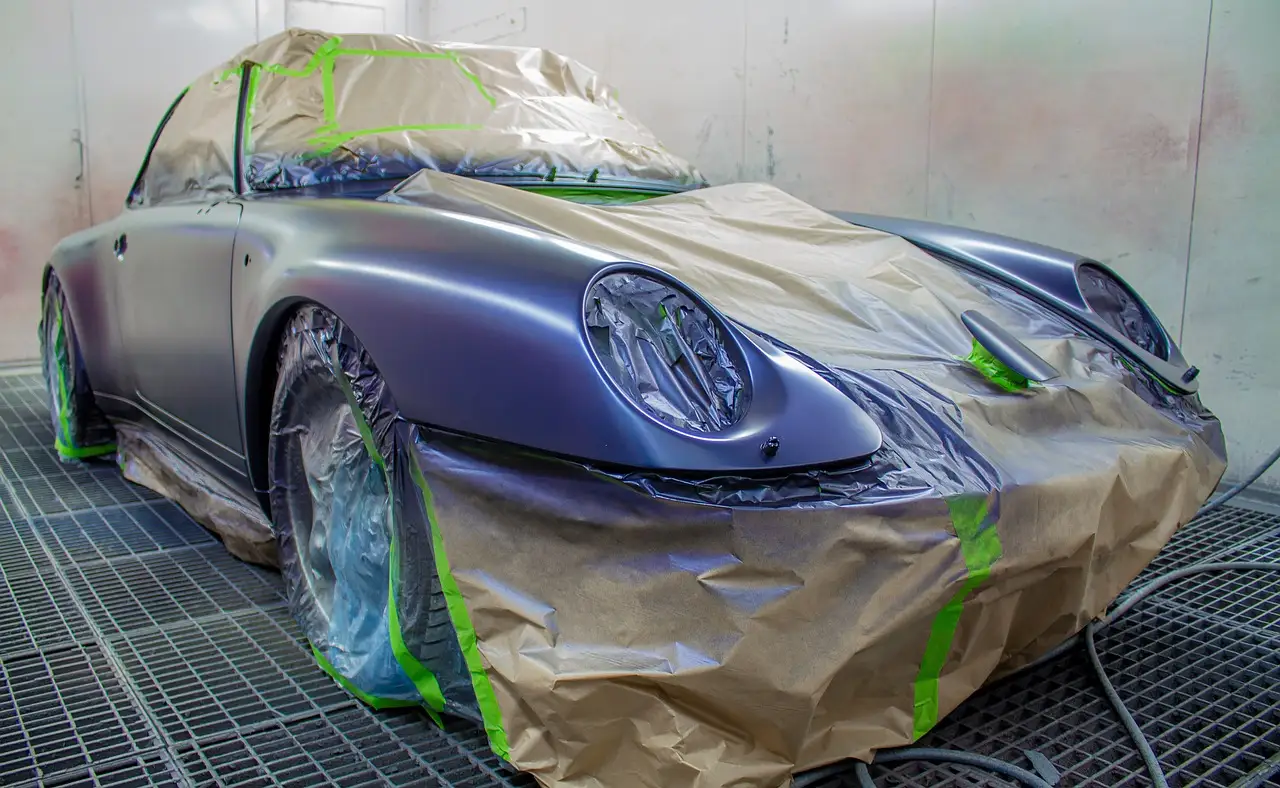
This matrix rates risk from low to high using four variables: paint age, heat, tape dwell time, and tape type. The safest removal method changes with the combination. Fresh paint, hot panels, long dwell time, and duct tape together create the highest-risk scenarios for residue and finish damage.
| Paint age | Heat / panel temp | Dwell time | Tape type | Risk level | Safest removal method |
|---|---|---|---|---|---|
| Fully cured factory paint | Cool or mild | Under 1 hour | Automotive masking tape | Low | Slow peel at low angle; wipe with a soft cloth if needed |
| Fully cured factory paint | Warm or sun-exposed | Several hours | Duct tape | Medium | Gentle warming, slow peel, then paint-safe adhesive remover after spot test |
| Aged clear coat with wear | Cool | Overnight | Duct tape | High | Test a hidden area, warm lightly, peel slowly, stop if the finish hazes |
| Freshly painted panel | Any | Any dwell time | Duct tape | High | Avoid removal on uncured paint; wait for full cure and use masking tape instead |
| Fully cured paint | Hot from sun | Long dwell time | Duct tape | High | Cool the panel first, then remove slowly with adhesive remover only if needed |
Low-risk, medium-risk, and high-risk patterns
Low-risk cases are usually fully cured paint, low heat, short dwell time, and masking tape. Medium risk appears when duct tape sits for a while on a warm but healthy panel. High risk includes fresh paint, aged clear coat, or any situation where the tape has baked on.
How do you get sticky residue off car paint?
Sticky residue comes off most safely with paint-safe adhesive remover, a soft cloth, and patience. Start with the mildest method and protect the clear coat. Do not scrape dry or use aggressive solvents. If residue will not release without pressure, switch methods before the finish is marked.
Residue removal tools and lubrication
Detailing clay, plush microfiber cloths, and a paint-safe adhesive remover are the usual tools. Clay must be lubricated so it glides rather than drags. That lubrication is what helps it pick up adhesive without grinding it into the clear coat.
When to stop and use a different method
Stop if the cloth starts grabbing, the residue turns gummy and smears, or the clear coat shows haze. Those are signs that pressure is too high or the finish is sensitive. At that point, move back to a gentler wipe or seek professional detailing help.
Frequently asked questions
Will duct tape take off car paint?
It can, but not usually from healthy factory paint in one pass. The more common result is residue on the clear coat. Damage becomes more likely on fresh paint, weak clear coat, hot panels, or tape that has been left on too long and removed too aggressively.
How long can duct tape stay on a car without damaging paint?
There is no safe universal time limit. On a cool, fully cured panel, short-term use is less risky than overnight use. Once heat, sun, aged paint, or long dwell time enter the picture, even a short hold can become harder to remove cleanly.
Does duct tape damage clear coat or just leave residue?
Both are possible. Residue is common because the adhesive is made to grab right away. Clear coat damage is more likely when the finish is weak, uncured, hot, or already worn. The safer assumption is that duct tape can leave residue first and cause damage second.
How do you remove duct tape from car paint safely?
Start with a low-angle peel after testing a hidden spot. If needed, warm the panel gently, then remove residue with a paint-safe adhesive remover on a soft cloth. Stop if the clear coat begins to haze, and avoid dry scraping, harsh solvents, or fast pulls.
What should I use instead of duct tape on a car?
Use automotive masking tape for short-term contact with painted surfaces. It is the better fit for temporary placement, layout work, and light masking because its adhesive profile is lower tack than duct tape. For delicate finishes, choose the least aggressive tape that still holds.
Is duct tape safe on freshly painted car panels?
No. Fresh paint is the highest-risk case because cure time may still be incomplete for days or weeks, depending on the system. Duct tape can bond too strongly to uncured paint and leave residue, imprinting, or pull-up. Wait for full cure and use a paint-safe alternative.
Products related to this article
Sponsored / affiliate links. As an Amazon Associate I earn from qualifying purchases. I may earn additional commission from eligible campaigns.