Will High Mileage Oil Hurt a New Car? The Proven Dangers
Using high mileage oil in a new car is not recommended and can be harmful. Its special additives are designed for older engines and can cause problems with new seals, introduce unnecessary chemicals, and potentially void your vehicle’s warranty. Always stick to the oil type specified in your owner’s manual.
You’re standing in the auto parts store, staring at a wall of motor oil. The choices are overwhelming! You see bottles for “new cars,” “synthetic blend,” and then you spot it: “high mileage oil.” It sounds impressive, right? It promises to protect and rejuvenate engines. You love your new car, so why not give it the best protection available?
It’s a common thought, but it can lead to a costly mistake. Choosing the right motor oil feels complicated, but I promise it’s simpler than you think. In this guide, I’ll walk you through exactly what high mileage oil is, why it’s the wrong choice for your new vehicle, and how to easily pick the perfect oil every single time. Let’s make sure your car’s engine stays happy and healthy.
What Exactly Is High Mileage Oil?
Before we dive into the dangers, let’s quickly understand what makes high mileage oil special. Think of it as a specialized formula, like a medicine prescribed for a specific condition. It’s designed for vehicles that have typically traveled over 75,000 miles.
As cars get older, their engines start to show signs of wear and tear. Rubber seals can become hard and brittle, leading to small oil leaks. Gaps between moving parts can widen, causing the engine to consume more oil. Sludge and deposits can build up over the years, hurting performance.
High mileage oil is engineered to fight these specific problems with a unique blend of additives:
- Seal Conditioners: These are special chemicals that cause old, hardened rubber seals to soften and swell slightly. This helps them create a tighter seal, stopping or preventing oil leaks.
- Extra Detergents: These powerful cleaning agents work to break down and remove the sludge and varnish that can build up inside an older engine over tens ofthousands of miles.
- Viscosity Modifiers: Some high mileage oils have a slightly different viscosity (thickness) to better coat worn engine parts, reduce oil consumption, and improve compression.
- More Anti-Wear Additives: They often contain a higher concentration of additives like ZDDP (Zinc Dithiophosphate) to provide an extra layer of protection on worn metal surfaces.
In short, high mileage oil is a fantastic product… for the right car. It’s a problem-solver for engines that have seen a lot of road. But what happens when you use this problem-solver in an engine that doesn’t have any problems?
Understanding the Needs of a New Car Engine
A new car engine is a marvel of modern engineering. The internal parts are built with incredibly tight tolerances, meaning the space between moving components is microscopic. The seals and gaskets are fresh, soft, and perfectly sized. The inside is spotlessly clean, with no sludge or deposits.
Your new car’s engine doesn’t need medicine; it needs the exact diet prescribed by its creators—the engineers who designed it. This “diet” is the specific motor oil listed in your owner’s manual. This oil is formulated to:
- Flow Quickly: Modern engines often require very thin, low-viscosity oils (like 0W-20). This allows the oil to circulate instantly on startup, protecting parts from wear when the engine is cold.
- Protect Advanced Technology: Many new cars have advanced features like turbochargers or gasoline direct injection (GDI). These systems run very hot and require specialized synthetic oils that can resist breaking down under extreme heat and pressure.
- Meet Strict Standards: New oils must meet the latest industry performance standards, such as those from the American Petroleum Institute (API). These standards ensure the oil protects against issues specific to modern engines, like low-speed pre-ignition (LSPI), which can cause serious damage.
A new engine needs an oil that lubricates efficiently, keeps it clean, and works in perfect harmony with its advanced systems. Using anything else is introducing an unknown variable that can disrupt this delicate balance.
The Proven Dangers: Why High Mileage Oil Can Hurt Your New Car
Now we get to the core of the issue. Using high mileage oil in a new car isn’t just unnecessary; it can be actively harmful. Here are the four biggest dangers you need to be aware of.
1. It Can Damage New Seals and Gaskets
This is the most significant risk. Remember those seal conditioners designed to swell old, brittle seals? In a new engine, the seals are already perfect. They are soft, flexible, and sealing exactly as they should.
When you introduce these swelling agents to healthy seals, you force them to expand beyond their designed size. This can cause several problems:
- Premature Wear: A seal that is constantly swollen is under stress. It can wear out much faster than a seal lubricated with the proper oil.
- Distortion: The swelling can cause the seal to become distorted or misshapen, ironically leading to the very leaks you thought you were preventing.
- Catastrophic Failure: In a worst-case scenario, a critical seal (like a rear main seal) could fail completely. This is an expensive repair that involves removing the entire transmission.
Using high mileage oil on new seals is like inflating a brand-new tire to double its recommended pressure. You’re pushing it beyond its limits and asking for trouble.
2. The Additive Package is Wrong for Your Engine
The powerful detergents in high mileage oil are designed to scrub away years of built-up gunk. A new engine is perfectly clean. It doesn’t need this aggressive cleaning action.
While these detergents are unlikely to cause immediate damage, they are simply not what the engine’s chemistry is designed for. The oil in your car is a carefully balanced formula. Introducing a high dose of unnecessary additives can, over time, disrupt this balance. Furthermore, the anti-wear additives might be different from what your manufacturer specifies, potentially leading to less-than-optimal protection for your new engine’s components.
3. It May Not Meet Modern Performance Standards
Car technology is always advancing. An engine built today is very different from one built 15 years ago. Because high mileage oil is formulated for older technology, it may not always carry the latest, most stringent certifications required for modern engines.
For example, your 2024 vehicle might require an oil meeting the “API SP” or “ILSAC GF-6” standard to protect against LSPI in its turbocharged engine. While some high mileage oils are updated to meet these standards, many are not. Using an oil without the correct certification means you are not giving your engine the specific protection it needs from modern-day problems.
4. You Can Void Your New Car’s Warranty
This is the financial bombshell. Every new car comes with a manufacturer’s warranty, which is a promise to cover the cost of repairs for certain parts, including the engine, for a set period.
However, this promise comes with a condition: you must maintain the vehicle according to the manufacturer’s specifications. This is clearly laid out in your owner’s manual, and it always includes the exact type, viscosity, and certification of motor oil to use.
If you use high mileage oil (or any oil other than what is specified) and an engine component fails, the dealership can perform an oil analysis. If they find you’ve used the wrong oil, they have the right to deny your warranty claim. Suddenly, a repair that should have been free could cost you thousands of dollars out of pocket. According to the Magnuson-Moss Warranty Act, a company cannot void your warranty just for using an aftermarket part, but they can deny a claim if they can prove the non-specified item (like the wrong oil) caused the failure.
High Mileage Oil vs. Standard Oil: A Clear Comparison
To make it even simpler, let’s look at the key differences side-by-side. This table shows why each oil is suited for a different stage of a car’s life.
| Feature | Standard Synthetic Oil (For New Cars) | High Mileage Oil |
|---|---|---|
| Target Engine | New to mid-life engines (0-75,000 miles) with tight tolerances. | Older engines (75,000+ miles) with wear and aging seals. |
| Seal Conditioners | Contains none. Formulated to maintain healthy, new seals. | Contains powerful swelling agents to rejuvenate old, brittle seals. |
| Detergent Level | Balanced level to keep a clean engine clean. | Elevated level to clean out years of existing sludge and deposits. |
| Primary Goal | Provide maximum protection, fuel economy, and performance for a new engine. | Solve common problems of older engines, like leaks and oil consumption. |
| Warranty Compliance | Guaranteed to meet warranty requirements when the correct grade is used. | May not meet specific manufacturer requirements and could void a new car warranty. |
What To Do If You Accidentally Used High Mileage Oil in Your New Car
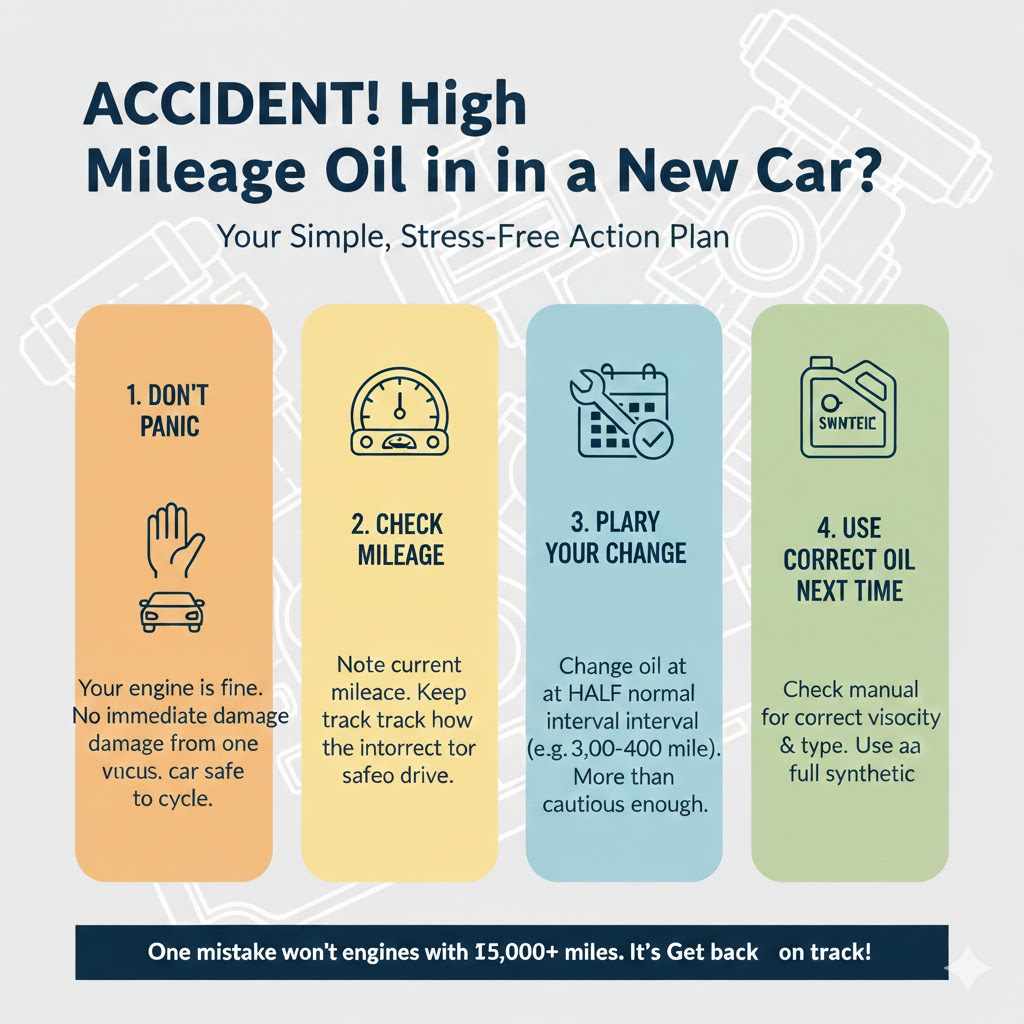
If you’re reading this and realizing you just put high mileage oil in your new car, take a deep breath. It’s not the end of the world, especially if it was just one time.
A single oil change with the wrong oil is highly unlikely to cause immediate, catastrophic damage. The key is to fix the mistake promptly. Here’s what to do:
- Don’t Panic: Stressing won’t help. The engine will be fine for a short period.
- Don’t Wait: Do not continue driving for thousands of miles until your next scheduled oil change. The goal is to get the wrong oil out as soon as you reasonably can.
- Schedule a New Oil Change: Call your mechanic or plan to do it yourself within the next week or few hundred miles. The sooner, the better.
- Use the Correct Oil This Time: This is your chance to get it right. Open your owner’s manual, find the “Capacities and Specifications” section, and buy the exact oil and a new, high-quality oil filter recommended by the manufacturer.
- Keep the Receipt: Hold onto the receipt for the correct oil and filter. This serves as proof that you performed the proper maintenance, which is important for your warranty records.
The Easiest Way to Choose the Right Oil, Every Time
You don’t need to be a mechanic to be an expert on your car’s oil. You just need to know how to read.
Your Owner’s Manual is Your Best Friend
The single most reliable source of information for your car is the owner’s manual sitting in your glove box. In it, the engineers who built your car tell you exactly what you need.
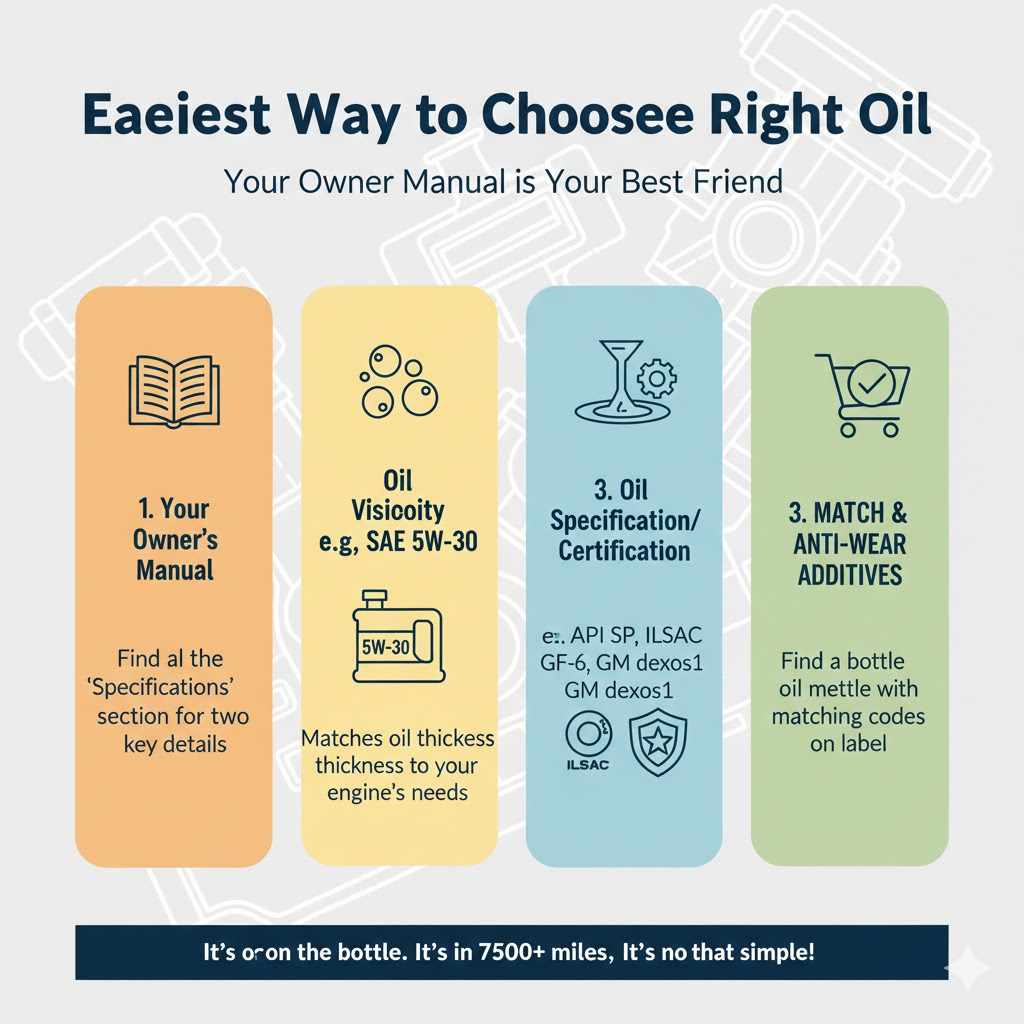
Look for a section titled “Vehicle Maintenance,” “Specifications,” or “Fluid Capacities.” You are looking for two key pieces of information:
- Oil Viscosity Grade: This will look like “SAE 0W-20” or “SAE 5W-30”. The “W” stands for winter, and the numbers refer to the oil’s thickness at cold and hot temperatures. Your job is not to guess which is best; it’s simply to use the grade they tell you to.
- Oil Specification/Certification: This looks like a code, such as “API Service SP” or “ILSAC GF-6.” Sometimes it will be a manufacturer-specific code like “GM dexos1 Gen 3.” This code is a guarantee that the oil has passed a series of tests to prove it can protect your specific engine.
Once you have this information, just go to the store and find a bottle that has those exact numbers and codes on the label. It’s that simple! You are now buying the perfect oil for your car and completely protecting your warranty.
A Quick Look at an Oil Bottle
All the information you need is right on the bottle, usually on the front and back. The viscosity (e.g., 5W-30) is always in large print on the front. The certification seal, often called the API “Starburst” or “Donut,” is usually on the back label. Match these to your manual, and you’re good to go.
Frequently Asked Questions (FAQ)
1. At what mileage should I start using high mileage oil?
Most manufacturers recommend switching around 75,000 miles. However, the best time to switch is when your car starts to show signs of aging, such as small oil leaks or increased oil consumption. If your 100,000-mile car runs perfectly and doesn’t leak or burn oil, there’s no urgent need to switch from the high-quality synthetic oil it’s used to.
2. Is high mileage oil better quality than regular synthetic oil?
It’s not “better,” it’s “different.” Think of it as work boots versus running shoes. Both are high-quality footwear, but they are engineered for very different tasks. Regular synthetic oil is designed for the high-performance demands of a new engine, while high mileage oil is designed to solve the specific problems of an older one.
3. My car is a few years old but has very low mileage. Should I use high mileage oil?
No. The formula is based on wear and tear from mileage, not just age. A five-year-old car with only 30,000 miles has an engine that is still considered “new” in terms of wear. Continue using the oil specified in your owner’s manual.
4. Can I mix high mileage oil with the regular oil already in my car?
It’s best not to. While all certified oils are compatible and won’t turn to sludge, mixing them dilutes the additive packages of both. You won’t get the full benefit of the high mileage additives, and you’ll be altering the chemistry of the regular oil. Always perform a full oil and filter change when switching oil types.
5. Will the dealership know if I used the wrong oil?
If you’re just in for a routine check-up, probably not. But if you have a major engine failure and file a warranty claim, they may take an oil sample for analysis. If the analysis shows the wrong type of oil was used, it gives them a reason to deny your claim. It’s a risk that is simply not worth taking.
6. Is high mileage oil a permanent fix for engine leaks?
No, it’s a temporary solution. The seal conditioners can help stop minor drips and seeps from aging seals. However, it cannot fix a cracked seal, a failed gasket, or a major mechanical leak. If your car has a significant leak, high mileage oil is a bandage, not a cure. You still need to see a mechanic for a proper repair.
7. What if my older, high-mileage car doesn’t have any leaks?
That’s great! Many modern, well-maintained engines can go well beyond 100,000 miles without any issues. High mileage oil can still be beneficial as a preventative measure. Its enhanced additives can help keep those seals in good condition and clean the engine to prevent future problems, but it isn’t strictly necessary if you’re using a quality full synthetic already.
Conclusion: Protect Your Investment the Smart and Simple Way
Your new car is one of the biggest investments you’ll make, and its engine is its heart. The temptation to use a product that sounds “extra strong” or “protective,” like high mileage oil, is understandable. But as we’ve seen, this is a case where more is not better.
High mileage oil is an excellent tool for older cars, specifically designed to combat the wear and tear that comes with age. For a new vehicle, it’s the wrong tool for the job—one that can cause harm to seals and jeopardize your warranty.
The best thing you can do for your new car is simple: trust the people who built it. Open your owner’s manual, use the exact oil they recommend, and change it on schedule. That simple act is the single most effective way to ensure your engine runs smoothly, powerfully, and reliably for many years and many miles to come. You’ve got this!