Will My Car Stop Running If Key Light Is On?
Seeing a light on your car’s dashboard can be a bit nerve-wracking, especially if you’re new to driving. The question “Will My Car Stop Running If Key Light Is On?” pops up because it’s not always clear what a dashboard warning means. Is it a small issue or something serious that will leave you stranded?
Don’t worry, it’s a common concern! We’ll break down what this light means and what you can do, step by step. You’ll get a clear picture of what’s happening with your car.
Understanding Your Car’s Key Light Warning
The key light on your dashboard is often related to your car’s anti-theft system or immobilizer. This system is designed to prevent your car from being stolen by making it impossible to start the engine without the correct key or fob. When this light illuminates, it typically means there’s an issue with the communication between your car and its key.
This could be due to a problem with the key itself, the car’s receiving module, or a temporary glitch. It’s important to know that in many cases, the car won’t suddenly stop running while you’re driving because of this light, but it might prevent you from starting it.
What the Key Light Signifies
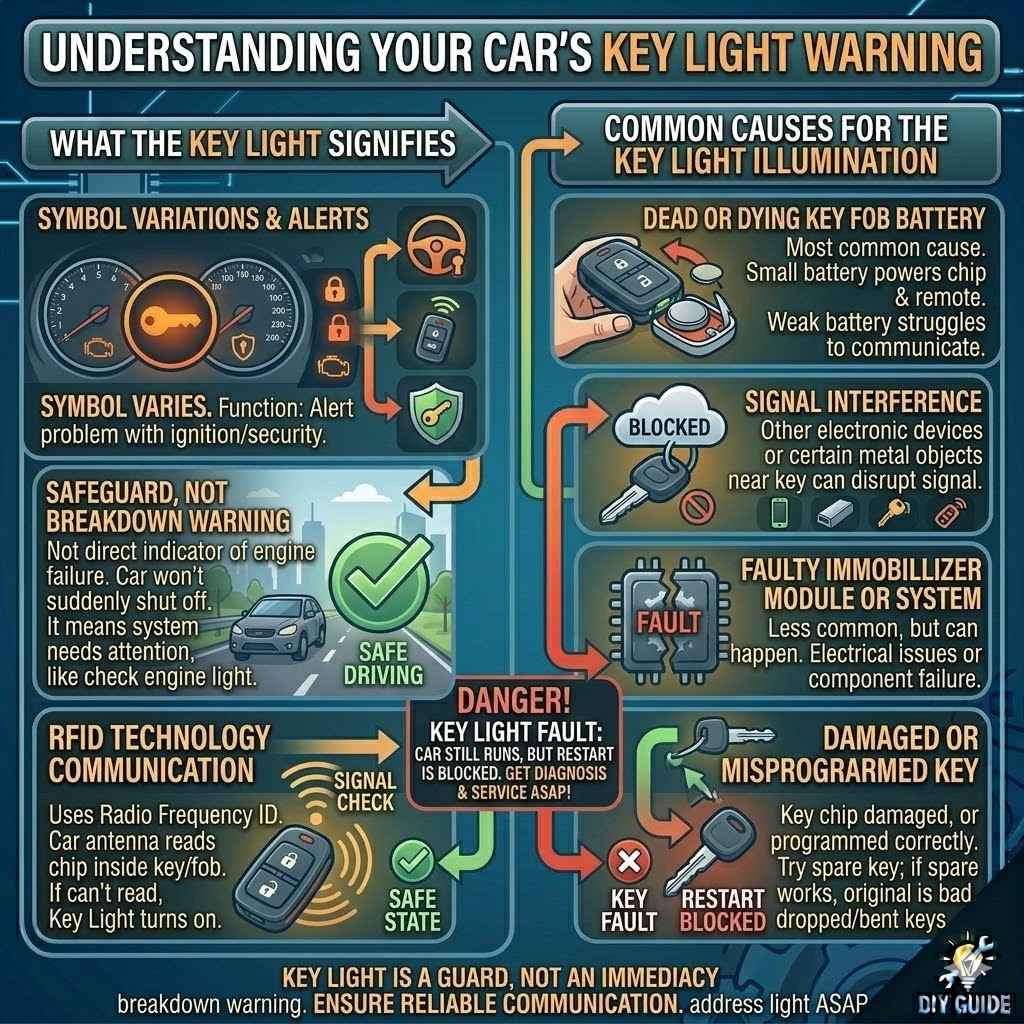
The symbol for this warning light can vary depending on your car’s make and model. It often looks like a key, a steering wheel with a keyhole, or an electronic key fob. Its primary function is to alert you to a problem with the car’s ignition system or its security features.
This light isn’t usually a direct indicator that your engine is about to fail or that your car will suddenly shut off while you’re on the road. Instead, it’s a signal that something isn’t quite right with the system that allows your car to recognize its key and start up.
This system uses radio frequency identification (RFID) technology. Your car has an antenna that reads a chip inside your key or key fob. If the car can’t read the chip, or if there’s a problem with the immobilizer itself, the key light will turn on.
This is a safeguard, not an immediate breakdown warning. It’s like a check engine light; it means something needs attention, but not necessarily that the car will stop working right this second.
Common Causes for the Key Light Illumination
Several factors can cause your car’s key light to come on. One of the most frequent reasons is a dead or dying battery in your key fob. Most modern car keys or fobs contain a small battery that powers the chip and the remote functions.
When this battery weakens, the car might struggle to read the key, triggering the warning light. Replacing the battery is often a simple fix that can resolve the issue quickly.
Another common cause is interference. Sometimes, other electronic devices or even certain metal objects near your key can disrupt the signal. If you’ve recently purchased aftermarket accessories or are carrying a lot of metal items, try moving them away from your key and see if the light disappears.
It’s also possible that the car’s keyless entry system or the immobilizer module has a fault. This is less common but can happen due to electrical issues or component failure.
Sometimes, the issue might be with the key itself. The chip inside the key could be damaged, or the key might not be programmed correctly to your vehicle. If you have a spare key, try using it to see if the warning light persists.
If the light goes off with the spare key, then your primary key is likely the problem. Physical damage to the key, like dropping it or bending it, can also lead to such issues.
In some instances, the car’s antenna, which is responsible for reading the key’s signal, might be malfunctioning. This antenna is usually located around the ignition or steering column. If this component isn’t working correctly, it won’t be able to pick up the signal from your key, and the key light will illuminate.
This is a more technical issue that might require a mechanic’s attention.
Will My Car Stop Running If Key Light Is On While Driving?
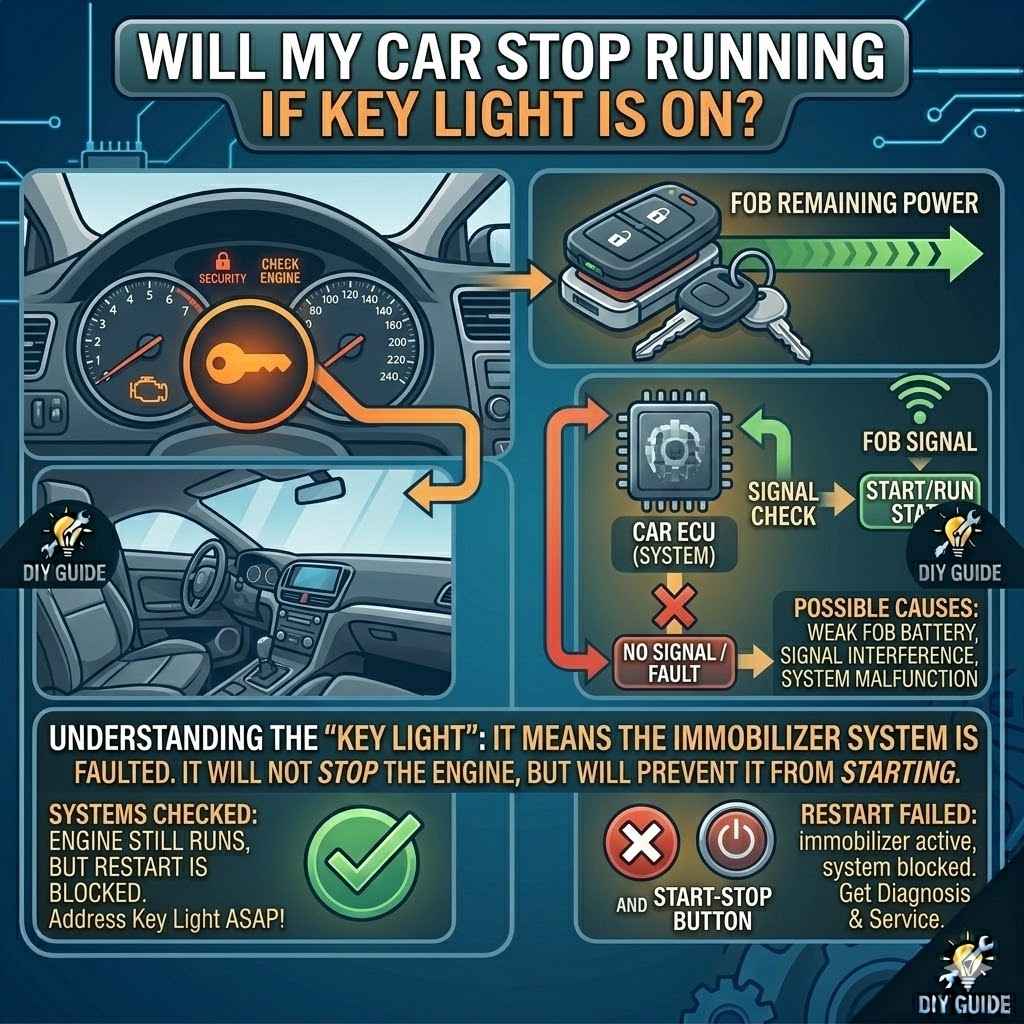
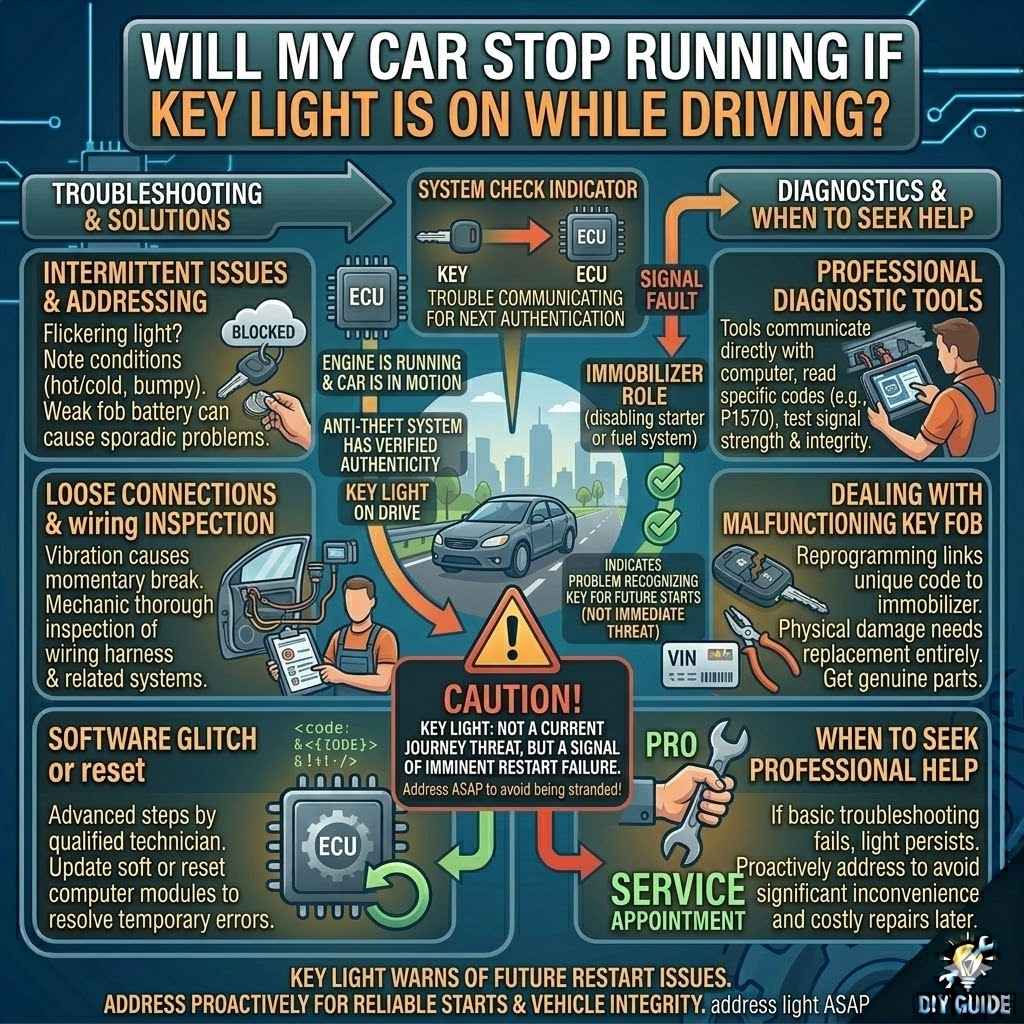
This is a primary concern for many drivers. The good news is that if the key light comes on while you are already driving, your car is highly unlikely to suddenly stop running. The anti-theft system is primarily designed to prevent the car from starting or to shut it down if it detects unauthorized tampering.
Once the engine is running and the car is in motion, the system has already verified the key’s authenticity. Therefore, a key light illuminated during a drive usually indicates a problem with recognizing the key for future starts, not an immediate threat to your current journey.
However, it’s crucial not to ignore the light. Even if your car is still running, the underlying issue could prevent you from starting it again once you turn it off. This could leave you stranded.
The system might be experiencing intermittent communication issues, and while it’s currently stable enough to keep the engine running, that stability might not last. Think of it like a low oil pressure light; the engine might keep going for a bit, but it’s a warning of imminent serious damage or failure.
The immobilizer system’s main job is to disable the starter or fuel system if the correct key isn’t present or recognized. Once the car is running, these systems are already engaged and functioning. The key light is more of a “system check” indicator.
It’s telling you that the computer is having trouble communicating with the key for its next “authentication” cycle. This could be due to a weak signal, a damaged key, or a fault in the car’s receiver.
It’s important to distinguish between the key light and other warning lights, such as the check engine light or oil pressure warning. Those lights often indicate more immediate mechanical or operational problems that could lead to the car stopping. The key light is specifically tied to the vehicle’s security and starting mechanism.
So, while not a cause for panic on the road, it absolutely warrants attention to avoid being unable to start your car later.
Intermittent Issues and How to Address Them
Sometimes, the key light might flicker on and off, or it might only appear under certain conditions. This can make diagnosing the problem trickier. An intermittent issue often points to a loose connection, a failing component that’s not completely broken yet, or a battery with fluctuating power.
If the light comes on and then goes off by itself, try to make a note of when it happens. Does it occur when the car is hot or cold? Does it happen after hitting a bump?
These details can be helpful for a mechanic.
For intermittent issues related to the key fob battery, try replacing it. Even if the battery isn’t completely dead, a weak one might cause sporadic connection problems. If replacing the battery doesn’t help, and the light continues to be intermittent, it might be worth having your key fob inspected for physical damage or internal faults.
A professional can test the fob’s signal strength and integrity.
Loose wiring or connections within the car’s immobilizer system can also lead to intermittent warnings. Vibration from driving can cause these connections to momentarily break and then re-establish. This is a situation where a mechanic would need to perform a thorough inspection of the wiring harness and components related to the keyless entry and immobilizer systems.
They might use diagnostic tools to check for error codes that are being logged by the car’s computer.
In some cases, the car’s computer itself might have a software glitch causing the intermittent warning. Modern cars have complex electronic systems, and like any computer, they can sometimes experience temporary errors. A software update or a reset of the car’s computer modules can sometimes resolve these phantom warnings.
However, this is a more advanced troubleshooting step that should be performed by a qualified technician.
Troubleshooting Steps When the Key Light Illuminates
When you see the key light, don’t panic. The first and easiest step is to try turning the car off and then restarting it. This simple reboot can often clear temporary glitches in the system.
If the light goes off, keep an eye on it, but you might be in the clear for now.
If the light stays on, try using your spare key or key fob. If the problem disappears with the spare, you’ve likely found the culprit: your primary key is damaged, its battery is dead, or it’s malfunctioning. In this case, you’ll need to address the issue with the faulty key, such as replacing its battery or getting a new key programmed.
Check your key fob for any signs of damage. Has it been dropped, exposed to water, or crushed? If so, this could be the reason.
If you suspect the battery is low, try replacing it with a fresh one. You can usually find the battery type printed on the old battery or in your car’s owner’s manual. This is a relatively inexpensive and simple fix for many key light issues.
Ensure there are no other electronic devices or metal objects directly next to your key fob when you try to start the car. Strong electromagnetic interference can sometimes disrupt the signal. If you’re in a parking garage or near powerful transmitters, this could be a temporary factor.
Moving the car to a different location might help isolate this as a cause.
If these basic steps don’t resolve the issue, it’s time to consult your car’s owner’s manual. It will likely have specific information about the key light warning for your particular model and may offer additional troubleshooting advice. If the manual doesn’t provide a clear solution or if the light persists, it’s best to schedule an appointment with a trusted mechanic.
Dealing with a Malfunctioning Key Fob
A malfunctioning key fob is one of the most common reasons for the key light to appear. The internal electronics of the fob can fail over time, or the battery might simply be too weak to transmit a strong enough signal. If you notice the range of your key fob’s remote functions decreasing, it’s a good indication that the battery needs replacing.
Most modern fobs use common coin-cell batteries that are readily available at most stores.
When replacing the battery, pay attention to how the fob is put back together. Ensure all the seals and connections are properly seated. A slightly misaligned piece can affect the signal strength.
After replacing the battery, try starting your car. If the key light turns off and the car starts normally, you’ve successfully addressed the problem. If the light remains on, the fob itself might have a more significant internal issue.
In cases where a new battery doesn’t fix the problem, the key fob might need to be reprogrammed by a dealership or a qualified automotive locksmith. The programming process links the fob’s unique transponder code to your car’s immobilizer system. If this link is broken or corrupted, the car won’t recognize the key.
Reprogramming is usually a straightforward procedure for professionals.
If your key fob is physically damaged, such as from being dropped or exposed to moisture, it may need to be replaced entirely. Some dealerships offer services to create and program new key fobs based on your car’s VIN. While this can be more expensive than a simple battery replacement, it’s necessary if the fob is beyond repair.
Always try to get a genuine replacement part or one from a reputable aftermarket supplier to ensure compatibility.
When to Seek Professional Help for the Key Light
If you’ve tried the basic troubleshooting steps and the key light warning persists, it’s time to bring your car to a professional. Mechanics have specialized diagnostic tools that can communicate directly with your car’s computer system. These tools can read error codes related to the immobilizer, keyless entry, and ignition systems, providing a much clearer picture of what’s going wrong.
A mechanic can test the strength and integrity of your key fob’s signal, as well as the functionality of the car’s antenna and the immobilizer control module. They can also check for any issues with the car’s wiring harness or fuses that might be affecting the system. If the problem is with the car’s internal computer, they can often diagnose and recommend the necessary repairs or software updates.
Don’t delay seeking professional help if the key light continues to be an issue. While it may not cause your car to stop running immediately, it could lead to a situation where you cannot start your vehicle at all. This is especially problematic if you rely on your car for daily commutes, errands, or emergencies.
Getting it checked out proactively can save you from more significant inconvenience and potentially costly repairs down the line.
A qualified technician will be able to pinpoint the exact cause of the warning light, whether it’s a faulty sensor, a communication error between modules, or an issue with the key programming. They can then perform the necessary repairs, such as replacing a defective part, repairing wiring, or reprogramming the immobilizer system. This ensures that your car’s security features are functioning correctly and that you won’t be left stranded.
Understanding Immobilizer System Diagnostics
The immobilizer system is a critical part of your car’s security, designed to prevent unauthorized use. When the key light is on, it often means the immobilizer isn’t happy with the key it’s seeing. Professional diagnostic tools can communicate with the car’s Engine Control Unit (ECU) or Body Control Module (BCM), which manage the immobilizer functions.
These tools can retrieve specific trouble codes, such as P1570, which might indicate a problem with the immobilizer-ECU communication or a lost key transponder signal.
A mechanic will use these codes to narrow down the potential causes. For instance, a code related to the antenna ring around the ignition switch would point them towards inspecting that specific component. They can also test the voltage and signal output of various sensors and modules within the immobilizer circuit.
This systematic approach helps avoid guesswork and ensures that the correct part is identified and replaced.
For example, one common scenario is where the immobilizer control module itself has a fault. This module acts as the brain of the anti-theft system, coordinating between the key, the antenna, and the ECU. If this module fails, it can trigger the key light and prevent the car from starting, even with a known good key.
A mechanic can test the module’s operation and, if necessary, replace and program a new one to the vehicle.
Another aspect of diagnostics involves checking the key’s transponder chip. This tiny chip emits a unique code that the car’s immobilizer system must recognize. If the chip is damaged or its code is corrupted, the car won’t start.
Technicians can use specialized readers to verify the integrity of the transponder chip and compare it against the codes stored in the car’s immobilizer system. This can help determine if a new key needs to be cut and programmed.
Preventative Measures and Maintenance Tips
While you can’t always prevent a component from failing, there are a few things you can do to minimize the chances of encountering issues with your car’s key light. Regular maintenance is key. Ensure your car’s battery is in good condition, as a weak car battery can sometimes cause voltage drops that affect various electronic systems, including the immobilizer.
Handle your key fobs with care. Avoid dropping them, exposing them to extreme temperatures, or getting them wet. If your fob uses a replaceable battery, consider replacing it periodically, perhaps once a year, even if you don’t notice any issues.
This proactive approach can prevent unexpected failures.
When you park your car, try to avoid areas with strong electromagnetic interference if possible. While unlikely to cause a permanent problem, prolonged exposure might contribute to intermittent signal issues. Keep your spare key in a safe and accessible place.
This way, if your primary key fails, you have an immediate backup to get your car started.
Regularly check your owner’s manual for any recommended maintenance related to the security system. Some manufacturers may suggest periodic checks or software updates for the immobilizer system. Following these recommendations can help keep your car’s security features in optimal working order and reduce the likelihood of the key light becoming a persistent problem.
Protecting Your Key Fob from Damage
Your key fob is a small but vital piece of technology that needs a little care. Think of it as a miniature computer. If you drop it on a hard surface, especially repeatedly, the internal circuit board can crack or components can loosen.
This can lead to intermittent signal failures or complete malfunction. When you have your keys in your hand, try to keep them secure and avoid tossing them around.
Water is another enemy of electronic devices. If your key fob gets wet, either from rain, dropping it in a puddle, or even spilling a drink on it, you need to act fast. Remove the battery immediately and let the fob dry out completely for at least 24-48 hours.
You can use a fan to help speed up the drying process. If it still doesn’t work after drying, the internal components may have corroded, and a replacement might be necessary.
Extreme temperatures can also affect the performance of electronic components. Leaving your key fob in a car that’s extremely hot or extremely cold for extended periods can potentially damage the battery or the internal circuitry. While modern fobs are designed to be durable, it’s best to avoid subjecting them to unnecessary environmental stress.
For instance, don’t leave your key fob in direct sunlight on a hot dashboard for hours.
If your key fob has a separate battery compartment, make sure it’s securely closed. A loose battery cover can lead to the battery becoming dislodged, interrupting the power supply to the chip. Regularly check that the battery cover is properly latched.
If it’s loose or damaged, consider getting it repaired or replaced to protect the battery and the fob’s internal workings.
Frequently Asked Questions
Question: Will my car stop running immediately if the key light comes on?
Answer: No, if the key light comes on while you are driving, your car is very unlikely to stop running immediately. The light typically indicates an issue with recognizing the key for starting the car, not an immediate failure of the running engine.
Question: Can I still start my car if the key light is on?
Answer: It depends. Sometimes the car will start, but the light will remain on, indicating a problem that needs attention. Other times, the car may not start at all if the system cannot properly read or authenticate the key.
Question: What is the most common reason for the key light to come on?
Answer: The most common reason is a weak or dead battery in your key fob. Other common causes include a faulty key, interference with the signal, or a problem with the car’s immobilizer system.
Question: Is it safe to drive with the key light on?
Answer: While your car may continue to run, it is not advisable to ignore the light. The underlying issue could prevent you from starting your car later, potentially leaving you stranded.
Question: How much does it cost to fix a key light warning?
Answer: The cost can vary widely. Replacing a key fob battery is inexpensive. Reprogramming a key or replacing a faulty key fob can range from fifty to several hundred dollars, depending on the make of the car and the specific issue.
Conclusion
Seeing the key light on your dashboard doesn’t mean your car will abruptly stop running, especially while you’re driving. It’s a signal that the car’s security system has a communication issue with your key. By understanding common causes like a dead key fob battery and performing simple checks, you can often resolve the problem.
If basic steps don’t work, seeking professional help ensures your car’s security features are restored, so you can drive with confidence.