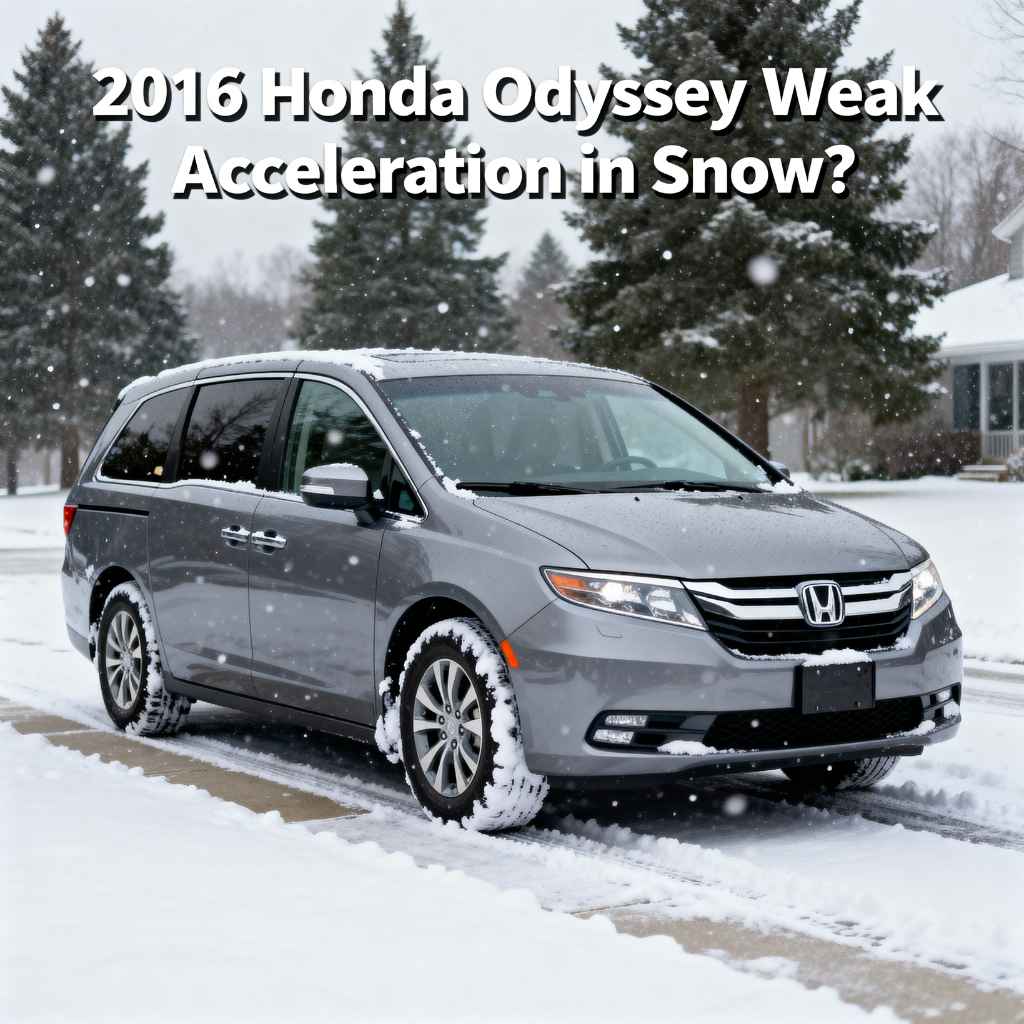
2016 Honda Odyssey Weak Acceleration in Snow?
If you’re wondering about 2016 Honda Odyssey Weak Acceleration in Snow?, you’re not alone. Many drivers find that their minivans struggle a bit when the weather turns cold and slippery. It can be tricky to get moving without spinning your tires too much.
This situation might seem confusing at first, but we’ll walk through it step-by-step. We’ll make it simple so you can feel confident about your Odyssey’s performance in the snow. Let’s get your van ready for winter!
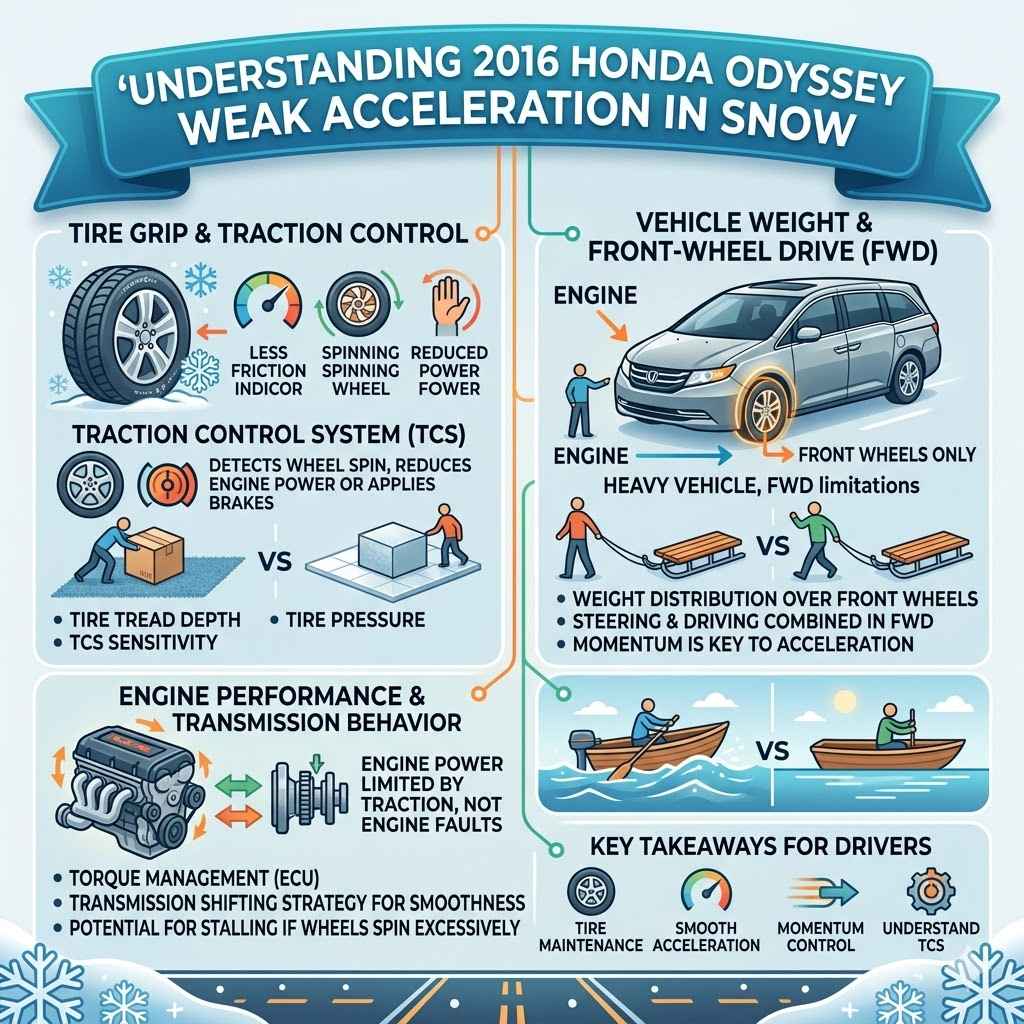
Understanding 2016 Honda Odyssey Weak Acceleration in Snow
This section explains why the 2016 Honda Odyssey might feel like it has weak acceleration when driving on snow or ice. It covers the basic reasons why this happens to many vehicles, especially front-wheel-drive ones. We will look at how the car’s systems react to slippery surfaces.
This will help you understand the feeling of reduced power. We aim to demystify why your Odyssey behaves the way it does in snowy conditions, making it less of a mystery.
Tire Grip and Traction Control
Tire grip is super important when you’re driving on snow. The tires are the only things connecting your car to the road. When the road is covered in snow or ice, there’s less friction between the tires and the surface.
This means your tires can’t grip as well. Without good grip, the engine’s power can’t be transferred to the wheels effectively. This leads to the feeling of weak acceleration because the wheels might just spin instead of pushing the vehicle forward.
The 2016 Honda Odyssey, like most modern cars, has a traction control system. This system is designed to help prevent wheel spin. When the car’s computer detects that a wheel is spinning too fast, it can reduce the engine power or even lightly apply the brakes to that wheel.
This is meant to regain traction. However, in very slippery conditions, this system might be very active. It can sometimes make the acceleration feel weaker as it constantly tries to manage wheel slip.
For example, imagine you’re trying to push a box across a carpeted floor versus a polished tile floor. On the carpet, your feet grip well, and you can push the box easily. On the tile, your feet might slip, and it’s harder to move the box.
The tires are like your feet, and the snow is like the tile floor. The traction control system is like someone trying to stop your feet from slipping too much, which might slow down how fast you can move the box.
Here are some key points about tire grip and traction control in snow:
- Tire Tread Depth: Good tire tread helps channel away snow and water, improving grip. If your tires are worn, they won’t be able to grip the road well in snowy conditions, leading to weak acceleration. Worn tires are a primary cause of poor performance in slippery weather.
- Tire Pressure: Proper tire inflation is also crucial. Over-inflated tires have a smaller contact patch with the road, reducing grip. Under-inflated tires can cause excessive heat and wear, and may not provide optimal traction either. Maintaining the correct pressure ensures the tire can make the best possible contact with the road surface.
- Traction Control System Sensitivity: The sensitivity of the traction control system can sometimes be a factor. While beneficial, overly aggressive intervention can make the vehicle feel sluggish. Drivers may sometimes wish for a way to temporarily adjust this sensitivity in certain situations, though this is not always an option.
Vehicle Weight and Front-Wheel Drive
The Honda Odyssey is a minivan, which means it’s a relatively heavy vehicle. While weight can sometimes help with traction by pushing the tires down onto the road, it also means more force is needed to get the vehicle moving. This is especially true on slippery surfaces where the available traction is already limited.
The 2016 Honda Odyssey is a front-wheel-drive (FWD) vehicle. This means that only the front wheels are powered by the engine. In FWD vehicles, a significant portion of the vehicle’s weight is over the front wheels, which can be good for traction during acceleration.
However, when accelerating on slippery surfaces, the front wheels are responsible for both steering and propulsion. This dual role means they can be more prone to losing traction and spinning.
If the front wheels lose grip, the car’s ability to accelerate effectively is severely impacted. The engine might be producing power, but it’s not translating into forward motion because the wheels are slipping. This can lead to the sensation of weak acceleration, even if the engine is performing as expected.
It’s a limitation of the physics involved in transferring power to the road surface.
Consider this analogy: Imagine trying to pull a heavy sled. If you’re pulling with only your front foot on slippery ice, it’s much harder than if both feet have good grip. The front wheels of your Odyssey are doing a similar job.
They are pulling the heavy van forward, and if they can’t get a good bite, the pulling power feels weak.
Here’s why FWD and vehicle weight matter in snow:
- Weight Distribution: While the Odyssey is heavy, much of that weight is over the front wheels, which helps with traction. However, in very slippery conditions, even this weight isn’t enough to overcome the lack of friction if the tires can’t grip.
- Steering and Driving Wheels Combined: In an FWD car, the front wheels steer and drive. When you accelerate hard on snow, if these wheels lose traction, they can both slip and make steering control difficult. This is a common characteristic of FWD vehicles in poor weather.
- Momentum is Key: Once moving, a heavier vehicle can maintain momentum better. The challenge with an FWD Odyssey in snow is getting it moving from a standstill or low speeds when traction is minimal.
Engine Performance and Transmission Behavior
Your 2016 Honda Odyssey has an engine designed to provide ample power for daily driving. However, in snow, the engine’s full potential might not be accessible due to traction limitations. The engine itself is likely working correctly, but the way its power is delivered to the wheels is affected by the slippery conditions.
The engine’s computer system may also adjust engine output to help the traction control system work better.
The transmission in your Odyssey plays a role too. Modern automatic transmissions are designed to shift gears to optimize performance and fuel economy. In snowy conditions, the transmission might shift differently than you are used to.
It might hold gears longer or shift more smoothly to avoid sudden bursts of power that could cause wheel slip. This smoother, less aggressive shifting can contribute to the feeling of weaker acceleration.
Think of it like this: if you were rowing a boat, you would use smooth, consistent strokes to move forward on calm water. But if the water was choppy and difficult, you might use shorter, more controlled strokes to avoid tipping over. The transmission in snow behaves similarly, trying to make gentle movements to keep the vehicle stable and moving.
Let’s look at engine and transmission in snow:
- Torque Management: The engine control unit (ECU) can manage the engine’s torque output. In snow, it might intentionally reduce the amount of torque sent to the wheels, even if you’re pressing the accelerator hard. This is a safety feature to prevent loss of control.
- Transmission Shifting Strategy: The transmission’s computer is programmed to adapt to different driving conditions. In snow mode (if your Odyssey has one), or based on sensor inputs, it will likely aim for smoother, less abrupt acceleration and deceleration to maintain traction.
- Potential for Stalling: In very challenging situations, if the wheels spin excessively, the engine might struggle to maintain its operational speed, leading to a feeling of power loss or even a stall if not managed properly by the driver or the vehicle’s systems.
Improving 2016 Honda Odyssey Performance in Snow
Now that we understand why your 2016 Honda Odyssey might seem to have weak acceleration in snow, let’s talk about how to make it perform better. There are several practical steps you can take. These solutions focus on improving traction, ensuring your vehicle is properly maintained, and using smart driving techniques.
We will go through each one to help you feel more secure when driving in winter weather.
Tire Selection and Maintenance
Tires are arguably the most important component for winter driving performance. The type of tires you choose can make a massive difference in how your 2016 Honda Odyssey handles snow and ice. Investing in good winter tires is one of the most effective ways to combat weak acceleration and improve overall safety.
Winter tires are specifically designed with a rubber compound that stays flexible in cold temperatures, unlike all-season tires which can become stiff and lose grip. They also feature more aggressive tread patterns with deeper sipes (small cuts in the tread blocks) that help to bite into snow and ice, providing better traction. These features directly address the cause of weak acceleration by increasing the tire’s ability to grip the road surface.
Beyond choosing the right tires, regular maintenance is critical. Always check your tire pressure, as it can fluctuate with temperature changes. Properly inflated tires ensure the tire makes optimal contact with the road.
Also, keep an eye on your tire tread depth. As mentioned before, worn tires significantly reduce traction. Rotating your tires regularly can help ensure they wear evenly, extending their life and maintaining consistent performance.
Consider this: a set of dedicated winter tires can improve braking by as much as 25% and acceleration traction by up to 50% compared to worn all-season tires. This is a significant improvement that directly combats the “weak acceleration in snow” concern.
Here’s what you need to know about tires:
- Winter Tires: These are designed for temperatures below 45°F (7°C). They have a special tread compound that remains pliable in the cold, allowing for better grip. The tread patterns often include more biting edges for snow and ice.
- Tire Tread Depth: New tires typically have a tread depth of around 10/32 of an inch. When tread depth falls below 4/32 of an inch, traction is significantly reduced, especially in snow. It is recommended to replace tires when they reach 4/32 of an inch or less for winter driving.
- Tire Pressure Monitoring: Regularly check your tire pressure using a reliable gauge. For every 10°F drop in temperature, tire pressure can decrease by 1 PSI. Under-inflated tires can be dangerous and reduce traction.
- All-Season vs. Winter Tires: While all-season tires are a compromise, dedicated winter tires offer superior performance in true winter conditions. If you experience frequent snow and ice, winter tires are a worthwhile investment.
Driving Techniques for Snowy Conditions
Even with the best tires, your driving habits play a huge role in how your 2016 Honda Odyssey performs in the snow. Adopting specific driving techniques can help you maximize traction and avoid the feeling of weak acceleration. These methods focus on being smooth and gentle with your vehicle’s controls.
One of the most important techniques is to accelerate gently. Avoid sudden stomps on the gas pedal. Instead, press the accelerator smoothly and gradually.
This allows the tires to find grip without immediately overwhelming them, which causes spinning. If you feel the wheels starting to spin, ease off the accelerator slightly until traction is regained, then gently reapply pressure.
When turning, do so smoothly and at a reduced speed. Abrupt steering inputs can cause the tires to lose grip, especially when combined with acceleration. If you need to brake, do so well in advance and with light, steady pressure.
Slamming on the brakes can lock up the wheels, causing you to lose steering control. Remember to look further ahead than usual to anticipate stops and turns.
Using your vehicle’s transmission wisely can also help. If your Odyssey has a “snow mode” or a way to select lower gears, use it. Lower gears provide more torque to the wheels at lower speeds, which can help you get moving without excessive wheel spin.
If you have manual mode on your transmission, manually selecting first gear can be helpful from a stop.
Consider this scenario: You’re at a stop sign on a snowy hill. Instead of flooring it, you gently apply gas. If the wheels spin, you might slightly lift off the pedal until they grip, then reapply gently.
This controlled approach is much more effective than aggressive acceleration.
Here are some key driving techniques for snow:
- Smooth Acceleration: Apply the accelerator pedal slowly and steadily. Avoid rapid increases in engine speed. If the wheels begin to spin, ease up on the gas until traction is regained.
- Gentle Braking: Brake early and softly. Sudden braking can cause your tires to lock up, leading to a loss of control. Allow much more space between your vehicle and the one in front of you.
- Smooth Steering: Make turns gradually. Sharp turns can cause tires to lose grip, especially when combined with acceleration. Anticipate turns and slow down before entering them.
- Looking Ahead: Always look as far down the road as possible. This allows you to anticipate hazards, traffic slowdowns, and the need to brake or steer early, giving you more time to react smoothly.
Vehicle Maintenance Checks for Winter
Ensuring your 2016 Honda Odyssey is properly maintained is essential for safe and effective winter driving. Several key checks can help prevent issues that might exacerbate weak acceleration in snow. Regular upkeep means your vehicle’s systems are working optimally, even in harsh conditions.
First, check your battery. Cold weather can significantly reduce a battery’s performance. A weak battery might struggle to provide enough power, especially if other systems are drawing more current in the cold.
Ensure your battery is tested and in good condition before winter arrives.
Inspect your fluids. Antifreeze levels should be correct to prevent engine overheating or freezing. Your windshield washer fluid should be a winter-grade solution to keep your windshield clear of snow and ice.
Dirty or frozen windshields severely impair visibility, making driving much more dangerous.
Also, consider your brakes. Ensure your brake pads and rotors are in good condition. While we want to avoid hard braking in snow, having reliable brakes is critical for safety.
Any issues with your braking system can be amplified on slippery surfaces.
Finally, check your wiper blades. Worn wiper blades won’t clear snow and slush effectively, leading to poor visibility. Replacing them at the beginning of the season is a simple but important step for winter preparedness.
Here’s a checklist for winter maintenance:
- Battery Check: Have your battery tested to ensure it can handle the cold. A strong battery is vital for starting the engine and powering essential electronics.
- Fluid Levels: Ensure your antifreeze is at the proper level and mixture for your climate. Use a winter-grade windshield washer fluid.
- Brake System Inspection: Have your brakes checked for wear and proper function. Responsive brakes are a critical safety feature in all conditions.
- Wiper Blades: Replace worn wiper blades for clear visibility. They need to effectively clear snow, ice, and slush from your windshield.
- Lights: Ensure all your lights, including headlights, taillights, and turn signals, are working correctly. Good lighting is crucial for visibility in low-light winter conditions.
Troubleshooting Specific Issues
Sometimes, even with good tires and driving techniques, you might still experience less-than-ideal acceleration in snow with your 2016 Honda Odyssey. This section looks at more specific issues you might encounter and how to address them. We’ll explore common problems and offer practical solutions to help keep your minivan performing as well as possible.
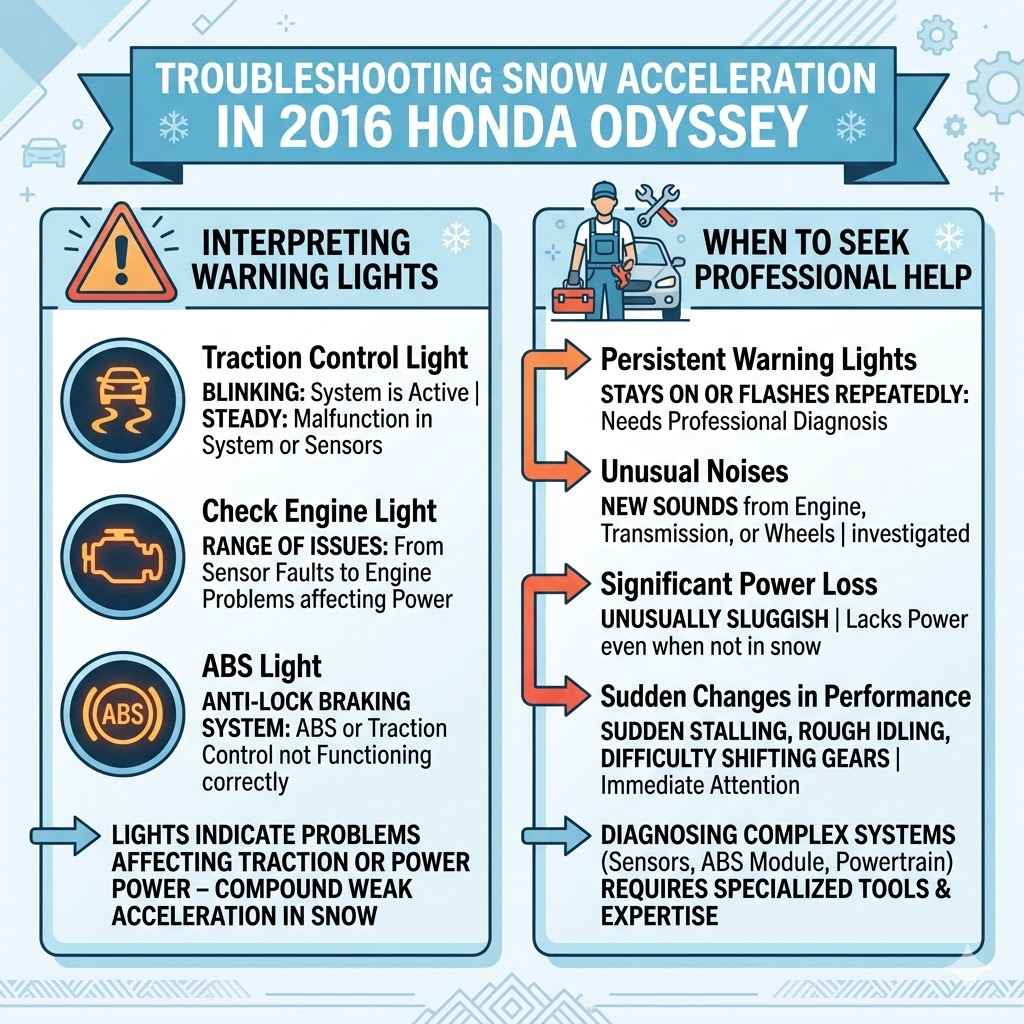
Interpreting Warning Lights
If you see any warning lights on your dashboard while driving in snow, it’s important to pay attention. A light that comes on might indicate a problem with a system that affects traction or engine performance. For instance, the traction control warning light might blink if the system is actively working.
However, if it stays on, it could signal a malfunction in that system.
Similarly, the check engine light could illuminate for various reasons. Some engine issues might cause a reduction in power, which would compound the problem of weak acceleration in snow. It’s always best to get any illuminated warning lights checked by a qualified mechanic to ensure there isn’t an underlying issue that needs fixing.
The ABS (Anti-lock Braking System) warning light could also come on. While primarily for braking, the ABS system works in conjunction with the traction control system in many vehicles. If the ABS light is on, it might mean the entire system that helps maintain control during braking and acceleration on slippery surfaces is not functioning correctly.
Here’s what to do with warning lights:
- Traction Control Light: A blinking light usually means the system is active. A steady light often indicates a problem with the traction control system itself or related components like wheel speed sensors.
- Check Engine Light: This can signify a wide range of issues, from minor sensor faults to more significant engine problems that could affect power output and fuel efficiency.
- ABS Light: If the ABS light is on, your anti-lock braking system may not be functioning. This means your brakes might not perform optimally in emergency situations, and traction control could also be affected.
When to Seek Professional Help
While many common issues related to weak acceleration in snow can be managed with simple checks and driving techniques, there are times when professional help is necessary. If you’ve tried basic solutions and are still experiencing significant problems, it’s time to consult a mechanic.
For example, if your traction control or ABS warning lights remain illuminated after starting the vehicle, or if they come on intermittently without a clear cause, it points to a system fault. These systems are complex, and diagnosing problems with wheel speed sensors, the ABS control module, or the traction control module requires specialized tools and expertise.
Another situation where professional help is crucial is if you suspect issues with your powertrain. If the engine is misfiring, the transmission is slipping, or there are other mechanical problems causing a noticeable loss of power, these need to be addressed by a technician. These types of issues are not typically fixable with DIY methods and can be dangerous if ignored.
Don’t hesitate to seek expert advice if you notice persistent problems. A mechanic can perform diagnostic tests to pinpoint the exact cause of your vehicle’s behavior. They can also inspect components you might not have access to, ensuring your 2016 Honda Odyssey is safe and reliable for all driving conditions.
Here are signs you should see a mechanic:
- Persistent Warning Lights: If a warning light stays on or flashes repeatedly, it indicates a problem that needs professional diagnosis.
- Unusual Noises: Any new or unusual sounds from your engine, transmission, or wheels while accelerating or driving should be investigated.
- Significant Power Loss: If your Odyssey feels unusually sluggish or lacks power even when not in snow, there might be a mechanical or electrical issue.
- Sudden Changes in Performance: If your vehicle’s behavior changes abruptly, like sudden stalling, rough idling, or difficulty shifting gears, it requires immediate attention.
Frequently Asked Questions
Question: Does the 2016 Honda Odyssey have all-wheel drive?
Answer: No, the 2016 Honda Odyssey is a front-wheel-drive vehicle. This means only the front wheels receive power from the engine.
Question: Will snow tires make a big difference on my 2016 Honda Odyssey?
Answer: Yes, snow tires can make a significant difference. They are designed with special tread patterns and rubber compounds that improve grip on snow and ice, helping with acceleration and control.
Question: How can I tell if my traction control is working?
Answer: Typically, the traction control warning light will blink on your dashboard when the system is actively reducing wheel spin. If the light stays on continuously, it may indicate a problem with the system.
Question: Is it normal for my Odyssey to slip a bit in the snow?
Answer: Some slipping is normal in very slippery conditions, but excessive slipping or feeling very weak acceleration suggests you might need better tires or to adjust your driving technique.
Question: Can I use tire chains on my 2016 Honda Odyssey?
Answer: It’s generally not recommended to use tire chains on minivans like the 2016 Honda Odyssey due to potential damage to the vehicle’s body and suspension. Always consult your owner’s manual or a dealership for specific advice on your model.
Wrap Up
Addressing 2016 Honda Odyssey Weak Acceleration in Snow? is about improving traction. Choosing the right tires and driving smoothly are key. Ensure your vehicle is well-maintained, and pay attention to warning lights.
With these steps, your Odyssey can handle snowy roads much better.