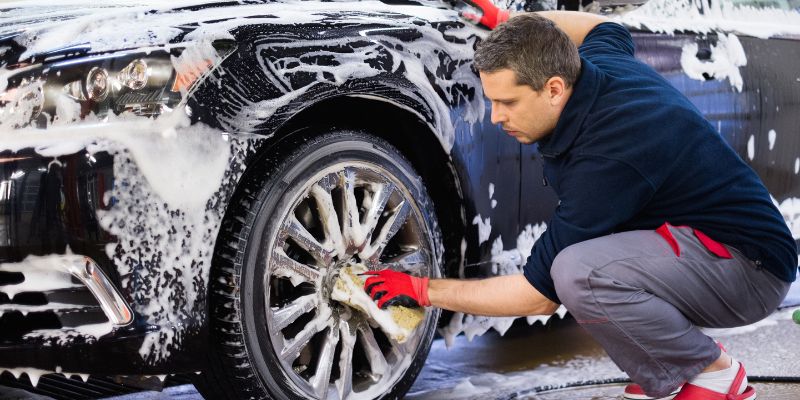
How Do Car Washes Work? Tunnel, Touchless & In-Bay Explained
Car washes clean vehicles using one of three core systems: tunnel/conveyor, in-bay automatic, or touchless — each running a pre-soak, wash, rinse, and dry cycle, but only some add a spot-free rinse with deionized water. Skipping that step is why some washes leave mineral spots on dark paint. This guide breaks down each system, the 6-stage wash cycle in order, and the safety steps that keep your car and the equipment damage-free.
Quick Answer
Automatic car washes pull or push your car through a series of stations — pre-soak, wash (brushes, foam, or touchless jets), rinse, and a final deionized spot-free rinse — before forced-air blowers dry it, usually in 3 to 5 minutes. Manual and self-service washes use the same basic stages, just by hand.
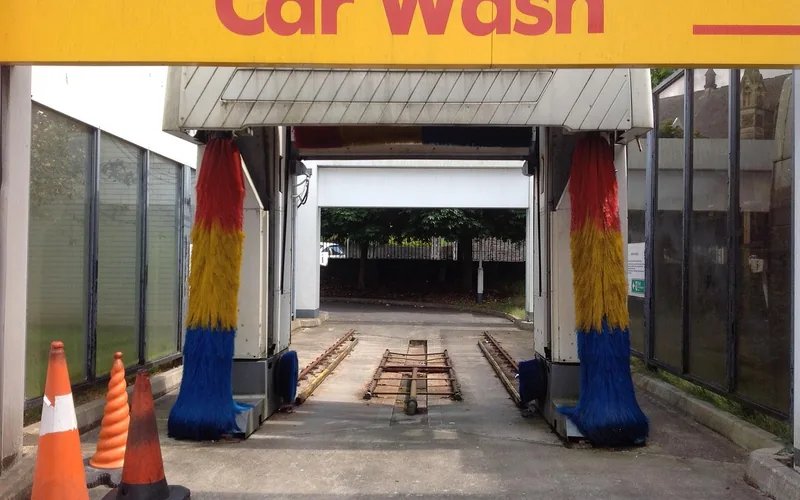
The 3 Types of Car Wash Systems (and How Each One Works)
Every automatic car wash falls into one of three categories, and the difference isn’t just speed — it changes how the equipment touches your car.
Tunnel (Conveyor) Car Washes
A tunnel car wash is a long structure that pulls your car through on a conveyor track while you stay in neutral. Rollers grip the front tires and tow the car past a fixed sequence of stations — entrance arch, tire applicator, soap, brushes or cloth wraps, rinse, and dryers. Because multiple cars move through at once, tunnels typically process 40 to 60 vehicles an hour, far more than a single-car bay.
In-Bay Automatic Car Washes
An in-bay automatic keeps your car parked in one spot while a rotating arm or gantry moves back and forth around it, spraying, scrubbing, and rinsing in place. In-bays can run touchless or soft-touch (cloth/brush) cycles, need less building space than a tunnel, and cost less to install — but they wash one car at a time, so throughput tops out around 10 to 15 cars an hour.
Touchless Car Washes
A touchless car wash is a system that cleans a vehicle with high-pressure water jets and stronger detergents alone — no brushes, cloth strips, or any other solid material ever contacts the paint. Sensors help the system adjust water pressure and dwell time to break down dirt chemically instead of scrubbing it off. That makes touchless the gentlest option for the clear coat, though it can leave more stubborn, baked-on grime behind than a friction wash. Our full guide to touchless car washes covers the chemistry and when it’s worth the extra cost.
| System | How It Cleans | Throughput | Best For |
|---|---|---|---|
| Tunnel / Conveyor | Brushes, cloth wraps, or touchless jets on a moving line | 40–60 cars/hr | Busy locations, fast express washes |
| In-Bay Automatic | A single rotating arm cycles around a parked car | 10–15 cars/hr | Small lots, gas stations, low-traffic sites |
| Touchless | High-pressure water + stronger detergent, zero contact | Varies (tunnel or in-bay) | Freshly wrapped, ceramic-coated, or easily-scratched paint |
The Car Wash Cycle: 6 Stages, In Order
Whichever system you use, a full-service automatic wash moves through the same six stages — the main difference between wash types is whether stage 2 uses brushes, cloth, or water alone.
- Pre-Soak / Foam Arch: An entrance arch or wand coats the car in a cleaning solution that loosens dirt and softens bugs and tar before anything touches the surface.
- Wash: Rotating cloth strips or foam brushes agitate the loosened dirt (friction wash), or high-pressure jets and stronger detergent do the same job with no contact (touchless wash).
- Rinse: High-pressure water — often recycled from earlier in the wash — flushes off the soap and the dirt it lifted.
- Spot-Free Rinse: A final rinse using deionized (DI) or reverse-osmosis (RO) water, with the dissolved minerals stripped out, so the water sheets off and air-dries without leaving white mineral spots — the same principle behind DIY water filtration systems for car washing you can run at home with a garden hose.
- Wax or Sealant: Nozzles or foam applicators apply a liquid wax or polymer sealant that bonds to the paint for a water-repellent, glossy layer that typically lasts several days to a few weeks.
- Drying: Overhead and side blowers force high-volume air across the body to push off remaining water before it can spot-dry on the paint.
📊 The average conveyor car wash uses about 30 gallons of fresh water per vehicle (down from 34 gallons in 2002), and roughly half of all car washes now recycle 80% or more of the water they use — Source: International Carwash Association, 2018 Water Use Study
Self-Service Car Washes: How the Coin-Op Bay Works
A self-service bay runs the same wash and rinse stages, but you’re the one operating the equipment. Drive in, insert coins or tap a card, and the timer starts. Switch the wand between pre-soak, soap, rinse, and (on newer bays) a spot-free rinse or wax cycle, and move between them yourself as the timer counts down.
The tradeoff is control for effort: you can spend extra time on a muddy wheel well or bug-covered grille that an automatic wash would breeze past, and it’s usually the cheapest per-wash option. Our step-by-step guide to using a self-service car wash covers timing each cycle so you don’t run out of quarters mid-rinse.
Manual (Hand) Car Washes: Tools and Process
A hand wash uses the same core stages — pre-rinse, soap, rinse, dry — but no machine touches the car. The core kit is a wash mitt or sponge, pH-balanced car soap, a hose or pressure washer, and microfiber towels for drying; wax, glass cleaner, and tire shine finish the job.
- Rinse the whole car first to knock off loose grit before it can be dragged across the paint.
- Wash top to bottom in straight lines (not circles) with a clean, soap-loaded mitt, rinsing the mitt often.
- Rinse the soap off before it dries on the panel.
- Dry with a clean microfiber towel — patting, not rubbing, to avoid dragging grit into the clear coat.
- Apply wax, then glass cleaner, tire shine, and a quick vacuum of the interior.
Best Hand Wash Kit Pick
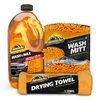
Armor All Car Wash Cleaning Kit (Soap, Mitt & Microfiber Towel)
A single bundle with everything the manual-wash steps above call for — no separate soap, mitt, and towel purchases needed.
- Best for: First-time hand-washers who want one purchase that covers soap, mitt, and drying towel
- Why we picked it: Matches every step in this guide’s manual wash process without mixing brands
- Main drawback: The included towel is fine for drying but not as plush as a dedicated detailing towel
Compare more hand-wash tool options
 Option 1 Chemical Guys Chenille Microfiber Wash Mitt
|
 Option 2 AUTODECO 22-Piece Car Wash Cleaning Tools Kit
|
 Option 3 TTRCB Microfiber Car Drying Towels (2-Pack)
|
As an Amazon Associate we earn from qualifying purchases.
For the tools that catch dirt best without hurting the paint, see our picks for the best heavy-duty car wash sponges, and for the final drying step, a dedicated car air dryer can finish the job faster than a towel alone.
Car Wash Safety: What to Do (and Not Do) Inside the Bay
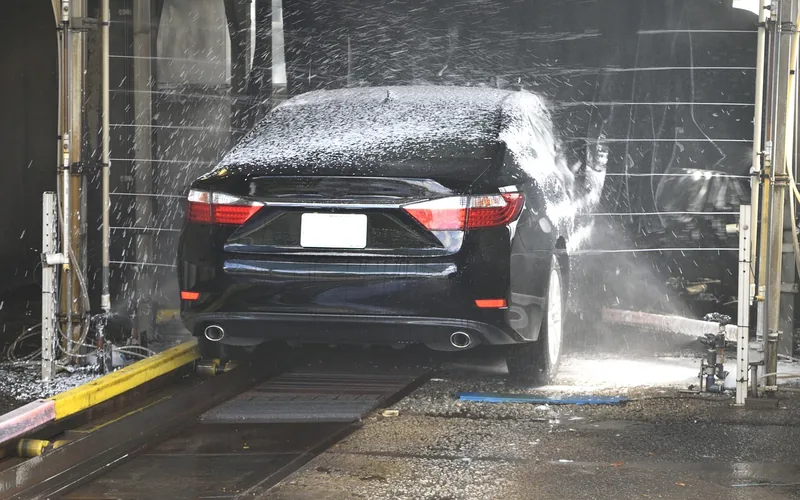
Fold in your side mirrors, close windows and the fuel door, and take your hands off the wheel once the conveyor grips your tires — steering or braking mid-wash is the most common cause of scraped bumpers and bent side mirrors. Turn off wipers, parking sensors, and any “auto hold” or self-parking features before you enter.
Should You Turn Off the Engine or Leave It Running?
This has changed. Older guidance said to shift to neutral and switch off the engine. But many newer vehicles engage an automatic electronic parking brake the instant the engine shuts off — and that locked brake can stop the wheels from rolling and cause the car to jump the conveyor track. Unless the wash posts specific instructions for your vehicle, the safer modern default is to leave the engine running in neutral, and disable “auto hold” beforehand if your car has it.
“When you turn off the engine, the automatic parking brake may engage and lock the tires — if that happens on your vehicle, the ignition needs to stay on throughout the wash cycle to avoid jamming the conveyor.”
How Car Washes Recycle Water and Reduce Waste
Most tunnel and in-bay systems recapture rinse water in an underground reclaim tank, filter it, and reuse it for the pre-soak and wash stages — only the final spot-free rinse needs fresh, treated water, since anything reused would just redeposit minerals. Biodegradable soaps and lower-flow nozzles cut both water and chemical use further, and a small but growing number of sites run reclaim pumps and blowers on solar power.
Common Car Wash Mistakes to Avoid
A hard sponge or dirty rag is the single biggest cause of swirl marks — stick to a soft microfiber mitt and rinse it often so trapped grit doesn’t get dragged across the clear coat. Washing in direct sun lets soap and water dry on the panel before you can rinse it, baking in water spots; work in shade when you can. Skip the air-dry: letting a car drip dry leaves mineral deposits the same way a missed spot-free rinse does, so pat it down with a clean microfiber towel instead of rubbing, which can grind in dust.
Frequently Asked Questions
How does a car wash system work?
A car wash system cleans a vehicle in stages: pre-soak, wash (with brushes, cloth, or high-pressure water alone), rinse, and dry, with sensors and timers keeping each station consistent. Tunnel systems move the car past fixed stations on a conveyor; in-bay systems keep the car still while equipment moves around it.
Do you turn off your engine at a car wash?
Not always. Older cars are typically fine turned off in neutral, but many newer vehicles engage an automatic parking brake when the engine shuts off, which can lock the wheels and jam the conveyor. Follow the wash’s posted instructions for your vehicle, and if in doubt, leave the engine running in neutral with “auto hold” disabled.
Do you stay in the car during a car wash?
Yes, in a standard automatic tunnel or in-bay wash you stay in the car with the windows up and hands off the wheel. Full-service washes and hand washes are the exception — you typically exit the vehicle before those begin.
Do you put your car in neutral when getting a car wash?
Yes, for a tunnel/conveyor wash. Neutral lets the rollers grip and tow your tires along the track without your drivetrain fighting the motion. In-bay automatics and self-service bays don’t use a conveyor, so follow the posted instructions there instead.
How do car wash dryers work?
Car wash dryers use large overhead and side-mounted blowers that force high-volume, high-speed air across the body panels, pushing remaining water off the paint before it can bead and spot-dry. Some systems add a light heat element, but the air velocity does most of the work, not the temperature.
What is a spot-free rinse, and why does it matter?
A spot-free rinse is a final rinse using deionized (DI) or reverse-osmosis (RO) water that’s had its dissolved minerals stripped out. Because there’s nothing left in the water to leave a residue, it sheets off the paint and air-dries clear instead of leaving the white mineral spots that plain tap water can cause, especially on dark colors.
What’s the purpose of a car wash, beyond looking clean?
Beyond appearance, regular washing removes road salt, bird droppings, tree sap, and bug acid before they etch or corrode the clear coat and metal underneath, and keeps windows and mirrors clear for visibility and safe driving. It also helps preserve resale value by protecting the paint from long-term damage.
Understanding how car washes work makes it easier to pick the right one for your car and paint condition — a touchless wash for freshly wrapped or ceramic-coated paint, a tunnel wash when you need speed, or a hand wash for the most control. For a look at what’s bundled into a full-service package, see our breakdown of what a car wash includes.
Products related to this article
Sponsored / affiliate links. As an Amazon Associate I earn from qualifying purchases. I may earn additional commission from eligible campaigns.