3 Best Bug and Tar Removers for Cars (2026): We Compared
Buy Meguiar’s Heavy Duty Bug & Tar Remover if you want a safe all-around spot cleaner for clear coat and modern paint systems, especially when you need foam that clings long enough to loosen stuck residue.
Quick comparison
| Product | Badge | Best for | Price | ||
|---|---|---|---|---|---|
 |
Meguiar’s Heavy Duty Bug & Tar Remover, Quick Bug and TarMeguiar’s | Our pick | 15 oz · 6 Pack · Heavy Duty Spray | $32.99
Price as of 16 Oct 2026
|
View |
 |
SONAX Insect Remover 533200 | High-Performance Bug ResidueSONAX | Also great | 500 ml · Single Bottle · Solvent-Free Spray | $13.99
Price as of 16 Oct 2026
|
View |
 |
Chemical Guys, Bug & Tar Remover, Fast-Acting Pre-Wash forChemical Guys | Budget pick | 16 oz · 1 Bottle · Fast-Acting Spray | $14.97
Price as of 16 Oct 2026
|
View |
Start with the residue, then check the surface. Fresh bugs usually call for the least aggressive option. Baked-on tar and adhesive need more dwell time, but they also raise the risk of clear-coat damage if you scrub too hard or work on the wrong trim.
For a quick call: choose Meguiar’s for clear-coat-safe bug and tar cleanup, Rain-X Pro when adhesive removal matters too, and Chemical Guys when you want a bug-and-tar cleaner that fits a foam cannon, foam gun, or bucket wash.
How we chose
This ranking weighs four things: residue type, surface safety, wipe-off effort, and value by likely repeat use. That matters because bug remover is not the same as tar remover, and a strong product that dries too fast can create more work instead of less.
Clear coat safety comes first. Clear coat is the paint protection layer on most modern vehicles, and harsh scrubbing can mar it, so the cleaner has to do more of the work before the towel touches the panel.
Also check surface coverage. A good pick should fit painted panels, trim, chrome, and glass with limits that are easy to see, not buried in fine print.
Road & Track’s broader field is useful here: 3D Bug Remover was the top pick, Stoner Car Care Tarminator Tar & Sap Remover was the best value, and Griot’s Garage Bug & Smudge Remover was the premium pick. That lines up with the buying logic on this page: fresh bugs, baked-on tar, and adhesive are different jobs.
A common first-timer mistake is spraying a remover on a hot panel and walking away. Suppose a hood is warm after a highway run, and the cleaner flashes off before you wipe it; you get streaks, not clean paint. Short dwell time matters, but the product still needs enough time to loosen the residue.
Meguiar’s Heavy Duty Bug & Tar Remover: best for clear coat-safe cleaning
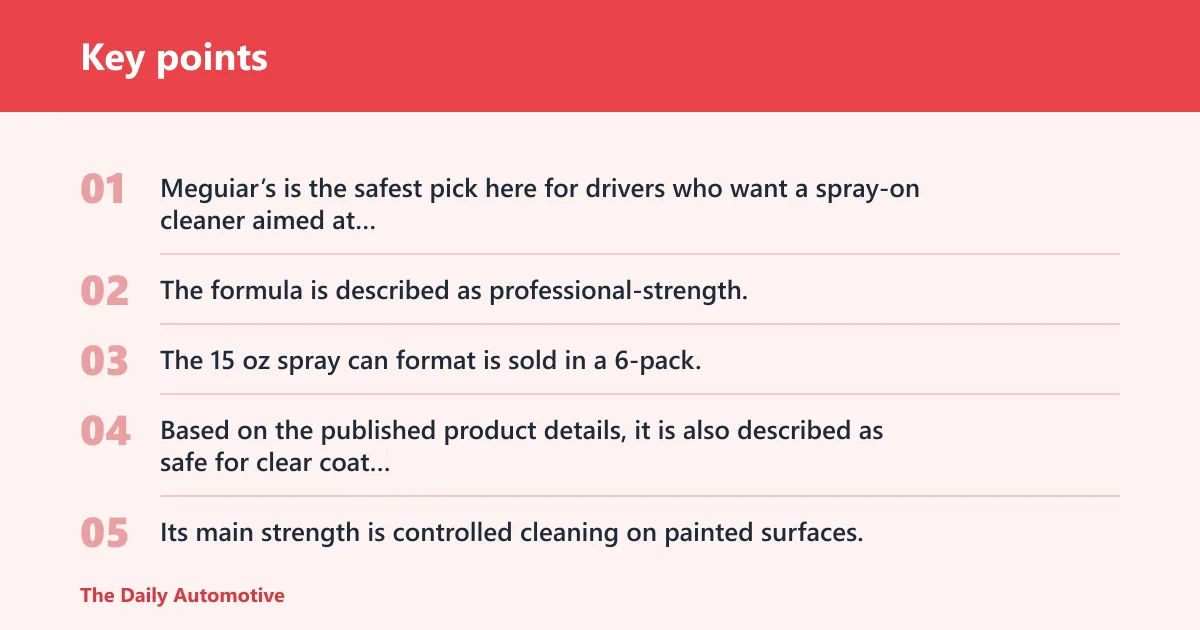
Meguiar’s is the safest pick here for drivers who want a spray-on cleaner aimed at stubborn road residue without pushing too hard on modern paint systems. The formula is described as professional-strength, and its Xtreme Cling foam is built to stay on the panel longer so the cleaner can work before wiping.
The 15 oz spray can format is sold in a 6-pack, which makes it practical for people who clean bugs often or want cans in more than one garage or trunk kit. Based on the published product details, it is also described as safe for clear coat finishes and modern automotive paint systems.
Its main strength is controlled cleaning on painted surfaces. Its main limit is that it is not the most versatile option if you want one product to handle adhesive residue as well as bug splatter and tar.
Best use case
Choose this for fresh bug splatter, moderate tar, and routine exterior cleanup where clear coat safety matters more than raw solvent strength. It fits the driver who wants a dedicated spray cleaner for painted panels and does not want to gamble with a harsher adhesive remover.
What to watch
The downside is simple: a foam cleaner still needs a towel and sometimes a second pass on heavier buildup. If the residue is old, baked on, or mixed with sticky adhesive, you may need a more targeted formula than this one.
Rain-X Pro 620213 3-in-1: best for bug, tar, and adhesive
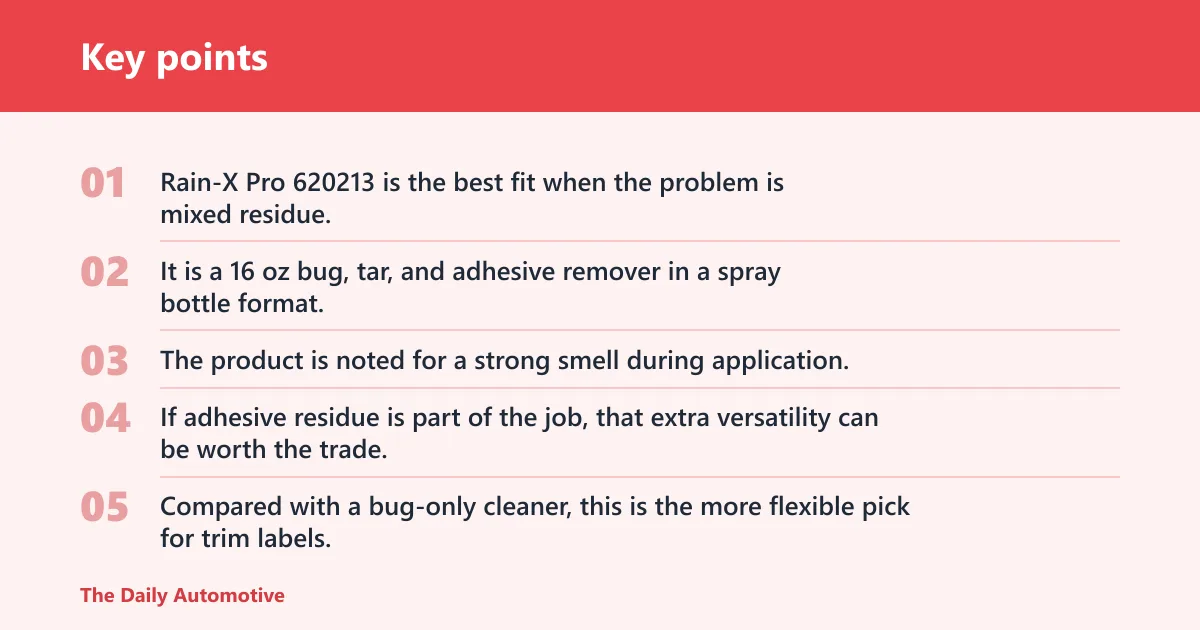
Rain-X Pro 620213 is the best fit when the problem is mixed residue. It is a 16 oz bug, tar, and adhesive remover in a spray bottle format, and that three-in-one scope is the point: one bottle for insect marks, road tar, and sticker residue.
The tradeoff is odor. The product is noted for a strong smell during application, so it suits open-air cleaning better than a closed garage session with poor ventilation. If adhesive residue is part of the job, that extra versatility can be worth the trade.
Compared with a bug-only cleaner, this is the more flexible pick for trim labels, old tape marks, or sticky film left after a badge or decal comes off. It still needs careful use on delicate finishes, because stronger residue removal often means more attention to wipe-off timing.
Best use case: choose
Choose this when a vehicle has bug splatter plus adhesive residue, or when you want one spray to cover multiple cleanup tasks before a wash. It is a good fit for drivers who value versatility over a mild scent profile.
Chemical Guys CWS_104_16: best for foam washing
Chemical Guys CWS_104_16 is presented as a strong choice if you want bug and tar removal built into a wash routine. It is a concentrated bug and tar remover car wash soap in a 16 fl. oz. size, and it can be used with a foam cannon, foam gun, or traditional bucket wash.
That format matters when you are cleaning more than one exterior panel or working on larger vehicles. The published details also say it is safe for cars, trucks, motorcycles, RVs, and more, so it suits owners who want one wash-step product across different vehicle types.
The downside is that a wash soap format is not the same thing as a dedicated adhesive remover. It works well as a pre-wash or maintenance cleaner, but stubborn tar spots may still need a more targeted spray and a second pass.
Best use case: choose
Choose this for maintenance washes, fleet use, and larger surface areas where foam coverage helps loosen bug residue before mitt contact. It is the most logical option if you want bug cleanup folded into the wash process.
What surfaces are safe?
Bug and tar remover can be safe on painted panels, clear coat, glass, chrome, and some plastics, but the safe answer depends on the formula and the finish. The better products name those surfaces directly; the risky ones rely on vague claims and leave you to guess.
On matte trim, wrap film, and PPF, caution matters more. Do not treat those surfaces like glossy paint. Use a small test spot, keep dwell time short, and wipe gently rather than scrubbing.
On chrome and glass, the goal is residue removal without streaking. A product that leaves an oily film may need a clean microfiber follow-up, especially around mirrors, badges, and window edges.
Here is the practical surface guide:
- Painted panels and clear coat: usually the safest place for a dedicated bug remover, but avoid hard rubbing that can mar the finish.
- Plastic trim: use caution, especially with darker trim that shows haze or staining.
- Chrome: usually compatible, but oily residue can leave smears if you do not wipe fully.
- Glass: generally workable, though strong cleaners can streak if overapplied.
- PPF and wrap: spot test first; keep dwell time short and avoid aggressive wiping.
- Matte finishes: only use a product that explicitly says it is safe there, and never scrub to force a finish clear.
Suppose a sedan has bug spots on the hood, adhesive from an old toll tag on the windshield, and a strip of matte-black trim near the cowl. That is not one job. Use the safest cleaner on the hood, a targeted adhesive formula on the glass, and the lightest possible touch on the trim.
How long should bug and tar remover dwell before wiping?
Dwell time is the short wait before wiping, and it matters because the chemical has to loosen the residue before you touch the panel. Fresh bugs need less time; baked-on tar and adhesive need more time, but the product should not dry too quickly or it stops working as intended.
For fresh bug splatter, keep dwell time brief and wipe before the surface dries. For older residue, reapply rather than scrubbing harder. That approach lowers the risk of marring clear coat and keeps you from grinding softened debris back into the finish.
If the product flashes off fast, work in smaller sections. Shade, cooler panels, and a second light application usually beat a single heavy spray on a hot surface.
Failure-case troubleshooting helps here:
- If it streaks: you likely used too much product or let it sit too long. Wipe again with a clean microfiber and a light follow-up pass.
- If it dries too fast: reduce the working area, move the vehicle into shade, and reapply before wiping.
- If it leaves an oily film: finish with a clean towel and, if needed, a mild wash or detail spray on the affected panel.
Which one should you buy?
Buy Meguiar’s if your priority is clear coat-safe bug and tar removal with clingy foam and a straightforward spray format. Buy Rain-X Pro if adhesive residue is part of the job and you want one bottle for mixed cleanup. Buy Chemical Guys if you want to fold bug removal into a foam cannon, foam gun, or bucket wash.
If you care most about residue type, not just price, the logic is simple. Fresh bugs favor the gentler, paint-safe cleaner; tar and sap need more targeted action; adhesive calls for the most versatile formula in the group.
If you are comparing with the broader market, Road & Track’s top pick, 3D Bug Remover, is the reference point for fresh bug splatter; Stoner Car Care Tarminator is the value pick for tar and sap; and Griot’s Garage Bug & Smudge Remover is the premium option for fresh bug cleanup with a wide, consistent spray pattern. That is useful context even if you are shopping from the three products above.
How often should you remove bug splatter? As soon as practical after driving, especially in warm weather. The longer residue sits, the harder it bonds, and the more likely you are to need repeat application or stronger wiping.
Bug remover decision table
| Residue type | Surface type | Dwell time | Wipe-off effort | Residue left behind | Odor | Cost per ounce | Buy this if… |
|---|---|---|---|---|---|---|---|
| Fresh bugs | Clear coat, paint, modern exterior panels | Short; wipe before it dries | Low to moderate | Usually low; may need a second microfiber pass | Moderate | Meguiar’s: not provided in supplied listing | You want the safest clear-coat-oriented spray for regular bug cleanup. |
| Baked-on tar | Paint, chrome, some plastics | Short to moderate; reapply instead of scrubbing | Moderate | Can leave an oily film if overused | Moderate | Rain-X Pro: not provided in supplied listing | You need one bottle that can handle tar plus adhesive and bug residue. |
| Mixed bug residue in a wash routine | Cars, trucks, motorcycles, RVs | Moderate during pre-wash use | Low in foam-wash workflow | Low if rinsed well; more if residue is old | Light to moderate | Chemical Guys: not provided in supplied listing | You want bug cleanup built into foam cannon, foam gun, or bucket washing. |
Buy this if… you want the cleanest match between residue type and product behavior: Meguiar’s for clear-coat-safe bug cleanup, Rain-X Pro for tar plus adhesive, and Chemical Guys for foam-wash use across larger or multiple vehicles.
Frequently asked questions
What is the best bug and tar remover for cars?
The best choice depends on what you are removing. For clear-coat-safe bug and tar cleanup, Meguiar’s is the strongest all-around fit in this group. For adhesive residue, Rain-X Pro is more versatile. For wash-based cleaning, Chemical Guys is the better workflow match.
Is bug and tar remover safe on clear coat?
It can be, but only if the product says so and you use it correctly. Clear coat is the paint protection layer, and harsh scrubbing can mar it. A safer formula, short dwell time, and gentle wipe are the right combination.
Can bug and tar remover remove adhesive residue too?
Some can, but not all bug removers are built for sticky adhesive. Rain-X Pro is specifically presented as a bug, tar, and adhesive remover, which makes it the better fit when tape residue, badge glue, or sticker film is part of the job.
What is the difference between a bug remover and a tar remover?
Bug removers are usually tuned for protein-like residue from insect splatter, while tar removers target oily, sticky road film. The difference matters because one formula may work quickly on fresh bugs yet struggle with baked-on tar or sap.
How often should I remove bug splatter from my car?
As soon as practical, especially after highway driving or hot-weather travel. Bug residue gets harder to remove as it sits, and older buildup usually means more dwell time, more wipe-off effort, and a higher chance of marring if you rush the job.
Products related to this article
Sponsored / affiliate links. As an Amazon Associate I earn from qualifying purchases. I may earn additional commission from eligible campaigns.