3 Best Car Emergency Kits for Roadside Use: We Compared
The best car emergency kits match your main risk: a dead battery, a minor breakdown, or winter travel. Start with the strongest jumper-focused kit, a tire-and-tool kit, or a winter kit, then add the missing items. A weak kit can leave you stranded, slow down help, or turn a small roadside problem into a tow. This guide ranks three prebuilt kits by what they solve best and lists the exact extras needed to make each one road-ready.
Quick comparison
| Product | Badge | Best for | Price | ||
|---|---|---|---|---|---|
 |
AUTODECO Car Emergency Roadside Assistance Kit with JumperAUTODECO | Our pick | Roadside kit · Standard · AUTODECO | $36.09
Price as of 18 Oct 2026
|
View |
 |
AUTODECO Car Roadside Emergency Kit, Portable Car SafetyAUTODECO | Budget pick | Safety kit · Portable · AUTODECO | $20.89
Price as of 18 Oct 2026
|
View |
 |
Jump Starter with Air Compressor Car Emergency Kits forWanderblooms | Upgrade pick | Jump starter · 6000A · Wanderblooms | $149.98
Price as of 18 Oct 2026
|
View |
Use this comparison as a short list, not a full verdict. The best kit for you depends on jump-start help, tire support, or the smallest possible storage footprint.
How we chose
We compared the kits by the emergency they solve best, not by piece count alone. That means jumper reach, inflator usefulness, first aid depth, visibility gear, bag quality, and whether the case fits a real trunk or glovebox.
We also looked at what each kit still misses. A kit can be useful and still need a jump starter, a better flashlight, or a more complete first aid refill before it is genuinely road-ready.
Finally, we weighed storage and driver fit. A commuter, a teen driver, a rural driver, and a family SUV driver do not need the same mix of tools, and a compact sedan cannot carry the same footprint as a truck.
Car emergency kit decision table
| Kit | Core use case | Missing essentials | Immediate upgrade cost | Trunk footprint | Best driver profile |
|---|---|---|---|---|---|
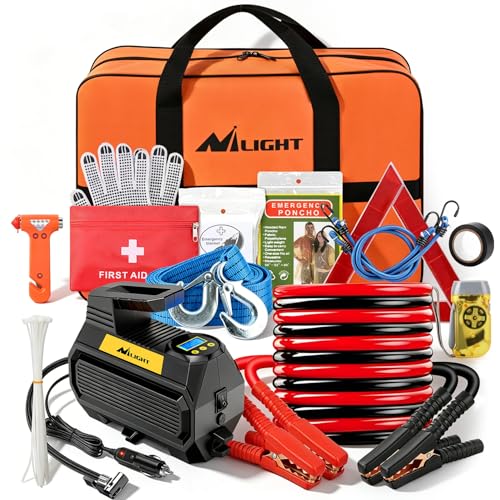
| AUTODECO Jump Starter with Air Compressor | Dead battery help plus basic tire inflation | Road triangles or reflective gear, stronger first aid depth, better flashlight, tow strap | About $30 to $60 if you add visibility gear, a better light, and a more complete first aid refill | Medium; larger than a bare cable kit because it combines power and air tools | Commuters, teen drivers, and drivers who want self-rescue without a second vehicle |
| AUTODECO Roadside Emergency Kit | Low-cost starter kit for general roadside coverage | Portable jump starter, tire inflator, warning triangles, better flashlight, deeper first aid kit | About $80 to $160, depending on the jump starter and inflator you add | Small to medium; easy to place in a trunk organizer bag | Budget buyers, new drivers, and small-car owners who want a base kit |
| AUTODECO Roadside Assistance Kit with Jumper Cables and Tire Inflator | Balanced all-around coverage in a compact package | Portable jump starter, visibility gear, upgraded first aid items, a stronger flashlight or headlamp | About $100 to $180 if you build out the battery and visibility side properly | Compact for a multi-tool kit, but still larger than a glovebox-only set | Sedans, hatchbacks, and drivers who want a ready starting point with room to improve |
Which kit should you buy for your car?
Buy the kit that matches your most likely failure. For a commuter, the best value is usually the compact kit plus a separate lithium jump starter. For a teen driver, the simplest kit is the best kit, because the priority is easy storage and easy use under pressure.
For winter driving or rural roads, start with the kit that can handle dead batteries and low tires, then add warning triangles, a warm blanket, and a stronger flashlight. A roadside stop on a dark shoulder is a visibility problem before it becomes a repair problem.
Say your sedan lives in a city garage and mostly does short trips. A compact kit can be enough if you add a jump starter and a small inflator, because short trips are hard on batteries and the trunk may not have room for a bulky case.
Suppose your SUV carries kids, sports gear, and groceries every week. You have more cargo room, so a larger kit with a hard case, triangles, and a stronger first aid refill makes more sense than a tiny pouch with filler items.
AUTODECO jump starter kit: best for dead batteries
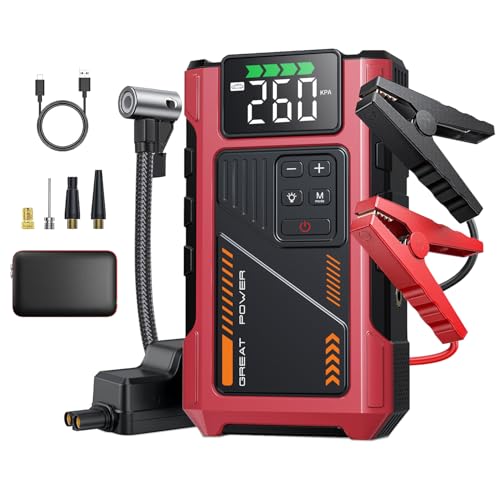
This is the best fit for a dead-battery problem because it combines a portable jump starter with an air compressor. A lithium jump starter matters because it works without a second vehicle, and that matters most when you are parked alone or the car in front of you cannot help.
Based on the published product details, the jump starter is rated at 6000A peak current and the compressor reaches 150 PSI. That makes it the strongest self-rescue choice in this group for drivers who want one box to cover battery failure and tire pressure issues.
The drawback is size and cost. At $149.98, it is the most expensive option here, and it still does not solve everything. You should still add reflective warning gear, a more complete first aid refill, and a better flashlight if the included light is weak.
For a commuter, this is the kit that matters most on a cold morning with a dead battery. For a rural driver, it helps because the jump does not depend on finding another car on the shoulder or a nearby parking lot.
AUTODECO roadside emergency kit: best for compact storage
This is the best compact starter kit for drivers who want a low-cost base and a small storage load. It is made to fit neatly into an organizer bag, which helps if you need to keep the trunk open for luggage, school gear, or work equipment.
The strength here is simplicity. Based on the published details, it includes essential tools and supplies and uses premium copper wire and PVC materials, which are the kind of details that matter more than a high piece count. It is also the lowest-priced option at $20.89.
The drawback is obvious: this is not a complete roadside recovery system. It does not give you a self-powered jump solution or a tire inflator, so the kit should be treated as a base layer rather than the whole answer.
A teen driver or a small-trunk sedan owner can start here, then add a lithium jump starter, a digital inflator, and visibility gear. That turns a cheap starter kit into something that can handle a real roadside stop.
AUTODECO roadside assistance kit: best for balanced coverage
This is the best all-around pick for drivers who want a conventional roadside kit with both jumper cables and a tire inflator. The manufacturer lists it as a standard roadside kit, and that combination is useful when the problem is a dead battery, low tire pressure, or a minor stop that needs basic tools.
The published specs list 8 AWG cables, which is a reasonable choice for a basic cable kit. Thicker cable is preferred because thin cables can waste current, and clamp quality matters as much as wire size. The included first aid kit has 48 pieces, which sounds useful, but piece count alone does not tell you if it has enough gauze, antiseptic, or wound-care depth.
The drawback is that this is still not a complete emergency system. Jumper cables depend on a second vehicle, and many bundled flashlights are serviceable at best. If you buy this kit, add a lithium jump starter, warning triangles, a better headlamp, and a more serious first aid refill.
For a sedan, this is the best middle-ground choice if you want a compact trunk kit and do not mind finishing the setup yourself. For a family vehicle, it is a sensible base layer because it gives you room to add the items that matter most.
Which one should you buy?
Buy the AUTODECO jump starter kit if your top concern is a dead battery and you want the fastest self-rescue path. Buy the compact AUTODECO roadside kit if your budget is tight and you want a small, easy-to-store starter set. Buy the AUTODECO roadside assistance kit if you want the most balanced base and plan to add better gear right away.
If you drive at night, on rural roads, or in winter, the best choice is the one you can make visible and self-sufficient. That means a jump starter, warning triangles, and a good light matter more than a bag full of filler items.
If trunk space is tight, the compact kit is easiest to carry. If you have an SUV or truck, the larger footprint is less of a problem, so choose the kit that needs the fewest replacements after purchase.
What should be included in a car emergency kit?
A useful car emergency kit should cover battery failure, tire trouble, visibility, and minor injury. At minimum, that means jumper cables or a jump starter, a flashlight or headlamp, a first aid kit with gauze and antiseptic, and reflective gear such as warning triangles or strips.
A tire inflator is a strong addition because it helps with low pressure before a flat becomes a tow. An emergency bag or case matters too, because loose tools are harder to find when you are standing on the shoulder in bad weather.
Some kits include a tow strap, but that is only useful for recovery scenarios and should not be treated as essential for every driver. For many commuters, a better light and a better jump source matter more.
How many pieces does a good roadside kit need?
Piece count is a weak signal. A 142-piece kit can still leave out the tool that solves your most likely breakdown, while a smaller kit can be better if it includes the right cable gauge, a usable inflator, and a real first aid core.
Look for what the pieces actually are. Bandages, gauze, antiseptic, cold pack materials, warning triangles, and a reliable light matter more than filler items like extra ties or low-value plastic extras.
The right question is whether the kit can solve the emergency you are most likely to face. If it cannot jump a dead battery, inflate a tire, or keep you visible, the piece count does not help much.
Jumper cables versus a battery jump starter
Jumper cables are cheaper and can work well if another vehicle is available, but they depend on outside help. A portable jump starter is a lithium battery pack that works without a second vehicle, so it is the better choice for solo drivers, parking garages, and cold-weather starts.
For cable kits, 8-gauge or thicker is a practical floor, and about 10 to 12 feet is a common rule of thumb for reach. Clamp strength matters. Thin or low-quality cables can fail to deliver enough current, especially on larger engines or in cold conditions.
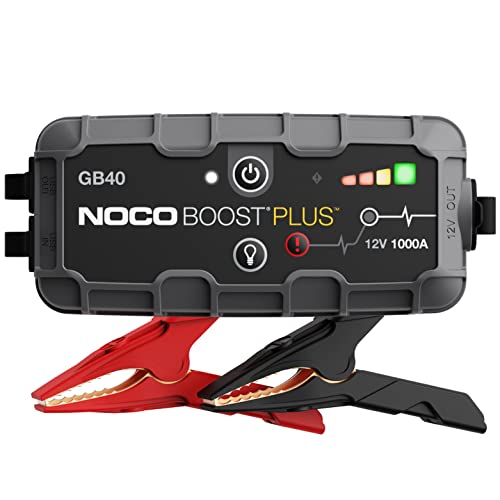
For jump starters, check peak amps and engine-size guidance. The NOCO Boost GB40 is listed in Consumer’s Guide as a top pick, weighs 2.4 lb, is rated at 1000 peak amps, and works on gas engines up to 6.0L. That is the kind of spec that tells you more than a piece count ever will.
What emergency kit is best for winter driving?
The best winter kit is the one that improves visibility, starting power, and comfort while you wait. A lithium jump starter, warning triangles, a good headlamp, and a compact first aid kit are the most useful upgrades because cold weather exposes weak batteries and dark shoulders.
Winter also makes tire pressure less stable, so a tire inflator with a digital preset and auto-shutoff is worth more than a basic pump. A 12V plug-in inflator is common and useful, while a battery-powered version makes sense if you want to avoid relying on the car battery during a weak-start situation.
Which car emergency kit is best for storage in a small trunk?
The best small-trunk option is the kit that stores neatly in an organizer bag and leaves room for everything else. The AUTODECO portable roadside kit is the smallest base choice here, but it needs upgrades before it can handle a real emergency on its own.
A hard-shell case can protect tools better, while a canvas duffel can be easier to squeeze into irregular cargo spaces. If space is tight, keep the kit organized by function so you can reach the light, gloves, and jumper gear first.
A common mistake is choosing a bulky car emergency kit because it seems more thorough, then realizing it takes up the entire trunk and leaves no room for a spare tire or road-trip bags. In a small trunk, the best kit is the one you can actually keep in the car every day.
What should I add to a prebuilt car emergency kit?
Start with the missing essentials, not the extras. Add a portable jump starter if the kit only has cables, and add a tire inflator if it has no air tool. Then add warning triangles or reflective strips, because roadside visibility matters more than a long supply list.
Next, check the first aid kit. If it has mostly tiny bandages and light filler, replace it with a deeper wound-care kit that includes gauze, antiseptic, and a cold pack. Then inspect the flashlight and replace it if the beam is weak or the battery life is doubtful.
If the kit does not include a proper bag, move everything into a hard-shell case or a canvas duffel with pockets. Organization matters when you are reaching for gloves or a cable set in the dark.
How to choose
Choose by emergency type first. Dead-battery risk points you toward a lithium jump starter or a strong cable kit. Tire-pressure issues point you toward a digital inflator with auto-shutoff. Dark-road stops point you toward warning triangles and a reliable light.
Then choose by vehicle and storage. A sedan usually needs a compact kit. A truck or SUV can carry a harder case, a larger first aid kit, and recovery gear such as a tow strap if that is relevant to the route you drive.
Finally, look at what you must replace right away. If the flashlight is weak, replace it. If the first aid contents are shallow, refill them. If the kit has cables but no self-powered jump option, add one. That is how a prebuilt kit becomes genuinely road-ready.
Frequently asked questions
Which emergency kit should you have in your car?
You should have the kit that matches your most likely roadside problem, but the safest baseline is a jump solution, a tire inflator, a first aid kit, and visibility gear. If you drive alone, a portable jump starter is more useful than cables because it does not require another vehicle.
Which emergency kit should I buy for a sedan?
For a sedan, buy the most compact kit that still covers battery help and tire pressure. Small trunks fill quickly, so prioritize a kit in an organizer bag, then add a lithium jump starter and a small inflator if the base package does not include them.
Are jump-start cables or a battery jump starter better?
A battery jump starter is better for solo drivers, winter mornings, and parking lots where no second vehicle is nearby. Jumper cables are still useful, but only when another car is available and the cables are thick enough, long enough, and fitted with strong clamps.
Products related to this article
Sponsored / affiliate links. As an Amazon Associate I earn from qualifying purchases. I may earn additional commission from eligible campaigns.